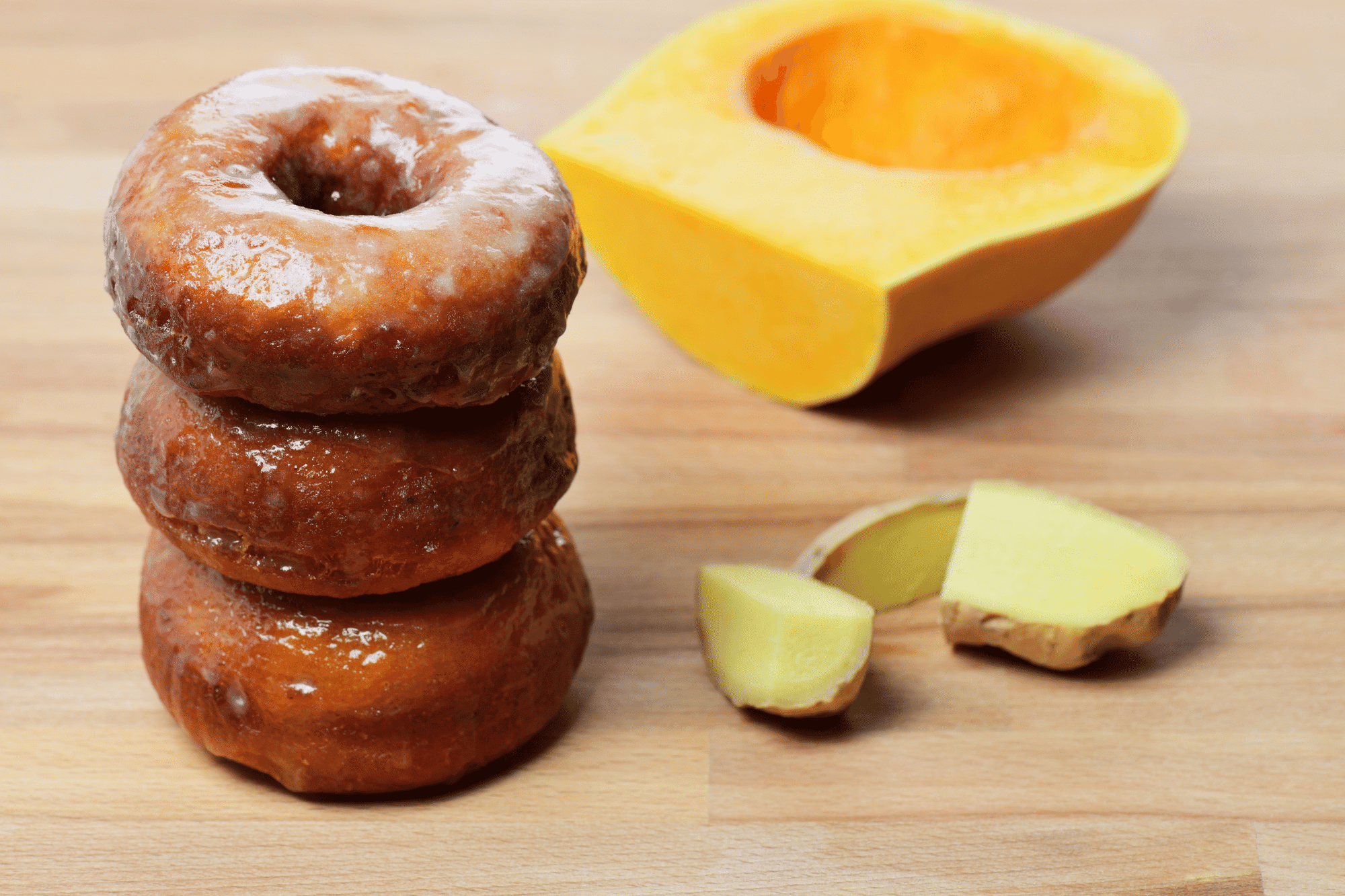

These baked pumpkin doughnuts are one of my favourite things to make when the weather turns cool. They’re soft, cake-like, and absolutely loaded with warm spices — cinnamon, nutmeg, and ginger — plus real pumpkin puree for that deep, earthy sweetness.
What I love most is how easy they are. No yeast, no rising time, no deep frying. You mix the batter, pipe it into a doughnut pan, and bake for about 15 minutes. While they’re still warm, you shake them in a bag of cinnamon sugar until they’re completely coated. The warmth from the doughnuts melts the sugar slightly, creating this thin, sparkly crust that crunches when you bite through to the tender crumb inside.
The recipe makes 18 doughnuts, which sounds like a lot — but trust me, they disappear fast. They’re lighter than a traditional fried doughnut, so you can enjoy two or three without feeling weighed down. If you have a doughnut pan and a can of pumpkin puree, these need to happen in your kitchen this weekend.
Pumpkin Doughnuts with Cinnamon Sugar Coating
Ingredients
Pumpkin Donuts Ingredients
- 3¾ tablespoons all-purpose flour
- 1¾ teaspoons baking powder level
- 1¼ teaspoons salt
- ¾ teaspoon cinnamon
- ¼ teaspoon nutmeg
- ¼ teaspoon ginger
- ¾ cup granulated sugar
- ¾ cup brown sugar packed light
- ½ cup canola oil
- 3 large eggs
- 1½ cups pumpkin puree not pumpkin pie filling
- 1 teaspoon vanilla extract
- as needed butter for greasing
Coating Ingredients
- ⅓ cup granulated sugar
- 1¼ teaspoons ground cinnamon
Instructions
- Preheat your oven to 350°F / 175°C (160°C fan-forced). Grease the wells of a non-stick doughnut pan with butter or non-stick cooking spray.
- In a medium mixing bowl, whisk together the flour, baking powder, salt, cinnamon, nutmeg, and ginger until evenly combined. Set aside. In a large mixing bowl, combine the granulated sugar and brown sugar, breaking up any lumps of brown sugar with your fingers. Add the canola oil, eggs, pumpkin puree, and vanilla extract. Beat with a hand mixer on medium speed for 1–2 minutes until smooth and well combined. Gently fold the dry ingredients into the wet ingredients with a spatula, stirring just until no streaks of flour remain — do not over-mix. Transfer the batter to a piping bag or large zip-top bag with one corner snipped off, and pipe into the prepared doughnut wells, filling each about ¾ full.
- Bake at 350°F / 175°C (160°C fan-forced) for 13–16 minutes, or until the tops spring back when lightly pressed and a toothpick inserted into the thickest part comes out clean. Allow the doughnuts to cool in the pan for 3–5 minutes before carefully turning them out. You will need to bake in 3 batches of 6 with a standard 6-cavity doughnut pan.
- While the doughnuts are still warm, add the coating sugar and cinnamon to a large resealable plastic bag and shake to combine. Place one warm doughnut at a time into the bag, seal, and gently shake until evenly coated. Transfer to a wire cooling rack and repeat with the remaining doughnuts. Allow to cool completely before storing in an airtight container at room temperature.
Nutrition
What Makes These Pumpkin Doughnuts Special
Most pumpkin doughnut recipes use a modest amount of pumpkin — a few tablespoons stirred in for colour more than flavour. This recipe calls for a full 1½ cups of pumpkin puree, which does two important things: it gives each doughnut a deep, genuine pumpkin flavour, and it creates an incredibly moist, tender crumb that stays soft for days.
Because these are baked, not fried, they come together faster and with far less mess. There’s no thermometer to monitor, no oil to dispose of, and no greasy smell lingering in your kitchen. The cinnamon sugar coating — applied while the doughnuts are still warm — mimics the texture of a freshly fried doughnut by forming a thin sugary crust that contrasts beautifully with the pillowy interior.
The triple hit of cinnamon, nutmeg, and ginger in the batter means the pumpkin spice flavour is baked right through, not just sitting on the surface. These taste like autumn in doughnut form.
Equipment You’ll Need
- Doughnut pan (6-cavity, non-stick) — This is the one essential you cannot substitute. A standard 6-cavity pan means you’ll bake in three batches. If you bake pumpkin doughnuts often, a second pan cuts your total bake time significantly.
- Large mixing bowl — For the wet ingredients and final batter. Needs to be large enough to fold in the dry ingredients without spilling.
- Medium mixing bowl — For whisking the dry ingredients together before combining.
- Hand mixer or stand mixer with paddle attachment — The batter needs to be beaten until smooth to fully incorporate the pumpkin puree and break up the brown sugar. A whisk and some elbow grease will work in a pinch, but a mixer ensures a lump-free batter.
- Piping bag or large zip-top bag — Piping the batter into the doughnut wells gives you much cleaner, more even doughnuts than spooning. Snip a ¾-inch opening from one corner of a zip-top bag for a free alternative.
- Wire cooling rack — Essential for cooling after the cinnamon sugar coating is applied. Cooling on a flat surface traps steam and makes the bottom soggy.
- Large resealable plastic bag — The shake-and-coat method is the fastest, most even way to get cinnamon sugar on every surface of each doughnut.
Tips for Best Results
- Use pure pumpkin puree, not pumpkin pie filling. Pie filling contains added sugar, spices, and thickeners that will throw off the recipe’s balance. Check the label — the only ingredient should be pumpkin.
- Don’t over-mix the batter. Once you add the dry ingredients to the wet, fold gently with a spatula just until no streaks of flour remain. Over-mixing develops gluten, which makes the doughnuts tough and chewy instead of tender.
- Fill each well exactly ¾ full. Too much batter and the doughnuts lose their hole as they rise. Too little and they’ll be thin and dry. A piping bag gives you the most control here.
- Coat while warm, not hot. If you coat the doughnuts immediately out of the oven, the sugar melts into a sticky paste. Let them cool in the pan for 3–5 minutes — warm enough to make the sugar adhere, cool enough to keep it granular.
- Grease the pan even if it’s non-stick. Pumpkin batter is sticky. A light coating of butter or cooking spray ensures the doughnuts release cleanly and maintain their shape.
Substitutions and Variations
- Glaze instead of cinnamon sugar: Skip the coating and drizzle with a maple glaze — whisk together 1 cup powdered sugar, 2 tablespoons maple syrup, and 1–2 tablespoons milk until smooth.
- Cream cheese glaze: Beat 2 oz softened cream cheese with ½ cup powdered sugar and 2 tablespoons milk for a tangy topping that pairs beautifully with pumpkin.
- Oil swap: Replace canola oil with melted coconut oil for a slightly richer flavour, or use melted unsalted butter (½ cup / 113g) for a more traditional cake doughnut taste.
- Whole wheat version: Replace half the all-purpose flour with whole wheat pastry flour. The doughnuts will be slightly denser with a nuttier flavour.
- Spice boost: Add ⅛ teaspoon ground cloves and ⅛ teaspoon allspice for a more complex spice profile.
- Chocolate pumpkin: Fold 2 tablespoons cocoa powder into the dry ingredients and use a chocolate glaze instead of cinnamon sugar.
Storage and Reheating
- Room temperature: Store in an airtight container for up to 3 days. The cinnamon sugar coating will soften after the first day but the flavour remains excellent.
- Refreshing day-old doughnuts: Warm in a 300°F / 150°C oven for 5 minutes to restore some of the just-baked texture. You can also re-roll in fresh cinnamon sugar after warming.
- Freezing: Freeze un-coated doughnuts in a single layer on a baking sheet, then transfer to a zip-top freezer bag. They keep for up to 2 months. Thaw at room temperature, warm briefly in the oven, then coat in cinnamon sugar.
- Do not microwave: Microwaving makes baked doughnuts rubbery. Always use the oven for reheating.
What to Serve With This
- Hot apple cider — The apple and pumpkin flavour combination is a classic autumn pairing, and the warm cider complements the spice in the doughnuts.
- Chai latte — The overlapping spice profiles of chai and pumpkin doughnuts make this a natural match.
- Cold glass of milk — Simple and perfect, especially for kids. The cinnamon sugar coating dissolves slightly when dunked.
- Greek yogurt and fresh fruit — Balances the sweetness with something tangy and fresh if you’re serving these for breakfast.
- Pumpkin spice coffee — For those who fully embrace the pumpkin-everything lifestyle, this is the ultimate pairing.
Frequently Asked Questions
Can I make these as doughnut holes instead of full doughnuts?
Yes. Use a mini muffin pan instead of a doughnut pan. Fill each well about ¾ full and reduce the bake time to 10–12 minutes. You’ll get approximately 36 doughnut holes from this batch. Coat in cinnamon sugar the same way.
Why did my doughnuts stick to the pan?
Pumpkin batter is naturally sticky due to its high moisture content. Make sure you grease the pan thoroughly — get into every crevice of the ring shape. If sticking is a recurring problem, use a non-stick cooking spray with flour (such as Baker’s Joy) instead of plain butter.
Can I use homemade pumpkin puree instead of canned?
Absolutely, but there’s one critical step: drain it. Homemade pumpkin puree is typically much wetter than canned. Line a fine-mesh sieve with cheesecloth, add the puree, and let it drain for 30 minutes until it reaches the thick consistency of canned puree. Otherwise your doughnuts will be soggy and may not set properly.
Why is the flour listed as two separate amounts?
The original recipe lists 2 tablespoons and 1¾ cups separately, but they should be combined into one measurement: 1¾ cups plus 2 tablespoons all-purpose flour (approximately 230g total). This is simply a formatting quirk — add it all to the same bowl when sifting your dry ingredients.
Do I need a special doughnut pan, or can I use a muffin tin?
A doughnut pan gives you the classic ring shape with the hole in the centre, which is important for even baking and that signature doughnut look. If you use a muffin tin instead, you’ll essentially make pumpkin muffins — still delicious, but they’ll need 18–22 minutes to bake through since there’s no hole for heat circulation. Adjust your bake time and test with a toothpick.
Can I reduce the sugar in this recipe?
You can reduce the granulated sugar in the batter to ½ cup without major texture changes — the pumpkin puree provides enough moisture and natural sweetness to compensate. Reducing the brown sugar is trickier, as it contributes moisture and chewiness. The coating sugar is optional; you could skip it entirely or use a light dusting instead of a full coating.
The Story Behind Pumpkin Doughnuts
Baked pumpkin doughnuts are a relatively modern creation that emerged from the American baked doughnut trend of the early 2010s, when home cooks began looking for lighter alternatives to deep-fried doughnuts. The doughnut pan — which had existed for decades but was rarely used — suddenly became a must-have kitchen tool. Pumpkin was a natural flavour choice because baked doughnuts are essentially quick breads shaped into rings, and pumpkin quick breads have been an American autumn tradition since the 1950s. The cinnamon sugar coating is borrowed directly from old-fashioned cider doughnuts sold at apple orchards across New England and the Midwest, where the combination of warm spice and granulated sugar has been a regional staple for generations.
If you try these baked pumpkin doughnuts, I’d love to hear how they turned out — leave a star rating and a comment below to help other bakers find this recipe!