







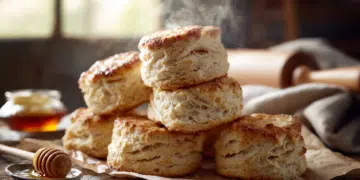


























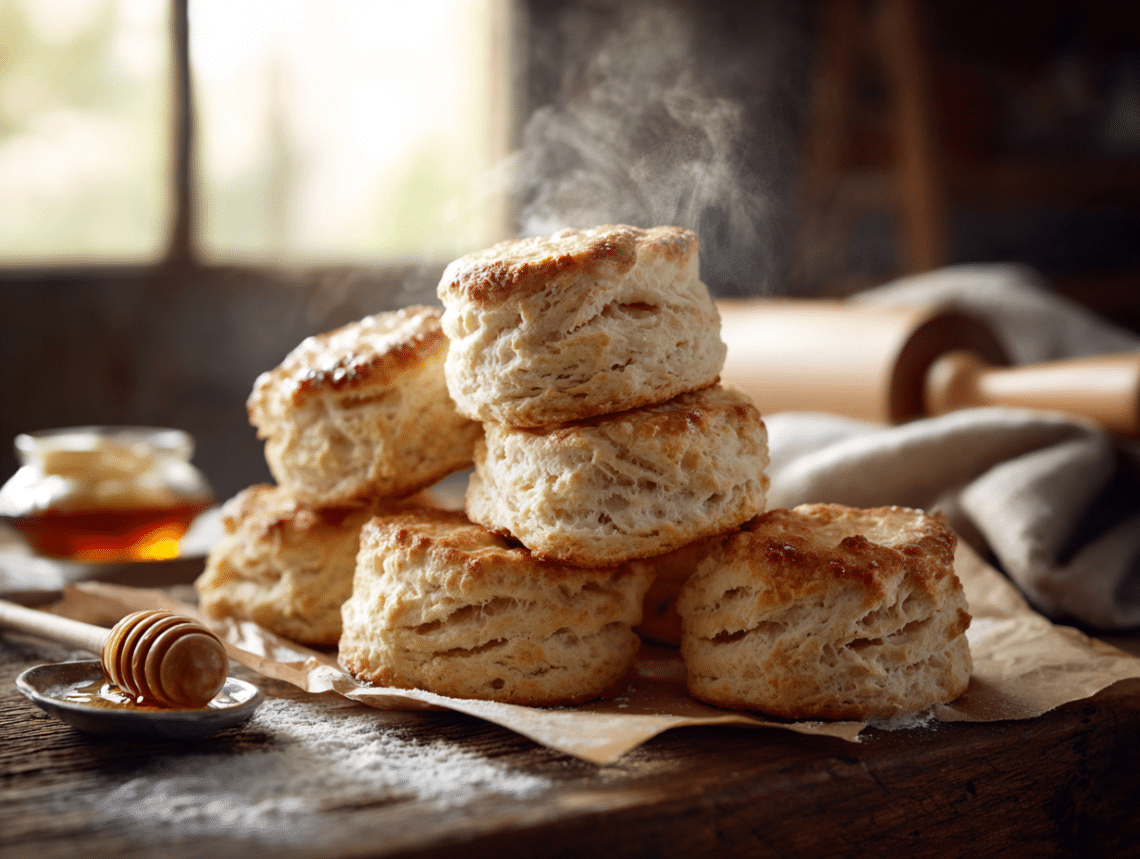
These buttermilk biscuits come together in 30 minutes using flour, butter, and buttermilk — ingredients most households already have. The recipe uses two simple techniques (cold fat and a quick fold) that make a real difference in rise and texture, without requiring any special skill or equipment. If you want reliable, tall, flaky biscuits on a weeknight, this is the one to bookmark.
Ingredient notes
- Buttermilk: If you don’t have any, stir 1 tablespoon of white vinegar or lemon juice into ¾ cup of regular milk and let it sit for 5 minutes. It works just as well here.
- Unsalted butter: Salted butter is fine — just reduce the added salt by about ¼ teaspoon. The important thing is that the butter is very cold, not which type you use.
- All-purpose flour: This is what most people have, and it works perfectly. Bread flour will make the biscuits tougher; cake flour will make them more crumbly. Stick with all-purpose.
- Baking powder: Check the date. Old baking powder is the single most common reason biscuits don’t rise. If yours has been open more than 6 months, test it by dropping a teaspoon into hot water — it should bubble actively.
Why this recipe works
Two things actually drive the result here. First, keeping the butter cold until it hits the oven — those solid fat pieces create steam pockets as they melt, which is what pushes the layers apart. Second, the fold. Patting the dough into a rectangle and folding it over itself two or three times builds distinct layers without developing the gluten the way kneading would. Both steps take under two minutes total, but skipping either one is why biscuits end up dense and flat instead of tall and pull-apart.
Common problems and fixes
- Biscuits spread sideways instead of rising up: The butter got too warm before baking. After cutting your biscuits, put the whole tray in the fridge for 10 minutes before they go in the oven. This firms everything back up.
- Tough, dense texture: The dough was overworked. Once the buttermilk goes in, mix only until the dough just comes together — lumpy and shaggy is correct. Extra stirring builds gluten and makes biscuits chewy.
- Pale tops that don’t brown: Your oven may run cool, or the biscuits were placed too low. Move the rack to the upper third of the oven. The butter brush helps with color, but skip the garnish of flaky salt on top — not worth the extra dish when the biscuits are this simple.
- Uneven rise, one side higher than the other: The biscuit cutter was twisted when pressing down. Press straight down and lift straight up — twisting seals the cut edge and blocks the rise.
- Dry, crumbly biscuits: Usually means too much flour was worked in during patting. Flour your surface lightly and handle the dough as little as possible. If your kitchen is warm, chill the mixing bowl for 10 minutes before you start.
Storage and reheating
Biscuits are best the day they’re made, but they keep at room temperature in an airtight container for up to 2 days. For longer storage, freeze them fully baked — wrap individually in plastic wrap, then place in a zip bag, and they’ll hold well for up to 3 months. To reheat from room temperature, wrap in foil and warm in a 350°F oven for about 8 minutes. From frozen, go straight into a 350°F oven (still wrapped in foil) for 15 to 18 minutes. The microwave works in a pinch but softens the crust — 20 to 25 seconds on medium power is enough.

Easy Buttermilk Biscuits
Equipment
- Mixing bowl
- Pastry cutter or box grater
- Baking sheet
- Oven
- Biscuit cutter or glass
- Pastry brush
Ingredients
- 2 cups all-purpose flour preferably unbleached and fresh
- 1 tablespoon baking powder ensure it's fresh for maximum rise
- ½ teaspoon baking soda
- 1 teaspoon salt kosher or fine sea salt recommended
- 6 tablespoons unsalted butter very cold, cut into small cubes or grated
- ¾ cup buttermilk very cold; shake well before measuring
- 1 tablespoon melted butter for brushing warm biscuits
Instructions
- Preheat your oven to 425°F (220°C) and line a baking sheet with parchment paper for easy cleanup and even baking.
- In a large mixing bowl, whisk together the all-purpose flour, baking powder, baking soda, and salt until well combined.
- Add the cold unsalted butter. Use a pastry cutter or box grater to incorporate the butter into the flour until the mixture resembles coarse crumbs with pea-sized bits of butter still visible. This ensures a flaky texture.
- Make a well in the center and pour in the cold buttermilk. Using a fork, gently stir just until a shaggy dough forms. Do not overmix.
- Turn the dough onto a floured surface and gently pat (not roll) it into a rectangle about 3/4-inch thick. Fold the dough over itself like a letter, then pat it down again. Repeat this folding once or twice more to build flaky layers.
- Cut out biscuits using a floured 2.5-inch biscuit cutter or a drinking glass, pressing straight down—do not twist—to allow for an even rise. Re-roll scraps only once to avoid toughness.
- Place biscuits onto the prepared baking sheet, sides just barely touching for soft sides or spaced apart for crispier edges.
- Bake for 13–15 minutes, or until the tops are lightly golden and the biscuits have risen beautifully. Remove from oven and immediately brush with melted butter.
Notes
- For extra-tall biscuits, chill the cut dough for 10 minutes before baking to slow butter melting rate.
- No Buttermilk? Add 2 teaspoons of lemon juice or vinegar to 3/4 cup milk and let it sit for 5 minutes before using.
- Want a Sweeter Biscuit? Add 1 tablespoon of sugar to the dry ingredients.
Nutrition
Your questions, answered
Can I make these without a biscuit cutter?
Yes — a sharp-rimmed drinking glass works fine, or you can skip cutting altogether and use a bench scraper or knife to cut the dough into squares. Square biscuits actually waste no scraps and rise just as well.
What if I only have salted butter?
Use it. Just cut the added salt in the recipe from 1 teaspoon down to about ¾ teaspoon. The difference in the final biscuit is minor.
Can I make the dough ahead of time?
Yes — cut the biscuits, place them on the lined baking sheet, cover tightly with plastic wrap, and refrigerate overnight. Bake straight from the fridge the next morning; no changes to time or temperature needed.
My biscuits came out flat. What went wrong?
The most likely cause is expired baking powder — it loses its lift over time and won’t recover. The second most common cause is butter that warmed up too much before baking; chilling the cut biscuits for 10 minutes before they go in the oven helps prevent this.
Can I use self-rising flour instead of all-purpose?
Yes, with adjustments. Self-rising flour already contains baking powder and salt, so leave out the baking powder and salt called for in the recipe and reduce the baking soda to ¼ teaspoon. Results will be slightly different in texture but still good.
Do I have to use buttermilk, or can I substitute regular milk?
Regular milk on its own will work but produces a less tender biscuit with less rise, because it lacks the acidity that activates the baking soda. For a closer result, add 1 tablespoon of white vinegar or lemon juice to ¾ cup of whole milk, stir, and let it sit for 5 minutes before using.
Try these next
- Warm Southern Buttermilk Biscuits from Scratch
- Homemade Strawberry Jam
- Southern-Style Crispy Fried Chicken
- Fluffy Homemade Pancake Mix