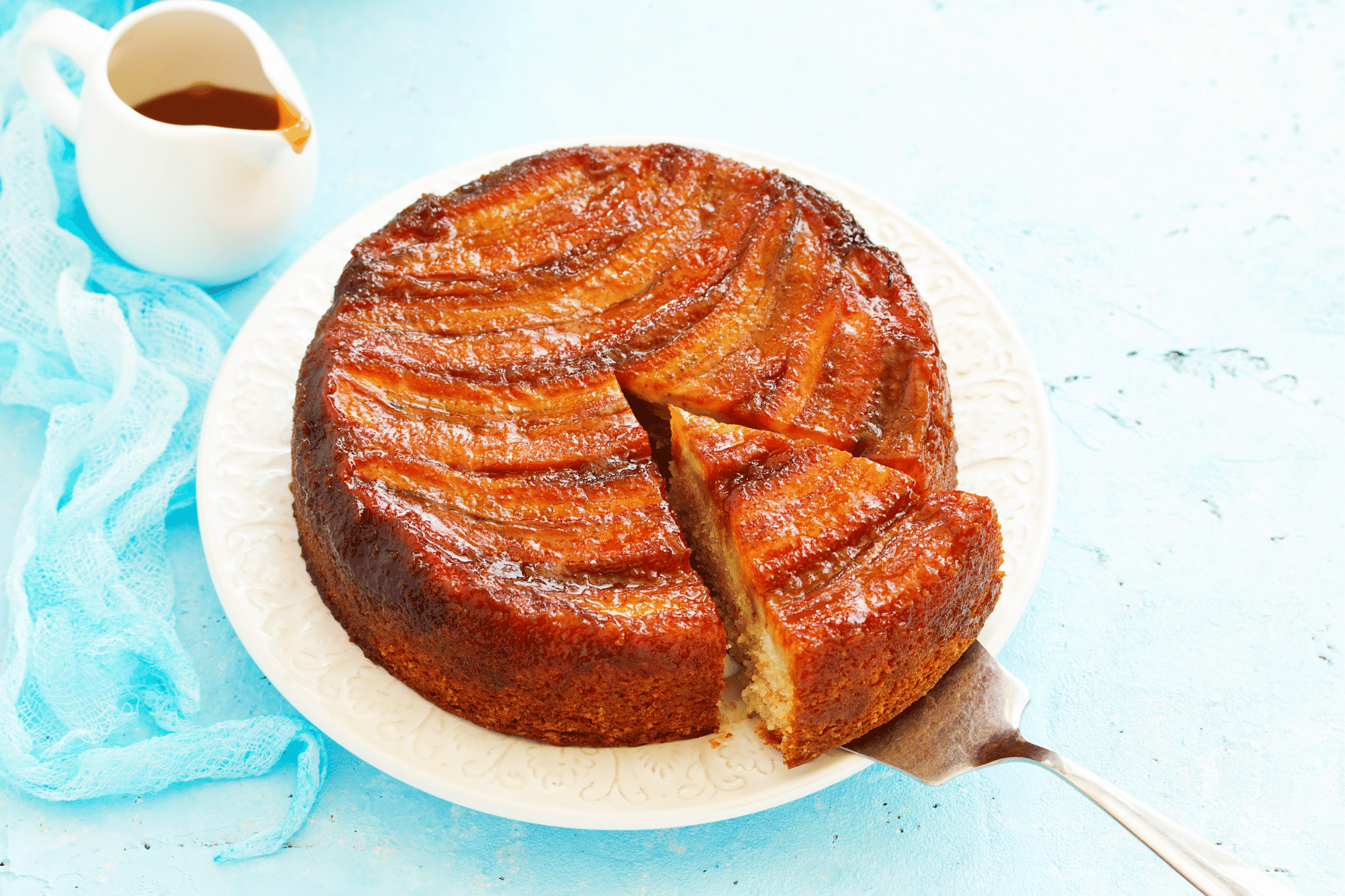



I love a cake that feels indulgent but isn’t loaded with refined sugar, and this honey banana cocoa cake is exactly that. It uses ripe bananas, agave nectar, and honey to create a deep, caramel-like sweetness that pairs beautifully with the bitterness of cocoa.
The texture is dense and fudgy — closer to a banana bread-meets-brownie than a fluffy sponge. That’s part of its charm. The whipped egg whites give it just enough lift, while the oat bran adds a subtle nuttiness and keeps everything moist for days.
What I really appreciate about this recipe is how forgiving it is. Your bananas are too ripe? Even better. You don’t have a stand mixer? A whisk and some elbow grease will do. It’s the kind of bake you can throw together on a Sunday afternoon with pantry staples.
The honey drizzle and fresh banana slices on top take it from simple to stunning — this is a cake worth making today.
Honey Banana Cocoa Cake – Moist & Naturally Sweetened
Equipment
- 9-inch round cake pan
- Large mixing bowl
- Medium mixing bowl
- Fine-mesh sieve
- Whisk or hand mixer
- Silicone spatula
- Wire cooling rack
Ingredients
- 5 tablespoons unsweetened cocoa powder
- 5 tablespoons soy milk
- 3 large ripe bananas mashed (about 1½ cups)
- ¾ cup agave nectar divided
- ½ cup honey plus extra for drizzling
- 1 teaspoon vanilla extract
- 5 medium egg whites whipped to stiff peaks
- 1 teaspoon baking powder
- 1 teaspoon salt
- ¾ cup whole wheat flour
- ⅔ cup oat bran
- 1 tablespoon butter for greasing pan
- 1 tablespoon whole wheat flour for dusting pan
- 1 medium banana sliced, for topping
Instructions
- Preheat oven to 375°F / 190°C (170°C fan-forced).
- In a medium bowl, whisk together the cocoa powder, half of the agave nectar (about 6 tablespoons), and the soy milk until smooth and no lumps remain.
- In a large, clean bowl, whip the egg whites to stiff peaks using a whisk or hand mixer. Gently fold the whipped egg whites into the cocoa mixture in two additions, being careful not to deflate them.
- In a separate bowl, mash the bananas thoroughly with a fork until mostly smooth. Stir in the remaining agave nectar and vanilla extract.
- Add the banana mixture to the cocoa mixture.
- In a small bowl, whisk together the whole wheat flour, salt, and baking powder.
- Using a fine-mesh sieve, sift the flour mixture over the cocoa-banana batter. Fold gently with a spatula until just combined — do not overmix.
- Sprinkle the oat bran over the batter and fold in gently until evenly distributed.
- Grease a 9-inch (23cm) round cake pan with butter and dust lightly with flour, tapping out the excess.
- Pour the batter into the prepared pan — it should fill the pan about halfway.
- Bake at 375°F / 190°C (170°C fan-forced) for 35–45 minutes, or until the top is firm to the touch and a toothpick inserted into the centre comes out with just a few moist crumbs attached. This is a dense, fudgy cake so it will not come out completely clean — that is normal.
- Allow the cake to cool in the pan for 10 minutes, then turn out onto a wire cooling rack to cool completely. Once cooled, drizzle with the honey and arrange fresh banana slices on top before serving.
Nutrition
What Makes This Honey Banana Cocoa Cake Special
This isn’t your typical chocolate cake. Instead of relying on butter, oil, and cups of white sugar, this honey banana cocoa cake builds its richness from three natural sweeteners — ripe bananas, agave nectar, and honey — each contributing a different layer of flavour. The bananas bring moisture and a subtle tropical sweetness, the agave adds a clean, neutral sweetness that lets the cocoa shine, and the honey on top delivers a floral, slightly caramelised finish.
The structure of this cake is unique too. With no butter or oil in the batter and whipped egg whites as the primary leavener alongside a single teaspoon of baking powder, you get a texture that’s dense and fudgy — somewhere between a rich banana bread and a flourless chocolate cake. The oat bran adds a gentle nuttiness and helps the crumb stay moist for days without drying out.
It’s also naturally dairy-free (when greased with coconut oil instead of butter), making it a genuinely inclusive dessert that doesn’t taste like a compromise.
Equipment You’ll Need
- 9-inch round cake pan — This batter needs room to bake evenly. Too small a pan and the centre will be raw while the edges burn; too large and you’ll end up with a thin, dry disc.
- Large mixing bowl — You’ll be folding whipped egg whites into cocoa batter, so you need space to work without deflating everything.
- Medium mixing bowl — For whisking the cocoa-agave-milk base and separately mashing the bananas.
- Whisk or hand mixer — Essential for whipping egg whites to stiff peaks. A hand mixer makes this significantly faster and more reliable than a manual whisk.
- Fine-mesh sieve — Sifting the flour mixture prevents lumps of baking powder and ensures even distribution throughout the dense batter.
- Silicone spatula — The folding steps are critical in this recipe. A flexible silicone spatula lets you fold without knocking the air out of your egg whites.
- Wire cooling rack — This dense cake holds a lot of heat. Cooling it on a rack prevents the bottom from steaming and turning soggy.
Tips for Best Results
- Use very ripe bananas. The blacker the skin, the sweeter and more flavourful your cake will be. Under-ripe bananas won’t mash smoothly and contribute a starchy, flat taste.
- Whip egg whites to stiff peaks. This is your main source of lift. Soft, floppy whites will give you a dense, heavy result. Stiff peaks that hold their shape when you lift the whisk are what you’re after.
- Fold, don’t stir. When combining the egg whites with the cocoa mixture, use a gentle folding motion — cut through the centre with your spatula, sweep along the bottom, and fold over the top. This preserves the air you’ve just whipped in.
- Don’t overmix after adding flour. Once the flour mixture is sifted in, fold until just combined. Overmixing develops gluten in the whole wheat flour, which will make the cake tough and chewy instead of tender.
- Check at 35 minutes. Every oven runs differently. Start checking for doneness at 35 minutes — a toothpick should come out with a few moist crumbs, not wet batter.
Substitutions and Variations
- Agave nectar → Maple syrup: A 1:1 swap that adds a warm, autumnal flavour. The cake will be slightly darker in colour.
- Soy milk → Any plant milk: Oat milk, almond milk, or coconut milk all work. Oat milk adds a touch of extra sweetness; coconut milk makes the crumb slightly richer.
- Whole wheat flour → Oat flour: For a lighter texture, swap the wheat flour for finely ground oat flour at a 1:1 ratio. This also brings the recipe closer to being fully whole-grain.
- Oat bran → Ground flaxseed: Adds omega-3s and a slightly earthier flavour. Use the same quantity.
- Honey topping → Chocolate ganache: For a more indulgent finish, melt 100g dark chocolate with 3 tablespoons of coconut cream and drizzle over the cooled cake.
- Add espresso: Dissolve 1 teaspoon of instant espresso powder into the cocoa-agave mixture. It won’t make the cake taste like coffee — it deepens and intensifies the chocolate flavour.
Storage and Reheating
- Room temperature: Store in an airtight container for up to 2 days. The dense, moist crumb actually improves overnight as the banana and honey flavours develop.
- Refrigerator: Wrap well or store in an airtight container for up to 5 days. Bring to room temperature for 30 minutes before serving for the best texture, or warm individual slices in the microwave for 15–20 seconds.
- Freezer: Wrap individual slices tightly in cling film, then place in a freezer bag. Freeze for up to 3 months. Thaw at room temperature for 1–2 hours. Do not freeze with the honey drizzle and banana topping — add those fresh after thawing.
- Do not reheat in the oven — the high sugar content from the agave and honey means the edges will burn before the centre warms through. Microwave is your best option for reheating.
What to Serve With This
- Greek yoghurt or coconut yoghurt — A dollop of tangy yoghurt cuts through the sweetness of the honey and agave beautifully.
- Fresh berries — Raspberries and strawberries add acidity that balances the dense, sweet crumb. Scatter them over individual slices.
- A dusting of cocoa powder — Simple but effective. Sift a thin layer of unsweetened cocoa over the top just before serving for a bakery-style finish.
- Warm with a scoop of vanilla ice cream — If you’re serving this as a dinner party dessert, a gently warmed slice with ice cream is spectacular.
- Black coffee or espresso — The bitterness of a strong coffee is the perfect counterpoint to this naturally sweet cake.
Frequently Asked Questions
Can I use whole eggs instead of just egg whites?
You can, but the texture will change significantly. Egg yolks add fat and richness, which will make the cake denser and less fudgy-light. The egg whites are what give this cake its characteristic lift without adding any fat. If you do use whole eggs, use 3 medium eggs and expect a heavier, more bread-like result.
Why does my cake taste bitter?
This is almost always caused by using Dutch-process cocoa instead of natural unsweetened cocoa. Dutch-process cocoa is treated with an alkalising agent that can taste bitter when combined with acidic ingredients like banana and agave. Use natural unsweetened cocoa powder for the best flavour balance in this recipe.
Can I reduce the amount of sweetener?
The agave and honey serve a structural purpose beyond sweetness — they keep the crumb moist and contribute to the dense, fudgy texture. You can reduce the agave nectar by 2–3 tablespoons without major issues, but cutting it by more than that will result in a drier, more crumbly cake. The honey topping is separate and can be reduced to taste.
Why did my cake sink in the middle?
The most likely cause is under-whipped egg whites or opening the oven door too early during baking. Since this recipe relies heavily on whipped whites for structure, they need to be at stiff peaks before folding. Also avoid opening the oven for the first 25 minutes — the sudden temperature drop can cause the delicate structure to collapse.
Can I make this recipe gluten-free?
Yes. Replace the ¾ cup whole wheat flour with a 1:1 gluten-free flour blend that contains xanthan gum. The oat bran should be certified gluten-free oat bran if you’re cooking for someone with coeliac disease. Everything else in the recipe is naturally gluten-free.
What size pan should I use?
A 9-inch (23cm) round cake pan works best. The batter should fill the pan about halfway — this allows room for the cake to rise without overflowing. If you only have an 8-inch pan, it will work but the cake will be taller and will need an extra 5–10 minutes of baking time. A 10-inch pan will produce a thinner cake that bakes faster — start checking at 25 minutes.
The Story Behind Honey Banana Cocoa Cake
Combining bananas, cocoa, and honey in baking has roots across multiple cultures. In West Africa and the Caribbean, ripe plantains and bananas have long been paired with cocoa in dense, naturally sweetened cakes and breads — often using honey or cane syrup instead of refined sugar. In the American South, banana cake became a staple during the Depression era when home cooks needed to use overripe fruit and relied on pantry staples like flour, baking powder, and whatever sweetener was affordable.
This particular recipe sits at the intersection of those traditions — a simple, naturally sweetened cake that doesn’t require fancy equipment or expensive ingredients. The use of egg whites instead of whole eggs and soy milk instead of dairy suggests a more modern, health-conscious approach, but the soul of the recipe is old-fashioned resourceful baking: use what you have, waste nothing, and make something delicious.
If you make this honey banana cocoa cake, I’d love to hear how it turned out — leave a star rating and a comment below to help other bakers find this recipe!