




































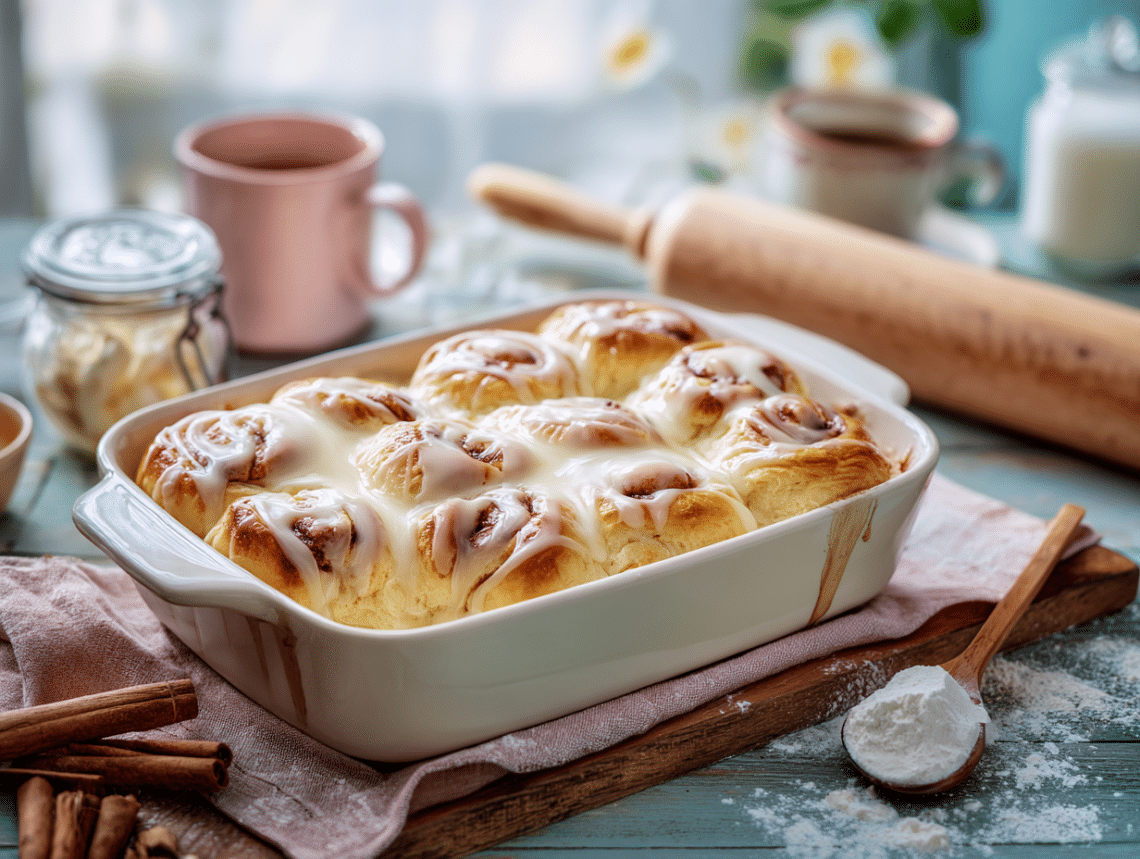
These are Japanese milk bread cinnamon rolls — softer and lighter than the classic American version, with a brown sugar-cinnamon swirl and a cream cheese glaze. The dough uses a tangzhong starter, which takes about five extra minutes but keeps the rolls genuinely soft for days instead of turning dry by afternoon. If you want a weekend baking project that actually delivers on the promise of fluffy, pull-apart rolls, this is a reliable one.
The technique that matters
Tangzhong is the one step worth understanding before you start. You cook a small amount of bread flour with milk and water until it thickens into a paste — it looks like a roux and takes about four minutes over medium-low heat. That paste gets worked into the dough, and what it does is lock in moisture at a structural level. The result is a dough that stays soft after baking and doesn’t stale quickly. The second thing that matters is the windowpane test during kneading: stretch a small piece of dough between your fingers and hold it up to the light. If it stretches thin enough to see light through without tearing, the gluten is developed enough. Skip the test and you risk rolls that don’t hold their shape or rise unevenly. Both steps are straightforward — they just need your attention.
Smart swaps
- Bread flour: All-purpose flour works in a pinch for both the tangzhong and the dough, but the rolls will be slightly less chewy and may spread a little more. Still good, just not quite as structured.
- Whole milk: 2% milk is fine throughout the recipe. Avoid skim — the lower fat content noticeably affects the dough’s richness and the glaze’s texture.
- Cream cheese glaze: If you’re out of cream cheese, a simple powdered sugar glaze (powdered sugar plus a splash of milk and vanilla) works perfectly well — skip the cream cheese entirely rather than using a small amount of a substitute that won’t behave the same way.
- Instant yeast: Active dry yeast can substitute at the same quantity; just proof it in the lukewarm milk with a pinch of sugar for five minutes before adding it to the dough.
- Light vs. dark brown sugar: Either works for the filling. Dark brown sugar gives a slightly deeper, more molasses-forward flavor; light brown keeps it milder. Use whatever is open in your pantry.
Troubleshooting
- Dough is sticky and won’t come together: Resist adding a lot of extra flour early — tangzhong dough is naturally tacky. Give the dough hook the full 10–12 minutes before deciding it needs adjustment. If it’s still sticking to the bowl sides after 8 minutes, add flour one tablespoon at a time, not by the handful.
- Rolls didn’t rise much during the second proof: Your kitchen is probably too cold. Set the pan inside an unheated oven with just the oven light on, or place it near (not on) a warm stovetop. The rolls need to look visibly puffed and touching each other before they go in to bake.
- Filling leaked out and pooled at the bottom of the pan: This usually means the butter was too warm and melted before baking rather than staying in the swirl. Use butter that’s soft enough to spread but not greasy or shiny — if it looks oily, chill it for ten minutes first.
- Rolls are browning too fast on top before the centers are cooked: Tent the pan loosely with foil after the first 15 minutes of baking. The milk bread dough browns faster than a standard enriched dough because of the higher milk content. An internal temperature of 190°F confirms they’re done — use an instant-read thermometer if you have one.
- Glaze is too thick to pour: Add whole milk one teaspoon at a time and stir well between additions. The glaze thickens quickly as the cream cheese chills, so if you made it ahead, let it sit at room temperature for ten minutes before using it. Pouring it over warm rolls is the easier approach and gives a thinner, more even coat — save the thick spread for cooled rolls when you want a cleaner look.
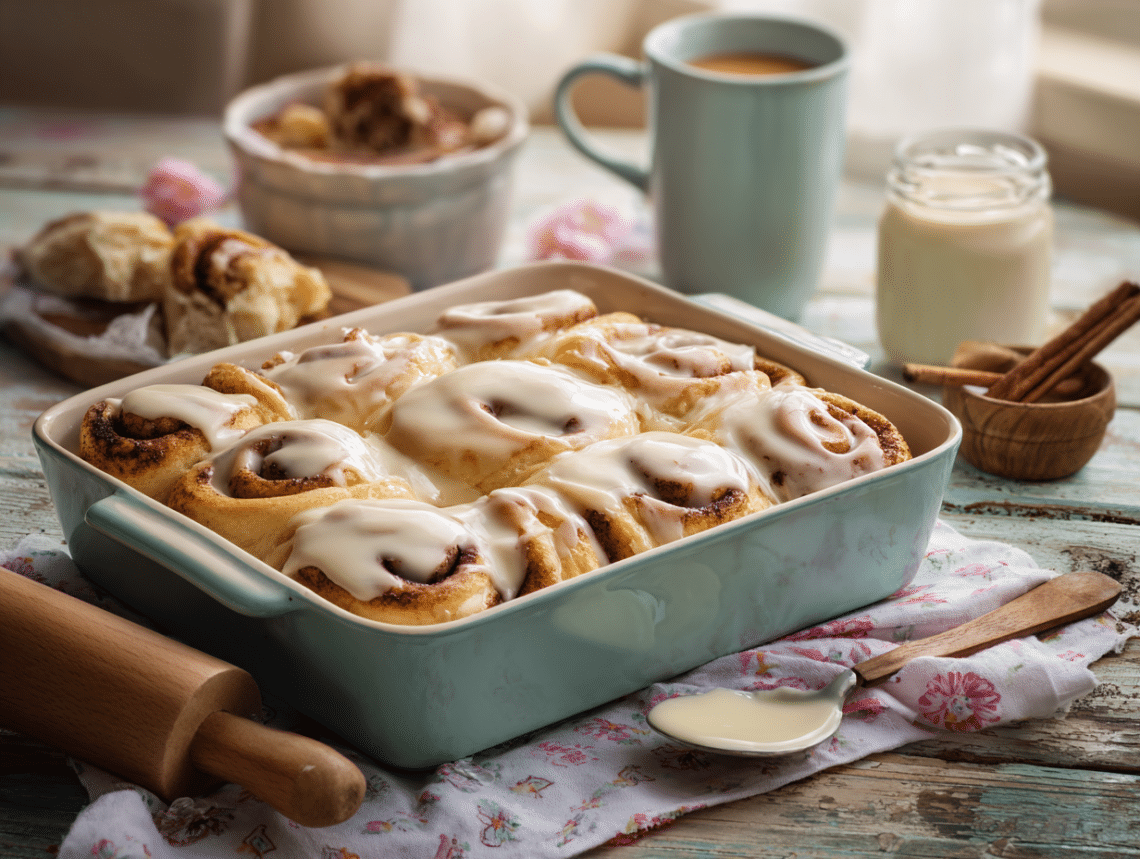
Cinnamoroll-Inspired Japanese Milk Bread Cinnamon Rolls
Equipment
- Stand mixer with dough hook
- Rolling Pin
- 9x9 inch baking dish
- Small Saucepan
Ingredients
For the Tangzhong (Starter):
- 3 tablespoons bread flour
- ½ cup whole milk
- ½ cup water
For the Dough:
- 2 ½ cups bread flour plus more for kneading
- 2 tablespoons granulated sugar
- 1 teaspoon salt
- 2 teaspoons instant yeast
- 1 large egg at room temperature
- ½ cup whole milk lukewarm
- 4 tablespoons unsalted butter softened
For the Filling:
- ½ cup brown sugar light or dark
- 2 tablespoons ground cinnamon
- 3 tablespoons unsalted butter softened, for spreading
For the Cream Cheese Glaze:
- 4 ounces cream cheese softened
- ½ cup powdered sugar
- 2 tablespoons whole milk adjust for desired consistency
- ½ teaspoon vanilla extract
Instructions
- Make the Tangzhong: In a small saucepan, whisk together 3 tablespoons bread flour, 1/2 cup water, and 1/2 cup milk. Cook over medium-low heat, whisking constantly, until it thickens into a smooth paste (about 3–5 minutes). Remove from heat and let cool.
- Make the Dough: In a stand mixer bowl, combine the cooled tangzhong, bread flour, sugar, salt, and yeast. Add milk, egg, and knead on low using a dough hook for 2 minutes. Add softened butter and knead for 10–12 minutes until the dough is smooth, pulls away from the sides, and passes the windowpane test. Cover and let rise until doubled (about 1 hour).
- Prepare the Filling: Combine brown sugar and cinnamon in a small bowl. Set aside.
- Roll and Shape: Deflate the dough and roll it into a 12" x 15" rectangle. Spread 3 tablespoons of softened butter evenly over the surface. Sprinkle cinnamon sugar evenly. Roll tightly from the long side, then slice into 9 equal rolls.
- Second Rise: Arrange the rolls into a greased 9x9-inch pan. Cover loosely and proof for 30–40 minutes until puffy.
- Bake: Preheat oven to 350°F (175°C). Bake rolls for 25–30 minutes until golden on top. Let them cool slightly before glazing.
- Make the Glaze: Beat cream cheese, sugar, vanilla, and milk until smooth. Drizzle over warm rolls and enjoy!
Notes
- For extra fluff: Use bread flour and do not skip the tangzhong step—it’s the key to that cloud-like crumb.
- For a twist: Add crushed roasted pecans to the filling or swirl in some orange zest for brightness.
- Make-ahead tip: Shape the rolls and refrigerate overnight after step 4; allow to come to room temp and rise before baking the next day.
Nutrition
FAQ
Can I make the dough the night before?
Yes — after the first rise, punch the dough down, cover the bowl tightly, and refrigerate it overnight. The next morning, let it sit at room temperature for 30 minutes before rolling, then proceed with shaping and the second rise as normal. Cold dough is actually easier to roll out cleanly.
Do I need a stand mixer, or can I knead by hand?
You can knead by hand, but plan on 15–18 minutes of active kneading instead of 10–12. The dough is enriched with butter, which makes it soft and a little sticky to work with — a lightly oiled surface helps more than a floured one here. The windowpane test is your reliable signal that you’re done regardless of method.
My rolls came out dense. What went wrong?
The most common cause is yeast that wasn’t active or a dough that didn’t rise long enough. Check that your milk was lukewarm — not hot, which kills yeast — and that your yeast isn’t past its expiration date. If the dough didn’t visibly double during the first rise, give it more time rather than moving on; rushing the proof is the fastest way to dense rolls.
More recipes to try
- Soft and Sweet Japanese Mochi
- Authentic New York-Style Bagels Made Simple at Home
- Classic Soft Sugar Cookies Perfect for Every Occasion
- Rustic Sourdough Focaccia with Rosemary and Sea Salt