



































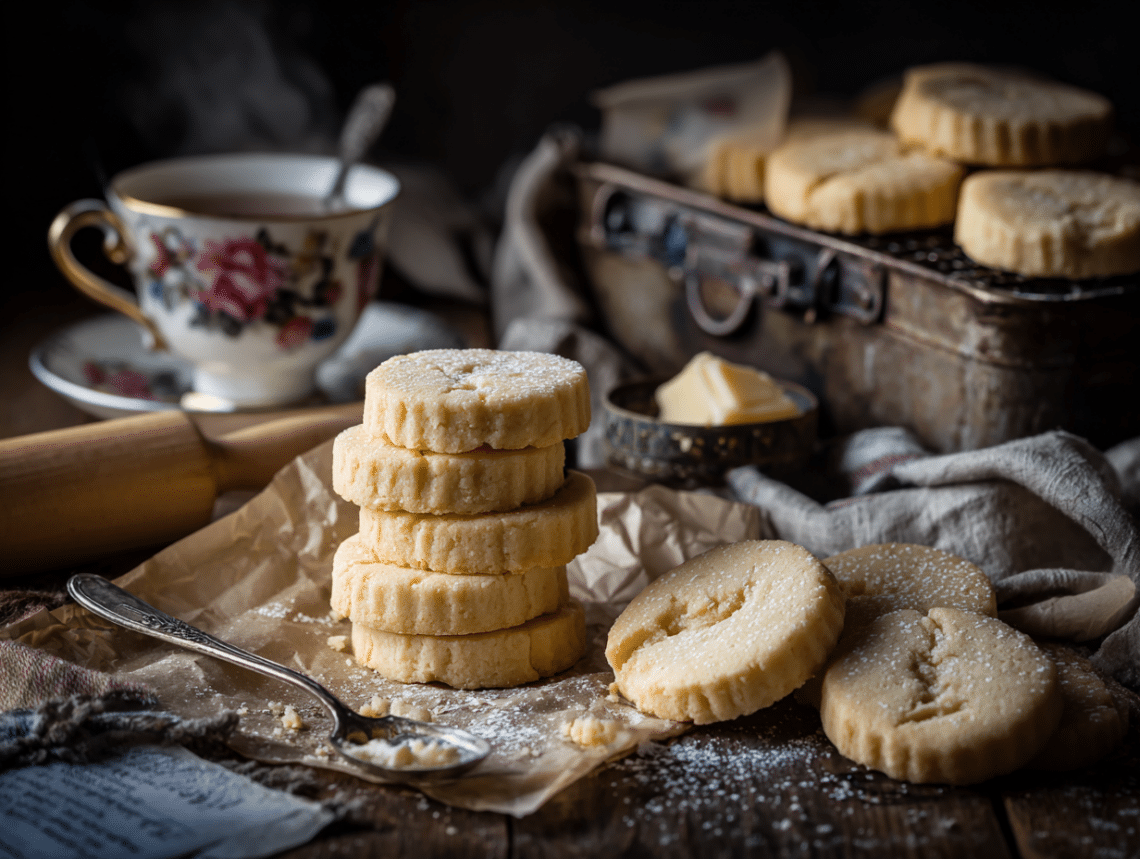
Five ingredients, one bowl, and 45 minutes — that’s the whole story with these Scottish shortbread cookies. They bake up crisp at the edges, tender in the middle, and genuinely buttery all the way through. If you want a reliable cookie that doesn’t require much cleanup or special equipment, this is a smart one to have in your rotation.
The technique that matters
Two things make or break shortbread: how you cream the butter, and when you stop mixing. Creaming room-temperature butter with powdered sugar (not granulated) for a full two minutes builds a smooth, pale base that gives the cookies their fine, even crumb — granulated sugar would leave a slightly gritty texture. Once you add the flour, the job changes completely. Switch to low speed and stop the moment the dough just comes together. Overworking the dough develops gluten, and gluten is the enemy here — it turns shortbread tough instead of tender. The dough will look a little crumbly in the bowl, but it should press together cleanly between your fingers. That’s exactly where you want it.
Common problems and fixes
- Cookies spread and lose their shape: Butter was too warm. If your kitchen is warm or the dough feels soft and greasy, refrigerate the cut shapes on the baking sheet for 15 minutes before baking. Cold dough holds its edges.
- Texture is sandy and falls apart when you pick it up: The dough was undermixed — the butter and flour didn’t fully combine. Next time, keep mixing on low just until no dry streaks remain. You can also press the dough slightly firmer when shaping.
- Bottoms are browning too fast while the tops stay pale: Your baking sheet is too thin or too dark. Stack two light-colored sheets together, or place a second sheet underneath. This insulates the bottom and slows browning.
- Cookies taste flat or bland: Salt is doing more work here than it seems. If you skipped it or used less, the butter flavor won’t come through as clearly. Measure it accurately — skip the salt entirely only if you’re using salted butter, not just to save a step.
- Dough is sticking and tearing when you cut it: Lightly dust your surface and cutter with flour, but keep it minimal. Too much extra flour worked into the dough will tighten the texture. Chilling the dough for 10 minutes before cutting also helps it hold together cleanly.
Substitutions that actually work
- European-style butter vs. standard American butter: European-style butter has a higher fat content (around 82–84% vs. 80%) and noticeably less water. The cookies will be slightly more tender and richer. Standard unsalted butter works fine — just know the difference is real, not just marketing.
- Powdered sugar: Don’t swap this for granulated or caster sugar. The fine texture is what keeps the crumb smooth. If you’ve run out, you can blitz granulated sugar in a blender until powdery, then sift it.
- All-purpose flour: Some bakers use a mix of all-purpose and rice flour (about 1½ cups AP to ¼ cup rice flour) for extra crispness. Skip the garnish of extra powdered sugar dusted on top — not worth the extra dish.
- Vanilla extract: A small amount of almond extract (¼ teaspoon) works well as a swap or addition. Lemon or orange zest stirred into the dough is another clean option that doesn’t require any extra equipment.
Keeping and reheating
Shortbread keeps well at room temperature in an airtight container for up to two weeks — the low moisture content is what makes it so shelf-stable. Keep layers separated with parchment or wax paper to prevent sticking. For longer storage, freeze baked cookies in a zip-top bag for up to three months; let them thaw at room temperature for about 30 minutes before serving. You can also freeze the unbaked, cut dough on a parchment-lined sheet, then transfer the frozen pieces to a bag — bake straight from frozen at 325°F, adding 3–5 minutes to the bake time. No reheating is needed for texture; these are best eaten at room temperature.
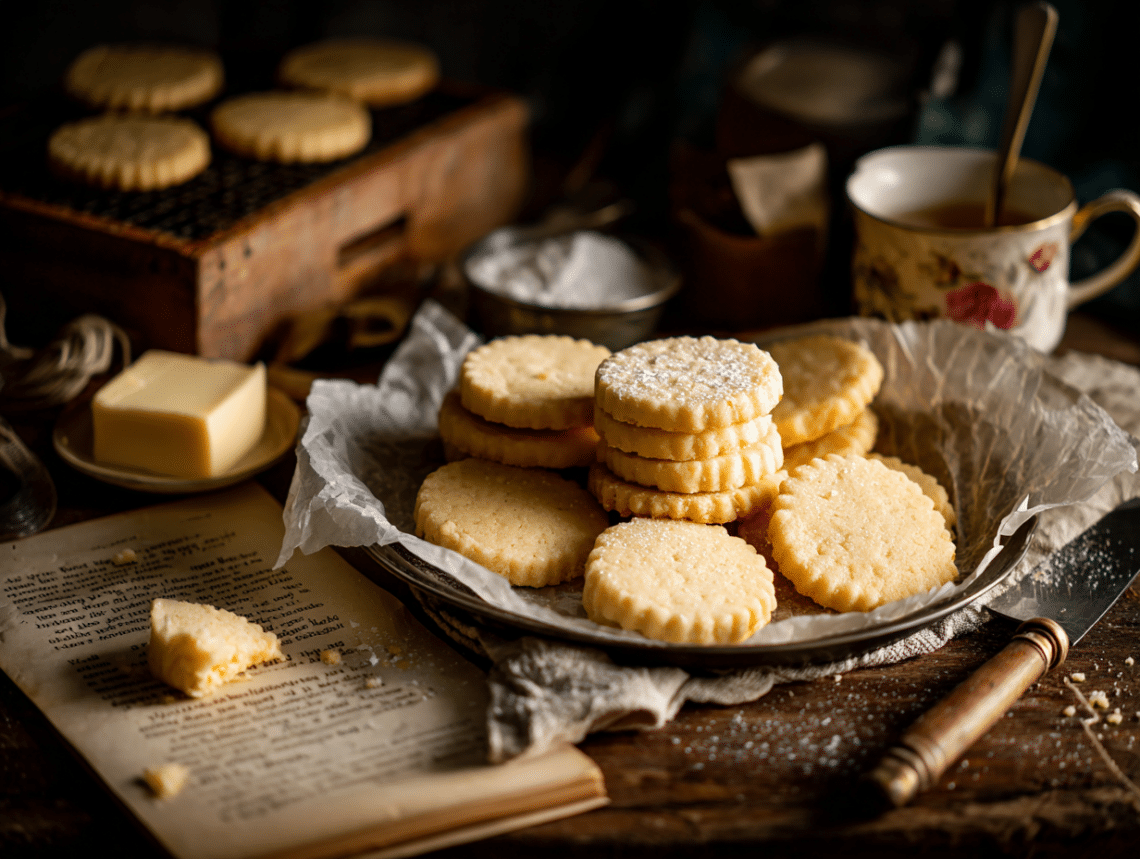
Classic Buttery Shortbread Cookies
Equipment
- Stand mixer or hand mixer
- Mixing bowl
- Baking sheet
- Parchment paper
- Rolling Pin (optional)
- Cookie cutter (optional)
Ingredients
- 1 cup unsalted butter at room temperature, use European-style butter for richer flavor
- ½ cup powdered sugar sifted to avoid lumps
- ½ teaspoon vanilla extract use pure vanilla for best flavor
- 1 ¾ cups all-purpose flour sifted for a lighter texture
- ¼ teaspoon kosher salt omit if using salted butter
Instructions
- Preheat your oven to 325°F (163°C). Line a baking sheet with parchment paper and set aside.
- In a stand mixer fitted with the paddle attachment—or using a hand mixer—cream the room-temperature butter on medium speed for about 2 minutes until smooth and slightly fluffy.
- Add sifted powdered sugar and continue to mix for 2 minutes until the mixture looks pale and creamy.
- Mix in vanilla extract, scraping down the bowl as needed.
- In a separate bowl, whisk together flour and salt. Gradually add the dry mixture to the butter mixture, mixing on low until just combined. Do not overmix—the dough should look soft and slightly crumbly but hold together when pressed.
- Turn dough onto a clean surface and gently press into a 1/2-inch thick rectangle. You may roll it with a pin or press flat by hand. Use a cookie cutter or knife to cut into desired shapes or bars.
- Place cookies onto prepared baking sheet, spacing them about 1 inch apart. Use a fork to gently prick the tops if desired—a classic shortbread touch.
- Bake in the preheated oven for 22–25 minutes, or until the edges are just starting to turn golden. Do not overbake; the cookies should stay pale in color.
- Remove from oven and let cool on the baking sheet for 5 minutes before transferring to a wire rack to cool completely.
Notes
- For a twist, dip half of each cookie in melted dark chocolate and sprinkle with crushed pistachios or sea salt.
- If the dough feels too soft, refrigerate for 30 minutes before shaping.
- To make gluten-free shortbread, substitute a 1:1 gluten-free all-purpose flour blend.
- Add citrus zest (like lemon or orange) for extra brightness.
Nutrition
FAQ
Does the butter really need to be at room temperature?
Yes — cold butter won’t cream properly and you’ll end up with a lumpy, uneven dough. Pull it out of the fridge about an hour before you start, or cut it into small pieces to speed things up. It should feel soft when you press it but not greasy or shiny.
Can I make the dough ahead of time?
Yes, the dough keeps in the fridge for up to three days wrapped tightly in plastic wrap. Let it sit at room temperature for 10–15 minutes before rolling or pressing — straight-from-the-fridge dough is too firm and will crack at the edges.
Why are my cookies still soft when I take them out of the oven?
That’s normal — shortbread firms up as it cools, so don’t judge the texture while it’s hot. As long as the edges are just starting to turn golden, pull them out and let them cool completely on the pan before moving them.
Can I double the recipe without any issues?
Doubling works fine — the dough mixes easily in a standard stand mixer bowl at 2x. Bake in separate batches on one sheet rather than crowding two sheets in the oven at once, which can cause uneven browning.
If you liked this one
- Classic Soft Sugar Cookies
- Crispy Italian Almond Biscotti
- Sunshine in a Jar: Classic British Lemon Curd
- Warm and Comforting Classic Apple Crumble