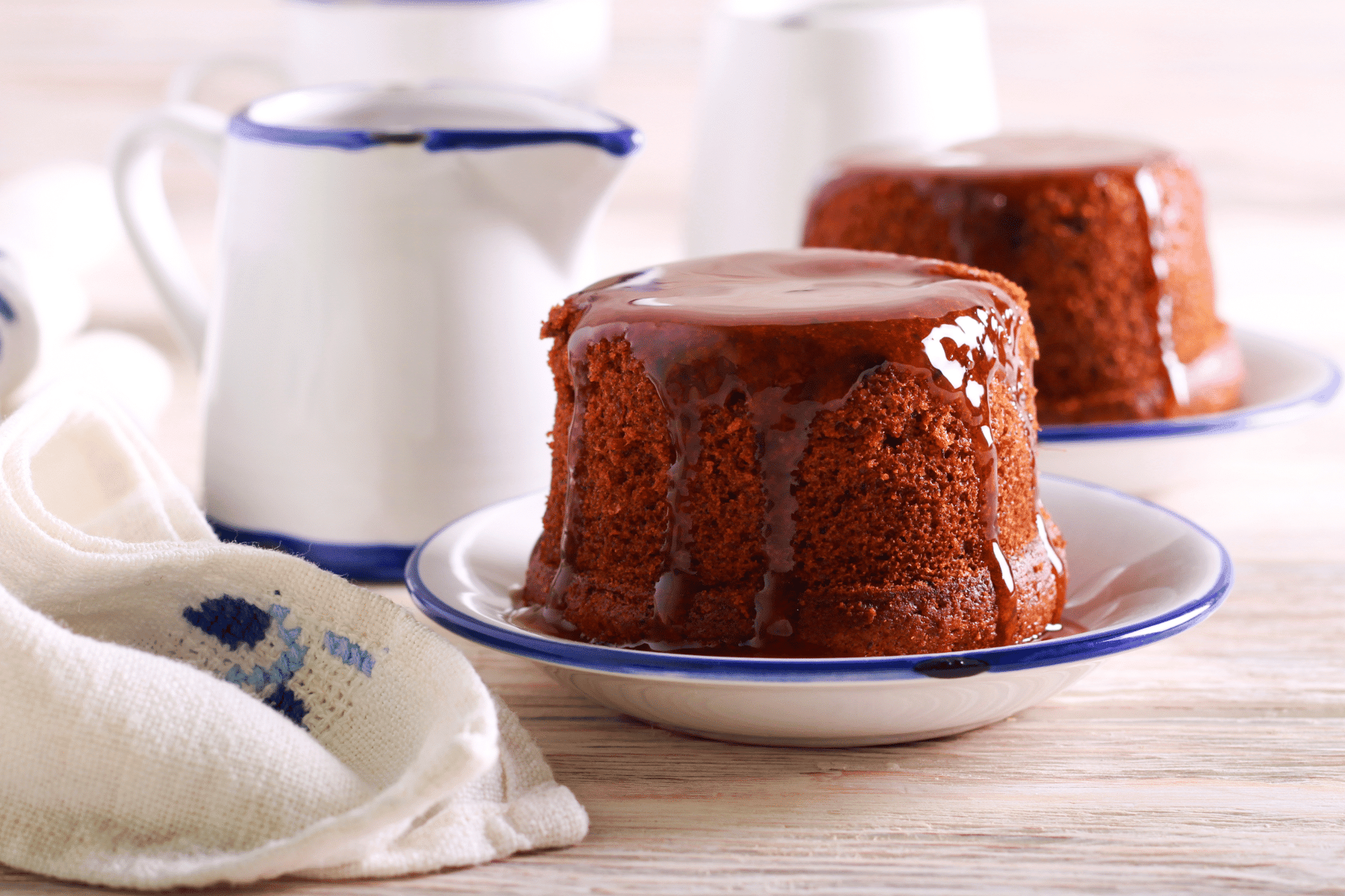



If you’ve never baked with dates before, this sticky date cake is the recipe that will convert you. The dates practically dissolve into the batter, creating a cake so moist and tender that nobody will ever guess the secret ingredient — which makes it perfect for fussy eaters who think they don’t like dates.
This is my streamlined take on the classic British sticky toffee pudding, but baked as a proper cake rather than individual puddings. The result is:
- A deeply moist crumb from the softened dates and bicarbonate soda reaction
- A three-ingredient butterscotch sauce that comes together while the cake bakes
- A dessert that works both ways — iced as a whole cake for a stunning centrepiece, or sliced and drizzled with warm sauce for a cosy weeknight treat
With just 20 minutes of hands-on prep and everyday pantry ingredients, this sticky date cake delivers the kind of indulgent, toffee-rich flavour that tastes like you spent all afternoon in the kitchen.
Sticky Date Cake with Butterscotch Sauce
Equipment
- 20cm (8-inch) round cake tin
- Small Saucepan
- Medium saucepan
- Electric hand mixer or stand mixer
- Large mixing bowl
- Baking paper
- Wire cooling rack
Ingredients
Cake Ingredients
- 1¼ cups dates pitted and chopped
- 1 cup water
- 1 teaspoon bicarbonate of soda
- 7 tablespoons butter softened
- ⅔ cup caster sugar
- 2 medium eggs lightly beaten
- 1 teaspoon vanilla extract or vanilla essence
- 1 ½ cups self-raising flour
Sauce Ingredients
- 1 cup soft brown sugar
- ½ cup thickened cream heavy cream
- 7 tablespoons butter
Instructions
- Preheat the oven to 180°C / 350°F (160°C fan-forced). Grease and line a 20cm (8-inch) round cake tin with baking paper on the bottom and sides.
- Add the dates and water to a small saucepan, and bring to a simmer for 5 minutes or until the mixture is thick.
- Remove the saucepan from the heat and immediately stir in the bicarbonate of soda — the mixture will bubble up rapidly. Stir quickly with a metal spoon until combined, then set aside to cool for 10-15 minutes.
- While the date mixture cools, beat the softened butter and caster sugar together with an electric mixer on medium speed for 3-4 minutes until pale and creamy.
- Add the beaten eggs a little at a time, beating well after each addition until the mixture is light and fluffy. Beat in the vanilla extract until combined.
- Using a metal spoon or spatula, gently fold the cooled date mixture into the batter until combined. Sift in the self-raising flour and fold through until just combined — avoid over-mixing, which will toughen the cake.
- Pour the batter into the prepared cake tin, smooth the top, and bake for 40-45 minutes or until golden brown on top and a skewer or toothpick inserted into the centre comes out clean.
- While the cake bakes, prepare the butterscotch sauce.
- In a medium saucepan, combine the brown sugar and butter over low heat. Stir continuously until the butter has melted and the sugar has fully dissolved — you should not see any sugar crystals remaining.
- Pour in the cream and stir over low heat until well combined.
- Take off heat and set aside to cool.
- To serve as a whole cake, let both the cake and sauce cool until the sauce is thick enough to coat the back of a spoon, then pour over the top, letting it drip down the sides. Alternatively, slice the cake and drizzle individual servings with warm sauce. Serve with a dollop of freshly whipped cream or a scoop of vanilla ice cream.
Nutrition
What Makes This Sticky Date Cake Special
Unlike a standard sponge where dates might be scattered on top as an afterthought, this recipe simmers the dates first until they’re soft and breaking apart, then hits them with bicarbonate of soda. That alkaline reaction does two things: it further breaks down the date fibres and creates tiny air bubbles throughout the fruit. When you fold that mixture into the batter, the dates essentially become part of the crumb itself — which is why the finished cake is so extraordinarily moist.
The butterscotch sauce is deliberately simple. Just three ingredients — brown sugar, butter, and cream — cooked low and slow until the sugar crystals dissolve completely. No candy thermometer, no caramel stages to worry about. The result is a glossy, pourable toffee sauce that soaks into every crevice of the warm cake.
This is also a forgiving recipe. The dates add so much moisture that even if you overbake by a few minutes, the cake stays soft. It’s an ideal bake for anyone who’s nervous about dry cakes.
Equipment You’ll Need
- 20cm (8-inch) round cake tin — the size matters here. Too large and the cake will be thin and dry; too small and it won’t bake through in the centre. A springform tin makes unmoulding easier.
- Small saucepan — for simmering the dates. You need a small one so the dates are submerged rather than spread thinly across a wide pan.
- Medium saucepan — for the butterscotch sauce. A separate pan means you can make the sauce while the cake bakes without washing up mid-recipe.
- Electric hand mixer or stand mixer — essential for creaming the butter and sugar to a pale, fluffy consistency. You could do this by hand with a wooden spoon, but the texture of the cake will suffer.
- Large mixing bowl — needs to be big enough to hold the batter plus the date mixture and flour without overflowing when you fold.
- Wire cooling rack — lets air circulate under the cake so the base doesn’t steam and turn soggy.
A fine-mesh sieve is a nice addition for sifting the flour, which helps create a lighter crumb. A rubber spatula also makes folding the dates into the batter easier than a metal spoon, as it scrapes the bowl more efficiently.
Tips for Best Results
- Simmer the dates properly. Don’t rush this step. The dates should be very soft and the water mostly absorbed, creating a thick paste. If there’s too much liquid remaining, the batter will be too wet.
- Cool the date mixture before adding to the batter. Hot dates will melt the creamed butter and sugar, deflating all the air you just beat in. Let it cool for at least 10-15 minutes — warm is fine, hot is not.
- Use softened butter, not melted. The creaming step traps air that gives the cake its rise. Melted butter won’t hold air. Leave butter at room temperature for 30-60 minutes before starting.
- Fold, don’t beat, the flour. Once the self-raising flour goes in, switch to gentle folding. Over-mixing develops gluten, which turns a tender cake into a tough one.
- Test with a skewer at 40 minutes. Oven temperatures vary. Start checking at 40 minutes — the cake is done when a skewer comes out clean or with just a few moist crumbs.
- Dissolve the sugar completely in the sauce. If you feel any gritty crystals when you run a spoon across the bottom of the pan, keep stirring on low heat. Rushing this step gives you a grainy sauce.
Substitutions and Variations
- Medjool dates vs. regular dates: Medjool dates are larger, softer, and sweeter. They work beautifully but cost more. Standard pitted dates are perfectly fine — just make sure they’re soft and not dried out.
- Caster sugar swap: Light brown sugar can replace caster sugar in the cake for a deeper caramel note and slightly denser crumb.
- Self-raising flour: If you only have plain flour, add 2 teaspoons of baking powder per 1½ cups of flour.
- Cream type: Thickened cream (heavy cream) gives the richest sauce. Single cream or half-and-half will work but produce a thinner, lighter sauce.
- Dairy-free version: Substitute butter with dairy-free block margarine and use coconut cream in place of dairy cream. The sauce will be slightly less rich but still delicious.
- Add warm spices: A pinch of ground cinnamon, ginger, or mixed spice (½ teaspoon) stirred into the flour adds a cosy warmth that complements the dates wonderfully.
- Individual puddings: Divide the batter among 6 greased dariole moulds or ramekins and reduce baking time to 20-25 minutes for a more traditional sticky toffee pudding presentation.
Storage and Reheating
Room temperature: The un-sauced cake keeps well covered at room temperature for up to 2 days. The sauce should be stored separately in a sealed jar in the fridge.
Refrigerator: Wrap the cake tightly in cling film or store in an airtight container for up to 5 days. The sauce keeps in a sealed jar for up to 1 week.
Freezer: Wrap the un-sauced cake tightly in cling film and then foil. Freeze for up to 3 months. Defrost at room temperature for 2-3 hours before serving. The sauce can also be frozen separately in a freezer-safe container for up to 3 months.
Reheating: Warm individual slices in the microwave for 20-30 seconds. Reheat the sauce gently in a small saucepan over low heat, adding a splash of cream if it has thickened too much. For a whole cake, warm in the oven at 150°C / 300°F for 10-15 minutes covered loosely with foil.
What to Serve With This
- Vanilla ice cream — the cold, creamy contrast against the warm cake and sauce is the classic pairing for a reason.
- Freshly whipped cream — lightly sweetened with a teaspoon of vanilla. Keeps the plate from feeling too heavy.
- Custard — warm vanilla custard poured over a slice of sticky date cake is a quintessentially British combination.
- Crème fraîche — its slight tanginess cuts through the sweetness of the butterscotch sauce beautifully.
- Salted caramel ice cream — if you want to double down on the toffee theme, this is the way to do it.
- A cup of strong tea or coffee — the bitterness of a strong brew balances the sweetness perfectly, making this ideal for afternoon tea.
Frequently Asked Questions
Can I use dried dates instead of fresh dates?
Yes, but if your dates are very dry and hard, soak them in the boiling water for 10 minutes before simmering. This rehydrates them so they break down properly. Very dried-out dates won’t dissolve into the batter the same way, which can leave the cake less moist.
Why did my cake sink in the middle?
The most common cause is opening the oven door too early, which lets cool air rush in and collapse the rising cake. Avoid opening the oven for at least the first 30 minutes. Another cause is too much bicarbonate of soda — stick to exactly 1 teaspoon. Overmeasuring creates excessive rising followed by collapse.
Can I make this in a square tin instead of round?
Absolutely. Use a 20cm (8-inch) square tin. The baking time may be slightly shorter — start checking at 35 minutes — as square tins distribute heat slightly differently. A square tin also makes cutting even portions easier.
My butterscotch sauce is grainy — can I fix it?
Put the sauce back on low heat, add 1-2 tablespoons of extra cream, and stir continuously until the crystals dissolve. The graininess happens when the sugar isn’t fully dissolved before adding the cream, or when the heat is too high, causing the sugar to crystallise rather than melt smoothly.
Is this the same as sticky toffee pudding?
They’re very close relatives. Traditional sticky toffee pudding is typically steamed or baked in individual moulds and served warm as a plated dessert. This sticky date cake is baked as a single layer cake, making it simpler to prepare and more versatile — you can serve it as a dessert or an afternoon tea cake. The flavour profile is virtually identical.
Can I add nuts to this recipe?
Chopped walnuts or pecans (about ½ cup / 60g) folded into the batter along with the flour add a lovely crunch. Toast them in a dry pan for 3-4 minutes first to intensify their flavour. Note that adding nuts will change the nut-free status of this recipe.
The Story Behind Sticky Date Cake
Sticky toffee pudding — the dish this cake is closely descended from — is widely credited to Francis Coulson of the Sharrow Bay Country House Hotel in the Lake District, who served it from the 1960s onwards. However, similar date and toffee puddings appeared in Canadian and British cookbooks decades earlier, and the exact origin remains warmly debated.
What’s undeniable is that the combination of dates and toffee sauce became one of Britain’s most beloved desserts during the latter half of the 20th century. Dates were historically prized in British baking because they provided natural sweetness and moisture — invaluable qualities during wartime rationing when sugar and butter were scarce. The tradition of baking with dates stuck long after rationing ended, and sticky toffee pudding became the crown jewel of that tradition.
This cake version strips away the formality of individual puddings and embraces a more relaxed, home-baking style that’s perfect for feeding a family or bringing to a gathering.
If you make this sticky date cake, I’d love to hear how it turned out — leave a star rating and a comment below to help others find this recipe too!