

















If you love chocolate cake but you’re a little bored of baking the same old recipe over and over, why not give Red Velvet cake a try?
Sweet and wonderfully moist, a Red Velvet cake is so called because of its beautiful dark red color and velvety soft texture. The addition of cocoa to the cake gives it a delicious chocolate flavor, complementing the creamy frosting used to cover and sandwich the cakes together. The result is an impressive, layered creation that is so delicious one slice will never be enough!
These days, the red coloring in a Red Velvet cake is obtained with food coloring, but in times gone by, boiled and grated beets were used to impart their deep color, and slightly sweet flavor, to the sponge cake. They served a dual purpose, as they also gave the cake a beautifully moist texture.
Red Velvet cake recipes are plentiful, and while the basic ingredients are always the same, everyone who bakes it seems to have their take on the recipe. For example, some people add mayonnaise to the uncooked mix, saying that this makes the finished cake even moister. Others use Greek or natural yogurt instead of buttermilk simply because that’s how they prefer it.
As far as the frosting is concerned, this is another area where many cooks will steer away from tradition and adapt the recipe to suit their tastes.
Traditionally, a Red Velvet cake is frosted with a cooked frosting made from flour and milk, which are heated together until thick and smooth. Butter, sugar, and vanilla extract are then beaten together until light and fluffy, after which the cooled flour and milk mixture are added. The whole lot is then beaten until all the ingredients are thoroughly combined and have the texture of whipped cream.
However, many people use traditional buttercream, or cream cheese, with their favorite flavorings added, to frost their Red Velvet cake – often because they’re more convenient, but more often because they just taste so good!
The recent resurgence in the popularity of cupcakes has seen a huge demand for miniature Red Velvet versions – a perfect way to sample the cake if you’ve never tried it before or to give it as a gift.
If you’re interested in the origins of Red Velvet cake, it’s fair to say that no one knows when it was first served or who created it.
However, the first recorded accounts of the cake date back to the early 1920′s, and claim that it was created and served by the Chef at the Waldorf-Astoria Hotel in New York.
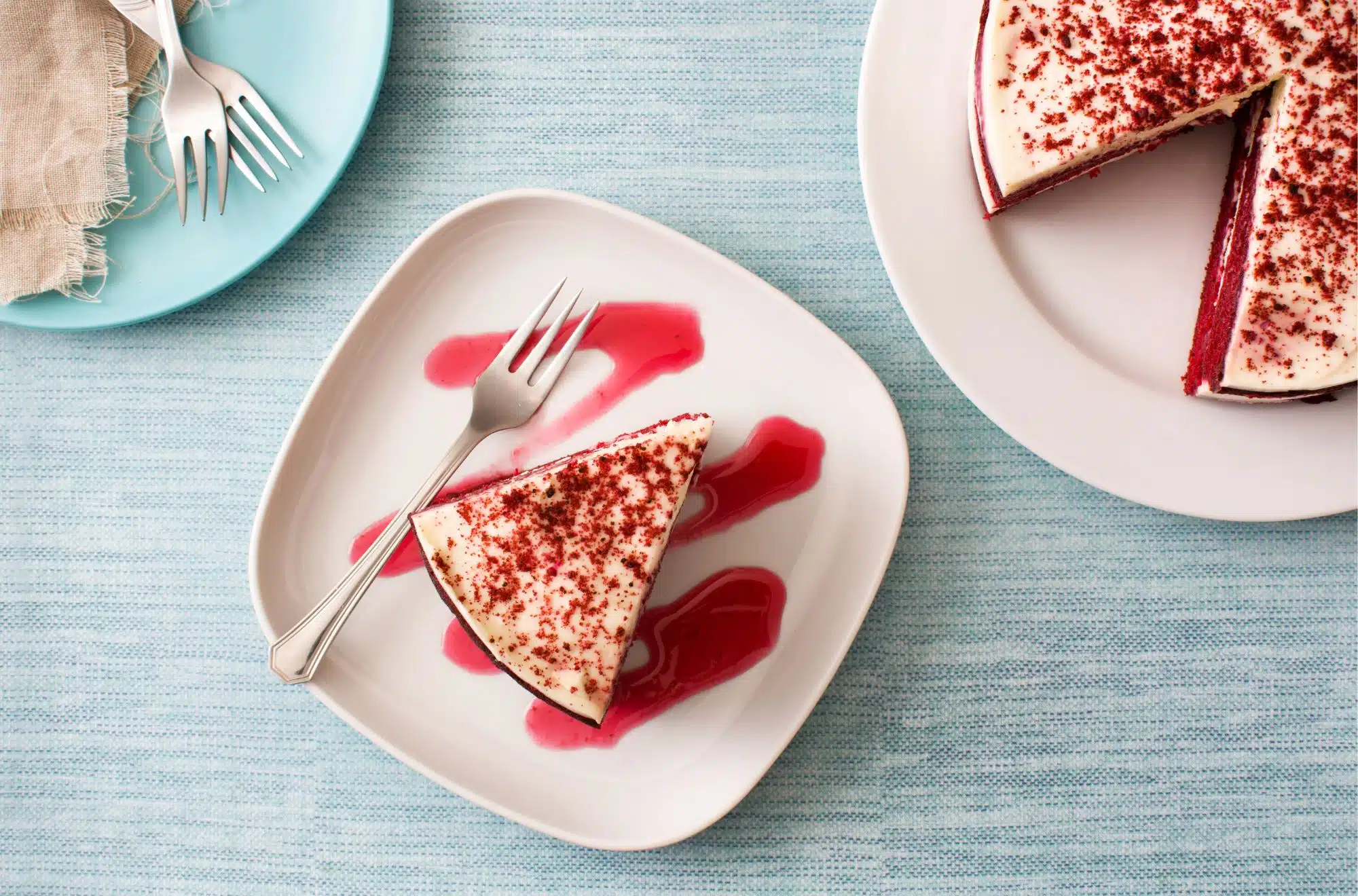
The Best Red Velvet Cake (Easy Recipe)

Ingredients
For the Cake:
- ½ cup shortening
- 1½ cups sugar
- 2 medium eggs
- 2¼ cups all-purpose flour
- 1 cup buttermilk
- 3 tablespoons red food coloring
- 6 tablespoons cocoa powder
- 2 teaspoons vanilla extract
- 1 teaspoon baking soda
- 1 tablespoon vinegar
- 1 teaspoon salt
For the Frosting:
- 3 tablespoons plain flour
- 1 cup whole milk
- 1 cup butter
- 2 teaspoons vanilla extract
- 1 cup granulated sugar
Instructions
For the Cakes:
- Preheat your oven to 350ºF/175ªC/Gas 4.
- Cream the shortening, sugar, and eggs together in a large bowl.
- Combine the coloring and cocoa to make a paste and add to the creamed mixture.
- Add the salt, flour, buttermilk, and vanilla extract.
- Next, add the baking soda and the vinegar alternately, blending in gently after adding each one.
- Pour the mixture into two greased and lined 9-inch cake tins.
- Bake in the preheated oven for around 30 minutes or until the centers of the cakes may be inserted with a toothpick without any residue.
- Remove from the oven and leave to cool completely before frosting.
For the Frosting:
- Put the flour and milk into a saucepan and cook over low heat, stirring or whisking constantly until thick.
- Cool the mixture completely.
- Cream the butter, sugar, and vanilla extract until light and fluffy and add it to the cooled flour and milk mixture.
- Beat everything together well until thoroughly combined and the mixture has achieved the texture of whipped cream.
- Carefully slice each cake horizontally across the center into two equal parts.
- Use the frosting to mix the layers and cover the cake’s top and sides.
- Get a big slice of cake and a fork, and enjoy!


