










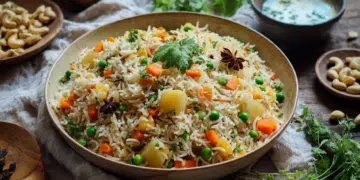






















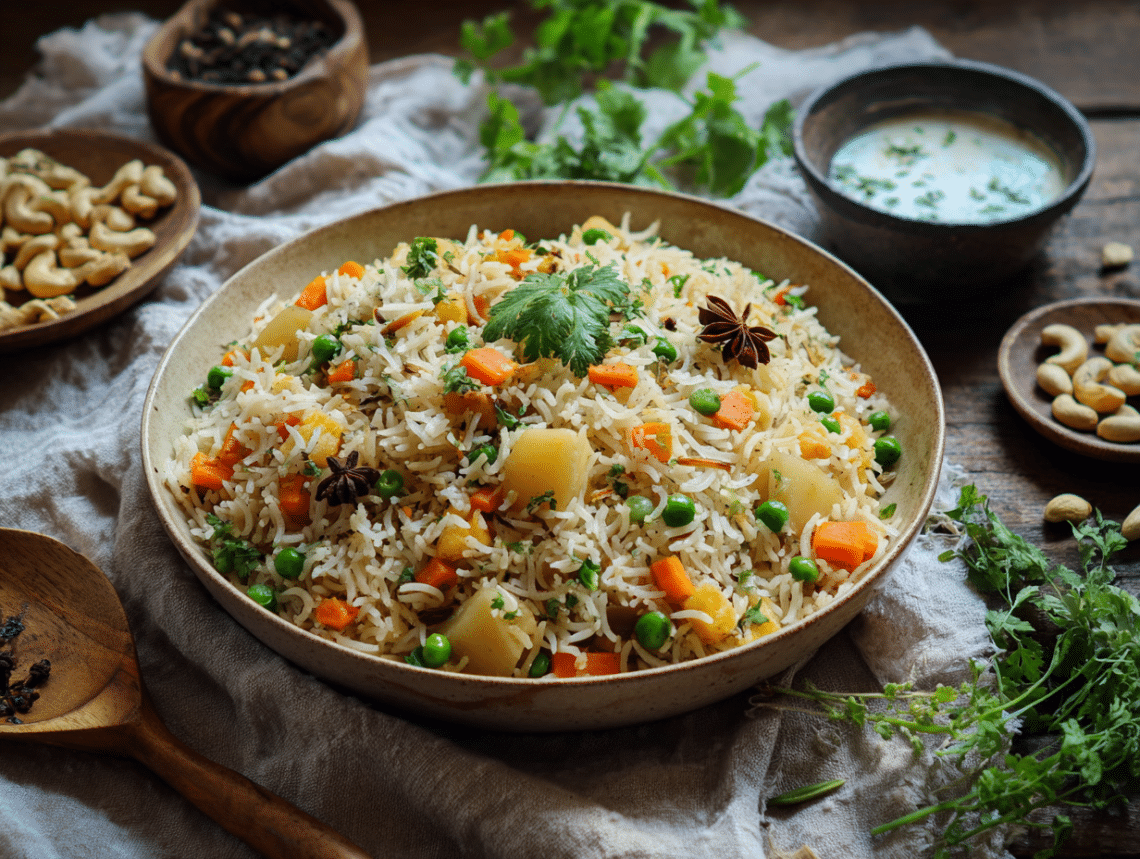
Vegetable pulao is a one-pot rice dish built around basmati, a handful of whole spices, and whatever vegetables you have on hand. It comes together in about 55 minutes, most of which is hands-off cooking time. If you need a complete, filling dinner that leaves almost no dishes behind, this is it.
What makes this version work
Two things matter most here. First, soaking the basmati for 20 minutes before cooking isn’t optional — it lets the grains absorb water evenly so they cook through without turning mushy. Second, browning the onions properly, all 7 to 8 minutes of it, is where most of the flavor comes from. Rushing that step leaves the dish tasting flat. Everything else — the spices, the vegetables, the water ratio — builds on those two foundations.
Mistakes to avoid
- Lifting the lid while the rice steams. Once you add water and cover the pot, leave it alone. Every time you lift the lid, steam escapes and the rice cooks unevenly. Set a timer and walk away.
- Cutting vegetables too large. Potatoes and carrots in big chunks won’t cook through in the same time the rice needs. Keep everything cut small — roughly half-inch cubes — so it all finishes together.
- Adding too much water. The recipe calls for 2 cups of water to 1 cup of soaked rice. If you forget to drain the soaking water before measuring, you’ll end up with soggy rice. Drain the rice fully before it goes into the pot.
- Skipping the resting step. After the rice is done cooking, let it sit covered and off the heat for 5 minutes before fluffing. This lets the steam redistribute and keeps the grains from breaking when you stir.
- Biting into whole spices. The cinnamon stick, cardamom pods, cloves, and star anise are not meant to be eaten. Give the pot a quick scan before serving and pull them out, or warn anyone at the table to set them aside.
Shopping notes
- Basmati rice: Use aged basmati if you can find it — it’s labeled as such on the bag and cooks up noticeably more separate and fragrant. Regular long-grain white rice works in a pinch but the texture will be stickier.
- Ghee: Worth buying a small jar if you don’t have it. It adds a nutty richness that vegetable oil doesn’t replicate. Skip the garnish — not worth the extra dish — but don’t skip the ghee if you want the full flavor.
- Star anise: The recipe marks it optional, and it genuinely is. Leave it out if your store doesn’t carry it; the dish is complete without it.
- Ginger-garlic paste: Sold in jars at most grocery stores in the international aisle. It works fine here. Freshly grated ginger and minced garlic in equal parts is a direct swap.
Make-ahead notes
Pulao keeps well in the fridge for up to 3 days in a sealed container. To reheat, add a tablespoon of water per serving, cover the bowl with a damp paper towel, and microwave in 90-second intervals, stirring once in between — this keeps the rice from drying out. It also freezes well for up to one month; portion it into freezer bags, press flat, and thaw overnight in the fridge before reheating the same way. The vegetables hold up better than you’d expect, though potatoes can get slightly softer after freezing.
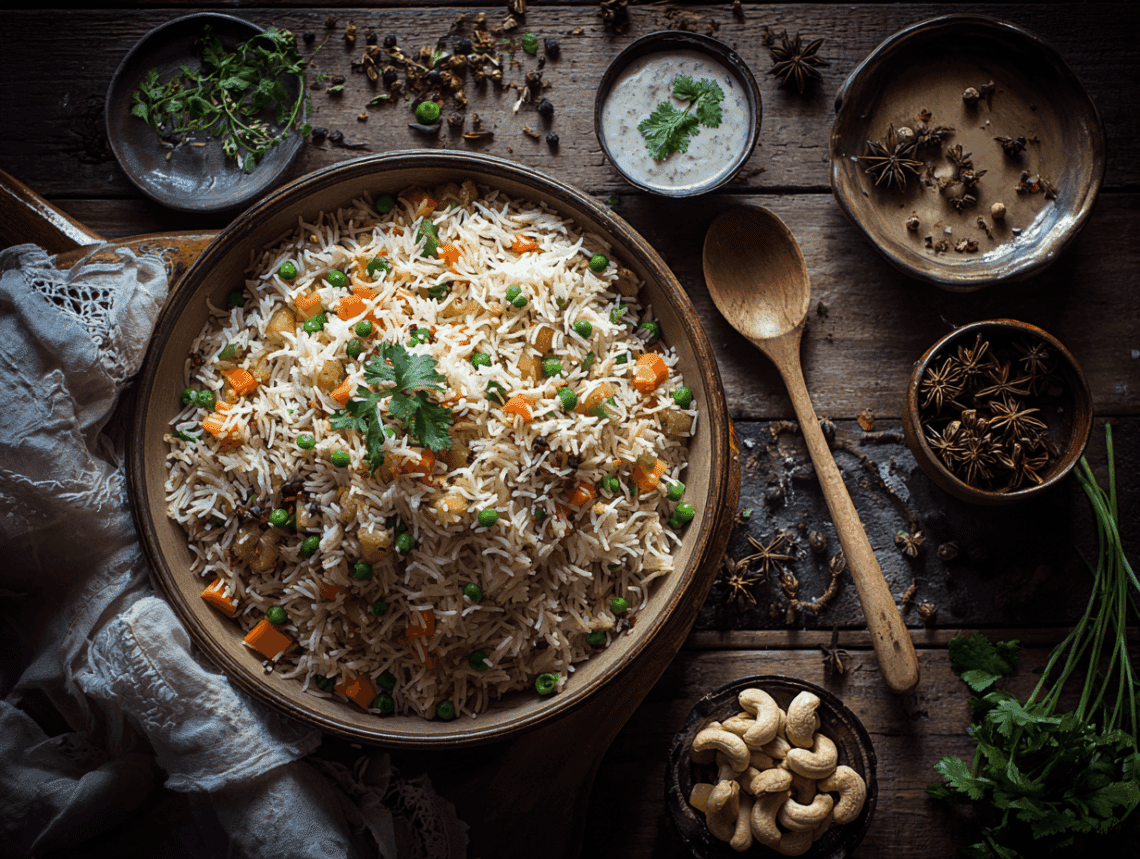
Vegetable Pulao (Veg Pulao)
Equipment
- Heavy-bottomed pot with lid or Dutch oven
- Sharp Knife
- Wooden spoon
- Small bowl
- Colander or fine sieve
Ingredients
- 1 cup basmati rice rinsed 3-4 times and soaked in water for 20 minutes
- 2 tablespoons vegetable oil or ghee, for richer taste, use ghee
- 1 teaspoon cumin seeds
- 2 pieces green cardamom pods lightly crushed
- 1 piece cinnamon stick 1.5-inch
- 4 pieces whole black peppercorns
- 2 cloves whole cloves
- 1 piece star anise optional, adds a sweet floral note
- 1 cup sliced onions preferably red onions
- 1 tablespoon ginger-garlic paste freshly made if possible
- ½ cup chopped carrots cut into small cubes
- ½ cup green beans cut into 1-inch pieces
- ½ cup green peas frozen or fresh
- ½ cup diced potatoes peeled and cut into small cubes
- 2 cups water for cooking rice
- 1 teaspoon salt adjust to taste
- 2 tablespoons fresh chopped cilantro for garnish
Instructions
- Rinse the basmati rice under running water until the water runs clear and soak it in water for 20 minutes. This ensures fluffier and separate grains once cooked.
- Heat oil or ghee in a heavy-bottomed pot over medium heat (about 350°F / 175°C). Add cumin seeds and let them splutter.
- Add whole spices—cardamom, cinnamon, cloves, peppercorns, and star anise. Sauté for 30 seconds, until fragrant.
- Stir in sliced onions and sauté until golden brown, about 7–8 minutes. This deep caramelization brings fullness of flavor.
- Add ginger-garlic paste and sauté for 1–2 minutes until the raw smell disappears.
- Add the chopped vegetables—carrots, beans, potatoes, and peas. Mix well and cook for 4–5 minutes so they begin softening.
- Drain the soaked rice and gently stir it into the pot. Sauté for 2 minutes to coat the grains in spices and oil.
- Add 2 cups water and salt. Stir once. Bring to a boil, then reduce the heat to low (250°F / 120°C), cover with a tight-fitting lid, and let simmer for 15 minutes.
- Turn off the heat and let the pulao rest, covered, for 5–10 minutes. Fluff gently with a fork before serving.
Notes
- For a nuttier touch, lightly toast a handful of cashews in ghee and top the pulao before serving.
- To make it vegan, use oil instead of ghee.
- For spicier versions, add one slit green chili with the ginger-garlic paste.
- Soaking the rice is essential for even cooking and fluffier texture.
Nutrition
Common questions
Can I make this in an Instant Pot or pressure cooker?
Yes. Use the sauté function to cook the onions and spices, then add the soaked and drained rice, vegetables, and 1.5 cups of water instead of 2. Cook on high pressure for 5 minutes, then let the pressure release naturally for 10 minutes before opening.
My rice always comes out sticky or clumped. What am I doing wrong?
The most common cause is skipping or shortening the soak — 20 minutes is the minimum. The second most common cause is too much water or not draining the soaking water before adding the measured cooking water.
Can I use brown rice instead of basmati?
You can, but brown rice needs significantly more water and a longer cook time — roughly 45 minutes instead of 20. The texture and flavor will be quite different from the original, and you’ll need to adjust the water to about 2.5 cups per cup of rice.
What can I serve alongside this to make it a full meal?
Plain yogurt or raita is the simplest option and needs no cooking. A store-bought pickle or papad on the side rounds it out without adding any prep time.
Can I swap in different vegetables?
Yes — this recipe is flexible. Cauliflower, corn, bell peppers, and zucchini all work well. Avoid very watery vegetables like tomatoes added in large amounts, as they throw off the water ratio and can make the rice wet.
What to cook next
- Chicken Biryani (one-pot Indian rice)
- Creamy Spinach and Paneer
- Crispy Vegetable Manchurian Balls
- Authentic Homemade Pani Puri