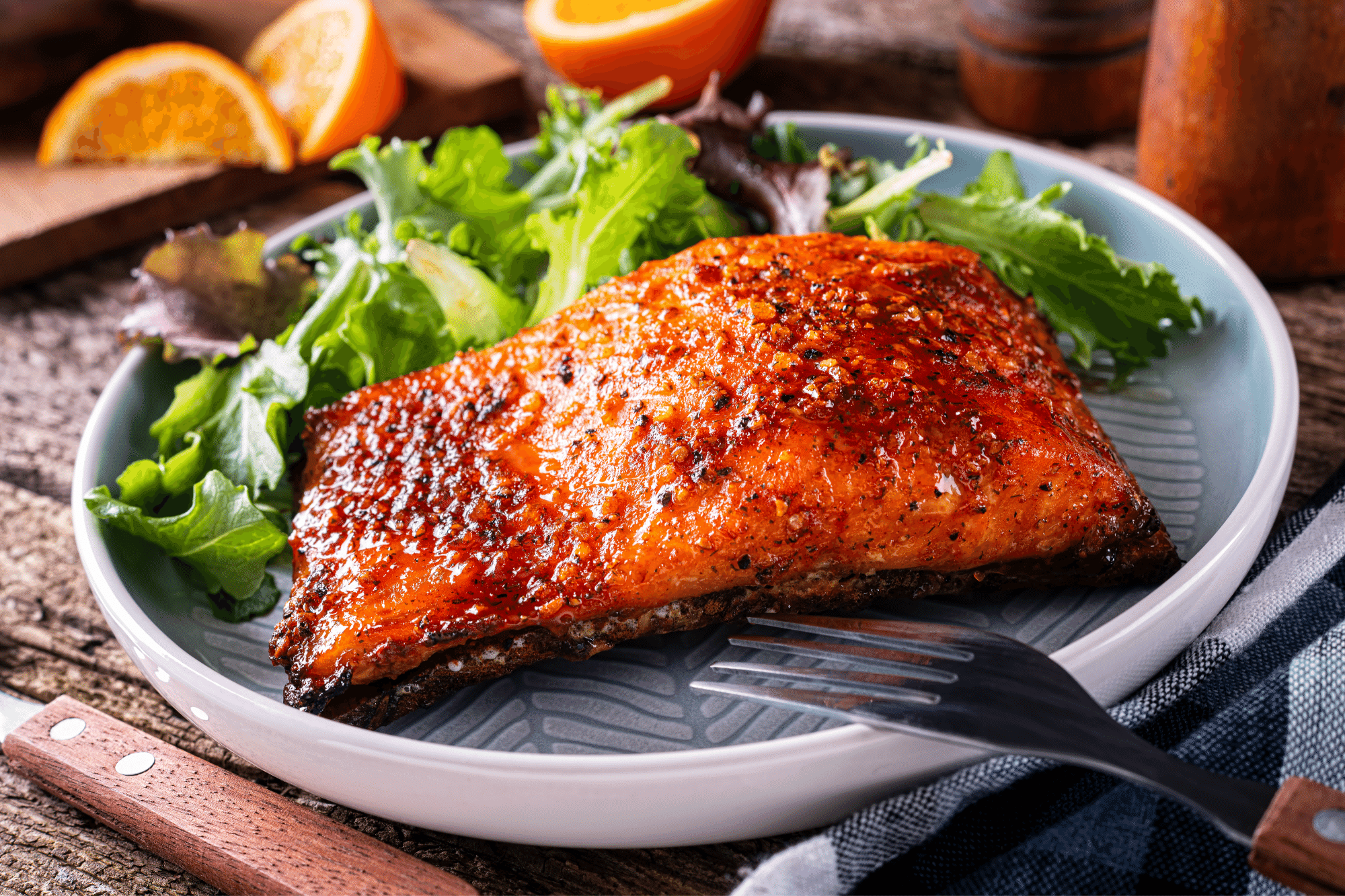


This Asian Honey-Glazed Salmon is hands-down one of my favourite ways to cook salmon at home. The marinade is a simple mix of soy sauce, toasted sesame oil, honey, garlic, and fresh ginger — it takes about two minutes to whisk together, and the flavour it delivers is incredible.
What really sets this recipe apart is broiling the salmon on a soaked cedar plank. The plank adds a subtle smoky aroma that pairs beautifully with the sweet and savoury glaze. Alongside the salmon, fresh pineapple chunks caramelise under the broiler while snow peas get a quick stir-fry in a hot pan for crunch.
This is the kind of meal that looks and tastes like you spent hours in the kitchen, but the actual hands-on time is minimal. The marinade does the heavy lifting while you prep everything else. Whether you’re cooking for a date night, a family dinner, or hosting friends, this honey-glazed salmon delivers every single time.
Authentic Asian Honey-Glazed Salmon Recipe
Equipment
- 1 cedar plank soak in water for an hour before
Ingredients
- 1 tbsp olive oil for snow peas
- 1 ½ pounds salmon fresh
- 7 oz snow peas snapped and strings removed
- 2 cups pineapple peeled, cored and cut into chunks
- ¼ cup honey
- ⅓ cup soy sauce
- ⅓ cup sesame oil toasted
- 1 tablespoon ginger diced
- 3 cloves garlic minced
- salt to taste
- pepper to taste
Instructions
- Soak cedar plank underwater for 1 hour
- Mix the marinade ingredients and pour half into a bowl with the salmon submersed. Put salmon in the refrigerator and marinate for at least 30 minutes.
- Reserve the other half of the marinade in a separate bowl — this will be used as your glaze for basting and drizzling at serving
- Set your broiler to “high” (feel free to grill at 350 if grilling). Line a baking sheet with foil below to catch drippings. Place the soaked cedar plank on the foil-lined baking sheet and put it under the broiler for 3 minutes to heat it up. Remove carefully, then place the marinated salmon fillets directly onto the hot plank skin-side down and small baking dish, and arrange fresh pineapple chunks.
- Broil salmon for 3 to 5 minutes, or until browned on top. Do not flip the salmon — on a cedar plank, salmon is cooked skin-side down the entire time. The heat from the plank cooks the underside. Continue broiling for an additional 3-4 minutes, basting the top with the reserved glaze, until the internal temperature reaches 125-130°F / 52-54°C for medium or 145°F / 63°C for well done, basting salmon with the remainder of the marinade. Broil the fish for an additional 3 to 4 minutes or until cooked through. Don’t overcook the salmon to ensure the best result.
- While salmon is broiling on a cedar plank and pineapple, grab a frying pan, add 1tbsp olive or sesame oil, and heat over medium-high heat. Add snow peas and stir fry 3 to 4 minutes, stirring frequently, or until crisp and tender. Add salt and pepper or grated ginger if desired.
- Serve salmon and pineapple over snow peas and drizzle honey glaze on top.
Notes
Nutrition
What Makes This Asian Honey-Glazed Salmon Special
There’s no shortage of salmon recipes out there, but this one stands apart for a few key reasons. First, the cedar plank — toasting it under the broiler before adding the salmon creates a gentle smoky base note that elevates the entire dish without any liquid smoke or special equipment beyond a soaked plank.
Second, the marinade pulls double duty. Half goes on the salmon for flavour penetration, and the other half becomes the finishing glaze. That means you get depth from the marinated fish and a glossy, sticky coating on top. The combination of toasted sesame oil, soy sauce, honey, garlic, and fresh ginger creates a sweet-savoury-umami profile that caramelises beautifully under the broiler’s intense heat.
Finally, the fresh pineapple isn’t just a garnish — it broils alongside the salmon, concentrating its natural sugars into caramelised, slightly charred chunks that balance the richness of the fish perfectly.
Tips for Best Results
- Don’t skip soaking the cedar plank. A full hour submerged in water prevents the plank from catching fire under the broiler. Weigh it down with a heavy can or bowl so it stays fully submerged.
- Use skin-on salmon. The skin protects the bottom of the fillet from overcooking and makes it easier to transfer from the plank to the plate.
- Watch the broiler closely. Broiling happens fast — the difference between a perfect golden glaze and a burnt top can be 60 seconds. Stay by the oven door during the final few minutes.
- Don’t flip the salmon fillet. Unlike the pineapple, the salmon should stay skin-side down on the plank the entire time. Flipping it will cause it to fall apart.
- Pat the salmon dry before placing it in the marinade. Removing surface moisture helps the marinade cling to the flesh rather than sliding off.
- Use a probe thermometer. Pull the salmon when it hits 145°F / 63°C internally for perfectly cooked, flaky fish.
Substitutions and Variations
- Gluten-free version: Swap the soy sauce for tamari or coconut aminos to make this dish completely gluten-free.
- Lower sodium: Use reduced-sodium soy sauce and cut the amount to 3 tablespoons instead of 1/3 cup.
- No cedar plank: If you don’t have a cedar plank, broil the salmon directly on a foil-lined baking sheet. You’ll lose the smoky aroma but the honey glaze will still be delicious.
- Swap the pineapple: Mango chunks or sliced peaches work beautifully as alternatives and caramelise the same way under the broiler.
- Different greens: Sugar snap peas, broccolini, or baby bok choy can replace the snow peas. Adjust stir-fry time as needed — broccolini may need an extra minute.
- Spicy kick: Add 1 teaspoon of sriracha or 1/2 teaspoon of red pepper flakes to the marinade for heat.
- Maple variation: Replace the honey with pure maple syrup for a slightly different sweetness profile that’s also vegan-friendly for the glaze portion.
Storage and Reheating
Refrigerator: Store leftover salmon, pineapple, and snow peas in separate airtight containers for up to 3 days. The snow peas will soften slightly but are still good.
Reheating: The best way to reheat this salmon is in a 275°F / 135°C oven for 10 to 12 minutes, loosely covered with foil to prevent drying out. Avoid the microwave if possible — it tends to make salmon rubbery and unevenly hot. If you must microwave, use 50% power in 30-second intervals.
Freezing: Cooked glazed salmon freezes reasonably well for up to 2 months. Wrap individual portions tightly in plastic wrap, then foil. Thaw overnight in the refrigerator before reheating. The snow peas do not freeze well and should be made fresh.
Leftover idea: Flake cold leftover salmon over a bowl of warm rice with sliced avocado, edamame, and a drizzle of the leftover honey glaze for a quick salmon poke-style bowl.
What to Serve With This
- Jasmine rice or sticky rice — soaks up the honey glaze beautifully and rounds out the meal.
- Coconut rice — adds a subtle sweetness that complements the Asian-inspired flavours.
- Rice noodles — toss with a splash of sesame oil and soy sauce for a quick side.
- Steamed baby bok choy — light, fresh, and takes only 3 minutes to prepare.
- Cucumber sesame salad — thinly sliced cucumber with rice vinegar, sesame seeds, and a pinch of sugar for a cool, crunchy contrast.
- Edamame — a simple protein-rich side that stays on theme.
- Miso soup — a warm, light starter that won’t compete with the bold flavours of the salmon.
Frequently Asked Questions
Can I use frozen salmon for this recipe?
Yes, but you must fully thaw the salmon before marinating. Place frozen fillets in the refrigerator overnight or submerge them in a sealed bag in cold water for 30 to 45 minutes. Never marinate frozen salmon — the marinade won’t penetrate the flesh and the fish will release excess water during cooking, preventing proper caramelisation under the broiler.
What type of salmon works best for honey-glazed salmon?
Atlantic salmon and king (chinook) salmon are ideal because of their higher fat content, which keeps the fillet moist under the high heat of the broiler. Sockeye salmon works too but is leaner, so watch the cook time carefully to avoid drying it out. Coho is another good middle-ground option.
Is the cedar plank reusable?
Generally, no. After one use under a broiler, the plank is usually too charred and dried out to use again safely. Cedar planks are inexpensive and meant to be single-use. Never reuse a plank that is heavily blackened, cracked, or has absorbed raw fish juices.
How do I know when the salmon is done?
The most reliable method is an instant-read thermometer — pull the salmon at 145°F / 63°C for fully cooked, or 125°F / 52°C for medium (slightly translucent in the centre). Visually, the flesh should flake easily when pressed gently with a fork and appear opaque throughout. The honey glaze will be deeply caramelised and glossy.
Can I make this on a grill instead of under a broiler?
Absolutely. Preheat your grill to 350°F / 175°C with indirect heat. Place the soaked cedar plank over indirect heat with the lid closed and cook for 12 to 15 minutes, or until the salmon reaches 145°F / 63°C. Grilling on a cedar plank gives an even smokier result than broiling and is the traditional way to use cedar planks.
Why does the recipe call for toasted sesame oil instead of regular sesame oil?
Toasted sesame oil has a deep, nutty, aromatic flavour that is essential to the Asian character of this marinade. Regular (light) sesame oil is much milder and primarily used for cooking rather than flavouring. If you only have regular sesame oil, use it but the dish will lack that distinctive toasty sesame depth. You could compensate by adding a teaspoon of sesame seeds to the finished dish.
Can I make the marinade ahead of time?
Yes, the soy-honey-sesame marinade can be whisked together up to 3 days in advance and stored in an airtight jar in the refrigerator. Give it a good shake or whisk before using, as the honey tends to settle to the bottom. Do not add the salmon to the marinade until 30 minutes before cooking.
A Brief History of Cedar Plank Cooking
Cooking fish on cedar planks is a technique that originated with the Indigenous peoples of the Pacific Northwest, particularly the Coast Salish and other First Nations communities. For centuries, salmon was secured to cedar planks and slow-roasted over open fires — a method that simultaneously cooked the fish, infused it with aromatic smoke, and honoured the salmon that was central to their diet and culture.
The modern backyard and oven adaptation of cedar plank cooking became popular in North America in the 1990s and early 2000s, when grilling culture embraced it as an easy way to add smoky flavour without a dedicated smoker. Pairing the technique with Asian-inspired glazes — like this honey, soy, and sesame combination — is a distinctly fusion approach that bridges Pacific Northwest tradition with East Asian flavour profiles. It’s a beautiful example of how food traditions evolve and cross-pollinate.
If you try this Asian honey-glazed salmon, I’d love to hear how it turned out — leave a star rating and a comment below to let me know what you thought!