



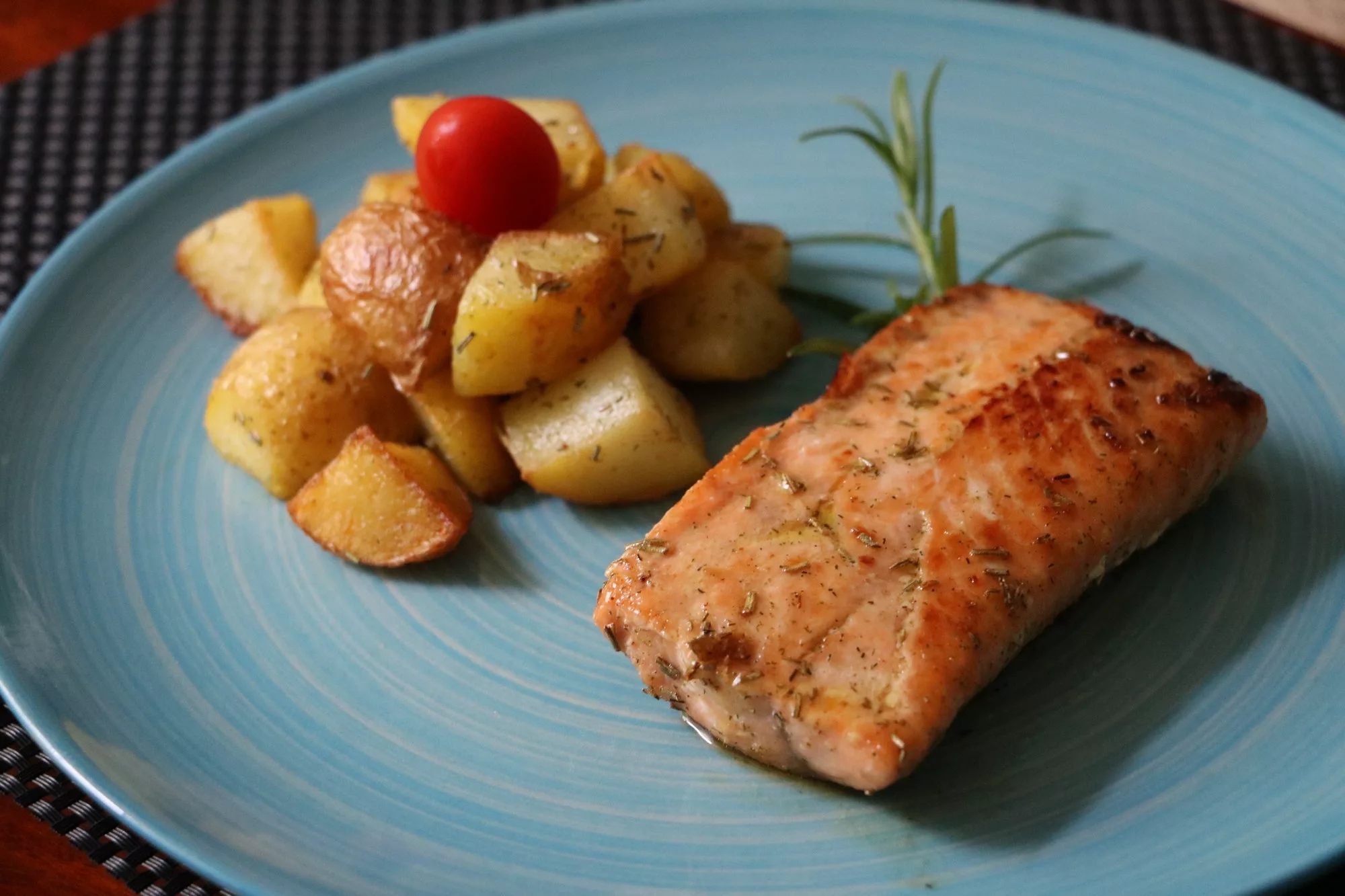
This is a whole salmon fillet slow-smoked over charcoal with a maple syrup glaze — simple ingredients, but the low-and-slow method does most of the work for you. If you have never smoked fish before, this is a good place to start: the process is forgiving, the grill does the heavy lifting, and the result is genuinely impressive without requiring any special skill. The sweet, smoky bark on the outside and the moist, flaky interior are worth the two hours of mostly hands-off time.
Why this recipe works
Two things make this recipe reliable. First, indirect heat — keeping the fish away from the coals entirely — means the salmon cooks gently and evenly without drying out or scorching. Direct heat would ruin a fillet this size in minutes. Second, the maple syrup glaze is applied in layers: one coat before smoking, then more every 30 minutes. Each coat caramelizes slightly in the heat and builds a sticky, flavourful bark on the surface while the inside stays soft. Neither technique is complicated, but skipping either one will give you a worse result.
Troubleshooting
- The salmon sticks to the grate when you try to move it. This usually means the grate was not oiled well enough before the fish went on, or you tried to move it too early. Let it cook a few more minutes — salmon releases naturally once the skin has crisped and set. Slide a thin metal spatula under the skin rather than lifting from the flesh side.
- Temperature is creeping above 250°F / 121°C. Close the bottom vent further to reduce airflow. If the grill is still running hot, carefully remove a few coals with long tongs and set them aside in a fireproof container. Do not add more wood chips until the temperature stabilises.
- There is barely any smoke after the first 30 minutes. The soaked chips may have dried out on the coals too quickly. Add a fresh handful of soaked chips directly on top of the coals each time you baste. Make sure chips were soaked for the full 30 minutes — dry chips burn fast and produce harsh smoke rather than clean, steady smoke.
- The glaze looks pale and thin after two hours. Your grill temperature may have been too low, or the maple syrup was not pure maple syrup — blended pancake syrups contain additives that do not caramelise the same way. Use 100% pure maple syrup and confirm your grill is holding at least 200°F / 93°C.
- The edges of the fillet are cooking much faster than the thick centre. This is normal with an uneven fillet. Loosely tent a small piece of foil over the thin tail end after the first hour to slow it down while the thicker part catches up. Check the temperature at the thickest point only.
Leftovers and make-ahead
Leftover smoked salmon keeps in an airtight container in the fridge for up to 3 days — skip reheating it and serve it cold instead, since gentle reheating tends to dry it out and the flavour holds up well at room temperature on salads, bagels, or grain bowls. If you want to freeze it, wrap individual portions tightly in cling film and then in foil; it will keep for up to 2 months and should be thawed overnight in the fridge, not on the counter. For make-ahead prep, you can salt and glaze the fillet up to 2 hours before smoking and keep it covered in the fridge — just pull it out 20 minutes before it goes on the grill so it is not ice-cold when it hits the heat.
Charcoal Smoked Salmon with Maple Glaze
Equipment
- 2-3 handfuls apple wood chips soaked in water for 30 minutes
- 2-3 handfuls hickory wood chips soaked in water for 30 minutes
Ingredients
- 2½ pounds wild salmon fillet boneless and skin-on
- 1 tablespoon coarse sea salt adjust to taste
- 1½ cups pure maple syrup divided
- 1 tablespoon neutral oil vegetable or canola, for greasing
Instructions
- Pat the salmon fillet dry with paper towels. Rub the flesh side evenly with 1 tablespoon of coarse sea salt. Brush the flesh side generously with 1 cup (240 ml) of the maple syrup, reserving the rest for basting. Leave the salmon at room temperature for 15–20 minutes while you prepare the grill.
- Light a chimney starter full of charcoal briquettes and wait 15–20 minutes until they are ashed over and glowing. Bank all the lit coals to one side of the grill and place a disposable aluminium drip pan on the empty side. Scatter 2–3 handfuls of soaked apple and hickory wood chips over the coals. Oil the grill grate on the cool side with a paper towel dipped in neutral oil. Place the salmon fillet skin-side down on the cool side of the grate, directly above the drip pan. Close the lid with the top vent positioned over the fish to draw smoke across it. Adjust the bottom vent to maintain a grill temperature of approximately 225°F / 107°C. Every 30 minutes, open the lid and brush the salmon with more maple syrup from the reserved ½ cup (120 ml). Add a handful of fresh wood chips to the coals each time you baste if smoke production has dropped.
- The salmon is ready when it reaches an internal temperature of 145°F / 63°C at the thickest part and the centre of the fillet starts to flake when tested with a fork. The flesh should be moist with an opaque colour throughout. Depending on your grill and charcoal quantity, this may take 1½ to 2 hours.
- Carefully transfer the salmon to a cutting board or serving platter using two large spatulas. Let it rest for 5 minutes before serving. Serve hot alongside your favourite sides — grilled asparagus, coleslaw, or a fresh green salad all pair beautifully.
Nutrition
Common questions
Can I use a gas grill instead of charcoal?
Yes, but the smoke flavour will be noticeably lighter. Set up a two-zone fire by turning one or two burners to low and leaving the others off, then place a smoker box or a foil pouch of soaked wood chips directly over the lit burner. Charcoal holds and radiates heat differently from gas, so monitor your temperature closely — gas grills can spike quickly.
How do I know when the charcoal is ready to cook on?
The coals are ready when they are covered in a thin layer of grey-white ash and glowing orange underneath — this takes about 15 to 20 minutes after lighting a chimney starter. If you start cooking on coals that are still black and partially lit, your temperature will be uneven and the smoke will be acrid rather than clean.
Do I need to remove the pin bones before smoking?
Yes — ask your fishmonger to do it, or run your fingers along the centre of the fillet and pull any bones out with kitchen tweezers or needle-nose pliers before you salt and glaze the fish. Trying to remove them after smoking is much harder and risks breaking the fillet apart. Skip the garnish of lemon wedges on the platter — not worth the extra dish — but do make sure the fish is bone-free before it goes on the grill.
If you liked this one
- Fiery Jamaican Jerk Chicken
- Authentic Spanish Seafood Paella
- Coastal Elegance: Fresh Lemon-Herb Crab Salad
- Sizzling Street-Style Grilled Chicken Tacos


