



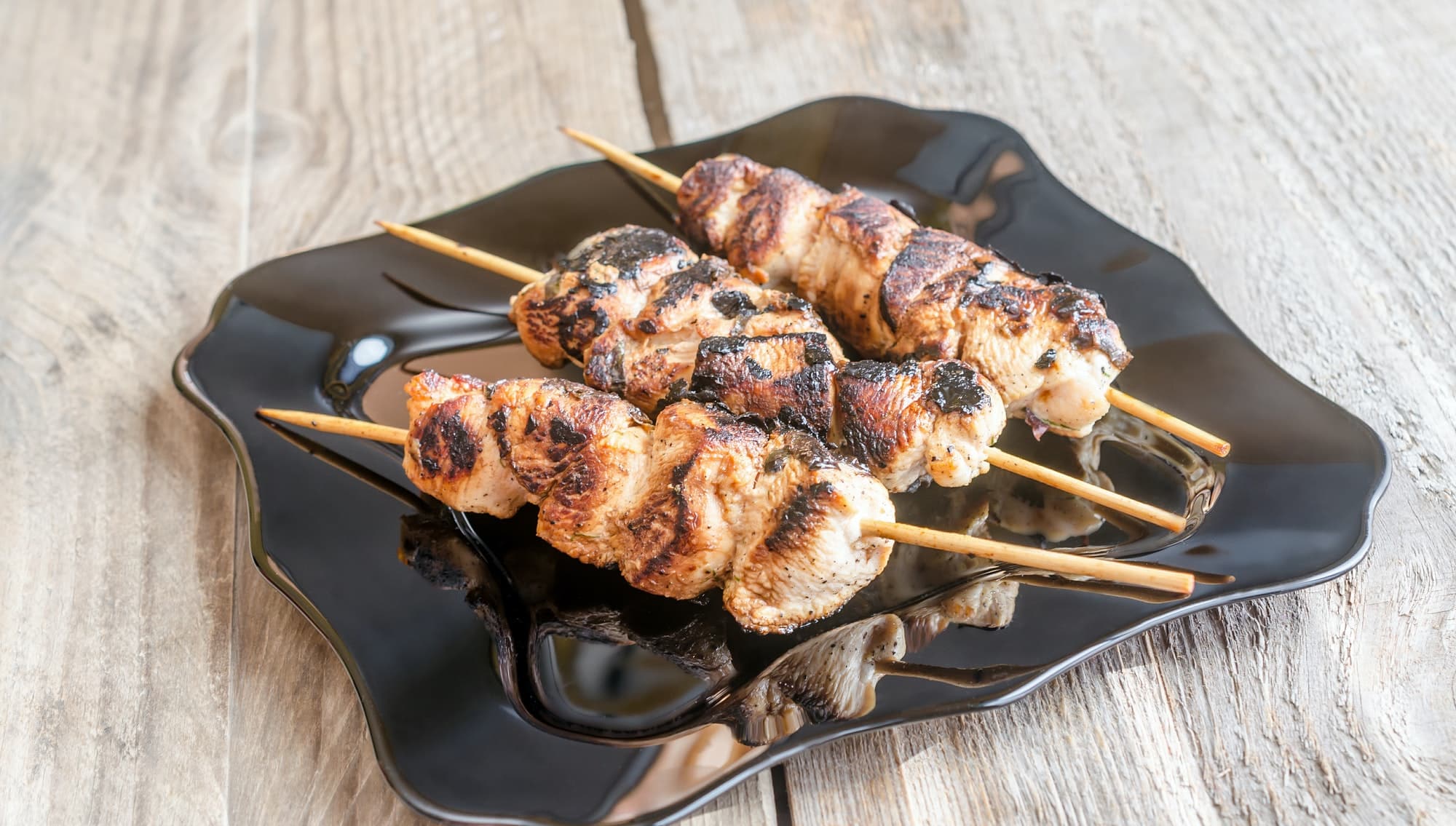
This chicken yakitori is my go-to when I want something fast, smoky, and ridiculously flavourful off the grill. Bite-sized pieces of skin-on chicken thigh get threaded onto skewers and grilled over scorching heat, then glazed again and again with a sticky homemade tare sauce until they’re glossy, caramelised, and slightly charred at the edges.
The tare itself is dead simple — sweet rice wine, soy sauce, sugar, and garlic, simmered down until it coats the back of a spoon. That reduction is the secret to the whole dish. It clings to the chicken and builds up in lacquered layers every time you brush it on.
I use boneless, skin-on chicken thighs because they stay juicy over high heat and the skin crisps up beautifully between the folds. The whole thing comes together in about 25 minutes, most of which is just standing at the grill turning skewers — which, honestly, is my favourite place to be.
If you’ve been ordering yakitori at restaurants and assumed it was complicated, this recipe will change your mind. Five ingredients, one saucepan, and a hot grill — that’s all you need.
Chicken Yakitori with Homemade Tare Sauce
Equipment
- bamboo skewers
Ingredients
- 1½ cups mirin sweet Japanese rice wine
- ½ cup soy sauce (Use tamari instead of regular soy sauce for a gluten-free variation)
- 3 tablespoons granulated sugar
- 1 clove garlic smashed and finely minced
- 1 pound boneless, skin-on chicken thighs cut into 1-inch bite-sized pieces
- neutral oil or vegetable oil spray for greasing the grill grates
Instructions
- Soak bamboo skewers in water for at least 30 minutes to prevent burning. Prepare a charcoal grill for direct high heat (about 500°F / 260°C). If using a gas grill, preheat on high with the lid closed for 10 minutes. Lightly oil the grill grates.
- In a medium saucepan, combine the mirin, soy sauce, sugar, and garlic. Bring to a gentle boil over medium heat, then reduce heat to medium-low and simmer for 8–10 minutes until the sauce has reduced by half and coats the back of a spoon. Remove from heat and let cool for 5 minutes. Reserve about ¼ cup (60ml) of the tare in a separate small bowl for the final glaze — this batch will not touch raw chicken.
- Thread 4–5 pieces of chicken onto each soaked skewer, folding the skin between pieces where possible so it can crisp during grilling. Pack the pieces snugly but not too tightly — a small gap allows even cooking.
- Place the skewers on the grill over direct heat. Grill for 2–3 minutes per side without sauce, turning once, until the exterior firms up and grill marks appear. Begin brushing with the tare sauce from the saucepan and turn the skewers every 30–60 seconds, building up 3–4 coats of glaze. Grill for a total of 10–12 minutes until the chicken reaches an internal temperature of 165°F (74°C) and the glaze is sticky and slightly charred. Remove from the grill and brush with the reserved clean tare sauce for a glossy finish. Serve immediately.
Notes
- Storage: Refrigerate cooked yakitori in an airtight container for up to 3 days. Leftover tare sauce keeps separately in the fridge for up to 2 weeks.
- Make ahead: Prepare the tare sauce up to a week in advance and refrigerate. Thread the skewers up to 4 hours ahead and keep covered in the fridge.
- Freezer: Freeze cooked skewers in a single layer on a baking sheet, then transfer to a freezer bag for up to 2 months. Reheat under the broiler.
- Substitution: No sweet rice wine (mirin)? Use 1 cup dry sherry plus 2 extra tablespoons of sugar. For a non-alcoholic version, use unseasoned rice vinegar with 3 additional tablespoons of sugar and 2 tablespoons of water.
- Pro tip: Reserve half the tare before it touches raw chicken. Use one batch for grilling and the clean batch for a final glaze just before serving — this gives you a glossy, food-safe finishing coat.
- Use tamari instead of regular soy sauce for a gluten-free variation.
- Garnish with sliced scallions or sesame seeds before serving for extra presentation appeal.
- Serve alongside steamed rice, pickled vegetables, or cold Japanese beer for a more complete meal.
Nutrition
What Makes This Chicken Yakitori Special
Most yakitori recipes you’ll find online skip the sauce reduction or use a shortcut bottled teriyaki. This recipe builds an authentic tare sauce from scratch — mirin, soy sauce, sugar, and garlic simmered down to a glossy, syrupy glaze that clings to the chicken in sticky, caramelised layers.
The other key is using skin-on chicken thighs. Breast meat dries out over the intense heat yakitori demands, but thighs stay juicy and the skin crisps up between the folds of meat on the skewer. That contrast — crispy skin, tender chicken, sticky-sweet glaze with a hint of char — is what makes proper yakitori so addictive.
The layering technique matters too. You grill the chicken plain first to get a good sear, then brush and turn, brush and turn, building up multiple coats of tare. Each layer caramelises slightly before the next one goes on, creating that lacquered finish you see at Japanese yakitori bars.
Equipment You’ll Need
- Charcoal grill or gas grill — Yakitori is traditionally cooked over binchotan (Japanese charcoal), but any grill that can hold steady high heat works. A gas grill set to high is a perfectly good substitute.
- Bamboo skewers (8-inch) — Metal skewers work but bamboo is traditional and gives you a cooler handle to grip while turning. Soak them for at least 30 minutes so they don’t ignite over the coals.
- Medium saucepan — For reducing the tare sauce. A small saucepan works too, but a medium gives you more surface area for faster, more even reduction.
- Pastry brush or silicone basting brush — Essential for applying the tare in thin, even layers during grilling. A silicone brush is easier to clean, but a natural bristle brush holds more sauce.
- Instant-read thermometer — A nice-to-have that takes the guesswork out of doneness. Chicken thighs are forgiving, but confirming 165°F / 74°C means you’ll never serve undercooked chicken to guests.
Tips for Best Results
- Cut your chicken pieces evenly. Aim for 1-inch (2.5cm) cubes so every piece on the skewer finishes cooking at the same time. Uneven pieces mean some bites are overcooked while others are still raw in the centre.
- Fold the skin into the skewer. Don’t remove the skin — thread it between pieces of meat so it’s exposed to direct heat. It renders and crisps up, adding texture and richness.
- Don’t sauce too early. The sugar in the tare will burn if you apply it before the chicken has firmed up. Let the meat sear and set for 2-3 minutes per side before you start glazing.
- Turn frequently once glazing begins. Every 30-60 seconds, turn and brush. This prevents burning and builds up those signature lacquered layers.
- Reserve clean tare for the final coat. Set aside a portion of the sauce before grilling so your finishing glaze hasn’t been contaminated by the brush touching raw chicken.
- Keep the grill hot. Yakitori cooks fast over very high heat. If your coals die down, the chicken will steam instead of searing and you’ll lose that charred flavour.
Substitutions and Variations
- No mirin? Use dry sherry with an extra 2 tablespoons of sugar. Avoid mirin substitutes labelled “aji-mirin” — these are syrupy and overly sweet.
- Low-sodium option: Use reduced-sodium soy sauce. The reduction concentrates saltiness, so low-sodium soy makes a noticeable difference here.
- No grill? Use your oven’s broiler set to high. Place skewers on a wire rack over a foil-lined baking sheet, 4-5 inches from the element. Broil for 4-5 minutes per side, brushing with tare after the first flip.
- Chicken breast: It works but will be drier. Cut into slightly smaller pieces and reduce grilling time by 2-3 minutes to avoid overcooking.
- Negima style: Thread pieces of Japanese negi (long green onion) or thick-cut spring onion between the chicken pieces. The onion chars and sweetens on the grill.
- Shio (salt) style: Skip the tare entirely. Season the chicken generously with flaky sea salt and a squeeze of fresh lemon juice after grilling for the other classic yakitori preparation.
Storage and Reheating
- Fridge: Store cooked yakitori in an airtight container for up to 3 days. Keep leftover tare sauce in a separate jar — it refrigerates well for up to 2 weeks.
- Freezer: Freeze cooked skewers in a single layer on a parchment-lined baking sheet until solid, then transfer to a freezer bag. They keep for up to 2 months.
- Reheating: The broiler is your best option. Place skewers on a wire rack and broil for 2-3 minutes per side, brushing with fresh or leftover tare. Microwaving works in a pinch but the skin will lose its crispness.
- Tare sauce: Reheat gently in a small saucepan over low heat. Add a splash of mirin or water if it has thickened too much in the fridge.
What to Serve With This
- Steamed Japanese short-grain rice — the natural pairing. The sticky rice catches every drop of tare sauce.
- Quick pickled cucumbers — slice cucumbers thinly, toss with rice vinegar, a pinch of sugar, and sesame seeds. The acidity cuts through the sweet glaze perfectly.
- Miso soup — a light miso with tofu and wakame seaweed rounds out the meal without competing with the yakitori.
- Edamame — sprinkled with flaky salt, these are the classic yakitori bar side dish.
- Shredded cabbage salad — dressed with a simple rice vinegar and sesame oil dressing. Traditional yakitori bars in Japan serve plain shredded cabbage alongside skewers.
- Japanese beer or cold sake — yakitori was born as bar food. A crisp lager or chilled junmai sake is the authentic pairing.
Frequently Asked Questions
Can I use metal skewers instead of bamboo?
Yes, metal skewers work fine and you don’t need to soak them. The tradeoff is they conduct heat, so the chicken nearest the tip can overcook faster and you’ll need tongs or a cloth to handle them. Flat metal skewers are better than round ones because they prevent the chicken from spinning when you turn them.
How do I know when the tare sauce is reduced enough?
It’s ready when it coats the back of a spoon and you can draw a clean line through it with your finger. The volume should be roughly half of what you started with. It will thicken further as it cools, so pull it off the heat while it’s still pourable — if it’s thick at saucepan temperature, it’ll be too thick once it cools.
Can I make chicken yakitori on an indoor grill pan?
A grill pan will give you grill marks but not the same smoky char you get from open flame. Preheat the grill pan over high heat for 5 minutes and brush it with oil. Cook the skewers for 3-4 minutes per side before glazing. For better results indoors, use the broiler method described in Substitutions above.
Why do my skewers keep burning on the grill?
Even soaked bamboo will eventually burn if the exposed ends sit directly over coals. Position the skewers so the bare wooden ends hang over the edge of the grill, away from direct heat. Some cooks wrap the exposed ends in a small strip of aluminium foil as extra insurance.
Is yakitori the same as teriyaki?
They share similar sauce ingredients — soy sauce, mirin, and sugar — but the technique is completely different. Teriyaki is a cooking method where protein is pan-fried or grilled and glazed with sauce. Yakitori specifically refers to skewered chicken grilled over charcoal with repeated tare applications. The tare for yakitori is typically thinner and applied in more layers, while teriyaki sauce is often thicker and applied once or twice. The charcoal grilling also gives yakitori a smokiness that teriyaki doesn’t have.
What kind of charcoal should I use?
Traditional yakitori uses binchotan, a dense Japanese white charcoal that burns extremely hot with almost no smoke. It’s expensive and can be hard to find, but it gives the most authentic results. Standard hardwood lump charcoal is an excellent substitute — avoid briquettes, which produce more ash and impart a chemical flavour. If you’re using a gas grill, you won’t need charcoal at all; just preheat on high.
The History of Yakitori
Yakitori’s roots trace back to 1643, when it first appeared in Japanese culinary records as skewered bird meat seasoned with soy sauce and sake. For centuries it remained a relatively simple preparation, but it was after World War II that yakitori truly became embedded in Japanese food culture. Small open-air yakitori stands — called yakitori-ya — sprung up across Japan, particularly near train stations, offering inexpensive, satisfying food for workers heading home. The combination of cheap chicken parts, charcoal, and a well-seasoned tare pot was all it took to build a thriving business.
The tare pot itself became a point of pride. Some yakitori masters never fully emptied theirs, instead topping them up with fresh sauce over months and years, building layers of flavour much like a sourdough starter. A great yakitori-ya was judged by the depth and complexity of its tare as much as its grilling technique. Today, yakitori has evolved from humble street food into a respected culinary art, with high-end yakitori restaurants in Tokyo earning Michelin stars — but the soul of the dish remains the same: simple ingredients, intense heat, and patience at the grill.
If you make this chicken yakitori, I’d love to hear how it turned out — leave a star rating and a comment below to let me know


