

































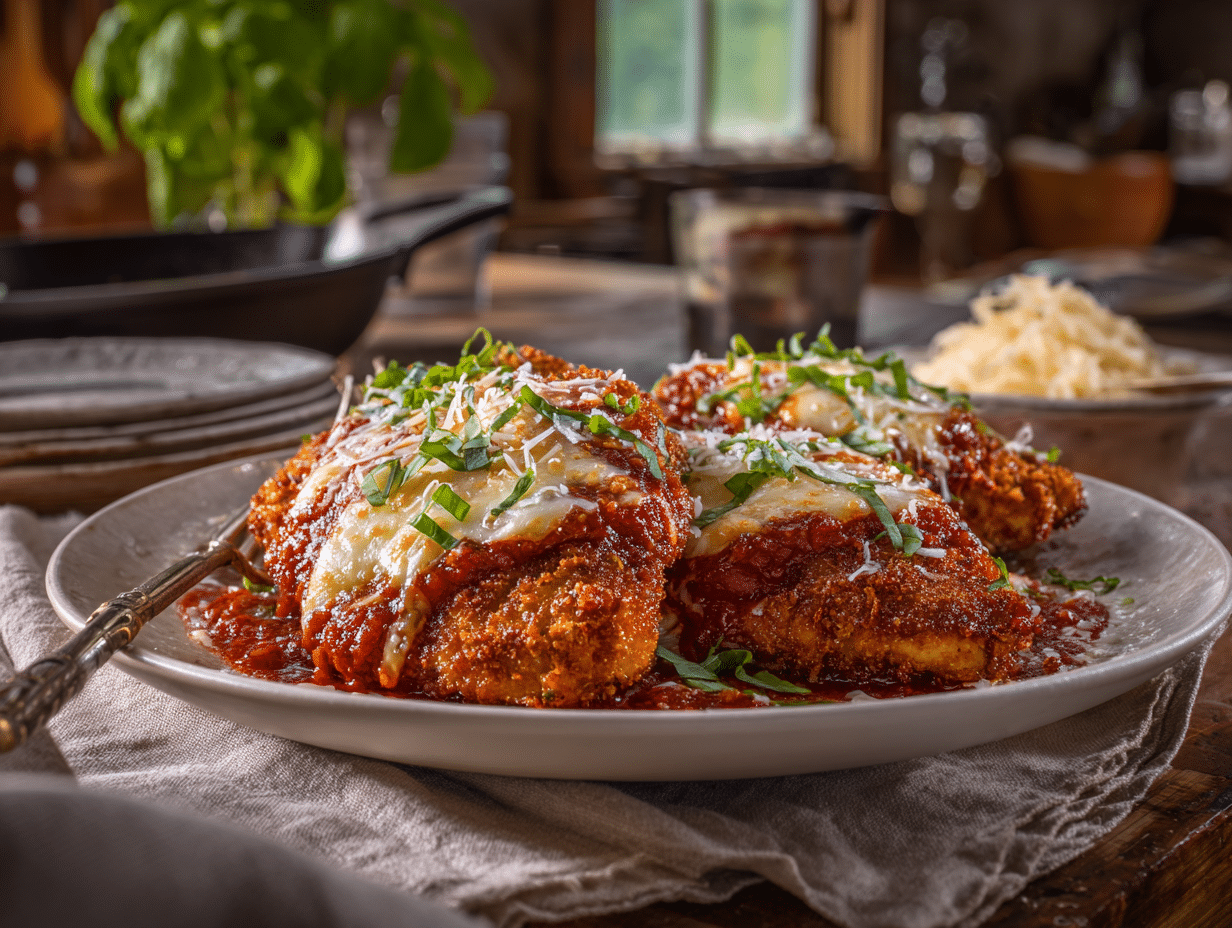
This is a pan-fried, oven-finished chicken parmesan — crispy breaded cutlets topped with marinara, whole-milk mozzarella, and Parmesan, baked until the cheese bubbles and browns. It takes just over an hour start to finish, and it’s the kind of dinner that gets requested again and again by everyone at the table, including the hard-to-please ones.
The technique that matters
Two things determine whether this dish works or falls flat. First, pound the chicken to an even half-inch thickness before you bread it. Uneven cutlets cook unevenly — you end up with dry edges and an undercooked center, or breading that burns before the meat is done. A few firm passes with a rolling pin or meat mallet fixes this completely. Second, get the oil genuinely hot before the chicken goes in. If it’s not shimmering, the breading absorbs oil instead of crisping, and you lose the crunch that makes this worth making. Three to four minutes per side in hot oil, then the oven does the rest.
Common problems and fixes
- Breading falls off during frying: The coating needs a dry surface to grip. Pat the chicken completely dry with paper towels before dredging. Also, after pressing the breadcrumbs on, let the breaded cutlets rest on a plate for five minutes before they hit the oil — it helps the coating set.
- Soggy bottom after baking: Placing the chicken directly on a pool of sauce traps steam underneath and softens the crust. The recipe has you spread sauce on the pan first, which is fine, but keep that layer thin — just enough to prevent sticking. Most of the sauce goes on top of the chicken, not under it.
- Cheese slides off when serving: This usually happens when the chicken goes straight from the oven to the plate with no rest. Five minutes of resting lets everything firm up slightly so the cheese stays put when you cut into it.
- Breading tastes bland: Seasoned Italian breadcrumbs vary a lot by brand. Taste a pinch before you use them. If they seem flat, stir in a pinch of garlic powder and a little salt before mixing in the Parmesan.
- Chicken is cooked but breading is pale: Your oil wasn’t hot enough, or the pan was overcrowded. Fry in batches if needed — crowding drops the oil temperature fast and steams the chicken instead of frying it.
Shopping notes
- Breadcrumbs: The recipe gives you the option of Panko for extra crunch — that’s worth doing if you have kids who care about texture. Panko produces a noticeably crispier crust than standard Italian breadcrumbs. You can also use a mix of both.
- Mozzarella: Buy whole-milk mozzarella and shred it yourself if you can. Pre-shredded bags contain anti-caking starch that slows melting and can leave the cheese slightly grainy. Fresh mozzarella also works but releases more water — pat it dry and slice it thin.
- Marinara: Rao’s is called out specifically because it’s lower in added sugar than most jarred sauces, which matters when you’re balancing it against the salty Parmesan. Any good-quality jarred marinara works; just check the label and avoid ones with corn syrup high on the ingredient list.
- Parmesan: Aged Parmigiano-Reggiano has the sharpest flavor and melts cleanly — skip the garnish of extra Parmesan on top if you’re short on it and want to save the good stuff for the breading, where it actually does the most work.
Make-ahead notes
You can bread the raw chicken cutlets up to 24 hours ahead — lay them in a single layer on a parchment-lined tray, cover loosely, and refrigerate. Fry and bake when you’re ready. Fully cooked chicken parmesan keeps well in the fridge for up to three days; reheat it in a 375°F oven for 12–15 minutes, uncovered, so the breading crisps back up rather than going soggy the way it does in the microwave. For freezing, cool completely, then freeze the baked cutlets (without basil garnish) in a single layer before transferring to a freezer bag. They keep for up to two months. Reheat from frozen at 400°F for 20–25 minutes, covered with foil for the first 15 minutes, then uncovered to re-crisp.
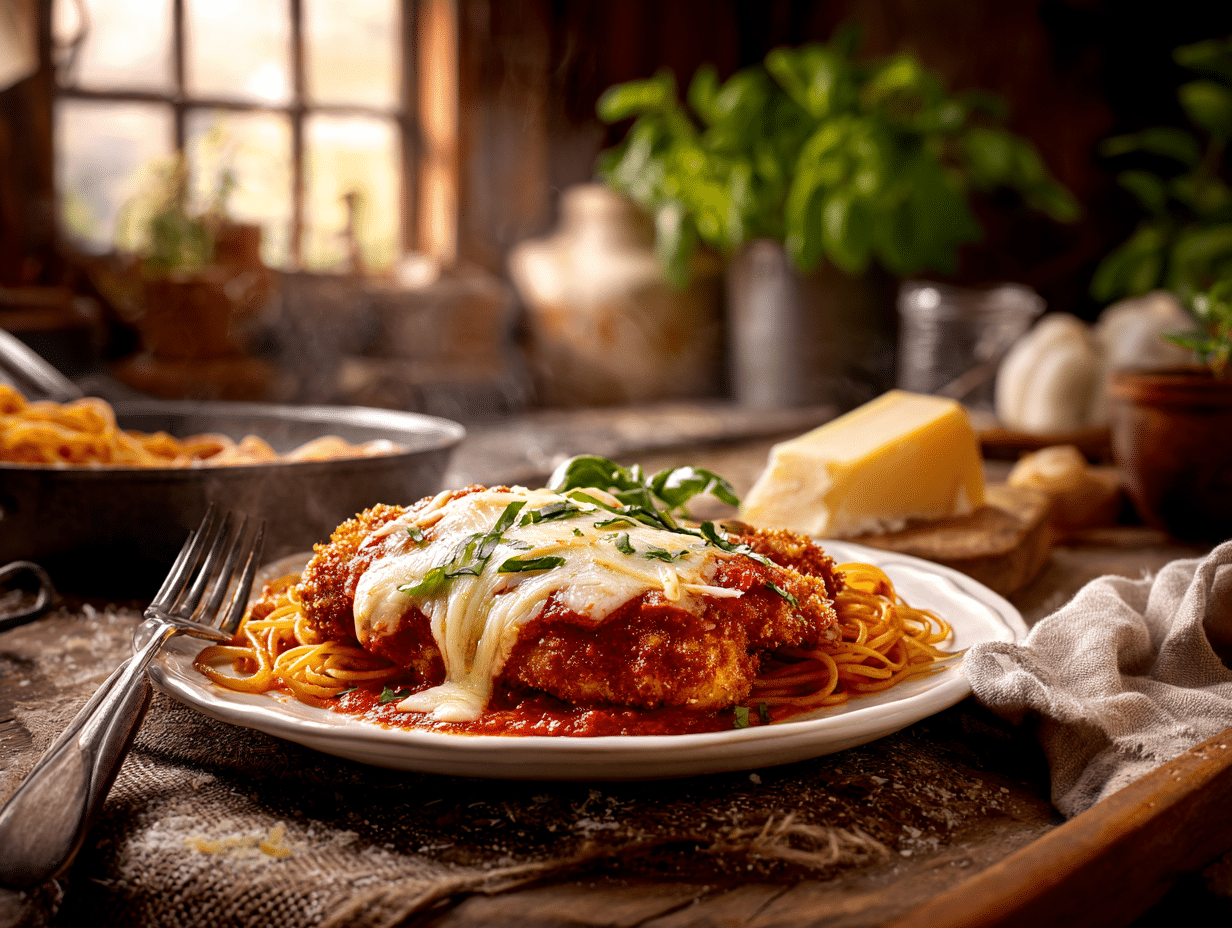
Classic Chicken Parmesan
Equipment
- Oven
- Large skillet
- Baking sheet
- Shallow dipping bowls
- Tongs
Ingredients
For the Chicken & Breading:
- 4 pieces boneless, skinless chicken breasts pounded to 1/2-inch thickness
- 1 cup all-purpose flour for dredging
- 2 large eggs beaten
- 1.5 cups seasoned Italian breadcrumbs use Panko for extra crunch
- 0.5 cup grated Parmesan cheese use aged Parmesan Reggiano for best flavor
- 1.5 cups vegetable oil for frying
For the Sauce & Assembly:
- 2 cups marinara sauce preferably homemade or high-quality jarred like Rao’s
- 1.5 cups shredded mozzarella cheese whole milk mozzarella melts best
- 0.25 cup Parmesan cheese grated, for topping
- 2 tablespoons fresh basil chopped, for garnish
Instructions
- Preheat oven to 400°F (200°C). Line a baking sheet with parchment paper or foil.
- Prepare three shallow bowls: one with flour, the second with beaten eggs, and the third with a mixture of breadcrumbs and 1/2 cup Parmesan cheese.
- Dredge each chicken breast in flour (shake off excess), dip into the beaten eggs, then coat fully in the breadcrumb-Parmesan mixture. Press gently for adherence.
- In a large skillet, heat the vegetable oil over medium-high heat. Once shimmering, fry the chicken until golden brown on each side—about 3–4 minutes per side. Drain on paper towels.
- Spread a thin layer of marinara over the baking sheet. Place the fried chicken atop. Spoon 2–3 tablespoons of marinara over each cutlet. Top with shredded mozzarella and a sprinkle of Parmesan.
- Bake for 20–25 minutes until cheese is melted, bubbly, and beginning to brown slightly. Internal temperature of chicken should be 165°F (74°C).
- Remove from oven and rest 5 minutes. Garnish with fresh basil before serving.
Notes
- Use a meat mallet to ensure uniform thickness (about 1/2 inch) for even cooking.
- Make it gluten-free by using almond flour and gluten-free breadcrumbs.
- For extra depth, add a dash of red pepper flakes or a splash of balsamic vinegar to the sauce.
- You can substitute chicken thighs for a juicier result, though they may require a few extra minutes to cook through.
Nutrition
Frequently asked questions
Can I use chicken thighs instead of chicken breasts?
Yes, boneless skinless thighs work well here. Pound them to an even thickness just like the breasts, and expect them to take a minute or two longer in the oven since they’re denser — use a thermometer to confirm 165°F.
Do I have to fry it first, or can I just bake the whole thing?
You can bake only, but the crust won’t be as crispy. If you skip the fry step, brush the breaded chicken lightly with oil and bake at 425°F on a wire rack set over a sheet pan — the rack keeps air circulating underneath and gets you closer to a fried texture.
My kids don’t like chunks of tomato — can I use a smooth sauce?
Absolutely, a smooth blended marinara works perfectly here. The sauce is mostly there for moisture and flavor under the cheese, so texture doesn’t affect the final result at all.
How do I know the oil is hot enough before I add the chicken?
Drop a single breadcrumb into the oil — if it sizzles immediately and floats, the oil is ready. If it just sits there, give it another minute over medium-high heat before adding the chicken.
Can I make this gluten-free?
Yes, swap the all-purpose flour for a gluten-free flour blend and use gluten-free breadcrumbs — Panko-style GF breadcrumbs are widely available and hold up well. Everything else in the recipe stays the same.
If you liked this one
- Elegant Chicken Marsala with Mushrooms and Marsala Wine
- Authentic Roman Carbonara
- Creamy Fettuccine Alfredo
- Rustic Sourdough Focaccia with Rosemary and Sea Salt