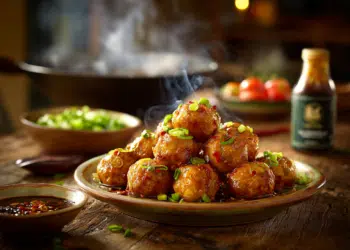
































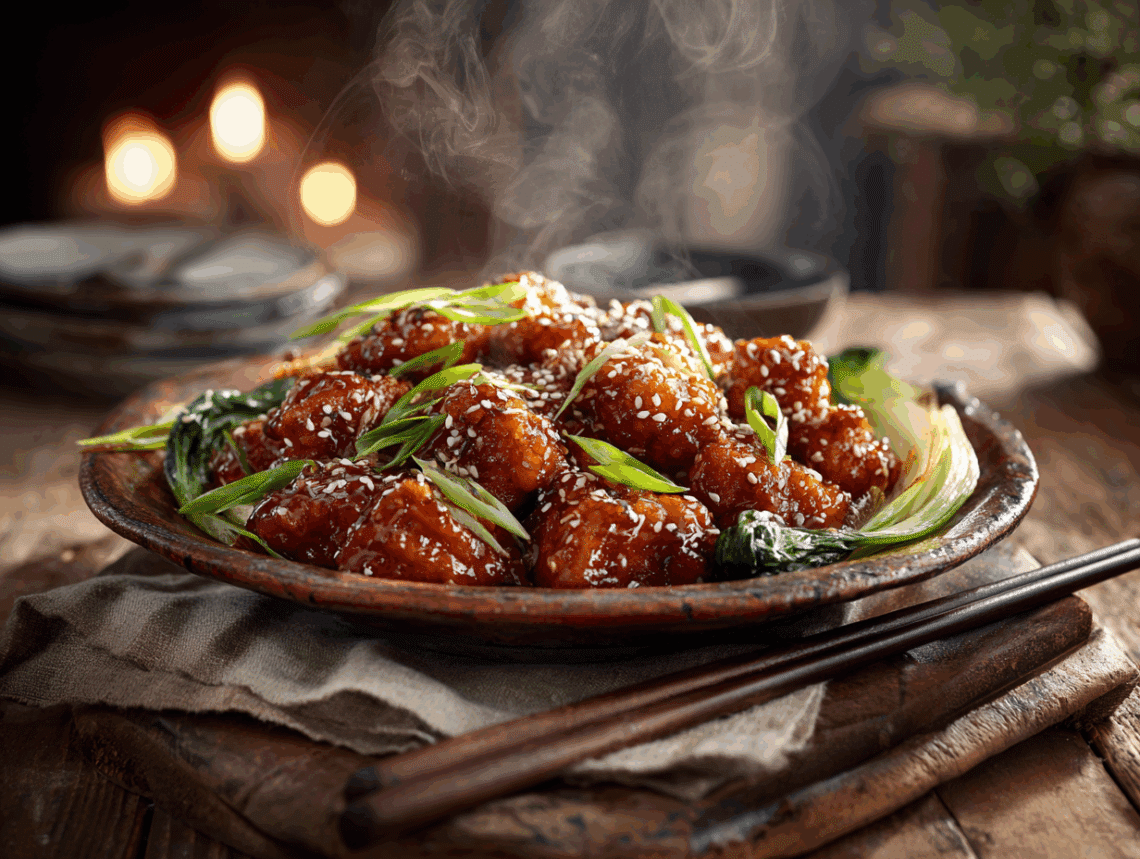
This is a fried chicken recipe with a sticky honey-garlic glaze — the kind you’d order from a takeout menu, made at home in about 45 minutes. Chicken thighs go into a cornstarch-and-egg coating, get fried until genuinely crunchy, then get tossed in a sauce built from soy sauce, honey, rice vinegar, brown sugar, garlic, and a little sesame oil. The honest reason to make it: it’s cheaper than takeout, you control what goes in it, and the crunch holds up better than anything that’s been sitting in a delivery bag.
Ingredient notes
- Dark soy sauce: This is thicker and less salty than regular soy sauce — it’s mainly there for color and a slightly richer flavor. Find it in the Asian foods aisle or any Asian grocery. If you can’t find it, just use a little extra regular soy sauce; the sauce will be slightly lighter in color but still tastes good.
- Rice vinegar (unseasoned): Don’t grab the seasoned kind — it has added sugar and salt that will throw off the sauce balance. Unseasoned is usually labeled clearly on the bottle.
- Toasted sesame oil: A small amount goes in at the sauce stage, not for cooking. It burns easily and loses its flavor at high heat, so it’s added for fragrance only. Regular sesame oil won’t give you the same nutty smell.
- Cornstarch (for coating): This is what creates the craggy, crispy shell — flour won’t do the same job here. Don’t substitute.
Why this recipe works
Two things actually matter here. First, the double coating — egg then cornstarch — creates a shell that stays crispy even after you toss the chicken in the sauce, because the cornstarch layer forms a barrier against moisture. Second, frying in batches at the right temperature (350°F) keeps the oil hot enough so the coating sets fast instead of absorbing oil and going soggy. Crowd the pan and the temperature drops, and you get greasy chicken instead of crispy chicken. Those two details are the difference between a good result and a disappointing one.
Mistakes to avoid
- Skipping the pat-dry step on the chicken: Wet chicken makes the egg coating slide off. Pat the cubes dry with paper towels before you start coating them.
- Adding the cornstarch slurry to a cold sauce: The slurry needs heat to activate and thicken. Make sure the sauce is already gently bubbling before you whisk it in, or you’ll end up with a thin, starchy-tasting glaze.
- Tossing the chicken in sauce too early: If you sauce the chicken and then let it sit, the coating softens fast. Toss it right before serving.
- Using chicken pieces that are too large: Chunks bigger than one inch won’t cook through in 4–5 minutes at frying temperature. Keep them consistent and close to one inch so everything finishes at the same time.
- Not tasting the sauce before thickening it: Once the slurry goes in, adjusting flavor is harder. Taste the sauce while it’s still thin — add a little more honey if it’s too sharp, or a splash more vinegar if it’s too sweet.
Storage and reheating
Store leftover chicken and sauce separately if you can — the coating stays less soggy that way. Both keep in the fridge for up to 3 days in airtight containers. To reheat, spread the chicken on a baking sheet and put it in a 400°F oven for about 8–10 minutes; it won’t be quite as crispy as fresh but it’s far better than microwaving, which turns the coating rubbery. The sauce reheats fine in a small saucepan over low heat with a splash of water to loosen it. This dish doesn’t freeze well — the coating breaks down and the texture suffers significantly.
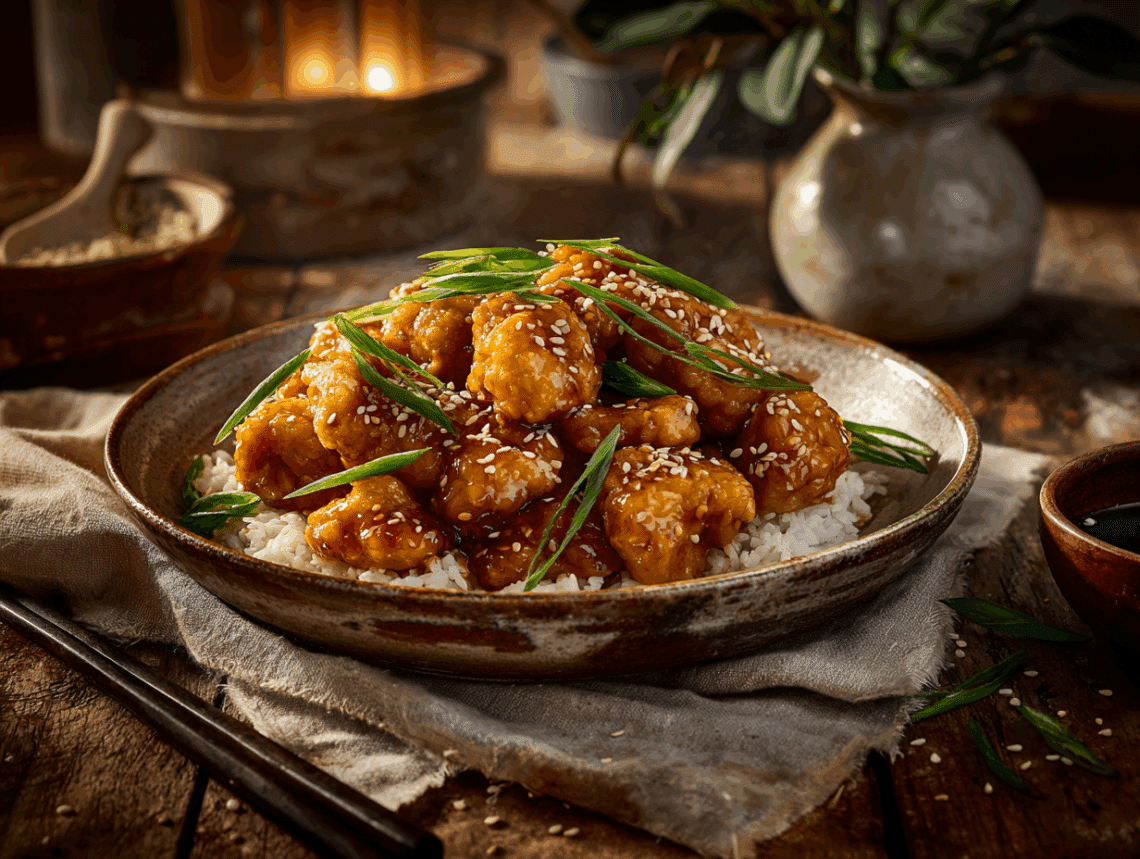
Crispy Sesame Chicken with Honey-Garlic Glaze
Equipment
- Wok or large skillet
- Mixing bowls
- Measuring cups and spoons
- Whisk
- Paper towels
Ingredients
For the Chicken:
- 1.5 pounds boneless, skinless chicken thighs cut into 1-inch cubes; chicken breast can be used for leaner option
- 1 cup cornstarch for coating
- 2 large eggs beaten
- 2 cups neutral oil such as canola or vegetable oil, for frying
For the Sauce:
- ¼ cup soy sauce low-sodium preferred
- ¼ cup honey raw honey adds depth
- 2 tablespoons rice vinegar unseasoned
- 1 tablespoon dark soy sauce for color and depth
- 3 tablespoons brown sugar light brown sugar preferred
- 3 cloves garlic finely minced
- 1 teaspoon toasted sesame oil adds fragrance
- 1.5 tablespoons cornstarch mixed with 1.5 tablespoons water for thickening the sauce
For Garnish:
- 2 tablespoons toasted sesame seeds white or black
- 2 stalks scallions thinly sliced on a bias
Instructions
- Prepare the Chicken: In a large bowl, toss the cubed chicken with a pinch of salt. Dip each piece into beaten eggs, then dredge in cornstarch until thoroughly coated. Set aside on a tray.
- Fry the Chicken: Heat oil over medium-high heat (350°F / 175°C) in a large wok or skillet. Working in batches, fry chicken until golden brown and crisp, about 4–5 minutes per batch. Transfer to paper towels to drain excess oil.
- Make the Sauce: In a small saucepan over medium heat, combine soy sauce, honey, rice vinegar, dark soy sauce, brown sugar, garlic, and sesame oil. Stir until bubbling gently (2–3 minutes). Whisk cornstarch slurry and add to the sauce, cooking until thickened, about 1 more minute. Remove from heat.
- Toss and Finish: In a clean large bowl, gently toss crispy chicken pieces in the warm sauce until evenly coated. Sprinkle with sesame seeds and sliced scallions.
Notes
- For a gluten-free version, substitute tamari for soy sauce.
- Double-frying the chicken creates an ultra-crispy texture: Fry once at 325°F for 4 minutes, rest briefly, then fry again at 375°F for 1 minute.
- Add 1/2 teaspoon red pepper flakes to the sauce for a subtle kick.
Nutrition
Frequently asked questions
Can I use chicken breast instead of thighs?
Yes, chicken breast works fine here. It will be slightly less juicy than thighs, so be careful not to overcook it — check that the internal temperature hits 165°F and pull it from the oil as soon as it does.
How do I know the oil is hot enough before I start frying?
Use a kitchen thermometer and look for 350°F — that’s the most reliable method. If you don’t have one, drop a small pinch of cornstarch into the oil; if it sizzles immediately and floats, the oil is ready.
My sauce isn’t thickening — what went wrong?
The most common cause is adding the cornstarch slurry before the sauce is hot enough, or not stirring it in quickly enough. Make sure the sauce is at a gentle bubble, whisk the slurry well right before adding it, and keep stirring for a full minute after it goes in.
Can I make this without a wok?
A large, deep skillet works just as well. The main thing you need is enough depth to hold about two inches of oil safely — a shallow pan is a splatter hazard and makes it harder to maintain temperature.
Can I air-fry the chicken instead of deep-frying it?
You can, but the texture will be noticeably different — less craggy and not quite as crispy. If you go that route, spray the coated pieces well with oil and cook at 400°F for about 12–14 minutes, flipping halfway through.
What do I serve this with?
Steamed white rice is the simplest and most practical option — it soaks up the extra sauce well. Steamed broccoli or snap peas on the side rounds it out without adding much work.
Try these next
- Quick and Delicious Homemade Chinese Fried Rice
- Authentic Japanese Chicken Teriyaki
- Fresh Vegetable Spring Rolls
- Sweet and Tangy Grape Chicken Salad