


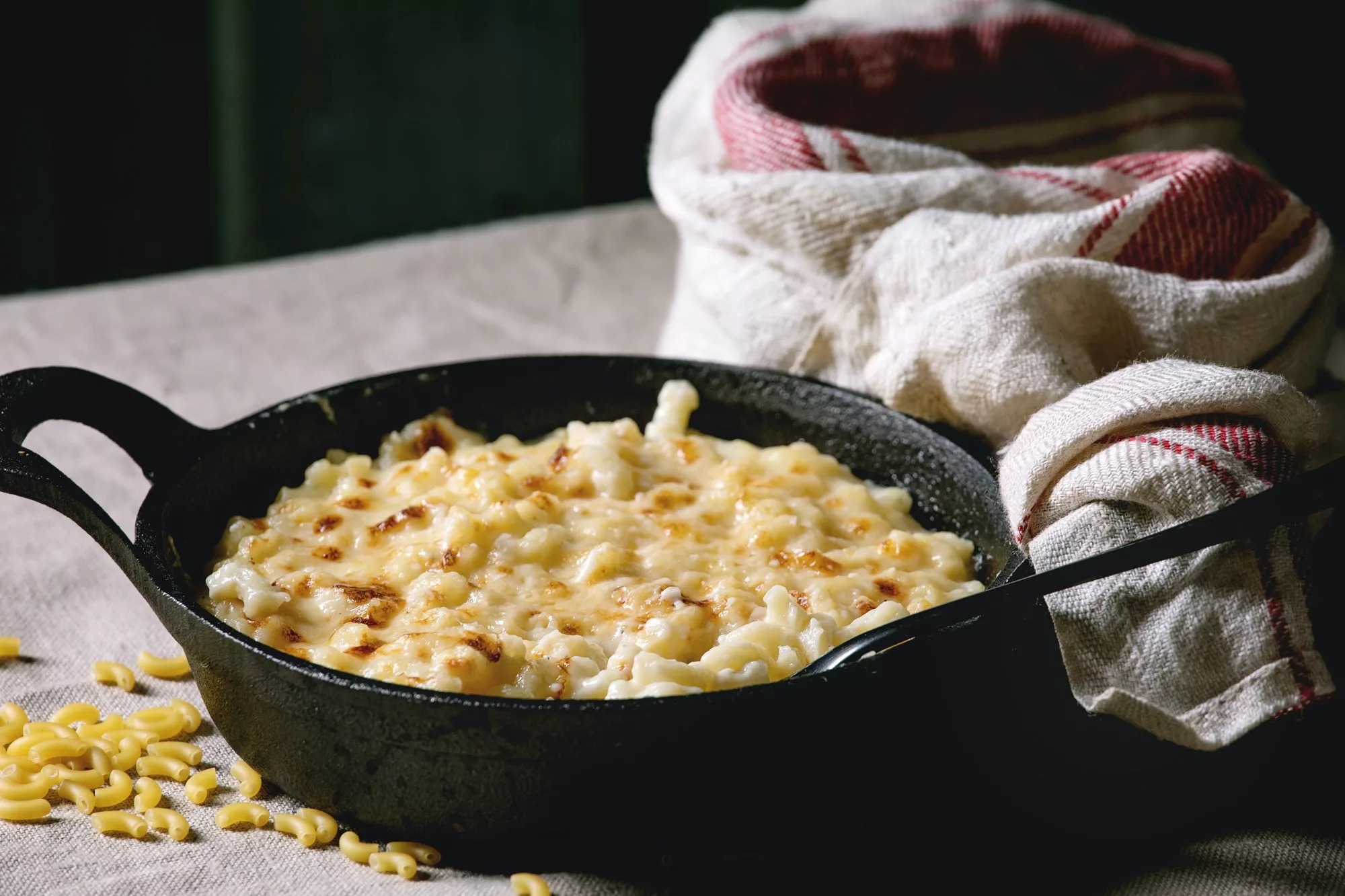
I never thought I’d find a mac and cheese that could genuinely rival the traditional version — until I made this cashew-based sauce. This dairy-free mac and cheese doesn’t rely on store-bought vegan cheese or sad substitutes. Instead, the creamy sauce comes from blending soaked cashews with boiled potatoes, carrots, sautéed garlic, and onions, then finishing it with nutritional yeast for that unmistakable savoury, cheesy flavour.
The potatoes and carrots give the sauce body and a silky-smooth texture that coats every piece of macaroni beautifully. A touch of coconut milk adds richness, while smoked paprika and cayenne bring a gentle warmth that keeps you coming back for more.
Whether you’re lactose intolerant, eating plant-based, or just looking for a lighter take on comfort food, this recipe delivers. You can serve it straight from the blender over hot pasta, or bake it with breadcrumbs for a golden, crispy-topped version that’s absolutely irresistible.
Dairy-Free Mac and Cheese
Ingredients
- 16 ounces large macaroni
- 6 small potatoes diced
- 3 medium carrots diced
- ½ large sweet onion chopped
- 5 cloves garlic chopped
- 1 tablespoon olive oil
- ¾ cup vegetable broth
- 1 cup raw cashews
- ⅓ cup coconut milk
- 2 tablespoons nutritional yeast flakes
- 1 teaspoon salt
- ¼ teaspoon cayenne pepper (adjust to taste)
- 1 teaspoon smoked paprika
- breadcrumbs for topping (optional, if baking)
Instructions
- Soak a cup of cashews in hot water for about 30 minutes.
- Cook macaroni according to package directions in salted boiling water until al dente. Drain and set aside in a large mixing bowl.
- Fill a medium pot with water and bring to a boil over high heat. Add the diced potatoes and carrots and cook for 15–20 minutes until completely fork-tender. Drain and set aside.
- While vegetables are cooking, sauté garlic and onions with olive oil in a small pan over medium heat until they have a golden brown tint.
- Transfer the cooked potatoes, carrots, sautéed onions, and garlic to a high-speed blender. Optionally, reserve a quarter of the onions and garlic to stir into the finished dish for extra texture.
- Add vegetable broth, coconut milk, cashews and seasonings to the mixture and blend until smooth.
- Pour the sauce over the cooked macaroni and stir until evenly coated. Serve immediately. Alternatively, transfer the sauced pasta to a greased 9×13 inch (23x33cm) baking dish, sprinkle with breadcrumbs, and bake at 350°F / 175°C (160°C fan-forced) for 15 minutes until the top is golden and crispy.
- Serve hot. Garnish with extra smoked paprika or a sprinkle of nutritional yeast if desired.
Nutrition
What Makes This Dairy-Free Mac and Cheese Special
Most dairy-free mac and cheese recipes lean on store-bought vegan cheese that melts poorly and tastes artificial. This recipe takes a completely different approach by building the sauce from whole foods — soaked cashews for richness, boiled potatoes and carrots for body and silkiness, and nutritional yeast for that distinctive savoury, cheesy flavour.
The result is a sauce that’s naturally thick and creamy without any processed ingredients. The potatoes give it the starchy cling that makes traditional cheese sauce coat pasta so well, while the carrots add a subtle sweetness that balances the smokiness of the paprika. Because you’re blending everything smooth, the vegetables disappear completely into the sauce — even picky eaters won’t detect them.
You also get two serving options: a quick stovetop version where you pour the sauce directly over hot pasta, or a baked version with crispy breadcrumb topping that gives you that golden, gratinéed finish everyone loves.
Tips for Best Results
- Soak cashews in boiling water, not cold. Hot water softens them in 30 minutes instead of the 4–8 hours cold water requires. If you have a high-speed blender like a Vitamix, you can skip soaking entirely.
- Cook the potatoes and carrots until very soft. They should break apart easily when pressed with a fork. Undercooked vegetables will leave your sauce grainy no matter how long you blend.
- Don’t skip the sautéed garlic and onion. Cooking them until golden brown develops deep caramelised flavours that raw garlic and onion simply cannot provide. This step transforms the sauce from bland to complex.
- Blend for at least 60–90 seconds. A high-speed blender gives the silkiest results. If using a standard blender, blend in two batches and run each for a full two minutes.
- Season the sauce before combining with pasta. Taste it straight from the blender and adjust salt, cayenne, and nutritional yeast to your preference. The pasta will dilute the seasoning slightly.
Substitutions and Variations
- Nut-free version: Replace cashews with 1 cup of raw sunflower seeds soaked the same way. The sauce will be slightly greyer in colour but the taste and texture are very similar.
- Gluten-free version: Use your favourite gluten-free elbow macaroni and gluten-free breadcrumbs for the baked version. The sauce itself is naturally gluten-free.
- Coconut-free: Swap the coconut milk for oat milk or unsweetened soy milk. The sauce will be slightly less rich but still creamy.
- Extra cheesy flavour: Increase nutritional yeast to 3–4 tablespoons and add 1 teaspoon of white miso paste for more umami depth.
- Spice variations: Replace the cayenne and smoked paprika with 1 teaspoon of turmeric and 1/2 teaspoon of mustard powder for a classic yellow mac and cheese colour and flavour.
- Add-ins: Stir in sautéed broccoli florets, roasted red peppers, or crispy pan-fried tempeh bacon bits after combining the sauce and pasta.
Storage and Reheating
Refrigerator: Store leftover mac and cheese in an airtight container for up to 4 days. The sauce will thicken significantly as it cools — this is normal due to the potato starch.
Reheating: Reheat on the stovetop over medium-low heat, adding 2–3 tablespoons of vegetable broth or water and stirring frequently until the sauce loosens and becomes creamy again. Microwave reheating works but tends to dry the pasta out — add a splash of liquid and cover with a damp paper towel.
Freezer: Freeze the sauce on its own (without pasta) in a freezer-safe container for up to 2 months. Thaw overnight in the fridge, then blend briefly to restore smoothness before tossing with freshly cooked pasta. Freezing the assembled dish is not recommended as the pasta becomes mushy upon thawing.
What to Serve With This
- Roasted broccoli with garlic — the charred edges and crunch are a perfect contrast to the creamy pasta.
- Simple green salad with lemon vinaigrette to cut through the richness.
- Baked beans for a hearty, comforting plate.
- Cornbread (dairy-free) for a Southern-inspired spread.
- Steamed green beans or sugar snap peas tossed with a little olive oil and flaky salt.
- Pulled jackfruit or smoked tempeh for a protein-packed plant-based meal.
Frequently Asked Questions
Can I taste the coconut milk in the sauce?
No. The 1/3 cup of coconut milk is a small amount relative to the other ingredients, and the savoury flavours from the nutritional yeast, garlic, and smoked paprika completely mask any coconut flavour. Full-fat coconut milk is used for creaminess, not flavour.
Why do you use potatoes and carrots in the sauce?
The potatoes provide starch that thickens the sauce and gives it a smooth, clingy texture similar to a traditional roux-based cheese sauce. The carrots add natural sweetness and contribute to the golden-orange colour that makes it look like real cheese sauce. Together they create body without any dairy or processed thickeners.
Can I use pre-soaked or roasted cashews instead of raw?
Raw cashews are ideal because they blend into the smoothest, most neutral-flavoured cream. Roasted cashews will add a toasty flavour that competes with the cheesy taste you’re going for. If you only have roasted, use unsalted and reduce the added salt accordingly.
Is this recipe suitable for people with nut allergies?
As written, no — cashews are tree nuts. However, you can substitute 1 cup of raw sunflower seeds soaked in hot water for 30 minutes. The sauce will be slightly darker in colour but the creamy texture and mild flavour are very comparable.
Can I make this ahead for a dinner party?
Yes. Make the sauce up to 2 days ahead and refrigerate it. Cook the pasta fresh just before serving, then heat the sauce on the stovetop while the pasta cooks. Combine and serve, or transfer to a baking dish with breadcrumbs and bake. Do not cook the pasta ahead of time — it absorbs too much moisture and becomes soft.
What kind of nutritional yeast should I use?
Use nutritional yeast flakes (not brewer’s yeast, which is bitter). Look for a fortified brand like Bragg or Bob’s Red Mill. Nutritional yeast is what gives this sauce its cheesy, umami flavour — it’s the single most important ingredient for making the sauce taste like cheese.
Why is the baked version optional?
The stovetop version is faster and gives you a saucier, creamier mac and cheese. The baked version adds a crispy breadcrumb crust on top and slightly firms up the sauce for a more structured casserole-style dish. Both are delicious — it comes down to whether you prefer creamy or crispy.
The History of Mac and Cheese — and Its Dairy-Free Evolution
Macaroni and cheese has roots stretching back to 14th-century Italy, where early recipes combined pasta with butter and Parmesan. Thomas Jefferson is often credited with popularising the dish in the United States after encountering it in Europe and serving it at a state dinner in 1802. The Kraft boxed version, introduced in 1937 during the Great Depression, cemented it as an American comfort food staple.
Dairy-free versions have surged in popularity over the past decade as plant-based eating has grown. Early attempts relied on vegan cheese slices that melted poorly, but home cooks discovered that blending soaked cashews with starchy vegetables and nutritional yeast produces a far superior sauce — one that’s creamy, flavourful, and made entirely from whole foods. This recipe represents that evolution: all the comfort of classic mac and cheese, none of the dairy.
If you try this dairy-free mac and cheese, I’d love to hear how it turned out! Drop a star rating on the recipe card and leave a comment below with your favourite add-ins or variations.


