




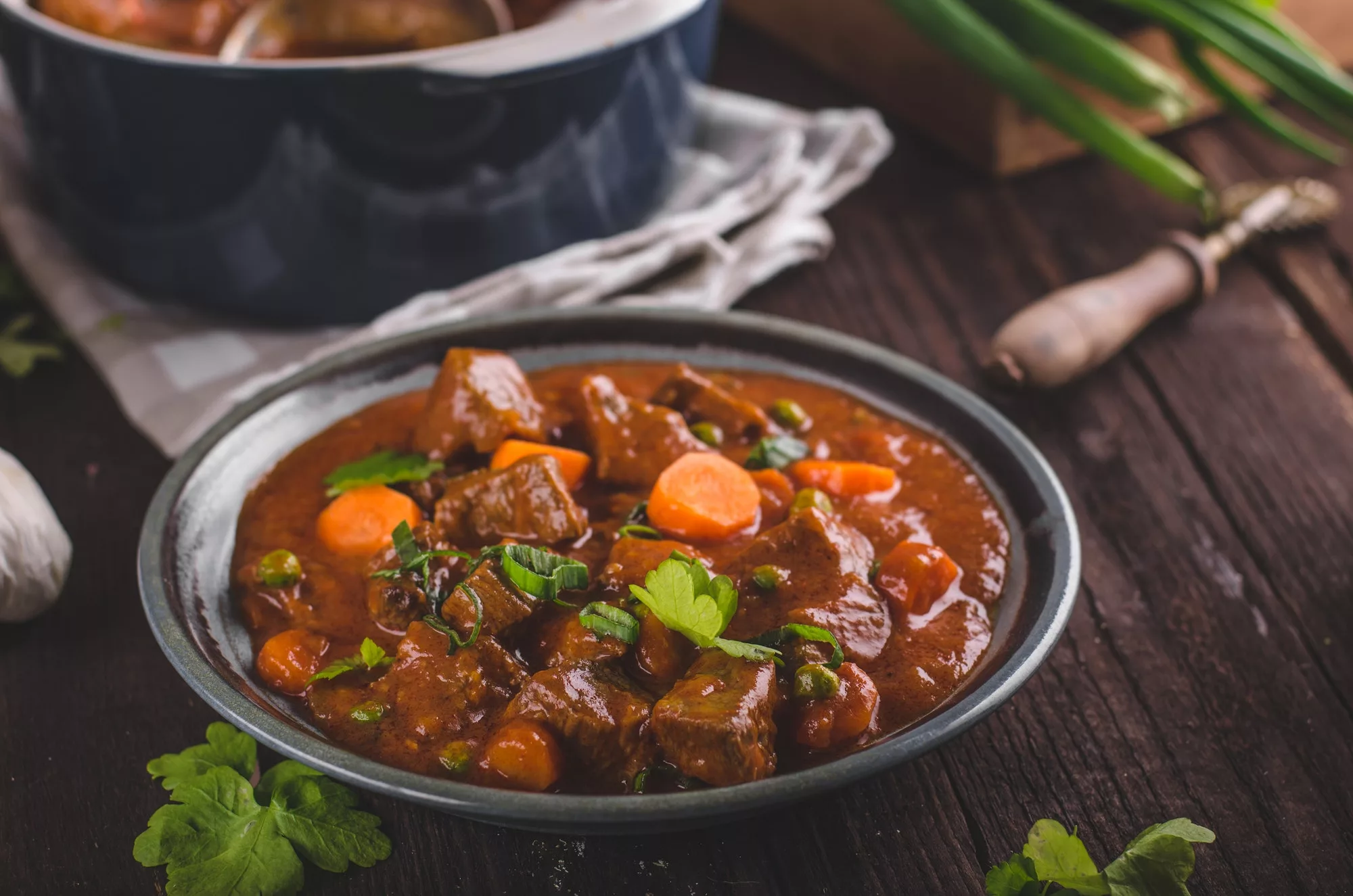
This hearty beef stew is hands-down one of my favourite cold-weather dinners. It’s built on a foundation of deeply caramelized onions that give the broth a natural sweetness and richness you just can’t get from a quick sauté. The beef gets tossed in a simple spice mix of paprika, mustard powder, and garlic powder before searing, which creates an incredible crust and layers of flavour throughout the stew.
What I love most about this recipe is that it uses straightforward pantry ingredients but delivers something that tastes like it’s been simmering all day. The potatoes break down just enough to thicken the broth naturally, the carrots hold their shape beautifully, and the fresh thyme and oregano tie everything together.
I make this on weekends when I have time to properly caramelize the onions — that 30 minutes of patience is what separates a good beef stew from an unforgettable one. Grab a crusty baguette and a big bowl, because you’re going to want seconds.
Hearty Beef Stew
Ingredients
Beef Stew Ingredients
- 1 ½ pound beef chuck steak cut into 1-inch cubes
- 2 large Russet potatoes (about 1 lb / 450g), peeled and diced into 1-inch cubes
- 3 large carrots (about 12 oz / 340g), peeled and sliced into 1/2-inch rounds
- 3 sticks celery diced
- 1 cup frozen peas
- 2 tablespoons tomato paste
- 3 cups beef broth
- 6-8 sprigs fresh thyme
- 4-6 sprigs fresh oregano
- 2 large yellow onions sliced
- 3 cloves garlic minced
- ¼ cup butter (4 tablespoons / 55g) unsalted butter
- 1-2 tablespoons Neutral oil (such as vegetable or canola) for searing the beef — the butter is used for the onions, but additional fat may be needed for the high-heat sear
- ½ teaspoon fine sea salt plus more to taste
Spice Mix ingredients
- 1 ½ tablespoons all-purpose flour
- 1 tablespoon paprika
- 1 teaspoon mustard powder
- ½ teaspoon garlic powder
Instructions
- Slice the onions and mince the garlic. Melt the butter in a large heavy-bottomed pot or Dutch oven over medium heat. Once it's bubbling, add the onion and garlic. Stir to coat in the butter, then turn the heat down to medium-low. Leave the onions for several minutes at a time so they can brown, stirring occasionally — don't let them burn. This should take about 25-30 minutes for truly caramelized onions.
- While the onions are cooking, prep the remaining ingredients: peel and dice the potatoes, carrots and celery. Rinse the fresh herbs and pat dry with a paper towel. Dice the steak into bite-sized pieces, blot dry with a paper towel, and toss in spice mix until well-coated.
- Remove the caramelized onions from the pot and set them aside. Add a splash of neutral oil (about 1-2 tablespoons) and raise the heat to high. Once the oil is shimmering and just starting to smoke, add the spice-coated beef in a single layer, working in batches to avoid overcrowding. Sear until well browned on all sides, about 2-3 minutes per batch, then remove and set aside. Leave any fond (the dark, caramelized bits stuck to the bottom of the pot) — this is pure flavour. Reduce heat to medium.
- Add the potatoes with 1/4 cup of stock. Cover and simmer for 5 minutes. Then add the carrots and another 1/4 cup of stock, cover, and simmer for 5 minutes more. Finally, add the remaining stock, celery, peas, caramelized onions, seared beef, tomato paste, and fresh herbs. Stir to combine, reduce heat to medium-low, and let it simmer uncovered for 35-45 minutes, stirring occasionally, until the potatoes are soft and the broth has thickened. Season with additional salt and pepper to taste.
Nutrition
What Makes This Hearty Beef Stew Special
Most beef stew recipes start with a quick sauté of onions — maybe five minutes until they’re translucent. This recipe takes a completely different approach. You spend a full 30 minutes slowly caramelizing the onions until they’re deep golden brown and almost jammy. That patience pays off in the final stew: the caramelized onions dissolve into the broth and create a natural sweetness and body that you simply cannot replicate with a shortcut.
The spice mix is another standout feature. Instead of just seasoning the broth, you coat each cube of beef in a blend of paprika, mustard powder, garlic powder, and flour before searing. This does double duty — it creates a deeply flavoured crust on the meat and helps thicken the stew as it simmers. The fond left behind from searing those spice-coated cubes becomes the flavour foundation for everything that follows.
Finally, the layered cooking method — potatoes first, then carrots, then everything else — means each vegetable is cooked to its ideal texture rather than everything being dumped in at once.
Tips for Best Results
- Don’t rush the onions. Thirty minutes feels long, but caramelized onions are the backbone of this stew’s flavour. Keep the heat at medium-low and stir every few minutes. If they start catching, add a splash of water.
- Blot the beef dry before coating. Moisture on the surface of the meat prevents browning. Pat each cube with a paper towel before tossing in the spice mix.
- Sear in batches. Overcrowding the pot drops the temperature and causes the beef to steam instead of sear. Work in two or three batches, giving each piece space.
- Use the fond. Those dark bits stuck to the bottom of the pot after searing are concentrated flavour. The stock added with the potatoes will deglaze the pot and lift all that goodness into the stew.
- Simmer, don’t boil. A gentle simmer keeps the beef tender. A rolling boil will toughen the meat and make the potatoes fall apart too quickly.
Substitutions and Variations
- Beef cut: Chuck roast is the classic stew cut and is often cheaper than steak. It has more connective tissue that breaks down during simmering, resulting in even more tender meat.
- Potatoes: Russet potatoes break down and thicken the stew naturally. If you prefer potatoes that hold their shape, use Yukon Gold instead.
- Fresh herbs: If you don’t have fresh thyme and oregano, substitute 1 teaspoon dried thyme and 1 teaspoon dried oregano. Add them when you add the stock.
- Frozen peas: Green beans cut into 1-inch pieces or frozen corn make excellent substitutes.
- Butter: For a dairy-free version, substitute olive oil or a neutral cooking oil. You’ll lose some richness but the caramelized onions will still deliver plenty of flavour.
- Spicier version: Add 1/2 teaspoon of smoked paprika and a pinch of cayenne to the spice mix for a stew with more heat.
- Red wine variation: Replace 1 cup of beef broth with dry red wine. Add it after searing the beef and let it reduce by half before proceeding.
Storage and Reheating
Refrigerator: Store leftover beef stew in an airtight container for up to 4 days. The flavours actually improve overnight as the spices meld with the broth.
Freezer: Freeze in portion-sized containers for up to 3 months. The potatoes may become slightly soft and grainy upon thawing — if this bothers you, freeze the stew without potatoes and add freshly cooked ones when reheating.
Reheating: Reheat gently on the stovetop over medium-low heat, stirring occasionally. Add a splash of beef broth if the stew has thickened too much in the fridge. Microwave reheating works but stir halfway through to ensure even heating. Avoid boiling when reheating as it can toughen the beef.
What to Serve With This Hearty Beef Stew
- Crusty baguette or sourdough bread — perfect for soaking up every last drop of that thick, flavourful broth.
- Cheesy mashed potatoes — if you want an extra-indulgent meal, a scoop of creamy mashed potatoes alongside the stew is unbeatable.
- Buttered egg noodles — a classic pairing that turns this into a rib-sticking dinner.
- Vegetable noodles — zucchini noodles, celeriac noodles, or butternut squash spirals for a lighter option.
- Simple green salad — dressed with a sharp vinaigrette to cut through the richness of the stew.
- Cornbread — slightly sweet cornbread is a wonderful complement to the savoury, paprika-spiced broth.
Frequently Asked Questions
Can I make this beef stew in a slow cooker?
Yes, but I strongly recommend still caramelizing the onions and searing the beef on the stovetop first. Transfer everything to the slow cooker, add the broth and remaining ingredients, and cook on low for 7-8 hours or high for 4-5 hours. The stovetop searing step is what gives the stew its depth — skipping it will result in a noticeably flatter flavour.
Why is my beef stew meat tough?
Tough meat in a stew usually means one of two things: the heat was too high (boiling instead of simmering) or it didn’t cook long enough. Beef stew needs a gentle, low simmer to break down the connective tissue in the meat. If your beef is still chewy, keep simmering on low for another 20-30 minutes.
Can I use a different cut of beef instead of steak?
Absolutely. Chuck roast is actually the preferred cut for stew because it has more marbling and collagen that melts during slow cooking, producing more tender, flavourful meat. Cut it into 1-inch cubes just like the steak. Brisket and bottom round also work well.
How do I thicken this beef stew if it’s too watery?
The flour in the spice mix and the Russet potatoes both act as natural thickeners. If the stew is still too thin after simmering, make a slurry by mixing 1 tablespoon of flour with 2 tablespoons of cold water until smooth, then stir it into the stew and simmer for 5 more minutes. Alternatively, remove a cup of potatoes, mash them, and stir them back in.
Do I need to peel the carrots?
Peeling is recommended for this stew. Unpeeled carrots can have a slightly bitter, earthy taste that becomes more pronounced during long simmering. It only takes a minute with a vegetable peeler and makes a noticeable difference in the finished dish.
Can I add other vegetables to this stew?
Yes — turnips, parsnips, sweet potatoes, and mushrooms all work beautifully in this recipe. Add root vegetables at the same stage as the carrots. Mushrooms should go in with the celery and peas so they don’t overcook and become rubbery.
Why do you caramelize the onions for so long?
Caramelizing onions for 25-30 minutes transforms their sharp, pungent flavour into something deeply sweet and complex. The natural sugars in the onions undergo the Maillard reaction, creating hundreds of new flavour compounds. In this stew, those onions dissolve into the broth and give it a richness that no amount of seasoning can replicate. It’s the single most impactful step in the entire recipe.
The History of Beef Stew
Beef stew is one of the oldest and most universal dishes in cooking. Nearly every culture with access to cattle and root vegetables developed some version of it. The concept is simple: tough, affordable cuts of meat become tender and flavourful when simmered slowly in liquid with whatever vegetables are on hand. In Britain and Ireland, beef stew has been a staple since at least the medieval period, often made with ale or stock and thickened with flour or bread. In France, it evolved into boeuf bourguignon with wine and mushrooms. In America, beef stew became a frontier and farmhouse staple, with potatoes and carrots stretching a small amount of meat into a filling family meal. This particular recipe draws on that comfort food tradition while elevating it with properly caramelized onions and a thoughtful spice mix — proof that the simplest dishes often reward a little extra care the most.
If you try this hearty beef stew, I’d love to hear how it turned out — leave a star rating and a comment below to let me know!


