


































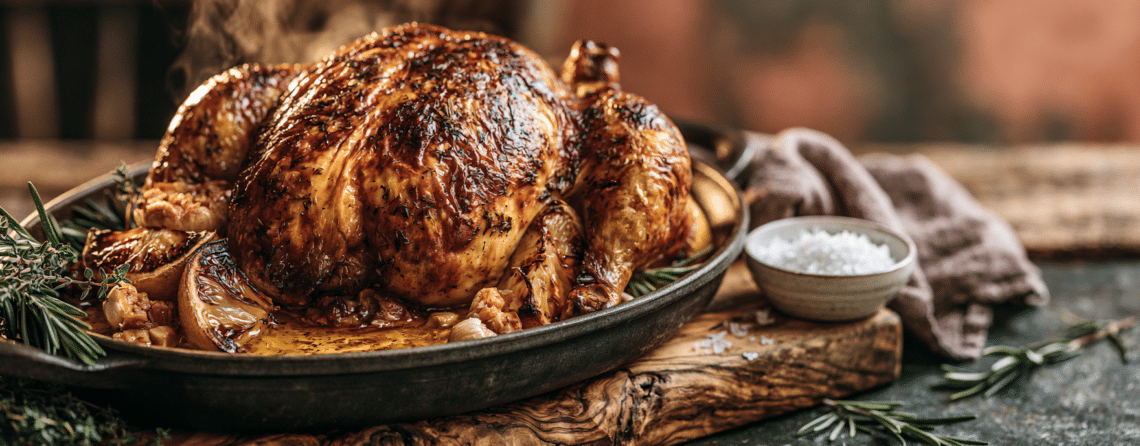
This is a whole roasted chicken seasoned with lemon, rosemary, thyme, and garlic — straightforward ingredients that do real work in the oven. The skin comes out crisp, the meat stays juicy, and the whole thing takes about 20 minutes of hands-on time. It’s the kind of dinner that looks like you tried harder than you did.
Before you start
Two things make or break this chicken. First, dry the bird thoroughly before it goes near the oil — any surface moisture turns to steam in the oven and you’ll get pale, soft skin instead of the golden crust you’re after. Paper towels and a minute of patience are all it takes. Second, use a meat thermometer rather than guessing by time alone. Ovens vary, and a 1.5 kg chicken can run ahead of or behind the 75-minute mark depending on your pan, your rack position, and how cold the bird was when it went in. Pull it at 74°C (165°F) in the thickest part of the thigh, not touching bone, and you’re done.
Smart swaps
- Fresh herbs: Dried rosemary and thyme work if that’s what you have — use about 1 teaspoon of each. The aroma won’t be quite as strong, but the flavor still comes through.
- Lemon: One medium lemon gives you enough juice and spent wedges for the cavity. A lime works in a pinch but gives a slightly different flavor — still good, just not the same.
- Olive oil: Any neutral oil (avocado, sunflower) will brown the skin fine. Skip the extra-virgin label here if you’re watching the budget — the flavor difference after 75 minutes in a hot oven is minimal.
- Whole chicken: Bone-in, skin-on chicken pieces (thighs and drumsticks) roast well with the same seasoning — reduce the cook time to around 40–45 minutes and check the temperature the same way.
Storage and reheating
Leftover chicken keeps in an airtight container in the fridge for up to 4 days. For freezing, pull the meat off the bone first — it thaws and reheats much more evenly than a whole carcass. Frozen cooked chicken is good for 3 months. To reheat, add a splash of water or broth to a covered baking dish and warm at 160°C (325°F) for 15–20 minutes — this keeps the meat from drying out. The microwave works for speed, but cover the plate and use medium power. Don’t reheat the skin in the microwave; it goes rubbery. If you want it crisp again, a few minutes under the broiler is faster than you’d think. Save the carcass for stock — simmer it with an onion, a carrot, and some peppercorns for an hour and you’ve got the base for a good soup.
What can go wrong
- The skin browns too fast but the inside isn’t done: Tent the chicken loosely with foil after it reaches the color you want, then keep cooking to temperature. Don’t skip the rest of the cook time just because it looks done on the outside.
- The bottom of the pan burns: A dry roasting pan with no liquid can scorch the drippings. Add a small splash of water or chicken broth to the pan before it goes in — just enough to cover the bottom. This also gives you something to baste with if you want.
- The garlic cloves inside the cavity turn bitter: Crushed garlic can over-roast if the cavity runs very hot. Leaving the cloves whole (just smashed, not minced) slows the cooking and keeps the flavor mellow rather than sharp.
- The chicken is done but the juices look pink near the bone: Pink juices near the bone don’t always mean undercooked — it can be a myoglobin reaction, especially in younger birds. Trust your thermometer over the juice color. If it reads 74°C (165°F), it’s safe to eat. Skip the garnish — not worth the extra dish.
- Uneven cooking — breast done, thighs still raw: This usually means the chicken went in straight from the fridge. Let it sit at room temperature for 20–30 minutes before roasting so it cooks more evenly throughout.
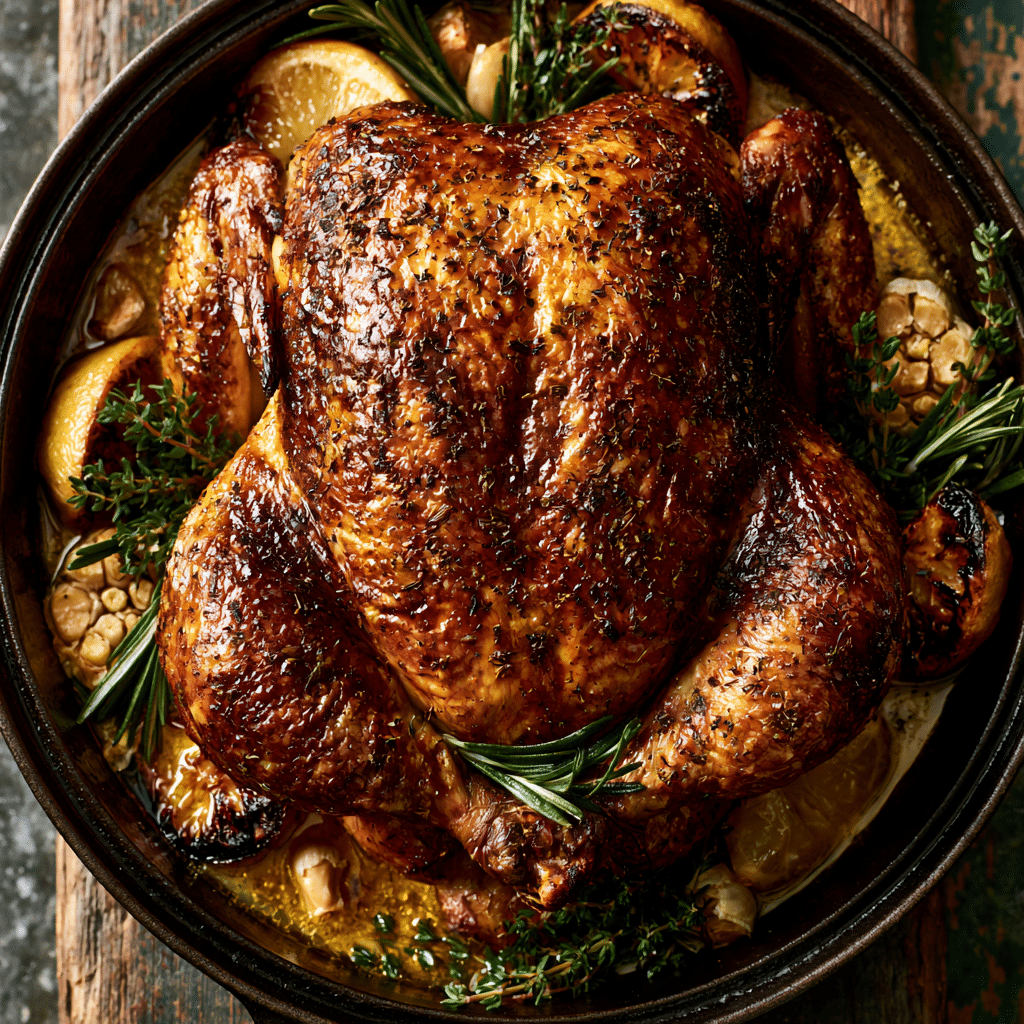
Lemon Herb Roasted Chicken (Crispy Skin, Juicy Meat)
Equipment
- Roasting pan
- Instant-read meat thermometer
- Kitchen twine (optional, for trussing)
- Cutting board (large)
- Paper towels
- Silicone basting brush
Ingredients
- 1 whole chicken preferably organic, about 1.5 kg (3.3 lb)
- 2 tablespoons olive oil extra virgin, 30 ml
- 1 medium lemon cut into wedges
- 3 sprigs rosemary fresh
- 3 sprigs thyme fresh
- 5 cloves garlic crushed
- 1 teaspoon sea salt plus more to taste
- 1 teaspoon black pepper freshly ground, plus more to taste
Instructions
- Preheat your oven to 190°C (375°F). As you wait, prepare your chicken by patting it dry with paper towels to ensure a crispy skin.1 whole chicken
- Rub the chicken all over with olive oil, ensuring an even coat that will lend to both flavor and browning during roasting.1 whole chicken, 2 tablespoons olive oil
- Squeeze the juice of the lemon wedges over the chicken, letting it run over all sides. Place the spent wedges inside the cavity — they will steam during roasting and infuse the meat with citrus aroma.1 whole chicken, 1 medium lemon
- Stuff the cavity with rosemary, thyme, and garlic cloves, allowing the herby essence to infuse the chicken.1 whole chicken, 3 sprigs rosemary, 3 sprigs thyme, 5 cloves garlic
- Season the skin generously with sea salt and freshly ground black pepper, paying special attention to the top and sides.1 teaspoon sea salt, 1 teaspoon black pepper
- Place the chicken in a roasting pan, breast side up. Roast in the preheated oven for approximately 75 minutes, or until an instant-read thermometer inserted into the thickest part of the thigh (not touching bone) reads 74°C (165°F). Cooking time may vary depending on the exact size of your bird and your oven — always rely on the thermometer rather than time alone.1 whole chicken
- Transfer the chicken to a cutting board and tent loosely with aluminium foil. Rest for 10–15 minutes before carving — this allows the juices to redistribute so every slice is moist and flavourful.
Notes
Nutrition
Frequently asked questions
Do I need to truss the chicken?
No — trussing is optional for this recipe. It helps the bird hold a neater shape and can promote slightly more even cooking, but skipping it won’t ruin the result. If the wing tips are browning too fast, just tuck them under the breast.
Can I prep this the night before?
Yes, and it actually helps. Season the chicken, rub it with oil, and leave it uncovered in the fridge overnight — the skin dries out further and browns even better the next day. Add the lemon juice and stuff the cavity just before it goes in the oven.
What size roasting pan should I use?
Use a pan that fits the chicken with a couple of inches of clearance on each side. Too large and the drippings spread thin and burn; too small and steam builds up around the bird and softens the skin. A standard 9×13-inch baking dish works well for a 1.5 kg chicken.
Can I use a convection (fan) oven?
Yes — reduce the temperature by about 15°C (25°F) and start checking the internal temperature around the 55-minute mark. Convection circulates hot air more efficiently, so the chicken typically finishes faster and the skin gets very crisp.
How do I know when the chicken has rested long enough?
Ten minutes is the minimum — that’s enough time for the juices to settle back into the meat so they don’t all run out when you carve. If you need to hold it longer (up to 20 minutes), tent it loosely with foil to keep it warm without steaming the skin.
What should I serve with this?
Roasted vegetables cooked in the same oven work well — put them in a separate pan alongside the chicken for the last 40 minutes. Crusty bread, a simple green salad, or steamed rice are all easy options that don’t require much extra effort.
More recipes to try
- Authentic chicken shawarma
- Elegant chicken Marsala with mushrooms
- Rustic sourdough focaccia with rosemary and sea salt
- Caramelized Brussels sprouts with balsamic glaze