








































This is a layered chicken biryani built around bone-in thighs, a yogurt-and-spice marinade, and the dum method — where partially cooked rice and chicken finish together in a sealed pot so the steam does the work. It takes about two hours start to finish, but most of that time is hands-off. If you want a one-pot dinner that genuinely tastes like you put in serious effort, this is a good one to learn.
Before you start
Two things will make or break this recipe. First, the rice must be parboiled to exactly 70% done — it should still have a firm, chalky center when you bite a grain. Fully cooked rice will turn mushy during the final steam, and there is no fixing that. Second, the seal on the pot matters. During the dum step, the steam trapped inside is what cooks the rice through and pushes the spice flavors upward into every layer. If your lid does not fit tightly, lay a sheet of aluminum foil across the pot before pressing the lid down — that simple fix closes the gap and keeps the steam where it belongs.
Mistakes to avoid
- Skipping the rinse on the rice. Basmati needs to be rinsed until the water runs clear. The surface starch is what makes grains clump and go gluey. Do not skip this step even if you are short on time.
- Cooking the chicken over high heat. Medium heat for the chicken step is not a suggestion. High heat drives off the liquid too fast, and you end up with dry, tough pieces before the rice even goes in. Keep it steady and let the liquid reduce slowly.
- Using low-fat yogurt in the marinade. Full-fat yogurt clings to the chicken and tenderizes it properly. Low-fat or non-fat versions are too watery and the marinade slides right off.
- Frying the onions in a hurry. The golden fried onions — birista — need slow, patient frying to get sweet and crisp. Rushing them on high heat gives you bitter, unevenly browned onions that taste sharp instead of mellow. Use medium-low heat and stir often. Skip the garnish of fresh cilantro if you want — not worth the extra dish — but do not cut corners on the onions.
- Lifting the lid during the dum step. Every time you open the pot you release steam and drop the temperature. Set a timer and leave it alone until it is done.
Make-ahead notes
The chicken can be marinated up to 24 hours ahead — longer than the one-hour minimum actually improves the flavor, so overnight in the fridge is a smart move. Fully assembled and cooked biryani keeps well in an airtight container in the refrigerator for up to 3 days. To reheat, add a splash of water (about 2 tablespoons per serving), cover the pan tightly, and warm over low heat for 8 to 10 minutes — the added moisture prevents the rice from drying out. For freezing, portion it into individual containers before freezing; it holds for up to 2 months. Thaw overnight in the fridge and reheat the same way. Avoid microwaving from frozen, as it heats unevenly and the rice texture suffers.
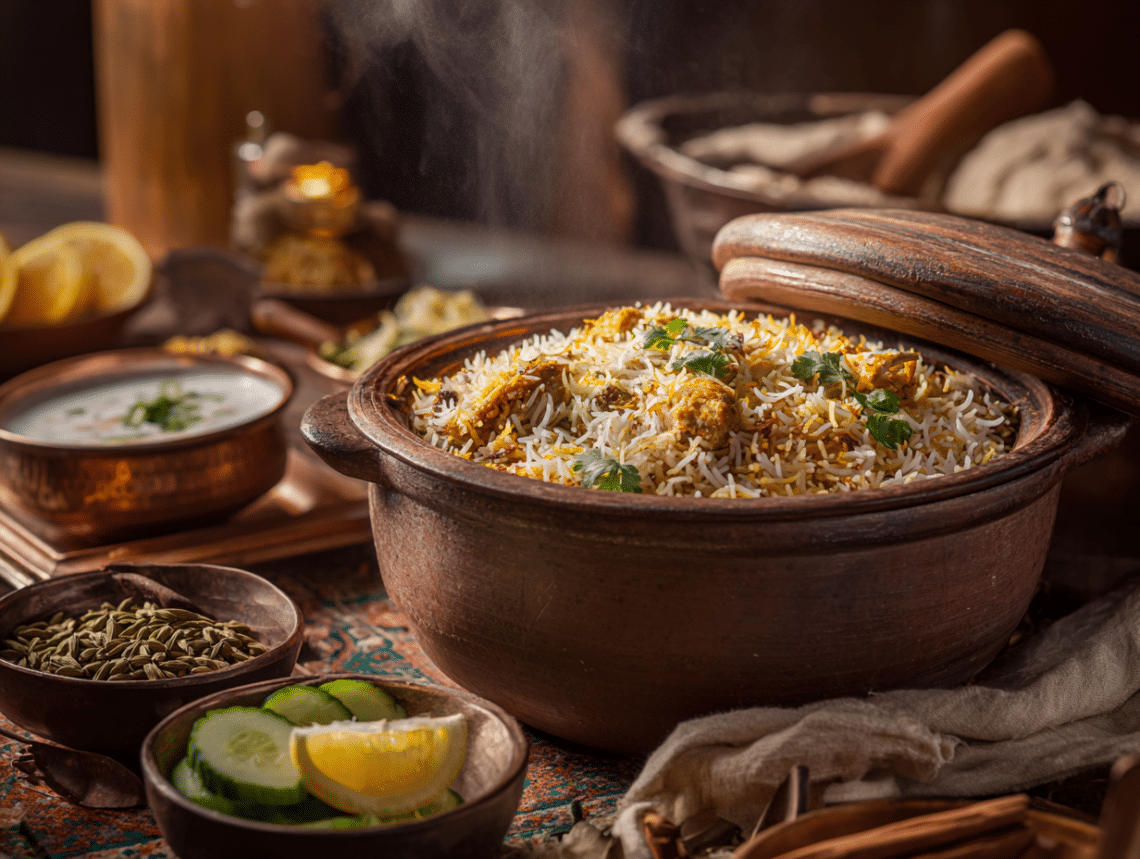
Chicken Biryani
Equipment
- Large heavy-bottomed pot or Dutch oven
- Mixing bowls
- Fine-mesh sieve
- Wooden spatula
Ingredients
For the Chicken Marinade:
- 2 pounds bone-in chicken thighs skin removed, cut into large chunks
- 1 cup plain full-fat yogurt Greek yogurt preferred for thickness
- 1 tablespoon ginger paste freshly grated preferred
- 1 tablespoon garlic paste freshly minced preferred
- 1 teaspoon turmeric powder
- 2 teaspoons kashmiri chili powder adds color and mild heat
- 1.5 teaspoons garam masala use homemade if available
- 1.5 teaspoons salt adjust to taste
For the Biryani Rice:
- 2 cups basmati rice aged, long-grain preferred
- 6 cups water
- 1 teaspoon salt
- 1 teaspoon cumin seeds
- 4 whole green cardamoms lightly crushed
- 1 inch cinnamon stick
For Final Assembly:
- 2 tablespoons ghee for layering and flavor
- 1 pinch saffron threads soaked in 2 tbsp warm milk
- 1 large onion thinly sliced and fried until golden
- 2 tablespoons fresh cilantro chopped
Instructions
- Marinate the Chicken: In a large bowl, combine yogurt, ginger-garlic paste, turmeric, chili powder, garam masala, and salt. Add chicken pieces and mix thoroughly to coat. Cover and marinate in the refrigerator for at least 1 hour (or up to overnight for deeper flavor).
- Parboil the Rice: Rinse basmati rice under cold water until water runs clear. In a large pot, bring 6 cups of water to boil. Add salt, cumin seeds, cardamom, and cinnamon. Add rice and boil until it's 70% cooked (still firm inside). Drain immediately and set aside.
- Cook Chicken: In a heavy-bottomed pot or Dutch oven, add marinated chicken and cook over medium heat (350°F / 175°C) until chicken is fully cooked and liquid reduces to a thick gravy, about 20–25 minutes.
- Layer and Assemble Biryani: Remove half the chicken and set aside. Spread half the parboiled rice over the remaining chicken. Layer reserved chicken on top, then add remaining rice. Drizzle saffron milk, fried onions, chopped cilantro, and dot with ghee.
- Dum Cooking (Steam Cook): Cover pot with tight-fitting lid or seal with foil. Cook on very low flame (250°F / 120°C) for 25–30 minutes. You should smell a deep, unified aroma as the biryani finishes cooking.
Notes
- For a lighter version, you can substitute chicken breast, though bone-in thighs deliver juicier results.
- Cook rice just until 70% done—overcooking will yield mushy grains.
- Always allow biryani to rest for at least 10 minutes after the steaming (dum) step.
Nutrition
FAQ
Can I use boneless chicken instead of bone-in thighs?
Yes, but reduce the chicken cooking time by about 5 to 8 minutes since boneless pieces cook faster. Bone-in thighs are worth using if you can find them — the bones add depth to the gravy that you do not get from boneless cuts.
I can’t find Kashmiri chili powder. What can I use?
A mix of half sweet paprika and half regular chili powder is the closest substitute — it gives you similar color and mild heat. Avoid using cayenne as a straight swap; it is much hotter and will throw off the balance.
Do I have to use saffron? It’s expensive.
No, you can leave it out and the biryani will still taste good. If you want the yellow color without the cost, dissolve a small pinch of turmeric in the warm milk instead.
How do I know when the rice is 70% cooked?
Bite a grain — it should be cooked on the outside but still have a distinct firm, white center. It typically takes 5 to 7 minutes of boiling, but start checking at 5 minutes because it moves fast.
My pot is not very heavy. Will this still work?
A thin-bottomed pot is a real problem for the dum step because it creates hot spots that scorch the bottom layer of rice. Place a flat griddle pan or a heavy skillet under your pot on the burner to diffuse the heat — it works well as a substitute for a Dutch oven.
What to cook next
- Authentic Homemade Pani Puri
- Crispy Golden Dosa
- Sizzling Classic Chicken Fried Rice
- Southeast Asian Street Food Inspired Chicken Rice Bowl