































This is a pot of slow-simmered dried black-eyed peas with onion, celery, carrot, garlic, smoked paprika, and a splash of apple cider vinegar stirred in at the end. It takes about two hours start to finish, costs very little, and makes six generous bowls — which is exactly why it earns a regular spot on a weeknight rotation or a casual dinner table.
The technique that matters
Two things decide whether this dish is good or just fine. First, bloom your spices. When the recipe tells you to stir the smoked paprika, cayenne, salt, and pepper into the hot oil and vegetables for 30 seconds before adding any liquid, don’t skip it or rush it. That brief contact with heat opens up the spices and distributes their flavor through the whole pot — adding them directly to the broth gives you a much flatter result. Second, keep the simmer genuinely low once the peas go in. A rolling boil breaks the skins and turns the peas mushy before the insides are fully cooked through. You want small, lazy bubbles. If you’re doubling the batch for a group, this matters even more — a bigger volume of liquid takes longer to settle into a true low simmer, so give it a few extra minutes after you reduce the heat before you walk away.
About the ingredients
- Dried black-eyed peas: Unlike many dried beans, black-eyed peas don’t strictly require an overnight soak — the quick-soak method (boil 2 minutes, rest covered 1 hour) works well here and produces the same tender result. Either way, drain and start with fresh water or broth for cooking.
- Smoked paprika: Regular sweet paprika won’t give you the same depth. If your jar has been open more than a year, it’s probably stale — buy a fresh one. The smokiness is doing real work in this recipe.
- Apple cider vinegar: A small amount added at the very end. Don’t add it earlier or cook it for long; the brightness fades quickly with heat. White wine vinegar is a reasonable substitute if that’s what you have.
- Broth choice: Chicken broth gives a richer base; vegetable broth keeps it fully vegetarian and still tastes good. If you want more body without meat, use a full-flavored vegetable broth rather than a pale or watery one.
Common problems and fixes
- Peas are still firm after 90 minutes: Old dried beans are the usual culprit — they can take significantly longer to soften. Keep simmering and check every 15 minutes. Adding salt too early can also slow softening, so hold extra seasoning until the peas are nearly done.
- The pot is drying out before the peas are tender: Add hot water or warm broth in half-cup increments, not cold liquid, which drops the temperature and extends cooking time further.
- The broth tastes thin: Remove the lid for the last 20–30 minutes of cooking to let it reduce slightly. Mashing a small scoop of peas against the side of the pot and stirring them back in also thickens the broth naturally.
- Too spicy for some at the table: The cayenne is adjustable — skip the garnish of extra hot sauce on the table and let people season their own bowls. That’s easier than trying to dial it back in the pot.
- Scaling up and running short on time: A doubled batch needs the same low simmer but may need an extra 15–20 minutes of cooking because the larger volume holds heat differently. Start checking for doneness at the 90-minute mark rather than assuming it’s done.
Keeping and reheating
Leftovers keep well in the fridge for up to 4 days in a sealed container. The peas will absorb more liquid as they sit, so add a splash of broth or water when reheating on the stovetop over medium-low heat, stirring occasionally until warmed through. For freezing, cool the peas completely first, then store in portions for up to 3 months. Thaw overnight in the fridge before reheating — they hold their texture better with a slow thaw than a microwave defrost. If you’re making this ahead for a gathering, it actually tastes better the next day once the flavors have had time to settle.
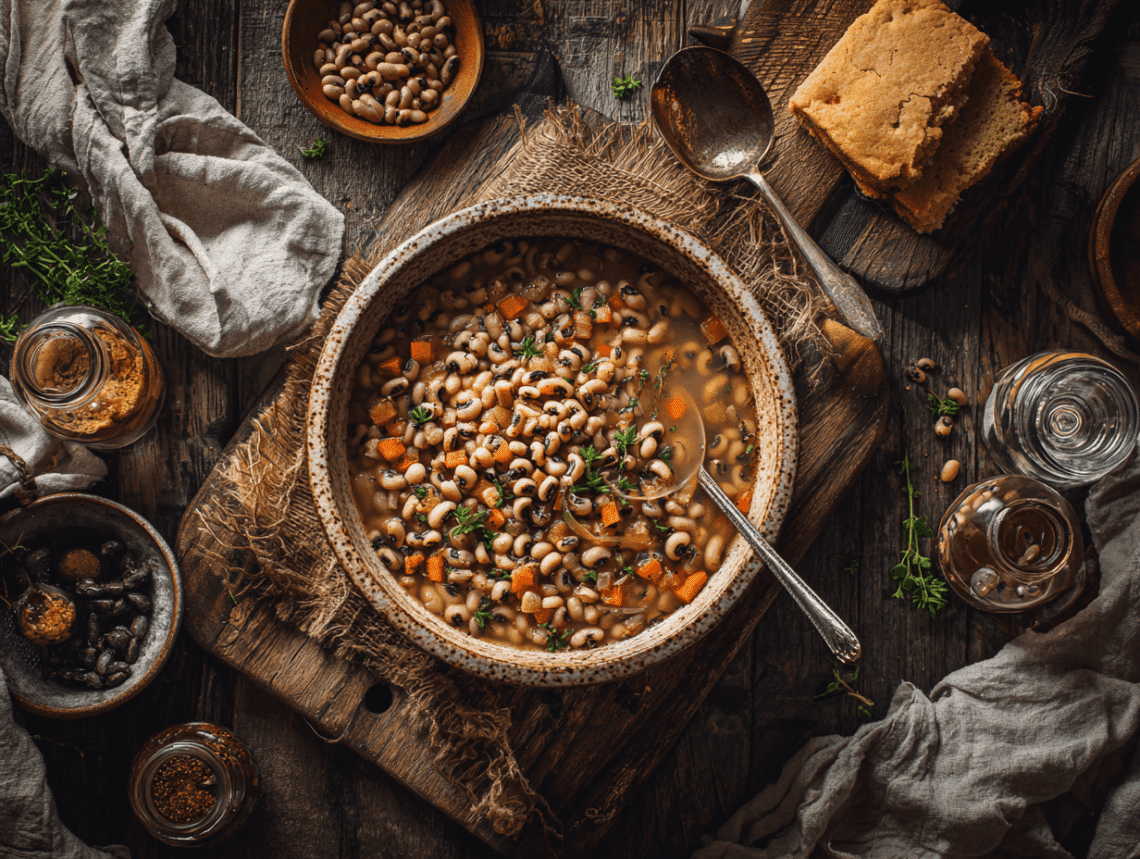
Southern-Style Stewed Black-Eyed Peas
Equipment
- Large heavy-bottomed pot or Dutch oven
- Wooden spoon
- Measuring cups and spoons
Ingredients
- 1 pound dried black-eyed peas sorted and rinsed
- 6 cups low-sodium chicken broth or vegetable broth for vegetarian option
- 1 tablespoon olive oil extra virgin preferred
- 1 cup yellow onion diced
- 3 cloves garlic minced
- 1 cup celery diced
- 1 cup carrot diced
- 1 piece bay leaf fresh or dried
- 1 teaspoon smoked paprika adds depth and smokiness
- ½ teaspoon cayenne pepper adjust to taste
- 1 teaspoon kosher salt plus more to taste
- ½ teaspoon black pepper freshly ground
- 1 teaspoon apple cider vinegar adds brightness
Instructions
- If using dried peas, soak them overnight in cold water or use a quick soak by boiling them for 2 minutes and letting them sit covered for 1 hour. Drain and set aside.
- In a large heavy-bottomed pot or Dutch oven, heat the olive oil over medium heat (about 350°F / 175°C). Add the diced onion and sauté for 4–5 minutes until it becomes translucent and slightly golden.
- Stir in the garlic, celery, and carrots. Cook for another 5–6 minutes, stirring occasionally, until vegetables begin to soften and develop aroma.
- Add the smoked paprika, cayenne, salt, and black pepper. Stir for 30 seconds to bloom the spices and enhance flavor.
- Add the soaked and rinsed black-eyed peas, broth, and bay leaf. Bring mixture to a gentle boil, then reduce heat to low and simmer uncovered for 1 hour and 30 minutes, or until peas are tender and flavorful.
- In the last 5 minutes of cooking, stir in the apple cider vinegar. Remove the bay leaf. Taste and adjust seasoning with additional salt or pepper if needed.
Notes
- For a vegetarian version, use vegetable broth instead of chicken broth.
- If you prefer a creamier texture, mash about 1 cup of the cooked peas and stir them back into the pot.
- Add diced smoked turkey or andouille sausage for a heartier meal with rich flavor.
- To thicken faster, simmer uncovered for the last 20–30 minutes and stir frequently.
Nutrition
FAQ
Can I use canned black-eyed peas instead of dried?
Yes, but reduce the cooking time significantly — canned peas are already cooked and only need about 20–25 minutes of simmering to absorb the flavors. Use two 15-ounce cans, drained and rinsed, and reduce the broth to about 3 cups since you won’t need as much liquid for a long simmer.
Can I add meat to this recipe?
Absolutely — smoked turkey legs, ham hocks, or andouille sausage all work. Add them at the same time as the peas and broth so they have the full cooking time to flavor the pot. If using sausage, slice it and brown it briefly in the pot before sautéing the vegetables for extra depth.
How do I know when the peas are actually done?
Taste a few — they should be fully tender all the way through with no chalky center, and the skins should be intact but soft. If the outside is soft but the inside still has resistance, keep simmering; that gap usually closes within another 15–20 minutes.
What do I serve this with to make it a full meal?
Cornbread is the classic pairing and handles the broth well. Rice also works if you want to stretch the pot further for a larger group — one batch of peas over rice can comfortably feed eight rather than six.
Try these next
- Fiery Jamaican Jerk Chicken
- Sweet Corn Chowder
- Creamy Grape Salad with Southern Charm
- Hearty Shepherd’s Pie