



























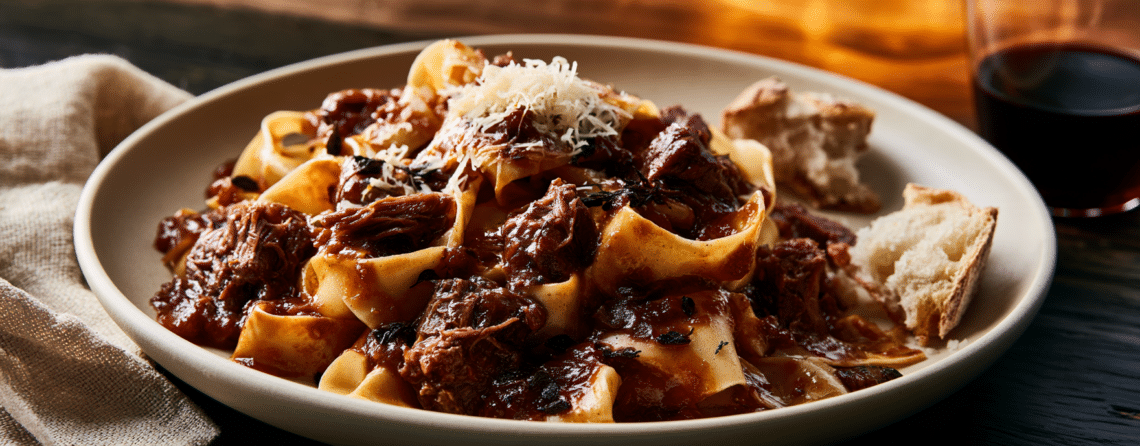
This is a braised beef short rib ragu tossed with pappardelle — 2 pounds of bone-in short ribs, a bottle of red wine, and about 3.5 hours of mostly hands-off oven time. The honest reason to make it: the sauce reheats better than almost anything else in this category, so the effort pays off across several meals, not just one.
The short version of why this works
Two things actually matter here. First, the sear. Getting a deep brown crust on all sides of the short ribs before anything else goes in the pot builds the flavor base for the entire sauce — pale, rushed searing produces a thin, flat result. Give each side a full 3–4 minutes without moving the meat. Second, the oven braise at 300°F rather than stovetop simmering. The oven heats from all sides evenly, so the collagen in the short ribs breaks down into gelatin at a steady pace. That gelatin is what makes the finished sauce cling to the pasta instead of pooling at the bottom of the bowl.
Shopping notes
- Bone-in short ribs: The bone adds body to the braising liquid. Boneless will work in a pinch, but the sauce will be slightly thinner. Ask your butcher for English-cut ribs — they’re meatier than flanken-cut for this application.
- Red wine: Use something you’d drink, but it doesn’t need to be Chianti specifically. Any dry, full-bodied red works. Avoid “cooking wine” from the grocery shelf — it’s salted and will throw off the seasoning.
- Pappardelle: Fresh pappardelle is sold refrigerated at most grocery stores and is worth grabbing if it’s available. Dry pappardelle is a perfectly fine substitute — skip the garnish of extra olive oil at the table, not worth the extra dish.
- Tomato puree: A standard 14 oz can. Crushed tomatoes also work if that’s what you have; the texture will be slightly chunkier but the flavor is the same.
What can go wrong
- The sauce is greasy after braising: Short ribs are well-marbled, and a lot of fat renders out during the braise. Before shredding the meat, tilt the pot and spoon off the fat that pools on the surface, or refrigerate the finished ragu overnight — the fat solidifies and lifts off cleanly in one step.
- The meat is tough at the 3-hour mark: Oven temperatures vary. If the ribs aren’t falling off the bone at 3 hours, cover the pot back up and give them another 30–45 minutes. Rushing this step is the most common reason the dish disappoints.
- The sauce tastes flat or too acidic: This usually means the wine didn’t reduce enough before the stock and tomatoes went in. A pinch of sugar stirred in at the end can correct sharpness. Taste and adjust salt at this stage too — unsalted stock means you control the seasoning.
- The pasta absorbs all the sauce before serving: Pappardelle soaks up liquid fast, especially fresh pasta. Keep a full cup of reserved pasta water nearby and add it a splash at a time when tossing. If the ragu thickens too much while sitting on the stove, the pasta water loosens it without diluting the flavor.
- Stringy, dry shredded meat: This happens when the meat is shredded too far in advance and sits uncovered. Shred directly into the warm sauce and stir it in immediately so the meat stays coated and moist.
Make-ahead notes
The ragu — meat shredded and stirred back into the sauce, pasta not yet cooked — keeps in the fridge for up to 4 days in a sealed container. The flavor genuinely improves on day two once the fat has been skimmed off. For longer storage, freeze the ragu in portion-sized containers for up to 3 months; thaw overnight in the fridge. Reheat gently in a saucepan over low heat, adding a splash of water or beef stock to loosen it. Cook the pasta fresh each time — pre-cooked pappardelle turns mushy when reheated and isn’t worth the shortcut.
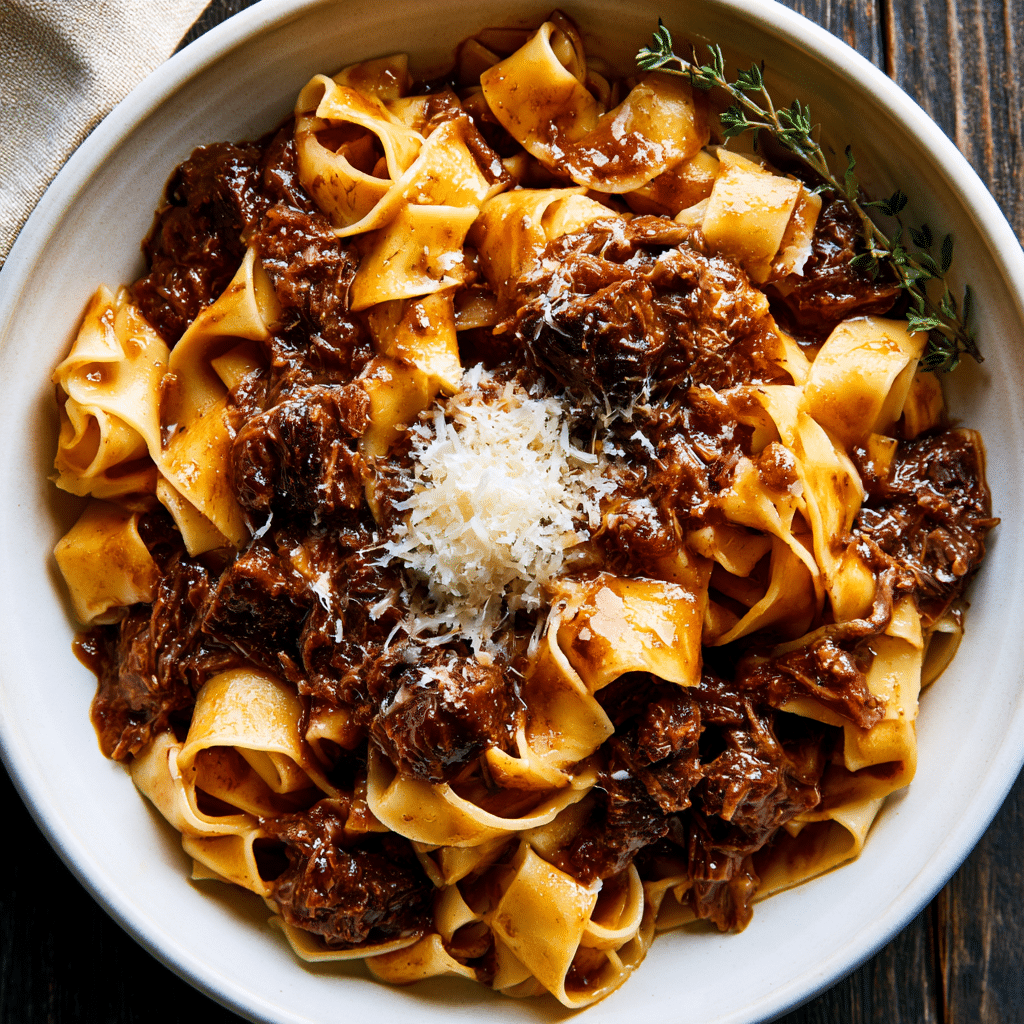
Short Rib Ragu with Pappardelle
Equipment
- Large Dutch oven (6-quart / 5.7-litre minimum)
- Heavy-bottomed tongs for turning short ribs
- Wooden spoon for deglazing
- Large pot (for boiling pasta)
- Fine-mesh sieve or fat separator (for skimming sauce)
- Instant-read thermometer
Ingredients
- 2 lb beef short ribs bone-in, well-marbled, about 900g
- 2 tbsp olive oil regular or light — not extra virgin, which has a lower smoke point and will burn during the sear
- 1 large onion finely chopped
- 1 medium carrot finely diced (optional, traditional soffritto base)
- 1 stalk celery finely diced (optional, traditional soffritto base)
- 2 cloves garlic minced
- 2 cups red wine bold and dry, such as Chianti or Sangiovese, 480ml
- 1 cup beef stock unsalted, 240ml
- 1 can tomato puree 14 oz / 400g can
- 2 sprigs thyme fresh, or substitute with 1 tsp dried
- 1 piece bay leaf
- 1 lb pappardelle pasta fresh preferred, 450g
- 1 pinch kosher salt to taste
- 1 pinch black pepper freshly ground, to taste
- ½ cup Parmesan cheese freshly grated, plus extra for serving, about 50g
Instructions
- Preheat your oven to 300°F / 150°C. Season the short ribs generously with salt and pepper.1 pinch kosher salt, 1 pinch black pepper, 2 lb beef short ribs
- Heat olive oil in a large Dutch oven over medium-high heat. Sear the short ribs on all sides until they are deeply browned, about 3-4 minutes per side. Remove the ribs from the pot and set aside.2 tbsp olive oil, 2 lb beef short ribs
- In the same pot, lower the heat to medium and add onions. Sauté until translucent and soft, stirring occasionally, about 5 minutes. Add carrot and celery if using, and cook for 3 minutes. Add garlic and cook for another 1 minute until fragrant.1 large onion, 1 medium carrot, 1 stalk celery, 2 cloves garlic
- Add the red wine to the pot, and scrape any brown bits from the bottom with a wooden spoon. Let the wine reduce by half, about 8-10 minutes.2 cups red wine
- Return the short ribs to the pot. Add beef stock, tomato puree, thyme, and bay leaf. Bring to a gentle simmer, cover, and transfer to the preheated oven. Braise for about 3 hours, or until the meat is tender and falling off the bone.2 lb beef short ribs, 1 cup beef stock, 1 can tomato puree, 2 sprigs thyme, 1 piece bay leaf
- Remove the ribs from the sauce and shred the meat using two forks, discarding any bones and large pieces of fat. Return the shredded meat to the pot. If the sauce is thin, simmer uncovered over medium-low heat for 10–15 minutes to concentrate it before adding the pasta.2 lb beef short ribs
- Cook the pappardelle according to package instructions until al dente. Drain, reserving a cup of pasta water.1 lb pappardelle pasta
- Remove and discard the bay leaf and thyme sprigs from the ragu. Toss the drained pappardelle with the ragu over low heat, adding reserved pasta water a few tablespoons at a time until the sauce clings to the pasta in a silky coat. Serve immediately in warmed bowls, topped with freshly grated Parmesan.1 lb pappardelle pasta, 1/2 cup Parmesan cheese, 2 sprigs thyme, 1 piece bay leaf
Notes
Nutrition
Frequently asked questions
Can I make this in a slow cooker instead of the oven?
Yes — cook on low for 7–8 hours after completing the stovetop steps through the wine reduction. The result is nearly identical, though you’ll want to remove the lid for the last 30 minutes to let the sauce reduce slightly, since slow cookers trap more moisture than a covered Dutch oven in the oven.
What can I use instead of red wine?
Replace the 2 cups of red wine with an equal amount of beef stock plus 1 tablespoon of tomato paste and a teaspoon of red wine vinegar. The sauce will be a little less complex but still very good. Avoid grape juice as a substitute — it adds sweetness that’s hard to balance.
My grocery store doesn’t carry pappardelle — what pasta works instead?
Wide egg noodles or tagliatelle are the closest substitutes and handle the weight of the sauce well. Rigatoni also works because the sauce gets trapped inside the tubes. Avoid thin pasta like spaghetti or angel hair — the ragu is too heavy and will slide right off.
What to cook next
- Authentic Roman Carbonara
- Creamy Fettuccine Alfredo
- Elegant Chicken Marsala with Mushrooms and Marsala Wine
- Crispy Italian Almond Biscotti