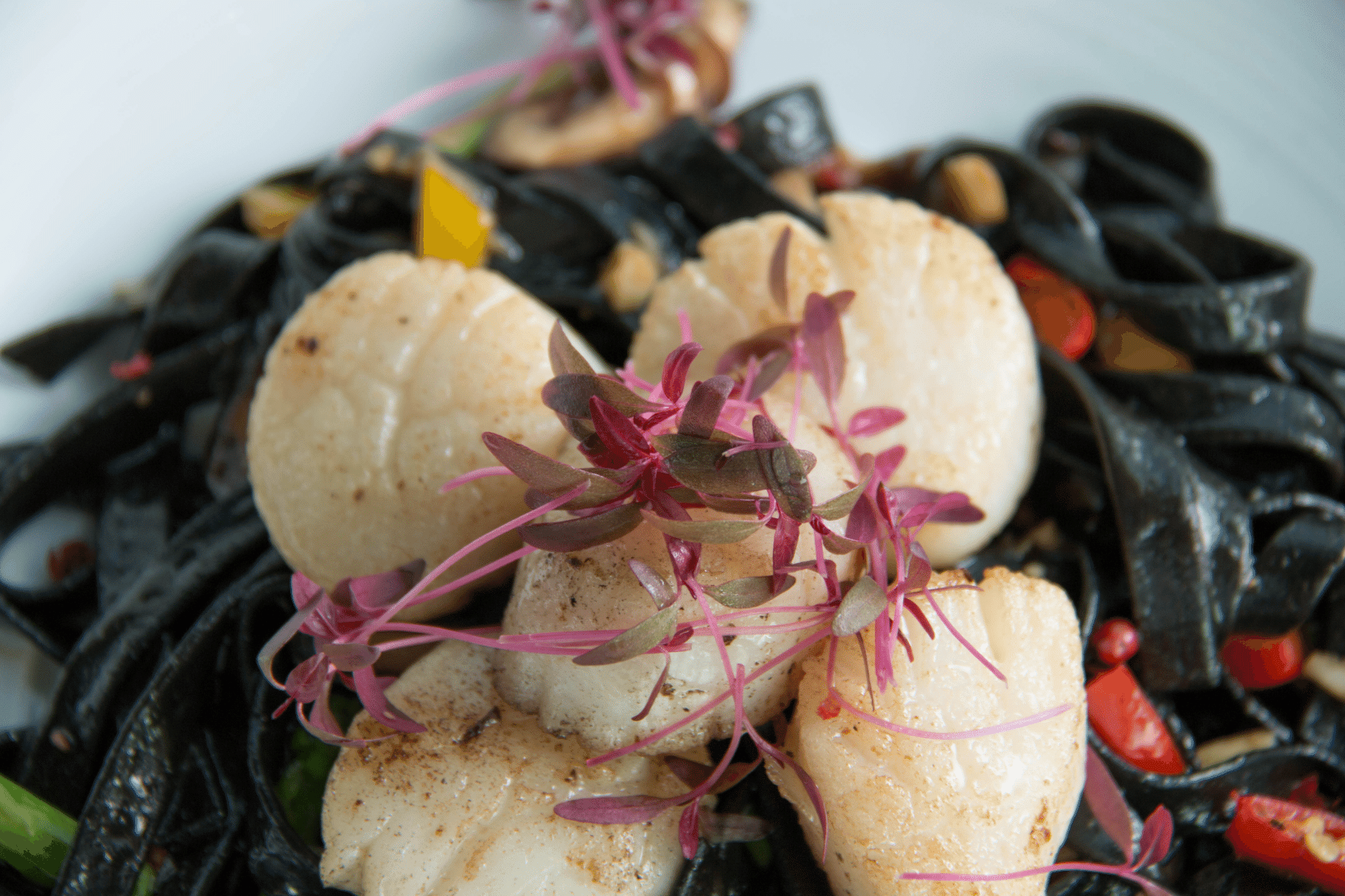


Squid ink pasta with shrimp and bay scallops is a 50-minute dinner that looks far more impressive than the effort involved. The sauce is built on lobster bouillon, tomato paste, and a shot of sriracha — briny, a little spicy, and bright from fresh lemon. It serves eight, so it works equally well for a dinner party or a week of packed lunches.
Why this recipe works
Two things make this dish reliable. First, the shrimp cook in a separate skillet rather than directly in the sauce. Crowding shellfish into a busy pan drops the temperature and causes steaming instead of proper cooking — keeping them separate means you control the timing and avoid rubbery results. Second, the lobster bouillon paste does the heavy lifting on depth of flavour without requiring homemade stock. Combined with tomato paste that’s cooked until it darkens slightly, you get a sauce that tastes like it took much longer than it did. The reserved pasta water added at the end is the quiet fix for sauce that’s too thick — starchy and warm, it brings everything together without thinning the flavour.
Smart swaps
- Squid ink pasta: Found at most specialty grocery stores and online. If you can’t track it down, regular linguine or spaghetti works fine — you lose the visual drama but nothing else.
- Bay scallops vs. sea scallops: Bay scallops are small and cook fast, which is why they go straight into the sauce. If you substitute sea scallops, cut them into quarters so they cook through in the same time.
- Sriracha heat level: One tablespoon instead of two keeps the heat mild enough for most kids. Skip the red pepper flakes entirely if you’re feeding anyone sensitive to spice — the sauce still has plenty of flavour without them.
- Lobster bouillon: Substitution notes are in the recipe card. Of the options listed, shrimp bouillon is the closest match in flavour.
If something goes sideways
- The sauce looks broken or greasy: This usually happens if the butter is added over very high heat. Pull the pan off the burner for 30 seconds, add a splash of pasta water, and stir steadily — it should come back together.
- The scallops released a lot of liquid and watered down the sauce: Pat them dry before they go in — even a quick press with a paper towel makes a real difference. If the sauce is already thin, let it simmer uncovered for an extra minute or two before adding the pasta.
- The pasta clumped together after draining: Squid ink pasta sticks faster than regular pasta once it sits. Get the sauce ready before you drain, and move the pasta straight from the colander into the pan. A drizzle of olive oil in the colander buys you a little time if you need it.
- The shrimp turned out tough: They were overcooked — shrimp go from done to rubbery in under a minute. Pull them off the heat the moment they curl into a C and turn fully pink. They’ll carry over slightly from residual heat.
- The dish tastes flat: Lemon does most of the brightening work here. If the flavour seems dull after tossing everything together, squeeze in a little extra lemon juice before serving — skip the garnish of extra Parmesan, which mutes the seafood flavour rather than adding to it.
Squid Ink Pasta with Shrimp and Bay Scallops
Equipment
- Large pot (6-quart or larger) for boiling pasta
- Large skillet or sauté pan (12-inch)
- Medium skillet for shrimp
- Microplane or fine grater for lemon zest
- Colander
- Tongs for tossing pasta
Ingredients
- 16 ounces squid ink pasta
- 10 ounces bay scallops
- 7 ounces grape tomatoes halved
- 1 tablespoon garlic minced (about 3 cloves)
- 1 medium lemon zested and juiced
- ½ cup fresh basil leaves cut into thin strips
- 4 tablespoons lobster bouillon paste or 4 cubes dissolved in 1/3 cup water
- 3 tablespoons unsalted butter
- 2 teaspoons garlic salt
- 2 tablespoons tomato paste
- 2 tablespoons sriracha
- 1 teaspoon red pepper flakes crushed
- 2 tablespoons olive oil
- 8 ounces shrimp peeled and deveined
- 1 pinch salt
- 1 pinch freshly ground black pepper
Instructions
- Prepare fresh ingredients for cooking. Cut tomatoes in half. Using a Microplane or fine grater, zest the lemon, being careful to avoid the bitter white pith. Set zest aside. Cut the zested lemon into quarters and remove any seeds. Cut basil (leaves only) into strips.
- Put a large pot of water on high flame and bring to a boil for pasta. Heat 2 tablespoons of olive oil in a large 12-inch skillet over medium-high heat. Then add garlic and sauté until slightly brown and fragrant. Add tomato paste to the pan and let it turn darker in colour, mixing frequently. Add tomatoes, lobster bouillon, sriracha, 1/3 cup of water, garlic salt, and red pepper flakes. Stir occasionally and cook for about 4 minutes until everything is blended and tomatoes are tender.
- Once water is boiling, add pasta and cook to your desired tenderness. I like mine cooked slightly past al dente.
- Add bay scallops to the pan with the sauce and cook for about 3 minutes, stirring gently, until the scallops are just opaque throughout. In a separate medium skillet over medium-high heat, cook 8 ounces (225g) peeled and deveined shrimp until they turn pink and curl into a C shape, about 1½ to 2 minutes per side. Do not overcook. Add shrimp to the sauce and give everything a good stir.
- Drain pasta reserving 1/2 cup of water. Add pasta to the pan with seafood and sauce. Add the butter and 1/4 cup of the reserved pasta water (keep the rest in case the sauce needs loosening). Add 2 tablespoons of the lemon zest and squeeze in the juice from all four lemon wedges. Throw in some salt and pepper to taste and give the pan a good stir to evenly coat the pasta with the sauce.
- Serve immediately, garnished with the reserved basil strips, a drizzle of extra-virgin olive oil, and freshly grated Parmesan if desired.
Notes
Notes
- Storage: Refrigerate leftovers in an airtight container for up to 2 days. The pasta will absorb sauce overnight, so add a splash of water or broth when reheating. Not recommended for freezing as the scallops and shrimp become rubbery.
- Make-ahead: Prep all vegetables, zest the lemon, and halve the tomatoes up to 24 hours in advance. Store covered in the fridge. Cook the sauce up to the point before adding seafood, then refrigerate and reheat before continuing.
- Substitutions: No lobster bouillon? Use fish stock concentrate, shrimp bouillon, or 1 tablespoon fish sauce mixed with 3 tablespoons chicken broth. Swap sriracha for sambal oelek or a pinch of cayenne if needed.
- Pro tip: Pat the bay scallops completely dry with paper towels before adding them to the sauce. Excess moisture causes the sauce to thin out and prevents any caramelisation on the scallops.
- Shrimp: Use medium or large (26/30 count) shell-off, deveined shrimp for the best texture in this dish.
Nutrition
Your questions, answered
Does squid ink pasta taste like fish or seafood?
No — it tastes almost identical to regular pasta. The ink adds a very faint brininess, but nothing strong or fishy, which makes it a good option even for people who are hesitant about seafood-forward dishes.
Can I use frozen shrimp and scallops?
Yes, but thaw them completely and pat them very dry before cooking. Frozen seafood holds extra moisture, and any water left on the surface will steam rather than sear and will thin out your sauce.
Is there a way to make this less spicy for kids?
Reduce the sriracha to one tablespoon and leave out the red pepper flakes entirely. The lobster-tomato base is flavourful enough on its own, and you can always add a small dish of red pepper flakes at the table for adults who want the heat.
If you liked this one
- Authentic Roman Carbonara
- Creamy Fettuccine Alfredo
- Authentic Spanish Seafood Paella
- Creamy New England Clam Chowder