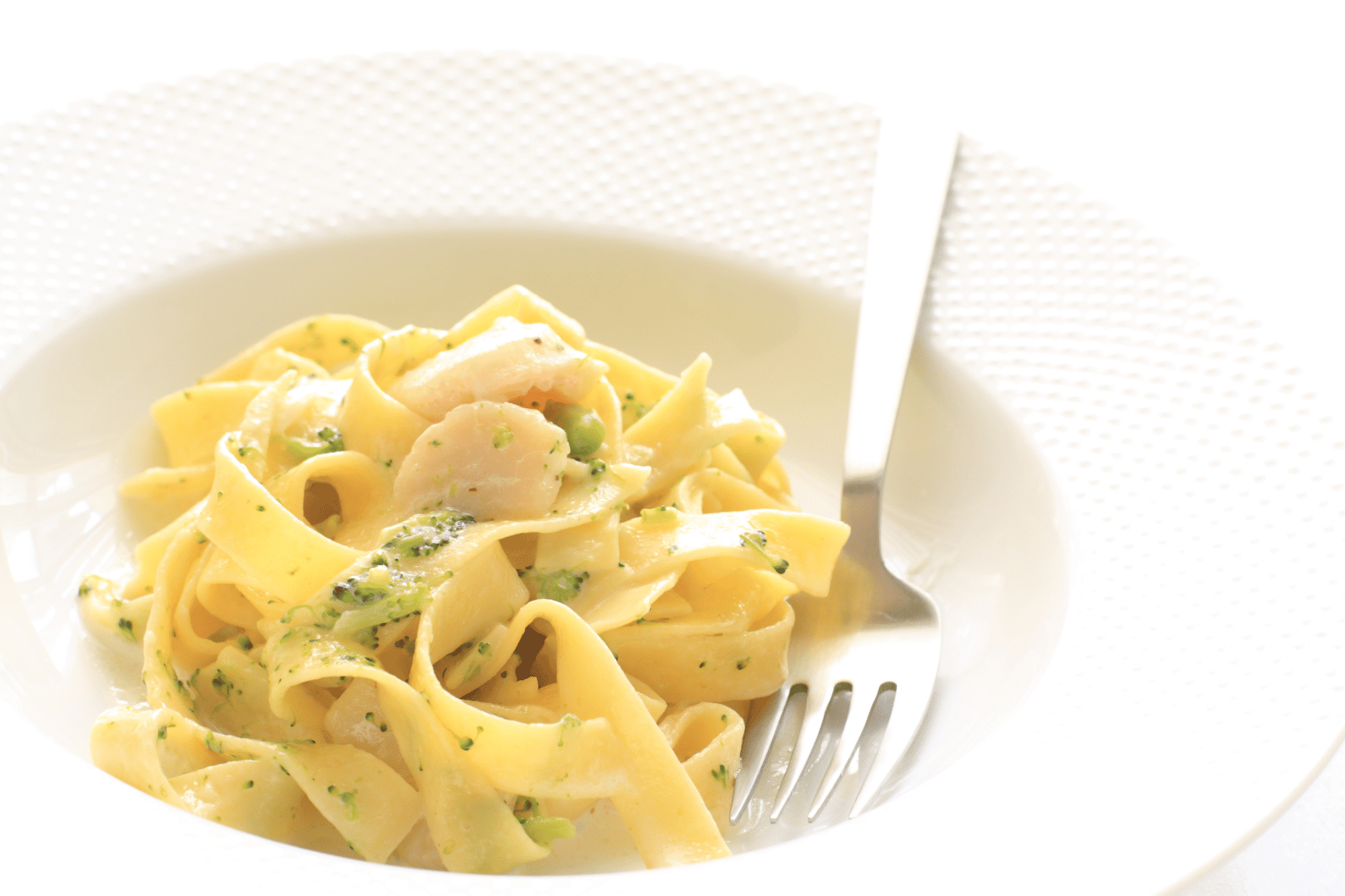




This creamy fettuccine with seared scallops is the kind of dish I make when I want to feel like I’m eating at an upscale Italian restaurant without leaving my kitchen. Golden, caramelised scallops sit on top of fettuccine that’s been tossed in a silky white wine and parmesan cream sauce — every single strand coated.
The beauty of this recipe is that it’s genuinely straightforward despite looking impressive. You sear the scallops first, build the sauce in the same pan to capture all that flavour, then toss everything together. Start to finish, the active cooking is about 20 minutes.
A few things make this version stand out:
- Same-pan technique — the cream sauce is built on top of the scallop fond, so every drop of flavour ends up on your plate
- White wine deglazing — adds brightness that cuts through the richness of the heavy cream
- Minced broccoli and parsley — subtle colour and freshness woven right into the sauce
If you’ve been saving those beautiful sea scallops in your freezer for a special occasion, tonight is that occasion.
Creamy Fettuccine with Seared Scallops
Equipment
- 12-inch stainless steel or cast iron skillet
- Large stockpot (6-quart / 5.7L)
- Whisk
- Pasta ladle or tongs
- Large mixing bowl
- Paper towels
Ingredients
- 1 lb fettuccine gluten-free, grain-free, and soy-free
- 8-12 pieces large sea scallops approximately 1 lb, patted dry
- 2 tablespoons butter
- 2 tablespoons ghee alternative to butter
- 2 cups heavy cream
- 3 cloves garlic about 1 tablespoon, diced
- 3 tablespoons parsley minced
- 1 tablespoon broccoli finely minced
- 1 pinch salt to taste
- 1 pinch white pepper to taste
- 1 cup dry white wine such as Pinot Grigio or Sauvignon Blanc
- ¼ cup parmesan cheese freshly grated
Instructions
- Heat a 12-inch stainless steel or cast iron skillet over medium-high heat (around 400°F / 200°C surface temperature if using an infrared thermometer). Add the butter and let it melt until foaming. While the butter heats, pat the scallops thoroughly dry with paper towels and season both sides with a light sprinkle of salt.
- Working in batches to avoid crowding the pan, add 4 scallops at a time, leaving at least 1 inch of space between each. Sear undisturbed for 2 to 3 minutes until the bottom develops a deep golden-brown crust and the scallop turns white about one-third of the way up the side. Do not move them during this time.
- Flip each scallop — you should see a deep golden-brown crust on the seared side. Cook for another 2 to 3 minutes, basting the tops by spooning the hot butter over them. Remove scallops to a plate and tent loosely with foil. Repeat with remaining scallops.
- Once the scallops have been cooked, you can use this fat to make a white cream sauce. Add the garlic, broccoli and parsley and cook in the pan for about 2 minutes letting the aroma release into your already fragrant kitchen.
- Next, add white wine and stir for another 3 minutes. After using a whisk, add the cream and cheese and whisk over heat for about 5 minutes. You are looking for a creamy consistency. Turn the flame off when you have seen all of the ingredients incorporated. Taste and season to your liking.
- While preparing the sauce, bring a large pot of generously salted water to a rolling boil. Cook the fettuccine according to package directions until al dente. Reserve ½ cup (120ml) of pasta water before draining, then drain the pasta.
- Transfer the al dente pasta to a large mixing bowl. Slowly pour the white cream sauce over the pasta while tossing with tongs or a pasta ladle to coat every strand. If the sauce is too thick, add a splash of the reserved pasta water to loosen it.
- Divide the sauced fettuccine among 4 dinner plates, twirling it into a nest in the centre. Top each plate with 2 to 3 seared scallops, browned side up. Garnish with an extra pinch of minced parsley and a light grating of parmesan. Serve immediately.
Notes
Notes
- Storage: Refrigerate leftover pasta and sauce in an airtight container for up to 2 days. Store seared scallops separately to prevent them from becoming rubbery. Not recommended for freezing as the cream sauce will separate.
- Make-ahead: Prepare the cream sauce up to 24 hours ahead and refrigerate. Reheat gently over low heat, adding a splash of cream to restore consistency. Sear scallops fresh just before serving.
- Substitutions: Use dry vermouth in place of white wine for a more herbaceous sauce. Swap heavy cream for full-fat coconut cream for a dairy-free version (omit the parmesan or use a vegan alternative). Large prawns/shrimp can replace scallops using the same searing method.
- Pro tip: Pat scallops completely dry with paper towels before searing — surface moisture is the number one reason scallops steam instead of developing a golden-brown crust. The pan should be hot enough that the scallop sizzles immediately on contact.
- Reheating: Warm leftover pasta gently in a skillet over low heat with a splash of cream or pasta water to loosen the sauce. Do not microwave scallops — they turn rubbery.
Nutrition
What Makes This Creamy Fettuccine with Seared Scallops Special
Most scallop pasta recipes cook the scallops separately, make the sauce in a clean pan, and lose all that beautiful caramelised fond. This recipe builds the entire cream sauce in the same skillet you seared the scallops in. Every golden bit stuck to the bottom of the pan gets dissolved into the white wine, then enriched with heavy cream and parmesan. The result is a sauce that actually tastes like scallops — not just cream.
The other key detail is restraint. Instead of drowning the plate in sauce, you toss just enough to coat each strand of fettuccine so the pasta itself carries flavour. The scallops sit on top, golden crust intact, so they stay beautifully seared rather than going soft in a pool of liquid.
Equipment You’ll Need
- 12-inch stainless steel or cast iron skillet — this is non-negotiable for scallops. You need a pan that gets screaming hot and holds heat when cold scallops hit the surface. Non-stick pans will not produce the golden crust that makes this dish.
- Large stockpot (6-quart / 5.7L) — fettuccine needs plenty of room to move freely in boiling water so the strands don’t clump together.
- Whisk — essential for incorporating the cream and parmesan into a smooth sauce without lumps forming.
- Pasta ladle or tongs — for transferring cooked fettuccine directly from the pot to the mixing bowl, bringing along a little starchy pasta water that helps the sauce cling.
- Large mixing bowl — the tossing happens off-heat in a bowl, giving you more control than tossing in the skillet where the sauce can reduce too much.
A nice-to-have: an instant-read thermometer. If you’re new to searing scallops, checking your pan surface temperature (aim for around 400°F / 200°C) takes the guesswork out of knowing when the pan is ready.
Tips for Best Results
- Dry your scallops obsessively. Lay them on a double layer of paper towels, press another layer on top, and let them sit for 5 minutes. Surface moisture creates steam, and steam prevents browning. This single step is the difference between a pale, rubbery scallop and one with a restaurant-quality golden crust.
- Don’t crowd the pan. Cook scallops in batches of 4, leaving at least an inch between each one. Crowding drops the pan temperature instantly and the scallops will steam instead of sear.
- Leave them alone. Once a scallop hits the pan, do not touch it for a full 2-3 minutes. Resist the temptation to peek. The crust forms through uninterrupted contact with the hot surface.
- Reserve pasta water. Before draining the fettuccine, scoop out half a cup of the starchy cooking water. It’s the best sauce adjuster you have — a splash loosens the cream sauce without diluting its flavour.
- Use a dry white wine you’d actually drink. Pinot Grigio and Sauvignon Blanc both work beautifully. Avoid cooking wines — they contain added salt and off-flavours that concentrate when reduced.
Substitutions and Variations
- Pasta: Any long pasta works — linguine, tagliatelle, or spaghetti. If you don’t need gluten-free, a quality semolina fettuccine gives the best texture and sauce adhesion.
- Scallops: Large shrimp (peeled, deveined, tail-on) can be seared using the same method — 2 minutes per side. Adjust cooking time as shrimp cook faster than scallops.
- Dairy-free: Swap heavy cream for full-fat coconut cream and use a vegan parmesan alternative. The sauce will be slightly thinner, so reduce it an extra 2 minutes.
- White wine: If you prefer not to cook with alcohol, substitute with ½ cup (120ml) low-sodium chicken stock mixed with 1 tablespoon of fresh lemon juice for acidity.
- Extra vegetables: Sautéed asparagus tips, wilted spinach, or roasted cherry tomatoes all pair beautifully. Add them to the sauce in the last minute of cooking.
- Richer sauce: Stir in an egg yolk after removing the sauce from heat for a more carbonara-like richness. The residual heat will cook it gently without scrambling.
Storage and Reheating
- Refrigerator: Store leftover pasta and sauce in an airtight container for up to 2 days. Store seared scallops in a separate container — reheating them with the pasta turns them rubbery.
- Freezing: Not recommended. The cream sauce will separate and become grainy when thawed, and scallops lose their texture after freezing once cooked.
- Reheating pasta: Warm in a skillet over low heat with a splash of cream or reserved pasta water, tossing gently until the sauce loosens back to a silky consistency. Do not use a microwave — it heats unevenly and turns the cream sauce oily.
- Reheating scallops: Gently warm in a dry skillet over medium heat for 30-60 seconds per side, just enough to take the chill off. They will not re-crisp but will remain tender if you don’t overheat them.
What to Serve With This
- Side salad: A simple rocket (arugula) salad with shaved parmesan, lemon juice, and olive oil. The peppery greens and acid balance the richness of the cream sauce.
- Bread: Warm crusty garlic bread or a slice of toasted sourdough — ideal for mopping up any sauce left on the plate.
- Wine pairing: The same dry white wine used in the sauce works perfectly at the table. A chilled Pinot Grigio or Vermentino is ideal. If you prefer red, a light Pinot Noir won’t overpower the scallops.
- Vegetables: Steamed broccolini with a squeeze of lemon or roasted asparagus spears. Keep it light — the pasta itself is rich.
Frequently Asked Questions
Why are my scallops not getting a golden crust?
The two most common reasons are moisture and heat. Scallops release a lot of liquid, so patting them thoroughly dry with paper towels is critical. Your pan also needs to be properly hot before the scallops go in — the butter should be foaming and just starting to brown. If you hear a loud, sharp sizzle when the scallop hits the pan, the temperature is right. A gentle hiss means the pan isn’t hot enough.
Can I use frozen scallops for this recipe?
Yes, but thaw them properly first. Place frozen scallops on a plate lined with paper towels in the refrigerator overnight. Avoid thawing in water or the microwave as both add moisture that prevents browning. After thawing, pat them very dry. Also check that your scallops are “dry-packed” (no sodium tripolyphosphate added) — chemically treated scallops retain water and will not sear properly.
What type of scallops should I buy — bay or sea?
This recipe is designed for large sea scallops (U-10 or U-15 count, meaning 10-15 scallops per pound). Sea scallops are large enough to develop a thick golden crust while staying creamy inside. Bay scallops are much smaller and cook in under a minute — they would work stirred into the sauce but won’t give you the impressive seared presentation.
Can I make this ahead for a dinner party?
You can make the cream sauce up to 24 hours ahead and refrigerate it. Reheat gently in a skillet over low heat, adding a splash of cream to restore the consistency. Cook the pasta and sear the scallops fresh just before serving — both lose quality significantly when held or reheated. This makes it a great dinner party dish because the sauce is done and you only have 15 minutes of active cooking at service time.
Why does my cream sauce taste flat?
The most likely culprit is under-seasoning. Cream absorbs a surprising amount of salt — taste and adjust seasoning after the sauce has simmered and thickened, not before. A squeeze of fresh lemon juice stirred in at the very end also works wonders to brighten a rich cream sauce without making it taste lemony.
Is 1 tablespoon of broccoli a mistake?
It does seem very small. In this recipe, the minced broccoli acts more like an herb than a vegetable — adding tiny flecks of green colour and subtle earthy flavour to the sauce. If you’d like more substance, increase it to ½ cup (45g) of finely chopped broccoli florets and add them with the garlic so they soften properly.
A Little Background on This Dish
Fettuccine with seafood in a cream-based sauce sits at the crossroads of two Italian-American traditions. Classic fettuccine Alfredo — invented by Alfredo di Lelio in Rome in the early 1900s — was originally just butter and parmesan emulsified with pasta water. When it crossed the Atlantic, American cooks added heavy cream to guarantee that silky texture without the precise technique the original required. Meanwhile, seared scallops became a fixture of upscale American-Italian restaurant menus in the 1980s and 1990s, often perched on a bed of pasta. This recipe brings those two streams together: a rich, wine-brightened cream sauce in the Alfredo spirit, topped with perfectly caramelised scallops that nod to the elegant seafood pasta tradition.
If you make this creamy fettuccine with seared scallops, I’d genuinely love to hear how it turned out — drop a star rating and leave a comment below to help other cooks find this recipe.