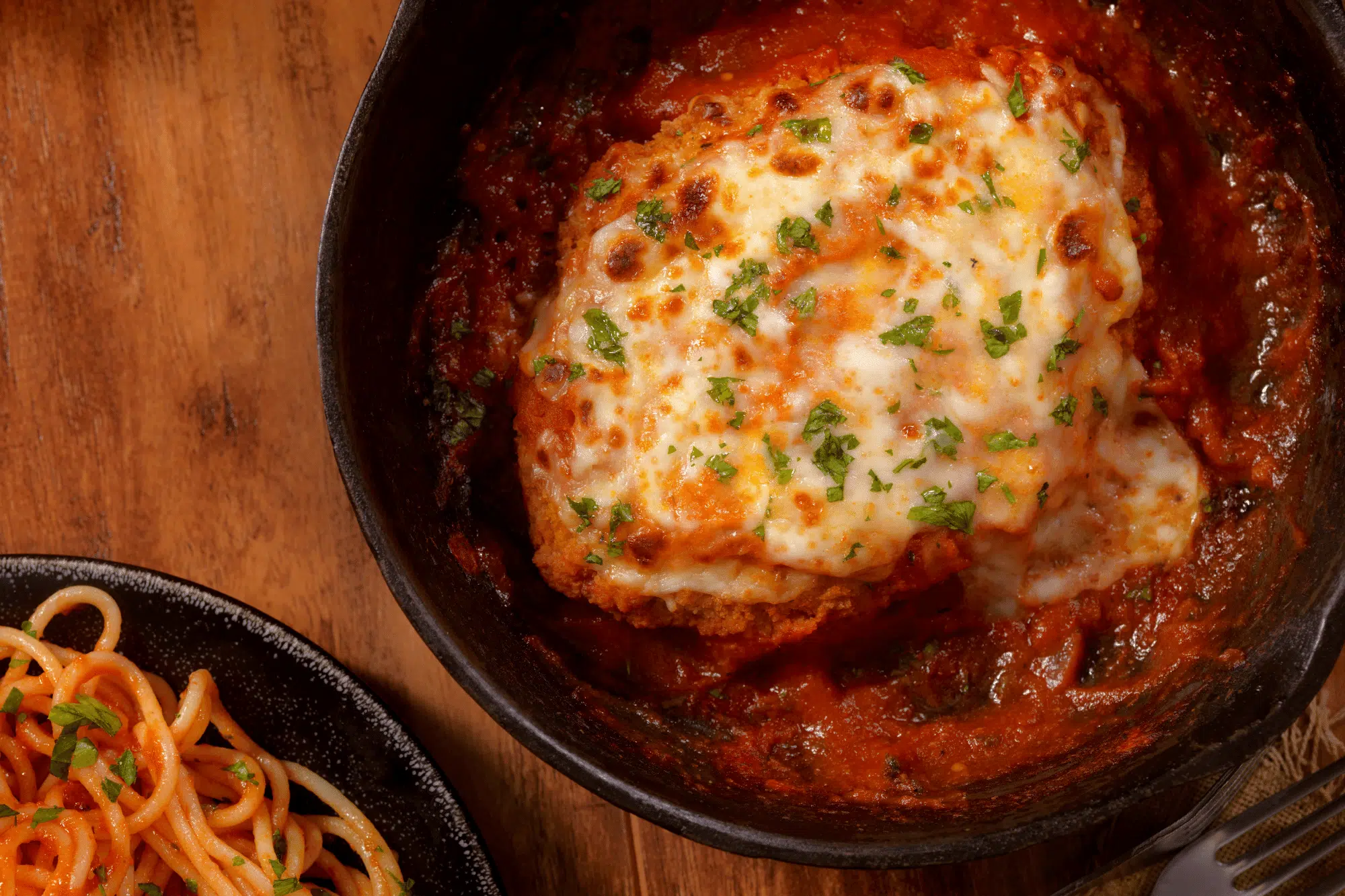
This is a pan-fried, oven-finished chicken parmesan with a double layer of panko for a crust that stays crispy under the sauce. The two-step cooking method — skillet first, oven second — gives you golden, crunchy chicken that’s fully cooked through without burning the coating. It comes together in under an hour and holds up well, which makes it a smart choice when you want a proper dinner without much last-minute work.
Shopping notes
- Panko breadcrumbs: These are coarser and drier than standard breadcrumbs, which is what creates the open, crunchy texture here. Find them in the Asian foods aisle or with regular breadcrumbs. If you can only find standard breadcrumbs, reduce to 1 cup — they’re denser and pack tighter.
- Neutral oil: Vegetable, canola, or avocado oil all work. Avoid extra-virgin olive oil for frying — its smoke point is too low for the heat needed to set the crust properly.
- Marinara sauce: A good jarred sauce is fine. Warm it gently before serving so it doesn’t cool down the chicken when you spoon it on.
- Parmesan: Buy a block and grate it yourself — pre-grated Parmesan in canisters contains anti-caking agents that affect how it melts. Skip the fresh basil garnish on top; it wilts immediately and adds nothing once the sauce goes on.
What makes this version work
Two things matter most here. First, the double coat of panko — dipping the chicken back through egg and pressing it into panko a second time builds a thicker, more structured crust that doesn’t separate from the chicken when it hits the oil. Single-coated chicken parm tends to shed its crust in the pan. Second, the 30-minute rest after seasoning draws surface moisture out of the chicken so the flour layer bonds cleanly instead of turning pasty. That flour layer is the anchor for everything above it, so if it doesn’t stick well, neither does the rest.
What can go wrong
- Crust falls off in the pan: Usually means the oil wasn’t hot enough before the chicken went in. Cold oil lets the crust absorb fat and loosen before it sets. Test with a few panko crumbs — they should sizzle within a second or two.
- Crust burns before the chicken is cooked through: This happens when chicken breasts are uneven in thickness. Pound them to a consistent half-inch before breading so they cook at the same rate as the crust browns.
- Soggy bottom after baking: If you transfer the chicken directly to a flat baking dish without draining first, oil pools underneath and softens the crust. Drain on a wire rack for a minute before moving to the baking dish.
- Breading clumps or falls off during setup: Wet hands are the culprit. Use one hand for dry steps (flour and panko) and the other for the egg dip. Keeping them separate prevents the breading station from turning into a paste.
- Uneven browning across the batch: Overcrowding drops the oil temperature fast. Fry in two batches if needed and let the oil come back up to temperature between them.
Leftovers and make-ahead
Breaded, uncooked chicken can be refrigerated on a wire rack over a sheet pan for up to 4 hours before frying — the resting time actually helps the coating adhere. Fully cooked chicken parmesan keeps in the fridge for up to 3 days; reheat uncovered at 375°F / 190°C for 10–12 minutes to bring the crust back. For longer storage, freeze the cooked chicken (without sauce) in a single layer, then transfer to freezer bags once solid — it keeps for up to 2 months. Reheat from frozen at 400°F / 200°C for 20–25 minutes. Add sauce and Parmesan only after reheating, not before, or the crust will soften in the oven.
Crispy Chicken Parmesan with Double Panko Crust
Equipment
- Large heavy-bottomed skillet (12-inch / 30cm)
- Oven-safe baking dish (9x13 inch / 23x33cm)
- Wire cooling rack
- 3 shallow dishes or bowls for breading station
- Instant-read thermometer
- Tongs
Ingredients
- 4 pieces boneless, skinless chicken breasts 6-8 oz; trimmed and pounded to even ½-inch thickness
- 1 teaspoon salt
- 1 teaspoon pepper
- 1 teaspoon Italian seasoning
- 1½ cups panko breadcrumbs for double crust
- ½ cup all-purpose flour
- 2 medium eggs beaten
- ½ cup neutral oil (vegetable, canola, or avocado) for frying, plus more as needed
- 1 cup marinara sauce warmed, for serving
- ½ cup freshly grated Parmesan cheese for topping
Instructions
- Season the trimmed chicken breasts on both sides with salt, pepper, and Italian seasoning. Let them rest at room temperature for 30 minutes — this helps the seasoning penetrate and brings the chicken closer to room temperature for more even cooking.
- Set up a breading station with three shallow dishes: flour in the first, beaten eggs in the second, and panko in the third. Dredge each chicken breast in flour, shaking off excess. Dip in beaten egg, letting excess drip off. Press into panko, coating all sides evenly. Dip back through the egg and press into panko a second time for a double crust. Set breaded chicken on a wire rack while you heat the oil.
- Preheat your oven to 350°F / 175°C (180°C fan-forced). Pour ¼ inch of oil into a large heavy-bottomed skillet and heat over medium-high until the oil reaches 350°F / 175°C, or until a few panko crumbs sizzle immediately when dropped in. Carefully place the breaded chicken in the hot oil — do not overcrowd the pan; work in batches if needed. Fry for 3-4 minutes per side until deep golden brown. Transfer to a wire rack set over a plate to drain excess oil.
- Transfer the pan-fried chicken to an oven-safe baking dish in a single layer. Bake for 20-25 minutes, or until the internal temperature reaches 165°F / 74°C on an instant-read thermometer. Spoon warm marinara sauce over each breast and top with freshly grated Parmesan cheese. Return to the oven for 2-3 minutes until the cheese is melted. Serve immediately.
Nutrition
Common questions
Can I bake the chicken instead of frying it?
You can, but the crust won’t be as crispy and the texture will be noticeably different. If you want to skip frying, spray the breaded chicken generously with oil on both sides and bake at 425°F / 220°C on a wire rack set over a sheet pan for 20–25 minutes — the rack keeps air circulating underneath so the bottom doesn’t go soft.
Do I have to pound the chicken breasts?
Yes — this step is worth the effort. Uneven chicken means the thin end overcooks while the thick end is still underdone, and the crust on the thin end will burn before the center is safe to eat. A few minutes with a meat mallet or rolling pin makes the whole process more predictable.
Can I bread the chicken the night before?
Up to 4 hours ahead is reliable; overnight is pushing it. After several hours, the moisture from the chicken slowly works through the flour layer and the panko starts to get tacky rather than dry and crisp. If you need to prep further in advance, freeze the breaded (uncooked) chicken on a sheet pan and fry straight from frozen, adding a couple of extra minutes per side.
Try these next
- Elegant Chicken Marsala with Mushrooms and Marsala Wine
- Smoky Oaxacan Chicken Enchiladas with Roasted Chili Sauce
- Authentic Roman Carbonara: A Classic Pasta Perfection
- Comfort in a Shell: Nonna’s Classic Italian Pasta Dish