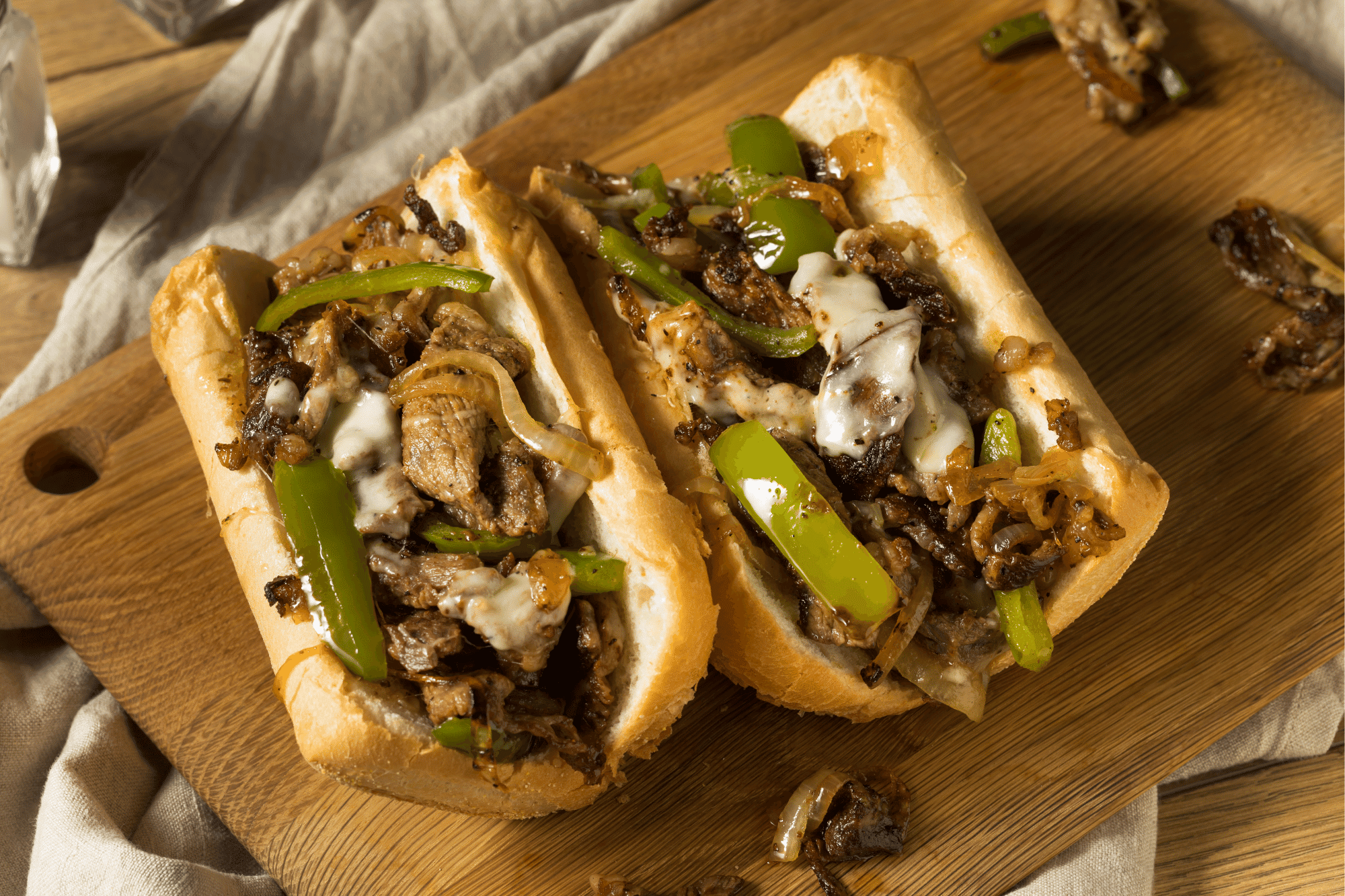



There are certain sandwiches that need absolutely nothing fancy to be extraordinary, and this dripping steak sandwich is one of them. The secret isn’t a complicated sauce or an exotic ingredient — it’s the balsamic caramelised onions that turn sweet, syrupy and golden after a slow, patient cook in butter and brown sugar.
I pair those onions with a rump steak seared hard and fast so it stays juicy and pink inside, then pile everything onto warm ciabatta with a handful of fresh peppery rocket from my garden. The bread soaks up all those meaty pan juices and sticky onion glaze, and that’s where the “dripping” magic happens.
What I love about this recipe:
- The onions do the heavy lifting — slow-cooked in balsamic, butter and brown sugar until they collapse into a savoury-sweet jam
- The steak stays simple — just oil, salt, pepper, and a screaming hot pan
- It feeds four people generously in under 45 minutes
If you’ve ever wondered why restaurant steak sandwiches taste so much better than yours, it’s the onions. Make these once and you’ll never skip them again.
Dripping Steak Sandwich with Caramelised Onions
Ingredients
Caramelised Onions Ingredients
- 5 medium onions both red and white
- 2 tablespoons balsamic vinegar
- 2 tablespoons butter plus a little extra for later
- 2 tablespoons olive oil extra virgin
- 1 teaspoon sea salt adjust to taste
- 1 teaspoon freshly ground black pepper
- 1 tablespoon brown sugar
- 4 sprigs fresh thyme optional
Steak Sandwich Ingredients
- 14 oz rump steak approximately 100g per person
- 2 tablespoons olive oil light/refined, or use a neutral high-heat oil such as vegetable or canola
- 1 teaspoon sea salt
- 1 teaspoon black pepper
- 2 large handfuls fresh wild rocket (arugula) or use watercress as an alternative
- 1 loaf ciabatta bread or 4 ciabatta rolls
Instructions
Caramelised Onions Instructions
- Peel and slice the onions into about 2-centimetre rounds.
- Add 2 tablespoons of olive oil and 2 tablespoons (30g) of butter to the bottom of a large deep pan over medium heat. Once the butter has melted, arrange the onion slices to fit snugly.
- Pour over 2 tablespoons (30ml) of balsamic vinegar and tuck the thyme sprigs between the onions.
- Fry on high heat for 4 minutes, then turn the heat down and cook slowly without turning the onions.
- After about 20 minutes, turn the slices around, add in the sugar, a little more butter and salt and pepper.
- Turn up the heat again for 4 minutes, then right down for another 15 minutes until the onions are syrupy and golden.
Steak Sandwich Instructions
- Rub the steak with 1 tablespoon of olive oil and season. Over hot coals or a screaming hot pan, drop your steak and do not touch it for 2 minutes.
- After this initial hard sear to build a flavourful crust, turn the steak over and sear it for 1 minute, depending on thickness, then remove immediately and allow to rest, loosely covered with foil, in a warm spot for at least 5 minutes. For rare, aim for 3–4 minutes total. For medium-rare, cook for 4–5 minutes total. For medium, cook 5–6 minutes total. Cooking times will vary depending on steak thickness — use an instant-read thermometer for accuracy: 50°C / 120°F for rare, 55°C / 130°F for medium-rare, 60°C / 140°F for medium.
- While the steak is resting, warm the ciabatta slightly in a hot oven at 200°C / 400°F (180°C fan-forced) for 3–4 minutes until just warmed through and lightly crusty on the outside. Halve and place in those meaty pan juices (if you have any), then pile the caramelised onions on the base. Thinly slice the steak and arrange it over the onions, finishing your sandwich with a generous handful of fresh rocket (arugula).
- Press the top half of the ciabatta over the fillings, press down gently so the bread soaks up the juices, and dig in immediately while everything is still warm.
Nutrition
What Makes This Dripping Steak Sandwich Special
Most steak sandwich recipes treat the onions as an afterthought — a quick fry in the same pan, maybe a sprinkle of dried herbs. This recipe flips that entirely. The balsamic caramelised onions are the foundation, slow-cooked for nearly 40 minutes until they collapse into a sticky, sweet-sharp glaze that coats every layer of the sandwich.
The steak itself is kept deliberately simple: just oil, salt, pepper, and a ferociously hot sear. That restraint lets the onions shine. When you pile thinly sliced pink steak over those syrupy onions and press it all into warm ciabatta that’s been dragged through the pan juices, you get a sandwich that literally drips with flavour — hence the name.
The fresh rocket adds a peppery bite that cuts through all that richness, and it’s that contrast — sweet onions, savoury steak, bitter greens, crusty bread — that makes this more than the sum of its parts.
Equipment You’ll Need
- Large deep frying pan or skillet (12-inch / 30cm) — the onions need to sit in a single snug layer to caramelise properly rather than steam. A pan that’s too small will crowd them and you’ll get soggy onions instead of golden ones.
- Cast iron griddle pan or barbecue grill — cast iron retains heat brilliantly, which is critical for getting a hard sear on the steak without overcooking the interior. A regular non-stick pan won’t get hot enough.
- Tongs — essential for flipping the steak without piercing it (a fork releases juices) and for turning the delicate onion rounds.
- Sharp carving knife — you need to slice the rested steak thinly against the grain. A dull knife will shred the meat and squeeze out the juices.
- Baking sheet — for warming the ciabatta in the oven.
- Instant-read thermometer (nice-to-have) — takes the guesswork out of steak doneness, especially if your steak is thicker or thinner than average.
Tips for Best Results
- Don’t rush the onions. The full caramelisation process takes about 40 minutes. If you try to speed it up by keeping the heat high, they’ll burn on the outside and stay raw inside. Patience is the only ingredient that matters here.
- Bring the steak to room temperature before cooking. Take it out of the fridge 20–30 minutes beforehand. A cold steak will cool down the pan and steam instead of searing.
- Rest the steak properly. Five minutes loosely covered with foil allows the juices to redistribute. If you slice immediately, those juices end up on the cutting board instead of in your sandwich.
- Slice against the grain. Look at the direction of the muscle fibres in your rump steak and cut perpendicular to them. This shortens the fibres and makes each bite more tender.
- Warm the bread, don’t toast it dry. You want the ciabatta slightly warmed and softened so it can absorb pan juices. Over-toasting makes it too rigid to bite through cleanly.
Substitutions and Variations
- Steak cut: Rump is great value, but sirloin or ribeye will give you more marbling and richness. Flank steak is a budget-friendly alternative — just slice it very thinly against the grain.
- Bread: Ciabatta is ideal because of its open crumb structure that soaks up juices, but a crusty sourdough or French baguette works beautifully too. Avoid soft sandwich bread — it’ll go soggy.
- Greens: Wild rocket (arugula) is the first choice for its peppery bite. Watercress is an excellent swap with a similar sharpness. Baby spinach works but adds less contrast.
- Cheese addition: Not in the original, but a slice of provolone or gruyère melted over the steak before assembling takes this into gourmet territory.
- Blue cheese crumble: For a more assertive flavour, crumble stilton or gorgonzola over the onions before adding the steak.
- Horseradish cream: Mix 2 tablespoons of horseradish with 3 tablespoons of crème fraîche and spread on the top half of the bread for a sharp, creamy kick.
Storage and Reheating
- Caramelised onions: Store in an airtight container in the fridge for up to 5 days. They also freeze beautifully for up to 3 months — freeze in portions so you can defrost only what you need. Reheat gently in a pan with a splash of water.
- Cooked steak: Leftover sliced steak can be stored in the fridge for up to 2 days. It’s best eaten cold in the sandwich rather than reheated, as reheating will cook it further and toughen it.
- Assembled sandwich: This sandwich is best eaten immediately. The bread will go soggy if stored, and the rocket will wilt. If you need to prep ahead, keep all components separate and assemble just before serving.
What to Serve With This
- Thick-cut chips or fries — the classic pub pairing. Triple-cooked chips elevate the whole meal.
- A simple green salad with a sharp mustard vinaigrette to cut through the richness of the onions and steak.
- Coleslaw — a tangy, crunchy slaw provides textural contrast to the soft bread and tender steak.
- Sweet potato wedges — their natural sweetness complements the balsamic caramelised onions.
- A cold beer or a glass of Malbec — the bold fruit and soft tannins of Malbec are a natural match for seared rump steak.
Frequently Asked Questions
What is the best cut of steak for a steak sandwich?
Rump steak is the best balance of flavour, tenderness and value for steak sandwiches. It has enough beefy flavour to stand up to the caramelised onions without being as expensive as ribeye or fillet. Sirloin is another excellent choice. Whichever cut you use, slice it thinly against the grain after resting for the most tender result.
Can I make the caramelised onions ahead of time?
Absolutely — in fact, they improve overnight as the flavours deepen. Make them a day or two in advance, store in the fridge, and gently reheat in a pan when you’re ready to assemble. This also makes the recipe much faster on the day you want to eat.
How do I know when my steak is done without a thermometer?
Use the touch test: press the centre of the steak with your finger. For rare, it should feel soft and springy like the fleshy base of your thumb when your hand is relaxed. For medium-rare, it should feel like the same spot when you touch your thumb to your index finger. For the most accurate results, invest in an instant-read thermometer — aim for 50°C / 120°F for rare, 55°C / 130°F for medium-rare.
Can I cook the steak on a barbecue instead of a pan?
Yes, and it’s arguably even better. Hot coals give you a smokier flavour and excellent char. Make sure your grill grates are clean and very hot before placing the steak down. The cooking times remain the same — 2 minutes on the first side, then 1–3 minutes on the second depending on your preferred doneness.
Why are my caramelised onions not turning golden?
The most common reason is too much moisture in the pan or the heat being too low. Make sure your onions fit snugly in a single layer and that you resist the urge to stir them for the first 20 minutes. The sugars need sustained contact with the hot pan surface to caramelise. Adding the brown sugar in the second stage helps accelerate the browning.
What bread works best if I can’t find ciabatta?
Look for any bread with a crusty exterior and an open, airy crumb — sourdough and French baguette are the best alternatives. The key is bread that can absorb pan juices without falling apart. Avoid sliced sandwich bread or soft rolls, which will turn to mush under the weight of the juicy fillings.
The Steak Sandwich: A Pub Classic
The steak sandwich as we know it has deep roots in British and Australian pub culture, where it evolved as a hearty, no-fuss meal that could be eaten with one hand while holding a pint in the other. While the Philly cheesesteak took a different path in America — thinly shaved beef with melted cheese on a hoagie roll — the British steak sandwich stayed closer to its origins: a proper piece of steak, simply seared, on good bread with quality accompaniments.
The addition of balsamic caramelised onions is a more modern touch that bridges Italian and British flavour traditions. Balsamic vinegar from Modena brings an acidic sweetness that transforms ordinary onions into something approaching a condiment, and when paired with brown sugar and butter, creates a sticky glaze that professional chefs use in high-end restaurants.
If you make this dripping steak sandwich, I’d love to hear how it turned out — leave a star rating and a comment below to let me know your thoughts!