






































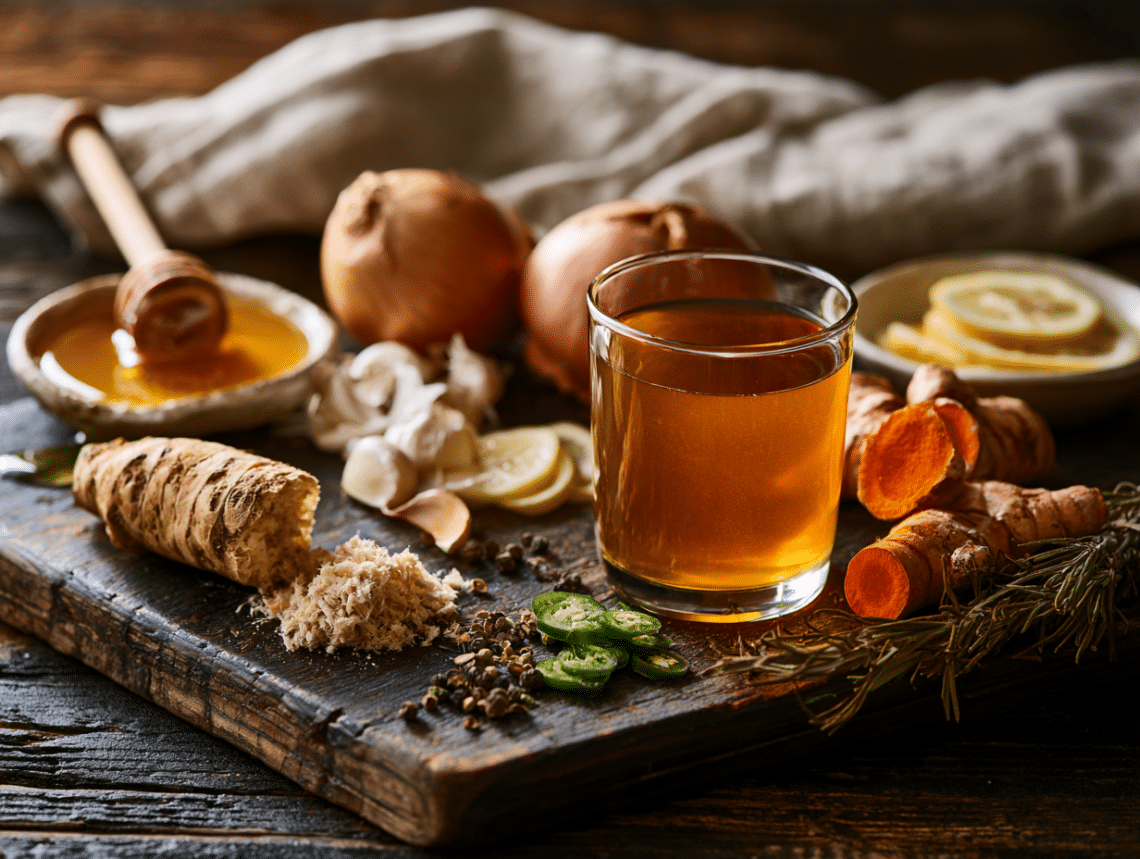
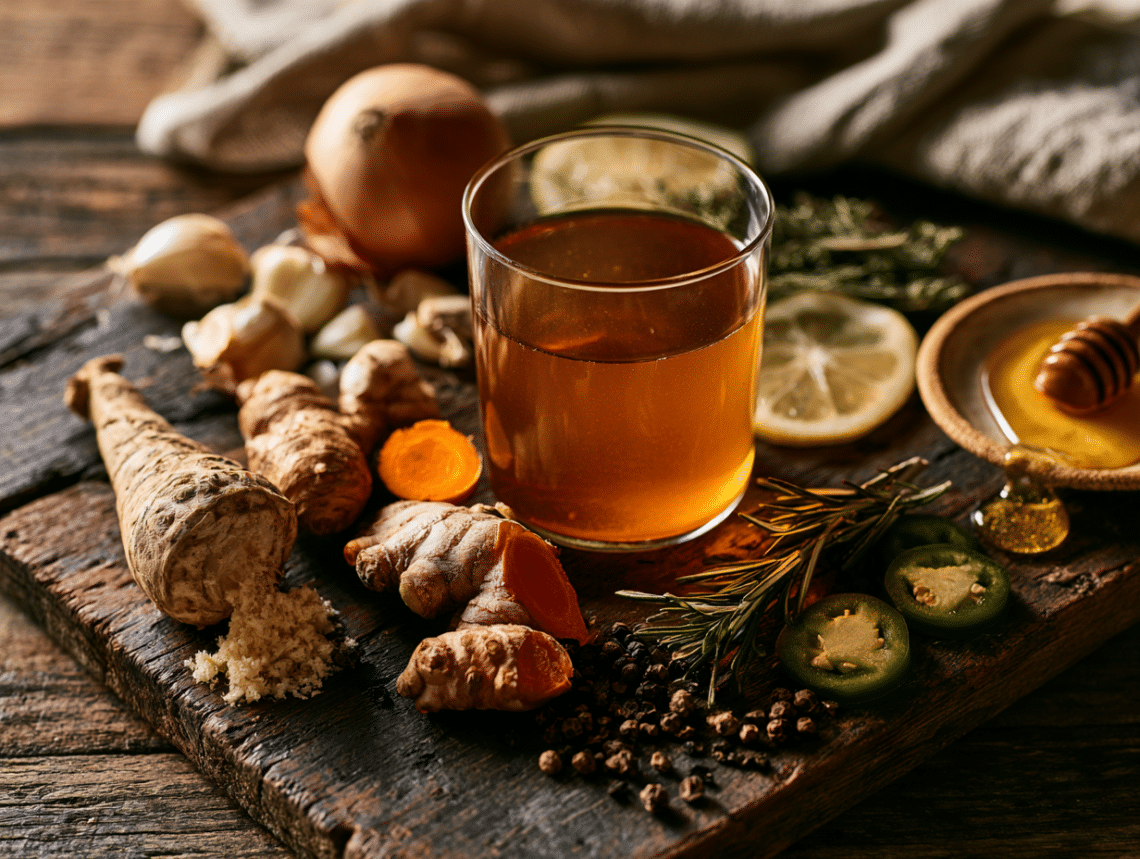
Fire cider is a raw apple cider vinegar infusion packed with horseradish, ginger, turmeric, garlic, jalapeños, onion, lemon, black pepper, and rosemary, then sweetened with honey after straining. It takes about four weeks of hands-off steeping, but the active work is under 30 minutes. The honest reason to make a batch: it yields roughly 16 ounces from one jar, so doubling or tripling the recipe costs almost nothing extra and means you have plenty to share, use in cooking, or keep on hand all winter.
The technique that matters
The two things that actually determine how good your fire cider turns out are submersion and daily agitation. Every solid ingredient must stay below the vinegar line for the full steep — anything poking above the surface can mold, which ruins the whole batch. Pack the jar firmly before pouring the vinegar, then use a small piece of crumpled parchment or a clean fermentation weight to keep everything down. Daily shaking matters just as much: the vinegar extracts more from the solids when they’re constantly moving, and you’ll notice the liquid deepening in color and sharpness over the weeks. If you skip shaking for a few days, it’s not catastrophic, but the final flavor will be flatter. When you’re ready to strain, press the solids hard — a potato masher works well for this if you don’t want to squeeze hot cheesecloth by hand — because a surprising amount of the most concentrated liquid is still sitting in the pulp.
Leftovers and make-ahead
Finished fire cider keeps for up to a year in the refrigerator and at least six months in a cool, dark cupboard — the acidity of the vinegar and the antibacterial properties of the honey make it genuinely shelf-stable. If you’re making multiple jars at once, label each one with the date you strained it so you’re not guessing later. The honey can settle or crystallize slightly over time; a quick shake before each use takes care of that. There’s no freezing needed and no reheating involved — this is a ready-to-use pantry staple from the moment it’s strained. One practical note: if you plan to use it as a salad dressing base or marinade regularly, consider keeping a small jar in the fridge for daily use and storing the rest sealed in a cool spot to preserve the sharpest flavor.
Troubleshooting
- The flavor is too sharp or harsh after straining: Add more honey, a tablespoon at a time, until the heat is balanced. Alternatively, dilute individual servings with a splash of water or stir a teaspoon into warm water rather than taking it straight.
- Mold appears on the surface: This almost always means some solids were above the vinegar line during steeping. Discard the batch — there’s no safe way to rescue it. Next time, check submersion on day one and again after the first shake.
- The liquid looks cloudy or has sediment: That’s normal and harmless. It’s mostly fine particles from the grated roots and the natural cloudiness of raw apple cider vinegar. Strain through a double layer of cheesecloth if you want a cleaner result — skip the extra straining step if you don’t mind the texture, it’s not worth the extra dish.
- Weak or muted flavor after four weeks: Fresh ingredients matter here. Older horseradish root or pre-ground turmeric will produce a noticeably duller result. If your batch tastes flat, let it steep an additional week before straining — the flavor continues to develop.
- Metal lid shows corrosion: Vinegar reacts with bare metal over weeks. Switch to a plastic lid, use a plastic-lined canning lid, or place a double layer of parchment between the jar and the metal lid before sealing.
Homemade Fire Cider
Equipment
- Quart-sized glass jar with lid
- Cutting board
- Sharp Knife
- Fine mesh strainer
- Cheesecloth or nut milk bag
- Funnel
- Measuring cups and spoons
Ingredients
- 1 cup fresh horseradish root peeled and grated
- ½ cup fresh ginger root peeled and grated
- ½ cup fresh turmeric root peeled and grated
- 1 medium onion chopped
- 10 cloves garlic smashed and peeled
- 2 pieces fresh jalapeños sliced
- 2 tablespoons black peppercorns lightly crushed
- 2 tablespoons dried rosemary
- 1 medium organic lemon sliced thin, seeds removed
- 3 cups raw unfiltered apple cider vinegar preferably with the ‘mother’
- ¼ cup raw honey to taste after infusing
Instructions
- Place all solid ingredients — horseradish, ginger, turmeric, onion, garlic, jalapeños, peppercorns, rosemary, and lemon — into a clean quart-sized glass jar.
- Pour apple cider vinegar over the top, ensuring all contents are fully submerged. Use a fermentation weight or crumpled parchment paper between the lid and vinegar to prevent corrosion if using a metal lid.
- Seal the jar tightly and store it in a cool, dark place for 3–4 weeks (21–28 days), shaking or turning the jar once daily to mix.
- After 4 weeks, strain the contents through a cheesecloth or fine-mesh strainer into a clean bowl. Press solids to extract as much liquid as possible.
- Stir in raw honey to taste. Start with 1/4 cup and adjust based on how sweet or sharp you prefer your cider.
- Transfer finished fire cider to a clean glass bottle or jar with a tight-fitting lid. Store in the refrigerator or a dark cupboard. Shake well before each use.
Notes
- Add a pinch of cayenne for extra heat or infuse with cinnamon sticks for a warming twist.
- To make it vegan, use maple syrup instead of honey.
Nutrition
Your questions, answered
Can I use dried horseradish or jarred prepared horseradish instead of fresh?
Fresh horseradish root gives the strongest, most pungent result and is worth seeking out. Prepared horseradish contains added salt and sometimes preservatives that can interfere with the infusion, and dried horseradish lacks the volatile compounds that make fresh root so effective — use fresh if you can find it.
How much fire cider should I take at a time?
One to two tablespoons per day is the standard starting point for most people. If you’re new to it, start with one teaspoon diluted in water and work up — the heat and acidity can be intense on an empty stomach.
Can I double or triple the recipe to make more at once?
Yes, and it scales up easily — just use a half-gallon jar for a double batch or two quart jars for a triple. Keep the ratio of solids to vinegar the same and make sure everything stays submerged.
Do I have to use raw unfiltered apple cider vinegar, or will regular ACV work?
Regular filtered apple cider vinegar will work and produce a usable fire cider. Raw unfiltered vinegar with the mother is preferred because it contains more naturally occurring enzymes and beneficial bacteria, which many people consider part of the point of making this at home.
What do I do with the leftover strained solids?
Don’t throw them out — the solids are still flavorful and can be blended into a spicy condiment paste, stirred into salad dressings, or mixed with olive oil as a marinade. They’ll keep in the fridge for about a week.
Can I adjust the heat level if jalapeños are too spicy for my household?
Reduce to one jalapeño or swap in a mild green pepper for a gentler batch. You can also remove the jalapeño seeds before adding them to the jar, which cuts the heat noticeably without removing the pepper flavor entirely.
If you liked this one
- Homemade Strawberry Jam
- Authentic Italian Dressing from Scratch
- Rustic French Oyster Mushrooms Sautéed with Garlic and Thyme
- Sweet and Spicy Hot Honey Roasted Chicken Thighs