




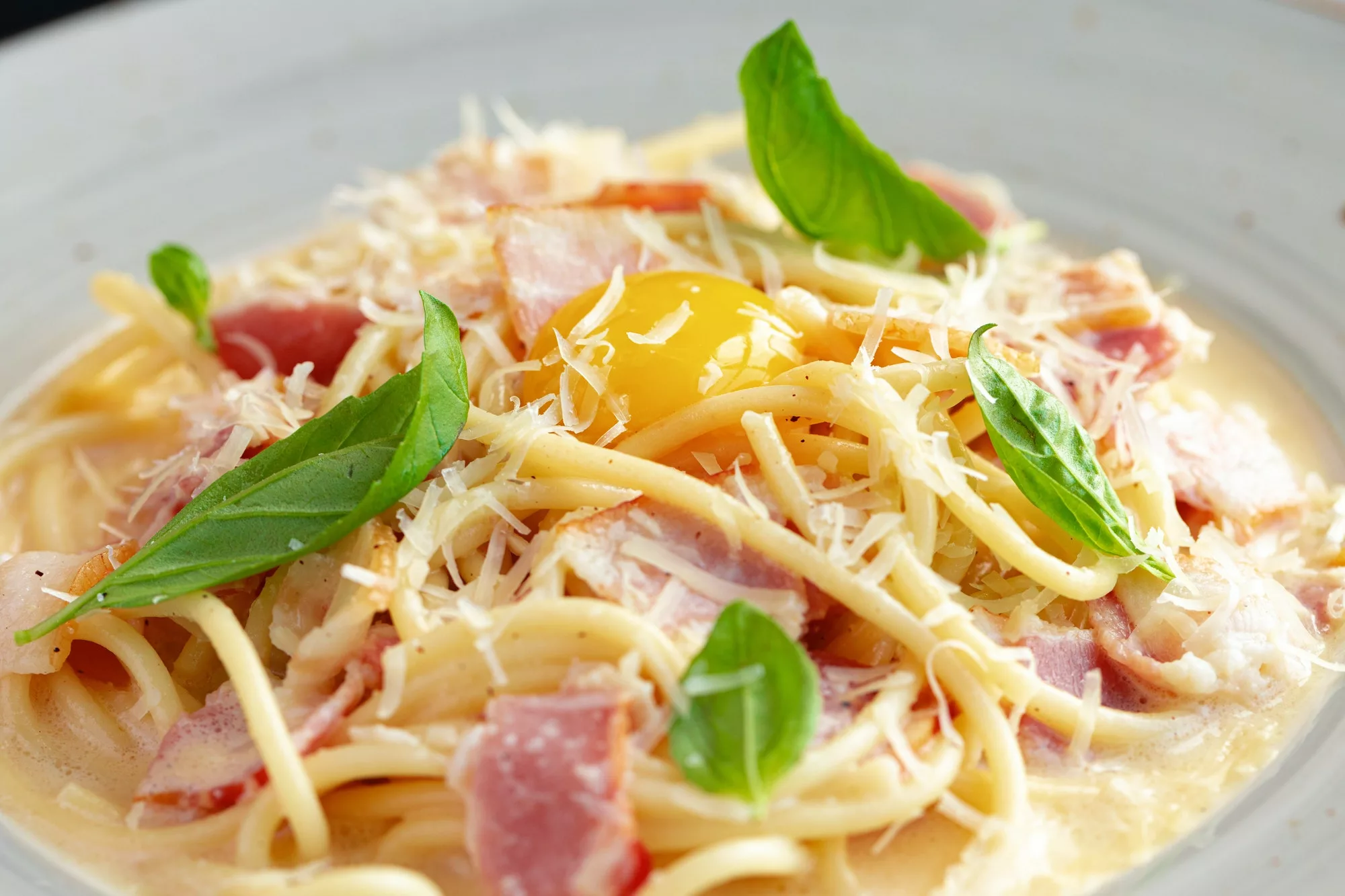
This carbonara uses prosciutto instead of guanciale, which means you can make it with ingredients from any grocery store without sacrificing the salty, savory punch the dish needs. The sauce is nothing more than eggs, Parmigiano-Reggiano, and starchy pasta water — no cream — which is exactly why the technique matters more than the ingredient list. It comes together in 25 minutes, and the leftovers reheat better than most pasta dishes if you know the trick.
Why this recipe works
Two things make or break carbonara: heat control and starch. Pulling the skillet completely off the heat before adding the beaten eggs is non-negotiable — the residual warmth in the pan and the hot pasta do all the cooking you need, slowly enough that the eggs emulsify into a sauce rather than seize into curds. The second piece is the reserved pasta water. It’s loaded with dissolved starch from cooking the spaghetti, and adding it a few tablespoons at a time lets you dial the sauce from thick and clumpy to glossy and coating. Those two steps — off-heat egg addition and incremental pasta water — are what separate a silky result from a disappointing one.
What can go wrong
- The eggs scramble anyway. This usually happens because the skillet was still sitting on a hot burner or the pasta was steaming too aggressively when you added the eggs. Let the drained pasta sit in the pan for 15–20 seconds off the heat before pouring in the egg mixture, and toss immediately without stopping.
- The sauce turns gluey and thick. This means not enough pasta water was added, or it was added all at once. Add it gradually — two tablespoons at a time — and keep tossing between additions. The sauce should look loose and shiny before you plate it, because it tightens as it sits.
- The prosciutto goes chewy instead of crispy. Overcrowding the pan traps steam. Cook the prosciutto in a single layer and resist stirring it constantly — let it sit undisturbed for a minute or two so it can actually crisp against the pan surface.
- The dish tastes flat. Prosciutto and Parmigiano-Reggiano are both salty, so under-seasoning isn’t usually the problem — under-seasoned pasta water is. The boiling water should taste noticeably salty before the spaghetti goes in. If it doesn’t, the pasta itself will taste bland no matter how well-seasoned the sauce is.
- The cheese clumps instead of melting in. Pre-grated cheese from a tub often contains anti-caking agents that prevent it from melting smoothly. Grate the Parmigiano-Reggiano fresh from a block — skip the garnish of extra pre-grated cheese on top, it’s not worth the extra dish.
Make-ahead notes
Carbonara doesn’t hold well as a finished dish — the sauce tightens considerably as it cools and doesn’t survive sitting on the counter. That said, you can get a head start: the prosciutto, onion, and garlic can be cooked and refrigerated in an airtight container for up to 3 days, so on a weeknight you’re only cooking pasta and making the egg mixture fresh. Leftover carbonara keeps in the fridge for up to 2 days in a sealed container. To reheat, skip the microwave — it scrambles the eggs. Instead, add the leftovers to a skillet over low heat with a splash of water (about 2 tablespoons per serving), and stir gently until the sauce loosens and the pasta heats through, about 3–4 minutes. Freezing is not recommended; the egg-based sauce breaks on thawing and won’t come back together.
Pasta Carbonara
Ingredients
- 1 lb spaghetti
- 1 large onion diced
- 2 large cloves garlic minced
- 4 ounces prosciutto diced
- 1 cup pasta water reserved after cooking the pasta
- 2 large eggs beaten
- 2 tablespoons extra virgin olive oil
- 1½ teaspoons butter
- ½ cup Parmigiano-Reggiano grated ; To taste
- 1 pinch ground black pepper To taste
- 1 pinch kosher salt To taste
- 1-2 tablespoons fresh rosemary chopped ; To taste
- 1-2 tablespoons fresh thyme chopped ; To taste
Instructions
- Bring a large pot of generously salted water to a boil. Cook the spaghetti according to packet directions until al dente. Before draining, reserve approximately 1 cup (240ml) of the starchy pasta water. Drain the pasta and set aside.
- While the pasta cooks, heat the olive oil and butter in a large skillet over medium heat. Add the diced prosciutto and cook for 4–5 minutes, stirring occasionally, until golden and crispy. Add the diced onion and minced garlic, season with salt and pepper, and cook for 3–4 minutes until the onion is translucent. Add a drizzle more olive oil if the pan looks dry.
- Remove the skillet from the heat entirely. Add the drained pasta to the skillet and toss well to coat in the prosciutto and onion mixture.
- With the skillet still off the heat, pour the beaten eggs over the pasta and toss quickly and continuously for 30–60 seconds. The residual heat will gently cook the eggs into a silky, creamy sauce that coats every strand. Work fast — if you pause, you will get scrambled egg.
- Add the reserved pasta water 2–3 tablespoons at a time, tossing after each addition, until the sauce reaches a glossy, creamy consistency that clings to the spaghetti. You may not need all of it — start with less and add more as needed. Season with additional salt and pepper to taste.
- Add a generous handful of grated Parmigiano-Reggiano (or Pecorino Romano) and toss once more. Plate immediately, top with extra cheese, a crack of black pepper, and a sprinkle of fresh rosemary and thyme if desired. Serve straight away — carbonara waits for no one.
Nutrition
Common questions
Can I use bacon instead of prosciutto?
Yes, but drain most of the rendered fat before adding the onion and garlic, or the dish will be greasy. Bacon has a smokier flavor than prosciutto and higher fat content, so the final sauce will taste noticeably different — still good, just less delicate.
Do I really need to use Parmigiano-Reggiano, or can I use regular Parmesan?
Regular Parmesan works fine for everyday cooking. Parmigiano-Reggiano has a sharper, more complex flavor and melts more smoothly because of its lower moisture content, but the difference in a dish this simple is real — if you can get it, use it.
My eggs are cold from the fridge. Does that matter?
It does slightly. Cold eggs lower the temperature of the pan faster, which reduces the window you have to emulsify the sauce before everything cools down. Take the eggs out 15–20 minutes before you start cooking so they’re closer to room temperature.
Can I use a different pasta shape?
Yes. Rigatoni and bucatini both work well because their texture holds the sauce. Avoid very thin pasta like angel hair — it doesn’t have enough surface area to carry the coating and tends to clump.
How do I know when I’ve added enough pasta water?
Stop adding when the sauce coats the spaghetti in a thin, glossy layer and there’s no dry clumping at the bottom of the pan. The sauce should look slightly wetter than you want it at this stage, because it will tighten by the time it reaches the plate.
Is it safe to eat the eggs if they’re not fully cooked?
The residual heat from the pasta and pan does cook the eggs — they’re not raw in the finished dish. If you’re cooking for young children, pregnant individuals, or anyone immunocompromised, use pasteurized eggs as a straightforward precaution.
If you liked this one
- Authentic Roman Carbonara
- Creamy Fettuccine Alfredo
- Elegant Chicken Marsala with Mushrooms
- Crispy Italian Almond Biscotti


