

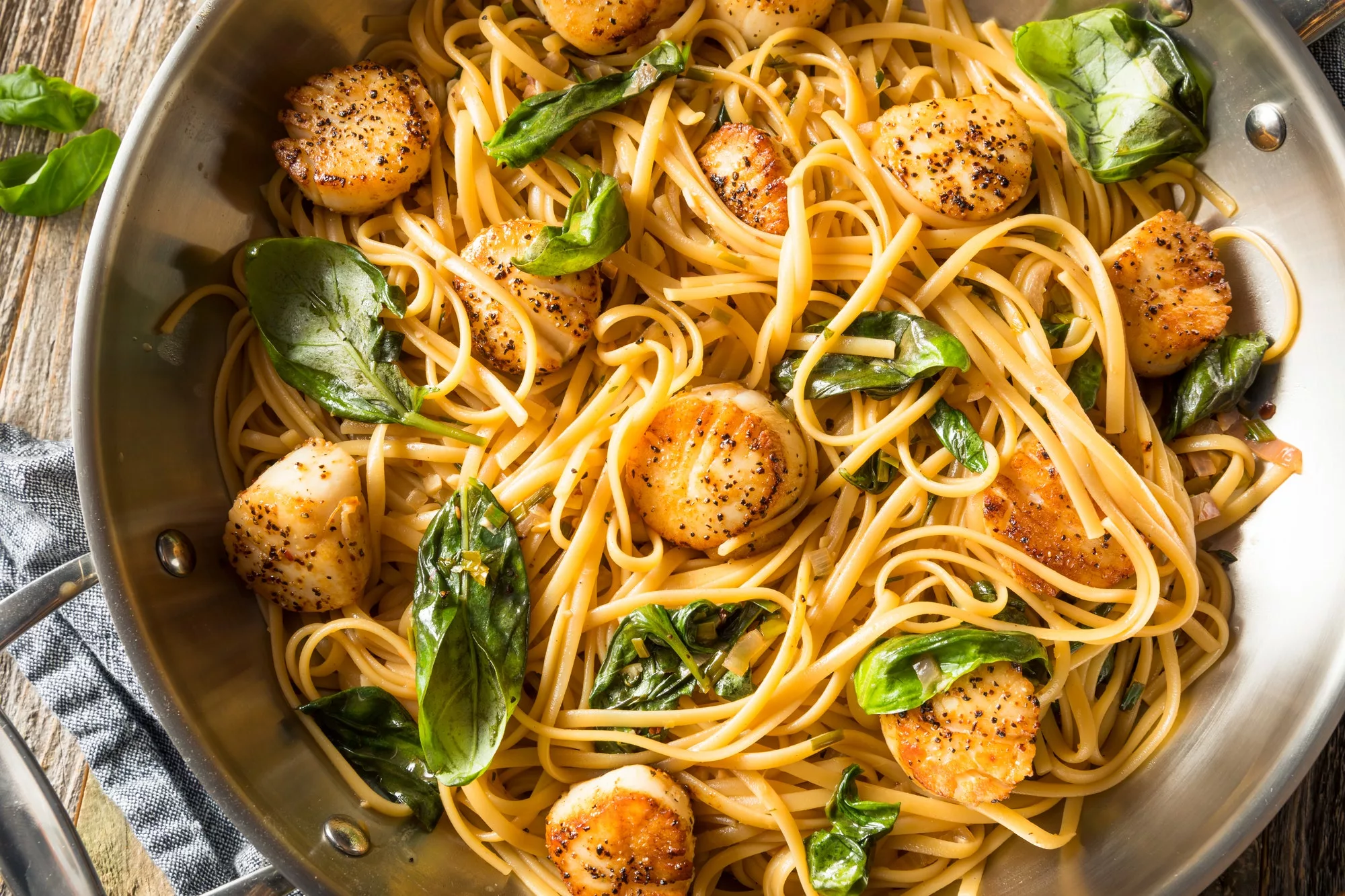
This scallops pasta pulls together in about 35 minutes using one skillet and a handful of everyday ingredients. The sauce is built from a white wine deglaze, whole milk, and a little flour — light enough that the scallops stay the main event, not an afterthought. If you want something that feels like a proper dinner without a pile of dishes, this is a reliable weeknight option.
What makes this version work
Two things matter here more than anything else. First, patting the scallops completely dry before they hit the pan — any surface moisture turns into steam and you lose the sear that gives the dish its flavor base. Second, adding the flour gradually into the sauce a tablespoon at a time rather than all at once. Dumping it in creates lumps that are hard to cook out; adding it slowly while stirring lets it absorb into the liquid evenly and gives you a smooth, clingy sauce that actually coats the pasta instead of pooling at the bottom of the bowl.
If something goes sideways
- Scallops are rubbery: They overcooked. Scallops need high heat and a short time — 1½ to 2 minutes per side maximum. Pull them off the heat as soon as they’re opaque at the edges and golden on the outside, even if the center looks slightly underdone. Residual heat finishes them.
- Sauce is too thin after adding the flour: The pan temperature dropped too much. Bring the sauce back up to a gentle bubble over medium heat and stir for another minute or two — it will thicken as it heats through.
- Sauce is too thick and gluey: Add a splash of the pasta cooking water (not plain water) a tablespoon at a time. The starch in it helps loosen the sauce without watering down the flavor.
- Garlic tastes bitter: It browned instead of just softening. Garlic goes from fragrant to burnt very fast — 30 seconds over medium heat is enough. If it smells sharp or acrid, start the sauce over; bitter garlic doesn’t cook out.
- Pasta is clumping while you finish the sauce: Toss the drained pasta with a small drizzle of olive oil right after draining. It keeps the strands separate for the few minutes you need to finish the sauce.
Ingredient notes
- Scallops: Use large sea scallops, not bay scallops. Bay scallops are much smaller and will overcook in seconds at searing heat. If your scallops are labeled “wet-packed,” soak them in cold salted water for 10 minutes and dry thoroughly — wet-packed scallops have added liquid that prevents browning.
- White wine: Pinot Grigio or Sauvignon Blanc both work well. Avoid anything labeled “cooking wine” — the added salt throws off the seasoning. If you’d rather skip the wine entirely, use an equal amount of low-sodium chicken broth with a small squeeze of lemon juice added at the end.
- All-purpose flour: This is the same as plain flour. Either works identically here — skip the bread flour or any specialty variety.
- Whole milk: Don’t substitute skim or low-fat milk. The lower fat content makes the sauce more likely to break when it heats. Half-and-half works if that’s what you have.
Leftovers and make-ahead
Store leftovers in an airtight container in the fridge for up to 2 days — the scallops hold reasonably well but will firm up slightly when cold. Reheat gently in a skillet over low heat with a splash of water or broth to loosen the sauce; the microwave works in a pinch but tends to toughen the scallops. Skip the garnish of extra Parmesan when storing — not worth the extra dish when you’re reheating anyway. This dish doesn’t freeze well: the sauce separates and the scallops turn tough. For a partial make-ahead, you can dice the onion and mince the garlic up to a day ahead and keep them covered in the fridge, which cuts a few minutes off the actual cooking time.
Scallops Pasta in White Wine
Ingredients
- 1 pound spaghetti or linguine
- ¾ yo 1 pound large sea scallops side muscles removed
- 1 to 1 ½ cups dry white wine such as Pinot Grigio or Sauvignon Blanc
- ½ cup whole milk
- 2 cups fresh spinach roughly chopped
- 3 cloves garlic minced
- 1 medium yellow onion diced
- 2 tablespoons olive oil or butter ; for sautéing
- 2 to 3 tablespoons all-purpose flour plain flour
- 1 pinch salt to taste
- 1 pinch ground black pepper
- shredded Parmesan cheese freshly shredded ; for serving
Instructions
- Cook pasta according to package instructions. Once you already have cooked the spaghetti noodles or linguine, set aside.
- Heat 2 tablespoons of olive oil or butter in a large skillet over medium heat. Add the diced onion and sauté for 3–4 minutes until translucent. Add the minced garlic and cook for another 30 seconds until fragrant — do not let it brown.
- Push the onions and garlic to the edges of the skillet and increase heat to medium-high. Pat scallops dry with paper towels, then sear them for 1½–2 minutes per side until golden brown. Remove scallops and set aside. Deglaze the skillet with ½ cup of white wine, scraping up any browned bits from the bottom.
- Add the remaining white wine, milk, and spinach. Stir and cook for 3–4 minutes until the spinach has wilted and the sauce begins to gently bubble.
- Reduce heat to medium-low. Sprinkle the flour over the sauce a tablespoon at a time, stirring constantly for 1–2 minutes until the sauce thickens to your desired consistency. Return the seared scallops to the skillet and gently toss to coat.
- Lastly, season with salt and pepper to taste.
- Divide the cooked pasta among serving plates. Spoon the scallop and sauce mixture over the top. Finish with freshly shredded Parmesan cheese and serve immediately alongside garlic bread or a simple green salad.
Nutrition
Frequently asked questions
Can I use frozen scallops?
Yes, but thaw them completely in the fridge overnight and dry them very thoroughly before cooking. Frozen scallops release more water than fresh, so pressing them between paper towels for a full minute before searing makes a real difference in getting a good crust.
What pasta shape works best if I don’t have spaghetti or linguine?
Any long, thin pasta works — fettuccine, bucatini, or even angel hair. Avoid short shapes like penne or rigatoni; the sauce is light and clings better to long strands than it fills tube-shaped pasta.
My scallops are sticking to the pan. What’s wrong?
The pan isn’t hot enough yet, or you’re moving them too soon. Let the pan heat for a full minute before adding the scallops, and don’t touch them for at least 90 seconds — a properly seared scallop releases naturally from the pan when it’s ready to flip.
Can I make this without alcohol?
Yes — replace the white wine with low-sodium chicken broth and add a teaspoon of lemon juice at the end to replicate some of the acidity. The sauce will be slightly less complex but still very good.
If you liked this one
- Creamy Fettuccine Alfredo
- Authentic Roman Carbonara
- Authentic Spanish Seafood Paella
- Elegant Chicken Marsala with Mushrooms and Marsala Wine


