




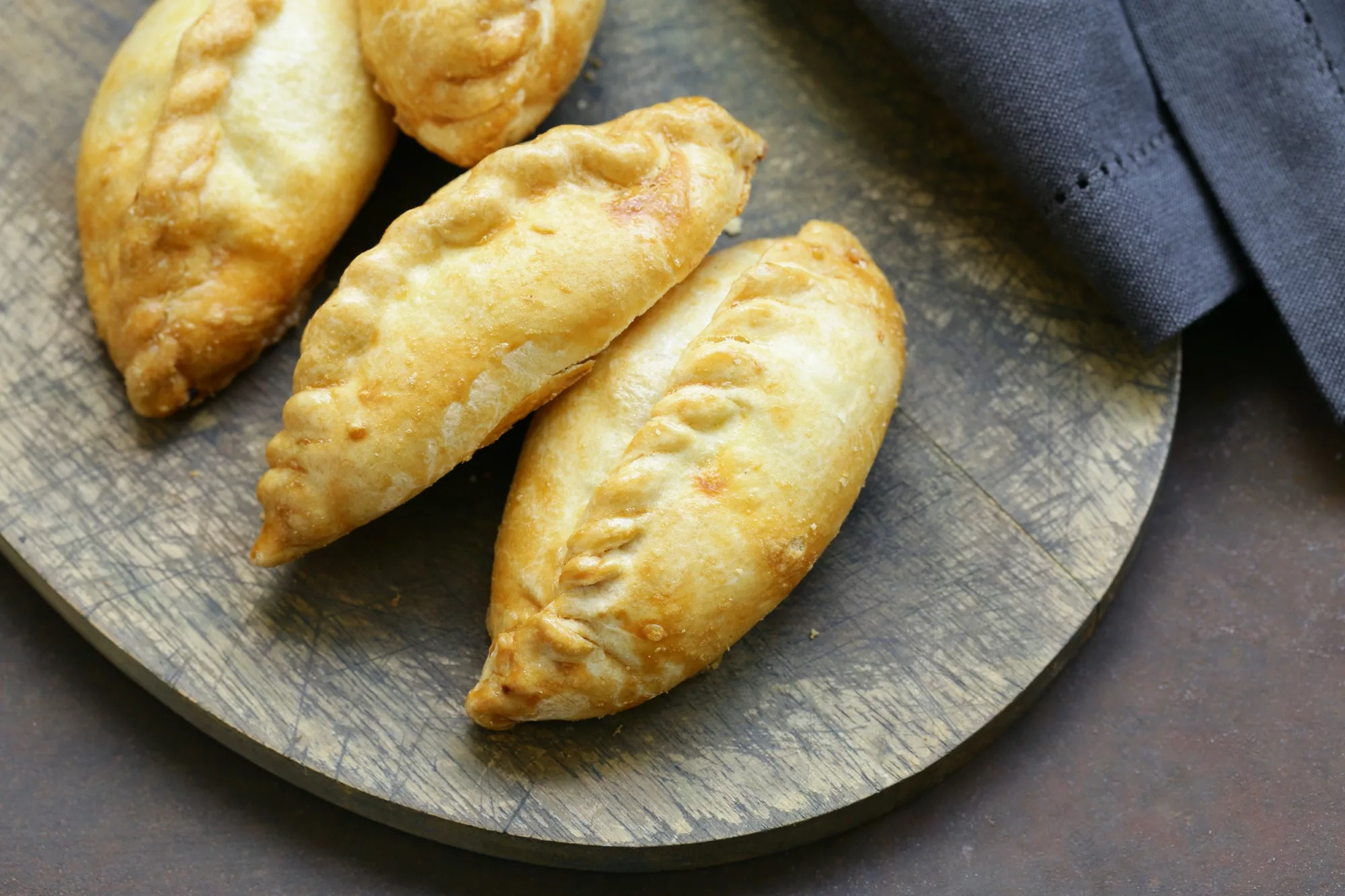
These homemade beef empanadas are one of my favourite things to make when I want a crowd-pleasing snack that feels special without being fussy. The dough is buttery and shatteringly flaky, and the filling is that classic Argentine-style combination of seasoned sirloin steak, briny green olives, sweet raisins, and chopped hard-boiled eggs.
What I love about this recipe is how well all those contrasting flavours work together — you get savoury, salty, sweet, and a little heat from the crushed red pepper in every bite. The dough comes together in minutes in a food processor, and the filling cooks quickly on the stovetop, so you can have a full batch ready in under an hour.
I make these for game days, potlucks, and weekend lunches. They reheat beautifully and freeze like a dream, which means you can always have a stash ready to go. If you have never made empanada dough from scratch before, this is the recipe to start with — the results are so much better than store-bought discs, and the process is genuinely simple.
Homemade Empanadas
Ingredients
Dough Ingredients
- 9 ounces all-purpose flour
- as needed all-purpose flour for rolling surface
- 1 teaspoon salt
- 10 tablespoons cold butter cut into 5 pieces
- ⅓ cup cold water
Filling Ingredients
- ⅓ cup raisins
- 1 cup boiling water
- 1 small onion (about 3 oz / 85g), finely chopped
- 1 tablespoon olive oil
- 8 ounces Sirloin steak boneless, cut into 1/4-inch dice
- 1 teaspoon crushed red pepper
- ¼ teaspoon cumin ground
- ½ teaspoon paprika
- 2 large hard-boiled eggs peeled and chopped
- 20 pieces green olives pitted and chopped or sliced
- ½ teaspoon salt
- ½ teaspoon freshly ground black pepper to taste
Instructions
Dough Instructions
- Add the flour and salt to a food processor. Pulse a couple of times to mix.
- Add cold butter to the mixture and pulse a few times until the mixture forms pea-sized pieces.
- As the machine runs, add water through the feed tube. Then, pulse for a few times until the dough ball forms.
- Remove the dough, put it in plastic wrap and store it in the refrigerator while preparing the filling.
Filling Instructions
- Soak raisins in the measured boiling water for 10 minutes. Drain. Set aside.
- Heat a medium skillet over medium heat. Add the olive oil. Add the onions and cook for 3-4 minutes, stirring occasionally, until translucent.
- Add the diced sirloin to the skillet and cook for 3-4 minutes until browned on all sides. Stir in crushed red pepper flakes, cumin, paprika, salt, and pepper. Remove from heat and fold in the reserved raisins, chopped eggs, and olives. Set aside to cool completely before filling.
Assembly Instructions
- Preheat oven to 400°F / 200°C (205°C fan-forced).
- Roll the dough on a floured surface to 1/8-inch thick. Cut out 4-inch rounds. The dough can be rolled a second time (after that, the dough gets too tough).
- Place 1-2 tablespoons of filling in the centre of each round. Moisten the edges with a little water, fold the dough over to form a half-moon, and press the edges firmly with a fork to seal.
- Bake empanadas on a parchment-lined sheet pan for 15-18 minutes until golden brown. Using parchment prevents sticking from any butter that leaks from the dough.
Nutrition
What Makes These Homemade Beef Empanadas Special
These empanadas stand out because of the balance between the buttery, flaky homemade dough and the complex Argentine-style filling. While many recipes rely on store-bought empanada discs, making the dough from scratch in a food processor takes just five minutes and produces a crust that shatters when you bite into it — something pre-made dough simply cannot achieve.
The filling is what really sets these apart. The combination of seared sirloin steak, briny green olives, plump raisins, and chopped hard-boiled eggs creates layers of flavour in every bite — savoury, salty, sweet, and subtly spicy from the crushed red pepper and cumin. This is a traditional Argentine filling style often called empanadas de carne, and it is considered the gold standard for a reason.
Tips for Best Results
- Keep everything cold: The butter and water for the dough must be cold. This is what creates the flaky layers — warm butter will melt into the flour and produce a tough, bready crust instead.
- Do not overwork the dough: Pulse the food processor just until a ball forms. Overprocessing develops gluten and makes the dough chewy rather than tender.
- Cool the filling completely: If you put warm filling into the dough rounds, the butter in the dough will soften and the empanadas will be difficult to seal and may leak during baking.
- Roll evenly to 1/8-inch thickness: Too thin and they will tear when filling. Too thick and the dough-to-filling ratio will be off, resulting in bready empanadas.
- Seal thoroughly with a fork: Press the tines firmly along the sealed edge. Any gaps will allow steam to escape and the filling to leak out during baking.
- Do not skip the chill: Resting assembled empanadas in the fridge for 10 minutes before baking gives the butter time to firm up again, which means flakier results.
Substitutions and Variations
- Protein swap: Replace sirloin with ground beef (cook and drain before seasoning), shredded rotisserie chicken, or diced pork shoulder for a different flavour profile.
- Vegetarian version: Use a filling of sautéed peppers, onions, corn, black beans, and crumbled queso fresco seasoned with the same cumin and paprika.
- Cheese addition: Tuck a small cube of mozzarella or Monterey Jack into each empanada before sealing for a melty surprise inside.
- Spice level: Increase crushed red pepper to 1/2 teaspoon for more heat, or add a finely diced jalapeño to the filling with the onions.
- Olive swap: If you dislike green olives, try kalamata olives or capers for a similar briny element.
- Gluten-free dough: Substitute a 1:1 gluten-free flour blend for the all-purpose flour and add 1/2 teaspoon xanthan gum — the texture will be slightly different but still delicious.
Storage and Reheating
Refrigerator: Store baked empanadas in an airtight container for up to 3 days. Reheat in a 375°F / 190°C oven for 8-10 minutes until the crust is crispy again. Avoid the microwave — it will make the flaky crust soggy.
Freezer (unbaked): Assemble empanadas, place them on a parchment-lined sheet pan, and freeze until solid (about 2 hours). Transfer to a freezer-safe bag and store for up to 3 months. Bake directly from frozen at 400°F / 200°C for 20-22 minutes — no thawing needed.
Freezer (baked): Fully baked empanadas can be frozen for up to 2 months. Reheat from frozen at 375°F / 190°C for 12-15 minutes.
What to Serve With These Empanadas
- Chimichurri sauce: The classic Argentine accompaniment — the bright, herbaceous flavour of parsley, garlic, and red wine vinegar cuts through the richness of the buttery pastry.
- Ají verde or ají amarillo sauce: A creamy Peruvian green sauce adds a tangy, mildly spicy kick that pairs beautifully with the beef filling.
- Simple green salad: Dressed with a lemon vinaigrette and shaved red onion to provide a fresh, crisp contrast.
- Black bean soup: Serve these empanadas alongside a bowl of smoky black bean soup for a satisfying and complete Latin American meal.
- Pickled red onions: Quick-pickled in lime juice and salt, these add acidity and crunch that complements the savoury filling.
Frequently Asked Questions
Can I use store-bought empanada discs instead of making dough from scratch?
Yes, you can. Goya or La Salteña brand discs work well for baking. However, homemade dough is significantly flakier and more buttery. If using store-bought discs, let them thaw at room temperature for 10 minutes before filling so they are pliable enough to fold without cracking.
Why did my empanadas leak filling during baking?
The most common reasons are that the edges were not sealed tightly enough, the filling was still warm when you assembled them (causing the butter in the dough to soften), or the dough was rolled too thin. Use a fork to firmly press the edges, make sure the filling is completely cool, and keep the dough at an even 1/8-inch thickness.
Can I fry these empanadas instead of baking them?
Absolutely. Heat neutral oil (vegetable or canola) to 350°F / 175°C in a deep pot or Dutch oven. Fry 2-3 empanadas at a time for 3-4 minutes, turning once, until deep golden brown. Drain on a wire rack. Fried empanadas have an even crispier crust but are richer, so they work best as appetisers.
How do I prevent the dough from getting tough?
Three things: use cold butter, add only enough water for the dough to come together, and do not overwork it. When rolling out the dough, you can re-roll scraps once — after that, the gluten has been worked too much and the dough becomes tough and elastic rather than tender.
Can I make the filling the night before?
Yes, and it actually works better that way. Making the filling ahead gives the flavours more time to meld and ensures the filling is thoroughly cold when you assemble the empanadas, which makes shaping and sealing much easier.
How many empanadas does this recipe actually make?
You should get approximately 18 empanadas using 4-inch rounds. The exact number depends on how thick you roll the dough and how efficiently you cut the rounds. Re-rolling the scraps once will help you maximise your yield.
What size round cutter should I use?
A 4-inch (10cm) round cutter is ideal for standard snack-sized empanadas. For larger, meal-sized empanadas, use a 6-inch (15cm) cutter and increase the filling to about 3 tablespoons per round — this will yield approximately 9-10 larger empanadas.
The History of Empanadas
Empanadas trace their roots to the Iberian Peninsula, where they evolved from the Arabic tradition of stuffed breads brought to Spain during the Moorish occupation. The word empanada comes from the Spanish verb empanar, meaning to wrap in bread. Spanish and Portuguese colonists brought empanadas to Latin America in the 16th century, where each country developed its own distinct style.
The filling in this recipe — sirloin with olives, raisins, and hard-boiled eggs — is distinctly Argentine. In Argentina, empanada fillings vary dramatically by province: Salta is known for its spicy beef empanadas with potatoes, Tucumán favours hand-chopped meat with cumin, and Buenos Aires embraces the olive-and-raisin combination you see here. Argentine empanadas are traditionally baked rather than fried, which distinguishes them from many other Latin American versions.
Today, empanadas are enjoyed across the globe and have become one of the most popular handheld foods at parties, street food stalls, and family gatherings alike.
If you try these homemade beef empanadas, I would love to hear how they turned out — leave a star rating and a comment below to share your experience!


