



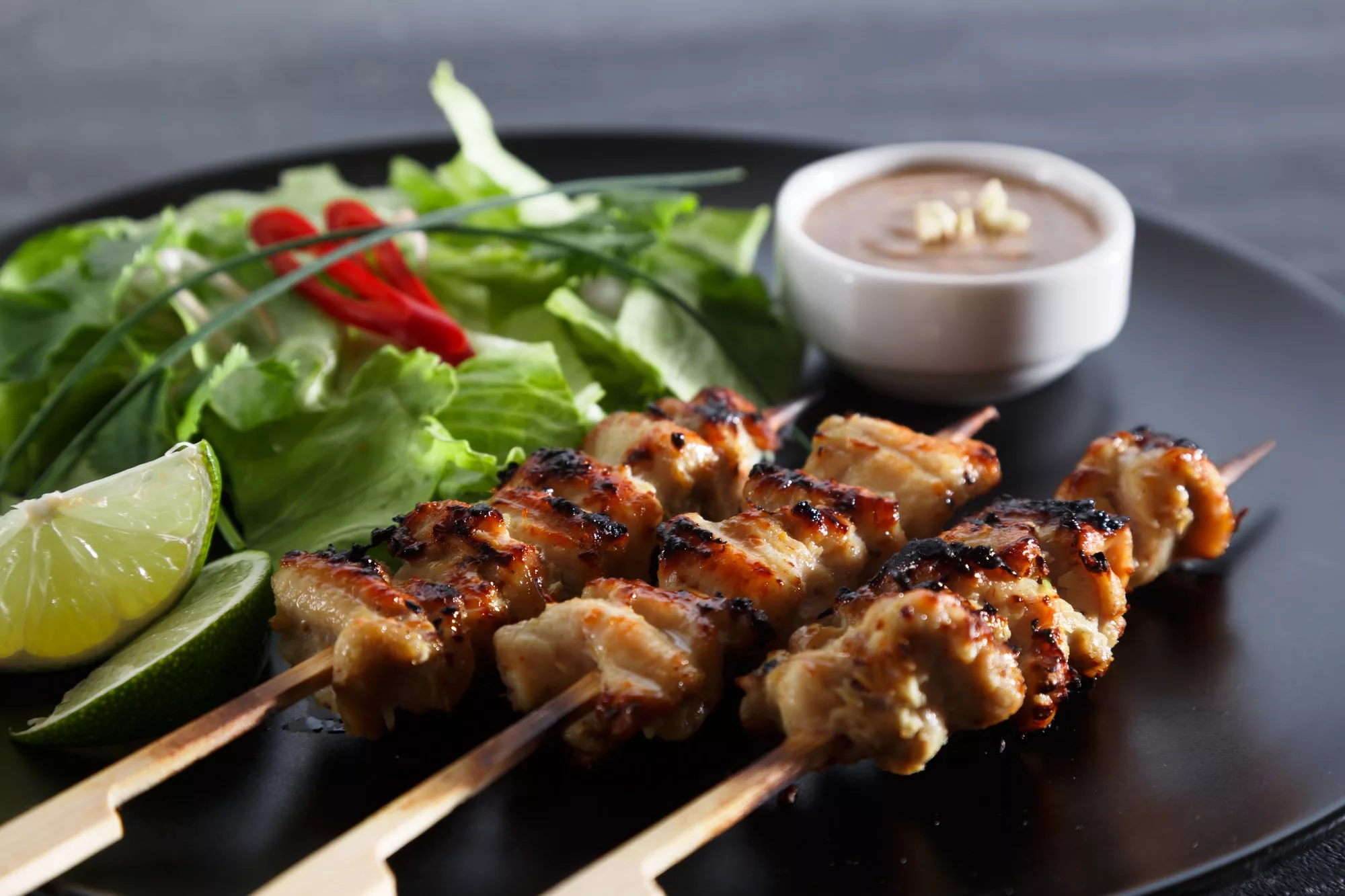
This is a straightforward chicken satay — coconut milk marinade, yellow curry spice, and a peanut sauce that comes together in one pan. The whole thing works on a backyard grill or a stovetop grill pan, and the active cooking time is under 20 minutes. The main reason to make it on a weeknight is that most of the work happens in the fridge while you’re doing something else.
The short version of why this works
Two things matter here. First, the coconut milk in the marinade. It contains enzymes that physically break down muscle fibers, which is why the chicken comes out noticeably tender rather than just flavored on the outside. That only works if you give it time — at least 2 hours, no more than 24. Second, the peanut sauce is cooked, not just stirred together. Simmering it for 10 minutes thickens it and mellows the raw edge of the fish sauce and lime, so it tastes balanced rather than sharp. Skip either step and you’ll notice.
If something goes sideways
- Sauce seizes up into a thick paste: It will tighten as it cools. Whisk in warm water or coconut milk a tablespoon at a time over low heat until it loosens to a dippable consistency.
- Chicken sticks to the grill: It’s usually not ready to flip yet. Leave it another 30–60 seconds — properly seared chicken releases on its own. Forcing it tears the meat.
- Skewers are burning before the chicken is done: The soak wasn’t long enough, or the grill is running too hot. Move the skewers to indirect heat and close the lid for a few minutes to finish cooking.
- Sauce tastes flat or too sweet: Add lime juice a small splash at a time. Acid is what balances peanut butter-based sauces — more curry powder won’t fix it.
- Chicken strips are uneven and some are overcooked: Cut the strips to a consistent thickness before threading — about ½ inch. Thin ends cook faster and dry out before the thick parts are done.
Substitutions that actually work
Fish sauce is the ingredient people most want to skip — don’t. It adds salt and depth that soy sauce alone doesn’t replicate. If you genuinely can’t use it, substitute with a mix of soy sauce and a small squeeze of lime, but expect a slightly flatter result. For the peanut butter, use a no-stir natural variety or a commercial brand like Jif or Skippy — both work, though commercial brands make a slightly sweeter sauce. Avoid chunky peanut butter; it won’t emulsify smoothly. Chicken thighs are a better swap than breasts if you have them — they stay juicier on high heat and are more forgiving if you go a minute over. Skip the garnish — not worth the extra dish.
Make-ahead notes
The marinade can go together the night before — just add the chicken and refrigerate up to 24 hours. The peanut sauce keeps in the fridge for up to 3 days in a sealed container; reheat it gently on the stove with a splash of coconut milk or water and whisk until smooth. Cooked skewers freeze well for up to 2 months — freeze them flat on a baking sheet first, then transfer to a bag so they don’t stick together. Reheat both the chicken and sauce separately: chicken under the broiler for 3–4 minutes, sauce low and slow on the stove. Don’t microwave the chicken if you can help it; it turns rubbery.
Grilled Chicken Satay With Peanut Dipping Sauce
Equipment
- 10 wooden or metal skewers
Ingredients
Marinade Ingredients
- ½ cup unsweetened coconut milk
- 1 tablespoon yellow curry powder
- 1½ teaspoons white sugar
- 1½ teaspoons fish sauce
- ¾ teaspoon granulated garlic
- 2 pounds boneless skinless chicken breasts cut into strips
Peanut Dipping Sauce Ingredients
- 1 cup unsweetened coconut milk
- ¾ cup chicken broth
- ½ cup creamy peanut butter
- 1¼ tablespoon yellow curry powder
- 1¼ tablespoon white sugar
- 1¼ tablespoon fish sauce
- 1¼ tablespoon lime juice about ½ a large lime
Additional Ingredient
- 2 tablespoons neutral oil for grill pan method
Instructions
- In a bowl, combine all marinade ingredients and pour over the cut chicken strips. Refrigerate for 2 hours.
- Prepare the peanut dipping sauce: combine all dipping sauce ingredients in a medium saucepan over medium heat. Bring to a simmer, stirring often with a rubber spatula, and cook for 10 minutes or until the sauce thickens enough to coat the back of a spoon.
- If using wooden skewers, soak them in water for at least 30 minutes while the chicken marinates (this prevents them from burning on the grill).
- Thread two chicken strips onto each skewer.
- Oil the cooking grates and preheat your grill to 400°F / 200°C (direct heat). Alternatively, for the stove: heat a grill pan over medium-high heat with 2 tablespoons of neutral oil until the oil shimmers.
- Grill chicken for 4–5 minutes per side, turning once with tongs, until the internal temperature reaches 165°F / 74°C and the edges are lightly charred.
- Serve with warm peanut dipping sauce.
Nutrition
Frequently asked questions
Can I cook these in the oven instead of on a grill?
Yes — broil them on a foil-lined sheet pan about 6 inches from the element for 4–5 minutes per side. You won’t get the same char marks, but the chicken cooks through cleanly and the edges will still brown.
Do I have to use skewers, or can I just grill the strips flat?
You can grill the strips flat — skewers are mainly for presentation and easier flipping. If you skip them, use tongs and work quickly so the strips don’t fall through the grates.
My peanut sauce is way too thick straight out of the pan. Is that normal?
It is — peanut sauce thickens significantly as it sits and cools. Thin it with warm water or coconut milk a tablespoon at a time until it reaches a consistency you can dip into without it clumping on the skewer.
Can I use frozen chicken for this?
Thaw it completely in the fridge first, then pat it dry before adding it to the marinade. Wet chicken doesn’t marinate as effectively, and excess surface moisture will steam rather than sear on the grill.
What to cook next
- Authentic Japanese Chicken Teriyaki
- Fiery Jamaican Jerk Chicken
- Fresh Vegetable Spring Rolls
- Sizzling Street-Style Grilled Chicken Tacos


