







































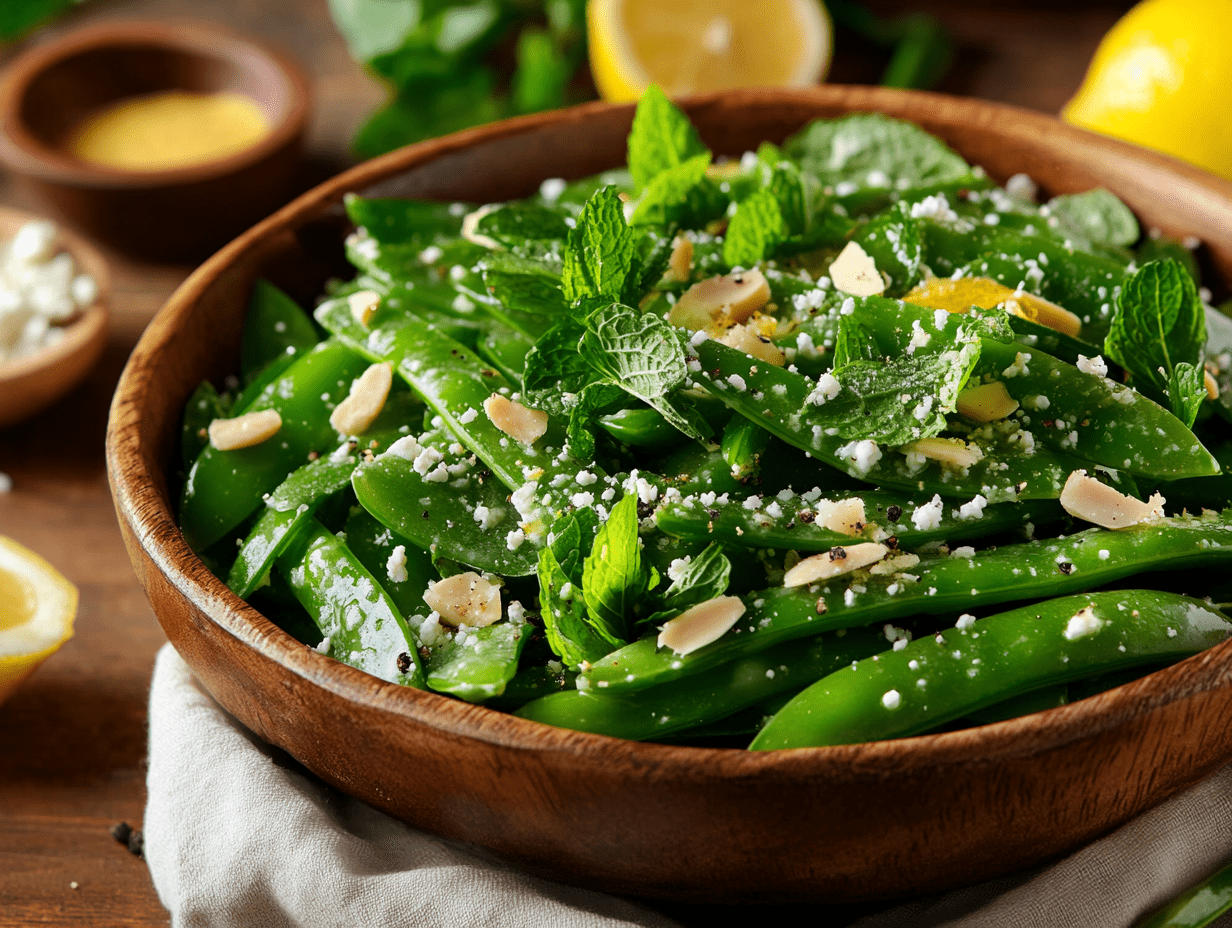
This salad is four ingredients, one bowl, and fifteen minutes — and it holds up well when you double or triple it for a group. The snow peas stay crunchy under the dressing longer than most greens, which makes it a genuinely low-stress option when you need a side that can sit on the table while everything else comes together. Feta is optional in the recipe card, but it earns its place.
Smart swaps
- Snow peas: These are the one ingredient worth tracking down fresh — frozen won’t give you the crunch. Sugar snap peas work as a direct swap if snow peas aren’t available; just slice them the same way.
- Fresh mint: Dried mint is not a substitute here. If you can’t find mint, fresh flat-leaf parsley or basil will change the flavor but still work well with the lemon dressing.
- Toasted almonds: Toasted sunflower seeds or pumpkin seeds are a solid nut-free swap and cost less per serving when you’re scaling up.
- Feta: Goat cheese crumbles in the same way and gives a similar tang. Skip the garnish of extra feta on top — not worth the extra dish.
- Honey: Maple syrup works as a 1:1 swap if that’s what you have open.
What makes this version work
Two things matter here. First, slicing the snow peas diagonally isn’t just about looks — it exposes more surface area so the dressing actually coats the pea rather than sliding off the flat side. Second, the Dijon mustard in the dressing does real work: it binds the olive oil and lemon juice into a cohesive emulsion instead of a separated, oily puddle at the bottom of the bowl. Whisk the dressing until it looks slightly thickened and uniform before you pour it on. Those two steps are the difference between a salad that tastes dressed and one that just tastes wet.
Common problems and fixes
- Dressing tastes flat: Lemon juice varies a lot in acidity depending on the fruit. Taste the dressing before it goes on the salad and add more lemon juice in small amounts — half a teaspoon at a time — until it has a clear bright edge.
- Almonds go soft: This happens when they’re added too early or the salad sits dressed for a while. Add the almonds right before serving, not during assembly. If you’re making a big batch ahead of time, keep them in a separate small container.
- Mint turns dark: Torn mint oxidizes faster than whole leaves. Tear it just before serving, not during prep. If you’re working ahead, leave the mint whole and tear it at the table.
- Salad tastes underseasoned: Feta adds salt, so if you’re skipping it the dressing may need more sea salt than the recipe suggests. Season the dressed salad, not just the dressing.
- Dressing separates in the bowl: If it’s been sitting, give the bowl a quick toss rather than adding more dressing. The emulsion breaks down over time but the flavor is still there.
Make-ahead notes
The dressing keeps in a sealed jar in the fridge for up to five days — shake or re-whisk before using since it will separate. The snow peas can be trimmed and sliced up to 24 hours ahead and stored in an airtight container with a damp paper towel to keep them from drying out. Do not dress the salad more than 30 minutes before serving; after that the peas start to lose their snap. If you’re feeding a crowd, assemble the full salad dry — peas, mint, almonds, feta all in the bowl — cover it, and refrigerate for up to two hours, then dress it right before it hits the table. This recipe does not freeze.
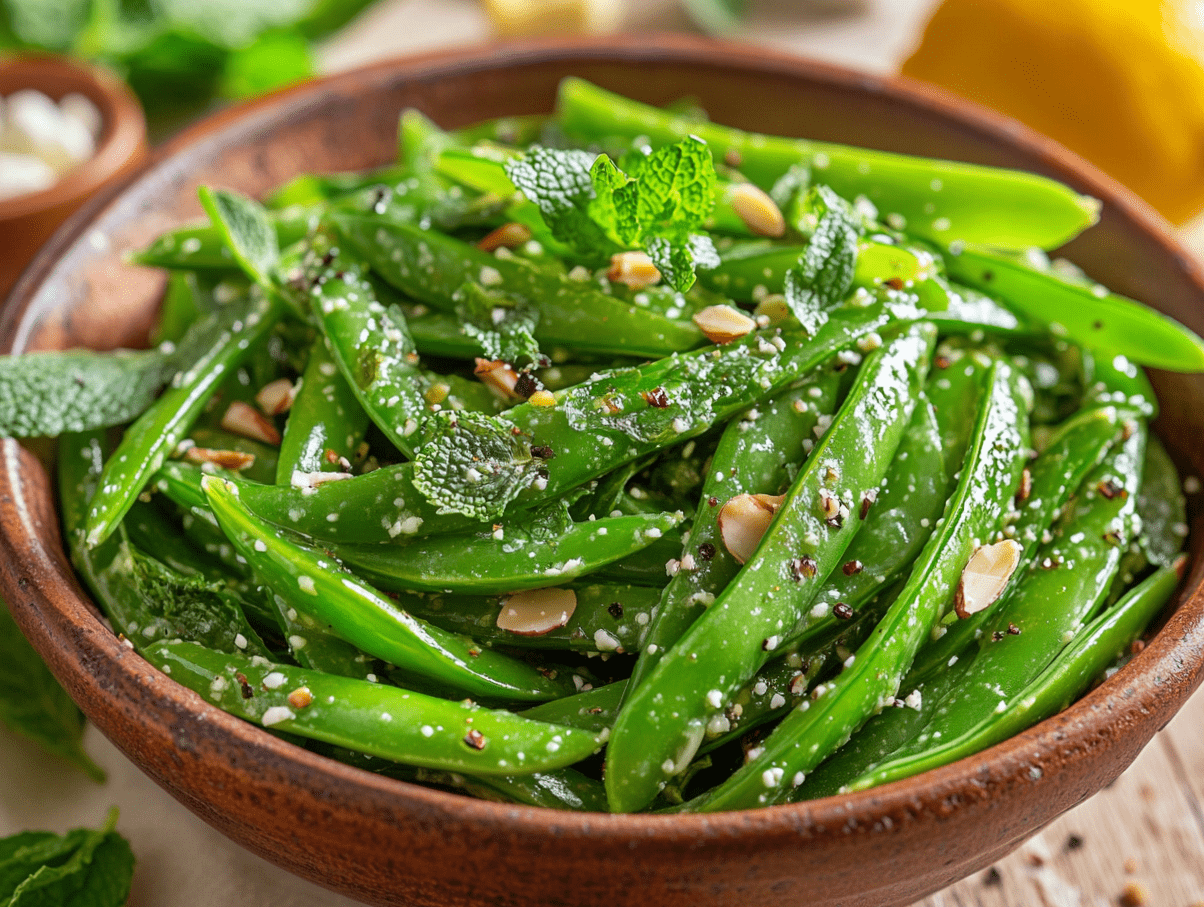
Snow Pea and Mint Salad with Lemon Dressing
Equipment
- Mixing bowl
- Whisk
- Sharp Knife
Ingredients
For the Salad:
- 2 cups snow peas trim ends and slice diagonally for an elegant look
- ½ cup fresh mint leaves loosely packed, torn for best aroma
- ¼ cup toasted almonds thinly sliced for added texture
- ¼ cup crumbled feta cheese optional, for a creamy contrast
For the Lemon Dressing:
- 3 tablespoons extra virgin olive oil high-quality for best flavor
- 2 tablespoons fresh lemon juice freshly squeezed for optimal freshness
- 1 teaspoon honey balances acidity
- ½ teaspoon Dijon mustard emulsifies dressing for better consistency
- ½ teaspoon sea salt adjust to taste
- ¼ teaspoon freshly ground black pepper for best depth of flavor
Instructions
- Trim the ends of snow peas and slice diagonally into thin strips for an elegant presentation.
- In a mixing bowl, combine the sliced snow peas with torn fresh mint leaves.
- In a separate small bowl, whisk together the olive oil, fresh lemon juice, honey, Dijon mustard, sea salt, and black pepper until emulsified.
- Drizzle the dressing over the snow pea and mint mixture, tossing gently to coat all ingredients.
- Top with toasted sliced almonds and crumbled feta cheese (if using).
- Serve immediately, or let it sit for 5 minutes to allow the flavors to meld together.
Notes
- For a nut-free version, swap almonds with sunflower seeds.
- If serving later, keep the dressing separate and combine before plating to maintain crisp textures.
Nutrition
FAQ
Can I make this salad the night before a party?
You can prep all the components the night before, but don’t combine them until closer to serving time. Store the sliced snow peas, torn mint, almonds, and dressing separately in the fridge, then toss everything together no more than 30 minutes before guests eat.
How do I scale this up for 10 or 12 people?
The recipe scales cleanly — just multiply every ingredient by the same factor. The one thing to watch is the dressing: mix it in a jar and taste it before pouring, since a larger batch can taste more or less acidic depending on your lemons.
Do the snow peas need to be blanched first?
No, they’re used completely raw. Blanching would soften them and you’d lose the crunch that makes this salad worth making.
My grocery store only has snap peas. Will those work?
Yes, sugar snap peas are a direct substitute. Slice them diagonally the same way — they’re a little thicker and sweeter, but the salad will still work.
Is this salad filling enough to be a main dish for lunch?
As written, it’s a side or starter. To make it a full lunch, add a can of drained chickpeas or some shredded rotisserie chicken directly to the bowl — both work with the lemon dressing and don’t require any extra cooking.
Can I use bottled lemon juice instead of fresh?
Fresh lemon juice is worth using here because it’s the main flavor in the dressing. Bottled juice tends to taste flat and slightly bitter, which is more noticeable in a simple dressing like this than it would be in a cooked dish.
More recipes to try
- Gourmet Avocado Toast with Poached Egg and Mediterranean Flair
- Street Food Magic: Authentic Chicken Shawarma Delight
- Coastal Elegance: Fresh Lemon-Herb Crab Salad
- Fresh Vegetable Spring Rolls: A Vibrant Vietnamese Dish