



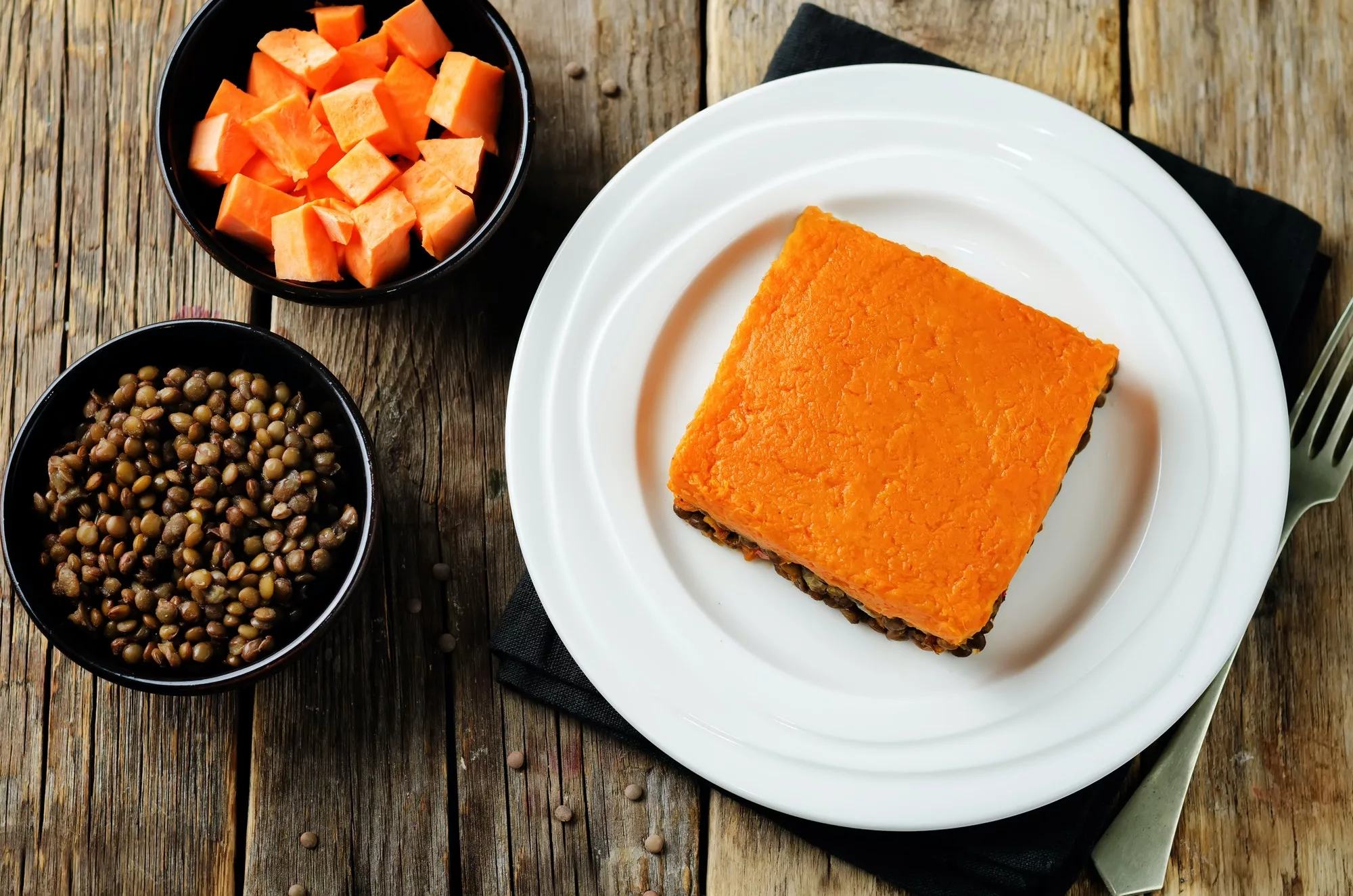
This vegan shepherd’s pie is the recipe I come back to when I want something deeply comforting without feeling heavy afterwards. It layers a savoury base of plant-based ground meat with onion, garlic, and sage under a thick blanket of mashed red potatoes and carrots — and every forkful delivers that classic shepherd’s pie satisfaction.
What makes this version work so well is the combination of red potatoes and carrots in the mash. The carrots add a subtle natural sweetness that balances the earthy sage in the meat layer, and the red potato skins give the topping a rustic texture that I genuinely prefer over the traditional smooth version.
The whole thing comes together in under an hour, uses straightforward pantry-friendly ingredients, and bakes up beautifully in individual ramekins or one big casserole dish. Whether you’re fully vegan or just looking to eat more plants, this vegan shepherd’s pie proves that comfort food doesn’t need butter or beef to be absolutely satisfying.
Vegan Shepherd’s Pie
Ingredients
- 2 pounds red potatoes
- 2 large carrots (about 8 oz / 225g), peeled
- 1 ½ pounds vegan ground meat (such as Beyond or Impossible)
- 1 tablespoon vegan butter
- 2 tablespoons olive oil
- 1 cup unsweetened almond or soy milk
- 1 large onion finely diced
- 2 large cloves garlic minced
- 1 tablespoon dried sage (or 2 tablespoons fresh sage, finely chopped)
- 1 teaspoon red pepper (crushed red pepper)
- 1 teaspoon salt to taste
- 1 teaspoon ground black pepper to taste
Instructions
- Quarter the red potatoes. You can peel them or leave the skins on — keeping the skins adds colour and nutrients to the mash.
- Chop the carrots into chunks.
- Place the potatoes and carrots into cold water and place on high heat. Boil until both are soft enough to mash, roughly for 17 minutes. (Note: it’s essential to use cold water at first, as it preserves the integrity of the starches in the potatoes before they boil.)
- While potatoes and carrots are boiling, thoroughly chop the onion and garlic.
- Heat 2 tablespoons olive oil in a large skillet over low to medium heat. Add the diced onions and sweat for 4-5 minutes until soft and translucent. Add the minced garlic and cook for 30 seconds until fragrant. Add the vegan ground meat and sauté for 5-7 minutes, breaking it apart with a wooden spoon, until slightly browned.
- Turn off the skillet and add a generous tablespoon of sage, a teaspoon of red pepper and salt and pepper to taste.
- Change to: Drain the potatoes and carrots thoroughly. Return them to the pot and add 1 cup (240ml) almond or soy milk and 1 tablespoon (15g) vegan butter. Season with salt and pepper to taste.
- With beaters or a fork, mash the ingredients together. I prefer to leave chunks of potatoes and carrots in there for the presentation, but how much you blend is entirely your call.
- Spoon the meat and onion mixture into individual ramekins or a large 9×13 inch (23x33cm) casserole dish, spreading it evenly across the bottom and pressing down gently to form a compact base. Spread the mashed potatoes on top in an even layer — use a fork to create ridges across the surface for extra texture.
- Bake in a preheated oven at 350°F / 175°C (160°C fan-forced) for 15 minutes to allow extra moisture to escape and the flavours to meld together.
- Remove and serve straight from the dish. Garnish with dried sage or your favorite vegan gravy!
Nutrition
What Makes This Vegan Shepherd’s Pie Special
Most vegan shepherd’s pie recipes rely on lentils or mushrooms for the base — and while those are perfectly fine, they don’t give you that unmistakable shepherd’s pie texture. This version uses vegan ground meat that browns and crumbles just like the real thing, giving you a filling that actually holds its shape under the mashed potato layer.
The other detail that sets this apart is mashing the carrots directly into the potatoes. Instead of hiding diced carrots in the meat base (where they often go unnoticed), folding them into the topping creates a subtly sweet, golden mash that pairs beautifully with the earthy dried sage in the filling. It’s a small change that makes a real difference in flavour and presentation.
Using red potatoes rather than russets is also intentional. Red potatoes hold more moisture and have a naturally creamier texture when mashed, which means you need less plant milk and butter to get a smooth, spreadable topping that won’t dry out in the oven.
Tips for Best Results
- Start potatoes in cold water. This allows the potatoes to cook evenly from the outside in. Dropping them into boiling water can leave you with mushy exteriors and hard centres.
- Don’t skip sweating the onions. Low, slow cooking draws out the onions’ natural sugars before the vegan meat goes in. This creates a deeper, more complex base flavour than high-heat sautéing.
- Drain the potatoes thoroughly. Excess water in the mash will make the topping soggy after baking. Let the drained potatoes sit in the colander for a full minute before returning them to the pot.
- Score the top with a fork. Dragging fork tines across the mashed potato surface creates ridges that catch heat and develop light golden edges during baking — this is what gives shepherd’s pie its signature look.
- Let it rest for 5 minutes after baking. The filling is extremely hot and loose straight from the oven. A short rest lets everything set so slices hold together when served.
Substitutions and Variations
- Vegan ground meat: Beyond Beef, Impossible Burger, or any soy-based crumbles all work. For a whole-food option, use cooked green or brown lentils (about 3 cups) — they won’t brown the same way but absorb the sage seasoning beautifully.
- Red potatoes: Yukon Gold potatoes are the closest swap and produce an even creamier mash. Russets will also work but absorb more liquid, so increase the plant milk by a couple of tablespoons.
- Plant milk: Oat milk is the creamiest non-dairy option for mashed potatoes and works slightly better than almond milk here. Avoid coconut milk — its flavour is too distinct for this dish.
- Sage: If you don’t have sage, use a combination of dried thyme (1 teaspoon) and dried rosemary (½ teaspoon) for a similarly warming, herbaceous flavour.
- Add frozen peas and corn: Stir ½ cup each of frozen peas and corn into the meat filling for added colour, sweetness, and a more traditional British shepherd’s pie feel.
- Make it spicier: Increase the red pepper flakes to 2 teaspoons or add a finely diced jalapeño to the onion base for a kick.
Storage and Reheating
Refrigerator: Store leftover vegan shepherd’s pie in an airtight container for up to 4 days. The flavours actually deepen overnight as the sage continues to infuse the filling.
Reheating: For the best texture, reheat individual portions in the oven at 350°F / 175°C for 12-15 minutes until heated through. Microwave reheating works in a pinch (2-3 minutes, covered) but won’t give you crisp edges on the potato topping.
Freezer: Freeze the assembled, unbaked pie tightly wrapped in cling film and foil for up to 3 months. Thaw overnight in the refrigerator, then bake as directed, adding 5-10 extra minutes to account for the cold centre. You can also freeze individual ramekin portions for quick weeknight meals.
What to Serve With This
- A simple green salad with a sharp vinaigrette — something with Dijon mustard and lemon to cut through the richness of the mash.
- Steamed green beans or broccoli for a classic British comfort food plate.
- Vegan gravy poured over the top — a mushroom-based gravy is particularly good with the sage-seasoned filling.
- Crusty bread to mop up the edges of the dish where the filling bubbles up around the potato topping.
- Roasted Brussels sprouts with a drizzle of balsamic glaze for a heartier side.
Frequently Asked Questions
Can I use real mashed potatoes from leftovers?
Absolutely. If you have leftover mashed potatoes, you can use them directly as the topping. You’ll need approximately 4 cups of mash. Just make sure they’re warm enough to spread easily — cold leftover mash tends to tear and clump rather than spreading smoothly.
Is this technically a shepherd’s pie or a cottage pie?
Traditionally, shepherd’s pie uses lamb (shepherds tend sheep) while cottage pie uses beef. Since this recipe uses neither, it doesn’t fit strictly into either category. However, “vegan shepherd’s pie” is the far more commonly searched term and the one most people recognise, so that’s what we’re going with.
Can I make this in an air fryer?
You can finish individual ramekins in an air fryer at 350°F / 175°C for 8-10 minutes to crisp the potato topping. However, the full casserole is too large for most air fryer baskets. The conventional oven is your best bet for the full-size version.
Why is my mashed potato topping sinking into the filling?
This usually happens when the filling is too wet or the mash is too thin. Make sure you drain the vegan meat mixture of any excess liquid before spooning it into the dish. Also, let the mash cool for 2-3 minutes before spreading — slightly cooled mash holds its shape better on top of a warm filling.
Can I add cheese to the top?
Yes — a generous handful of shredded vegan cheddar (such as Violife or Follow Your Heart) sprinkled over the potato layer before baking creates a golden, bubbly crust. Add it during the last 5 minutes of baking to prevent it from over-browning.
How do I know when the vegan ground meat is done?
Most vegan ground meats are technically pre-cooked and just need to be heated through and lightly browned, which takes about 5-7 minutes. You’re looking for slightly crispy edges and an even brown colour throughout. Unlike real meat, there’s no food safety risk from undercooking — you’re simply building flavour through browning.
Can I prep this the night before?
Yes, this is an excellent make-ahead meal. Assemble the full pie, cover it tightly with cling film, and refrigerate overnight. When ready to bake, remove the cling film and add 5-10 minutes to the bake time since the dish will be starting cold.
A Brief History of Shepherd’s Pie
Shepherd’s pie has its roots in late 18th-century Britain and Ireland, where it originated as a practical way to use up leftover roasted meat. The dish was a staple of working-class kitchens — a hearty, affordable meal that stretched a small amount of meat with vegetables and a thick potato topping. The name “shepherd’s pie” specifically refers to lamb, reflecting the sheep-farming communities of northern England, Scotland, and Ireland where the dish was most common.
The vegan version is a relatively modern evolution, born from the growing plant-based movement of the 2010s. As vegan ground meats improved in texture and flavour, home cooks discovered that shepherd’s pie was one of the easiest classic dishes to adapt — the savoury, well-seasoned filling translates perfectly to plant-based protein, and the mashed potato topping was already naturally dairy-free with simple swaps. Today, vegan shepherd’s pie has become one of the most popular plant-based comfort food recipes worldwide, proving that the spirit of the original dish — stretching humble ingredients into something deeply satisfying — translates across centuries and dietary choices.
If you try this vegan shepherd’s pie, I’d love to hear how it turned out — drop a star rating and leave a comment below to let me know your thoughts or any tweaks you made!


