







































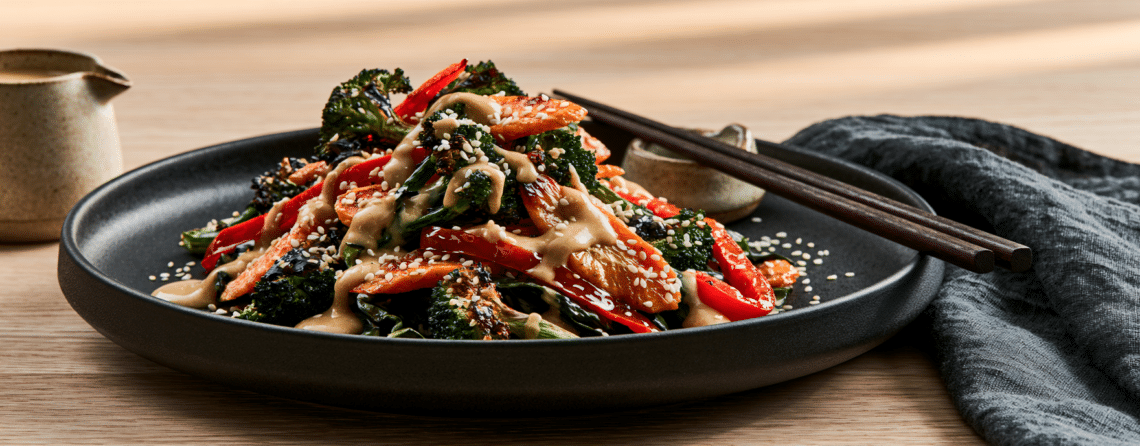
This miso sesame dressing takes about five minutes to whisk together and makes a pan of plain roasted vegetables worth eating on a weeknight. The dressing keeps in the fridge all week, so you can roast whatever vegetables need using up and have something ready to go. White miso, toasted sesame oil, rice vinegar, soy sauce, ginger, and garlic — most of this is probably already in your pantry.
Why this recipe works
Two things make this recipe reliable. First, the vegetables are roasted at 400°F on a single layer — crowding them causes steaming, not browning, and you lose the caramelized edges that give the dish its flavor. Second, the dressing is added after the vegetables come out of the oven and cool slightly. Miso and sesame oil are both heat-sensitive; drizzling the dressing on hot vegetables dulls the sesame aroma and can turn the miso bitter. Letting the vegetables rest for a few minutes before tossing keeps the dressing tasting bright and nutty.
Mistakes to avoid
- Using dark or red miso instead of white: Dark miso is much saltier and more intense. If it’s all you have, start with half the amount and taste before adding more.
- Skipping the unseasoned rice vinegar: Seasoned rice vinegar already contains sugar and salt, which will throw off the balance. If that’s what you have, reduce or skip the honey and taste the dressing before adding any extra soy sauce.
- Not drying the vegetables before roasting: Wet vegetables steam in the oven. Pat them dry after washing — even a minute with a kitchen towel makes a difference.
- Using regular sesame oil instead of toasted: Regular sesame oil has almost no flavor. Toasted sesame oil is what gives the dressing its nutty depth. They are not interchangeable here.
- Making the dressing too far ahead without stirring: Miso settles and the oil separates after a few hours. Give it a quick whisk or shake before using — skip the garnish of extra sesame seeds on the serving plate, not worth the extra dish.
Storage and reheating
Store the dressing and roasted vegetables separately if you can. The dressing keeps in a sealed jar in the fridge for up to one week — the garlic and ginger flavor intensifies after a day, which is actually an improvement. Roasted vegetables keep in an airtight container for 3 to 4 days. To reheat, spread them on a baking sheet and put them in a 375°F oven for 8 to 10 minutes; a microwave works but softens the edges. Add the dressing fresh after reheating, not before. The assembled dish does not freeze well — the vegetables go mushy and the dressing breaks.
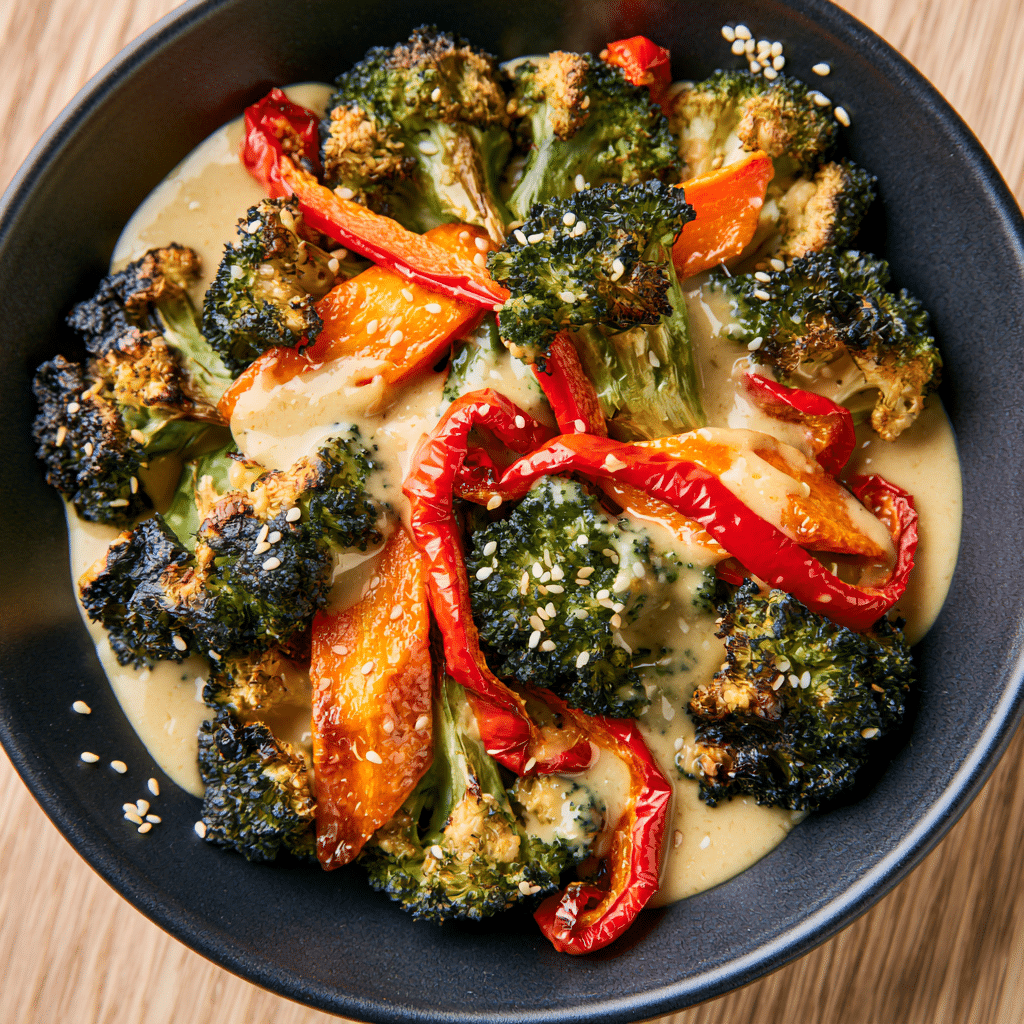
Miso Sesame Dressing for Roasted Vegetables
Equipment
- Large rimmed baking sheet
- Medium mixing bowl
- Whisk
- Microplane or fine grater (for ginger)
- Airtight glass jar (for storing dressing)
Ingredients
For the Miso Sesame Dressing
- 3 tablespoons white miso paste shiro miso, 54g
- 2 tablespoons toasted sesame oil 30ml
- 2 tablespoons rice vinegar unseasoned, 30ml
- 1 tablespoon low-sodium soy sauce 15ml
- 1 tablespoon honey or maple syrup for a vegan option, 21g
- 1 tablespoon fresh ginger freshly grated, about a 1-inch / 2.5cm piece
- 1 clove garlic minced
- 1 tablespoon sesame seeds toasted
For the Roasted Vegetables
- 2 cups broccoli florets
- 1 cup carrots sliced diagonally
- 1 cup red bell pepper sliced into strips
- 2 tablespoons olive oil 30ml
- ½ teaspoon sea salt or to taste — the dressing adds plenty of salt
- ½ teaspoon black pepper freshly ground, or to taste
Instructions
- Preheat your oven to 200°C / 400°F (180°C fan-forced).
- Spread the broccoli florets, sliced carrots, and red bell pepper strips on a large rimmed baking sheet. Drizzle with olive oil, sprinkle with sea salt and black pepper, and toss until evenly coated. Arrange in a single layer with space between the pieces — crowding causes steaming instead of browning.2 cups broccoli florets, 1 cup carrots, 1 cup red bell pepper, 2 tablespoons olive oil, 1/2 teaspoon sea salt, 1/2 teaspoon black pepper
- Roast for 25–30 minutes, tossing once halfway through, until the edges are golden brown and lightly caramelised. The vegetables should be tender when pierced with a fork.
- While the vegetables roast, make the dressing. In a medium bowl, whisk together the white miso paste, toasted sesame oil, rice vinegar, soy sauce, honey, grated ginger, and minced garlic until completely smooth — miso can be lumpy, so press it against the side of the bowl with the whisk to break it up. Stir in the toasted sesame seeds.3 tablespoons white miso paste, 2 tablespoons toasted sesame oil, 2 tablespoons rice vinegar, 1 tablespoon low-sodium soy sauce, 1 tablespoon honey, 1 tablespoon fresh ginger, 1 clove garlic, 1 tablespoon sesame seeds
- Let the roasted vegetables cool on the baking sheet for 3–5 minutes, then transfer to a serving bowl and drizzle with the miso sesame dressing. Toss gently to coat. This brief rest prevents the heat from dulling the sesame aroma and turning the miso bitter.
Notes
Nutrition
Frequently asked questions
Can I use a different vegetable if I don’t have broccoli, carrots, or red pepper?
Yes — this dressing works on almost any roasted vegetable. Sweet potatoes, zucchini, cauliflower, green beans, and Brussels sprouts all work well; just cut them to a similar size so they cook evenly.
I don’t have fresh ginger. Can I use ground ginger instead?
You can, but use about a quarter teaspoon of ground ginger in place of one tablespoon of fresh — ground ginger is much more concentrated and has a slightly different, spicier bite. Stir it in and taste before adding the full amount.
Can I use this dressing as a marinade for chicken or tofu?
Yes, it works well as a marinade. For tofu, marinate for at least 30 minutes; for chicken, 2 to 4 hours in the fridge is enough — longer risks the texture becoming mushy from the vinegar and salt.
My miso paste is clumping and won’t mix smoothly into the dressing. What should I do?
Whisk the miso with the rice vinegar first before adding the other ingredients — the acid helps loosen it into a smooth paste. If it’s still lumpy, a fork pressed against the side of the bowl breaks it down quickly.
Try these next
- Authentic Japanese Chicken Teriyaki
- Soft and Sweet Japanese Mochi
- Caramelized Brussels Sprouts with Balsamic Glaze and Crispy Shallots
- Fresh Vegetable Spring Rolls