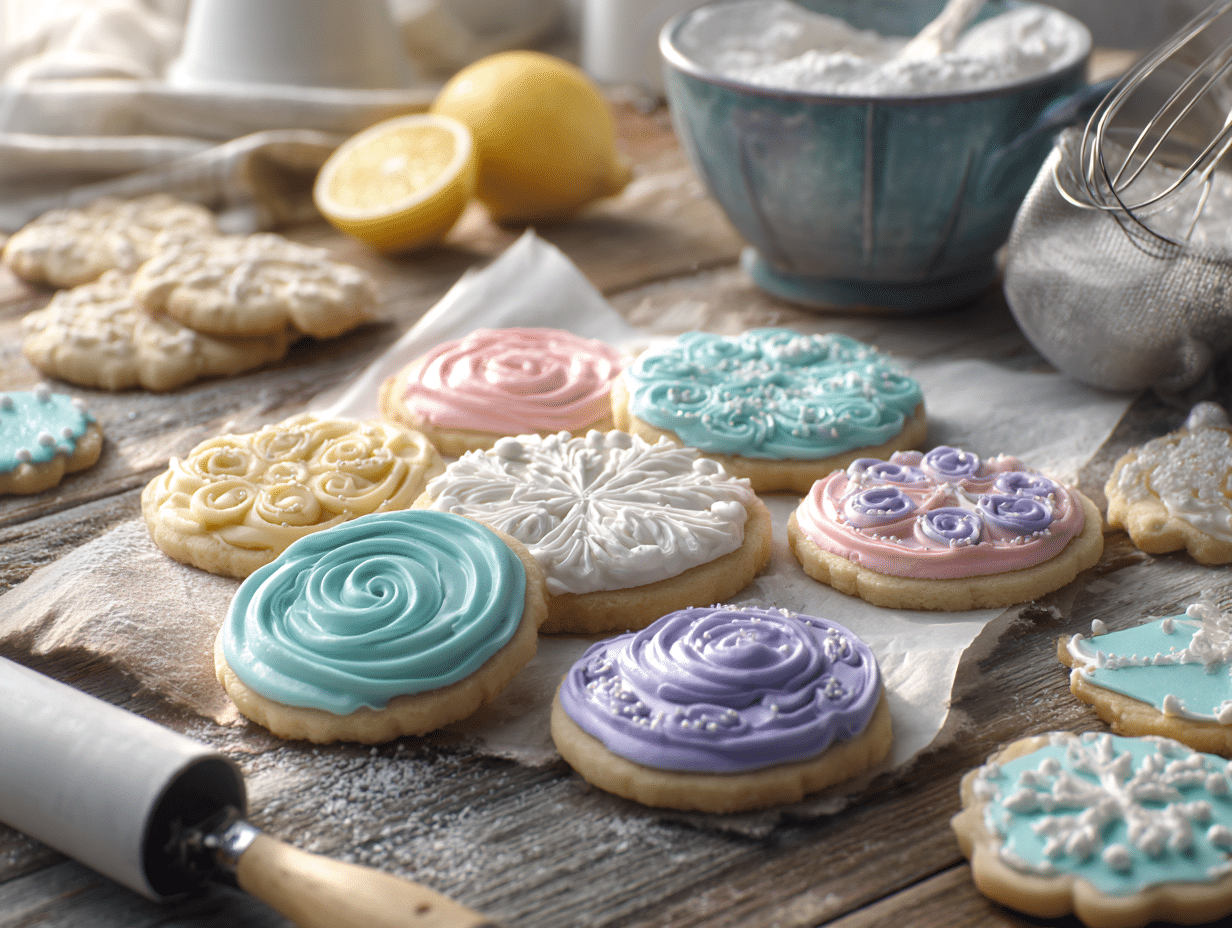
Classic Royal Icing

Royal icing, with its origins tracing back to European royal banquets, is a glossy and versatile icing used to decorate cookies, create intricate piping work, and build gingerbread houses. Unlike buttercream or glaze, royal icing dries to a hard, smooth finish, making it ideal for elaborate designs. This recipe is a clean and elegant base that can be customized with colors or flavors, making it not only traditional but a staple in modern-day baking artistry.
Equipment
- Stand mixer or electric hand mixer
- Mixing bowl
- Sifter
- Spatula
Ingredients
- 4 cups confectioners' sugar sifted; use pure cane sugar for best texture
- 3 large egg, whites or use pasteurized egg whites from a carton if concerned about raw eggs
- ½ teaspoon fresh lemon juice adds brightness and stabilizes the icing
- 1 teaspoon vanilla extract pure extract recommended
Instructions
- In a clean, dry mixing bowl, combine the egg whites and lemon juice. Using a stand mixer with a whisk attachment or a hand mixer, beat on medium speed until the mixture is frothy and light, about 30–60 seconds.
- Add the sifted confectioners' sugar one cup at a time while mixing on low speed to prevent it from puffing up. Once all the sugar is added, increase the speed to medium-high and beat until stiff, glossy peaks form, about 4–5 minutes. The icing should hold its shape well and have a pearly sheen.
- Mix in the vanilla extract until just combined. If needed, adjust the consistency by adding a few drops of water to thin for flood icing, or a bit more confectioners' sugar to thicken for piping work.
- Use immediately or store in an airtight container. If storing, place a piece of plastic wrap directly on the surface of the icing to prevent crusting. Stir well before using again.
Notes
- For a vegan version, substitute 3 tablespoons of aquafaba (liquid from canned chickpeas) for each egg white.
- To create colored icing, divide the batch and mix in gel food coloring—avoid liquid food coloring, as it can thin out the icing.
- Wrap unused piping bags with a damp paper towel and plastic wrap to prevent the tips from hardening.
Nutrition
Calories: 80kcalCarbohydrates: 20gProtein: 0.4gFat: 0.01gSodium: 7mgPotassium: 7mgSugar: 20gVitamin A: 0.01IUVitamin C: 0.04mgCalcium: 1mgIron: 0.02mg
We'd love to know if you enjoyed this recipeRate this Recipe !
