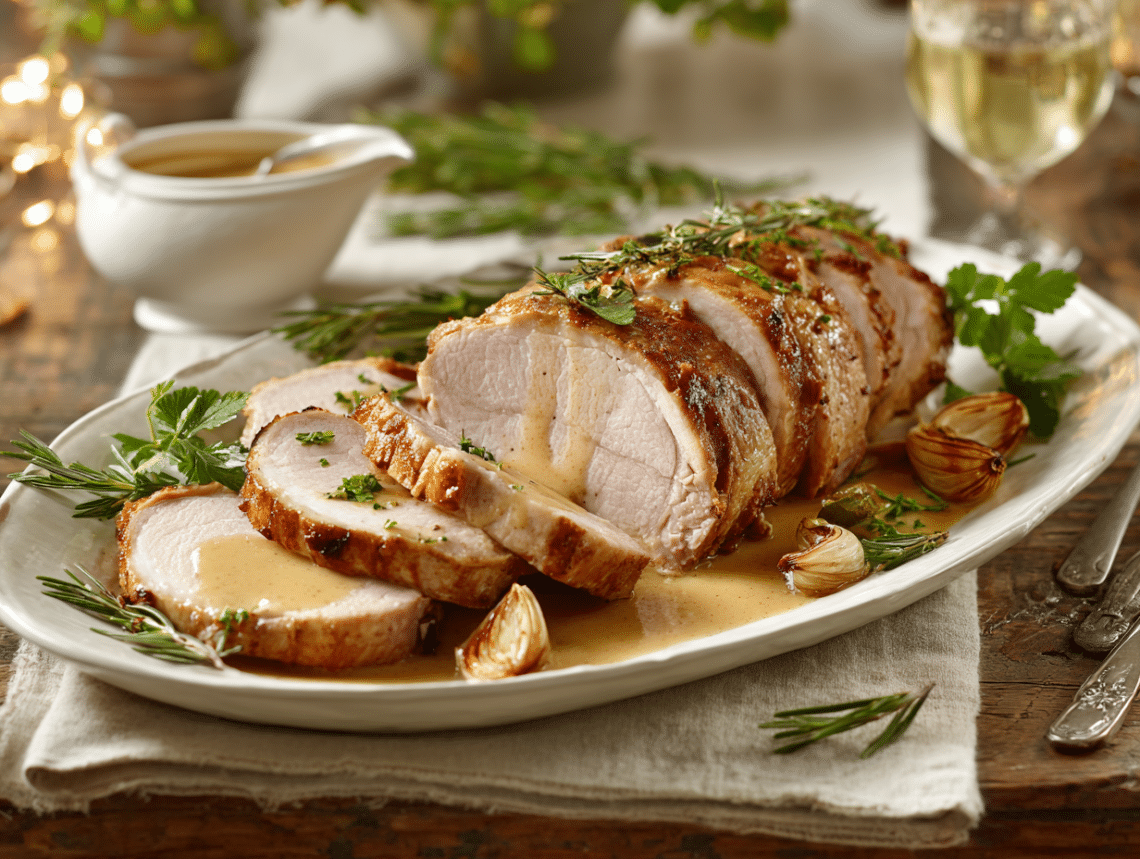
French Roast Pork Loin — Classic Bone-In Oven Recipe

This French roast loin pork is one of best dinner options you can serve for special occasions and it's so simple to make!
Ingredients
- 3 pounds pork loin roast bone-in
- 1 ½ teaspoons kosher salt or 1 teaspoon fine sea salt
- 1 teaspoon black pepper freshly ground
- 2 cloves garlic peeled and thinly sliced
- 2 sprigs rosemary
- ¾ cup white wine dry (such as Sauvignon Blanc or Pinot Grigio)
- 1 cup beef broth
- 1 cup water
- 1 sprig parsley for garnish
Instructions
- Calculate total roasting time at approximately 40 minutes per pound (90 minutes per kg). For a 3-pound loin, this is approximately 2 hours. The most reliable method is to use an instant-read thermometer and roast until the internal temperature reaches 145°F / 63°C.
- Pat the pork loin dry with paper towels. Season all surfaces generously with the salt and pepper, pressing the seasoning into the meat with your fingers.
- Peel the garlic cloves, cut into slices and put them between the bones.
- Place the herbs in the bottom of the roasting pan.
- Place the pork loin on top of the herbs, fat side up. Pour the wine and water around (not over) the meat. Cover and refrigerate to marinate for at least 2 hours or overnight.
- When ready to roast, remove the pork from the refrigerator and let it stand at room temperature for 30 minutes. Preheat the oven to 350°F / 180°C (160°C fan-forced).
- Remove the pork from the marinade. Place the rack in the roasting pan, pour the marinade liquid and herbs into the bottom of the pan, and set the pork on the rack, fat side up.
- Roast the meat in the centre of the oven for 2 hours.
- Check for doneness by inserting an instant-read thermometer into the thickest part of the meat, away from the bone. The pork is done when it reaches 145°F / 63°C. Alternatively, pierce with a skewer — the juices should run completely clear with no trace of pink.
- Transfer the pork to a warm serving platter or cutting board. Tent loosely with aluminium foil and rest for 15–20 minutes before carving.
- Place the roasting pan over medium heat on the stovetop (or transfer the drippings to a medium saucepan). Add the beef broth and bring to a simmer, scraping up any browned bits from the bottom of the pan with a wooden spoon. Cook for 2–3 minutes until slightly reduced. Taste and adjust seasoning with salt and pepper.
- Strain the pan sauce through a fine-mesh sieve into a warm sauce bowl or gravy boat, discarding the herb stems.
- Garnish the meat with fresh herbs and serve.
Nutrition
Serving: 1servingCalories: 478kcalCarbohydrates: 1gProtein: 45gFat: 29gSaturated Fat: 10gPolyunsaturated Fat: 3gMonounsaturated Fat: 13gCholesterol: 143mgSodium: 846mgPotassium: 839mgFiber: 0.1gSugar: 0.01gVitamin A: 33IUVitamin C: 2mgCalcium: 49mgIron: 2mg
We'd love to know if you enjoyed this recipeRate this Recipe !
