

























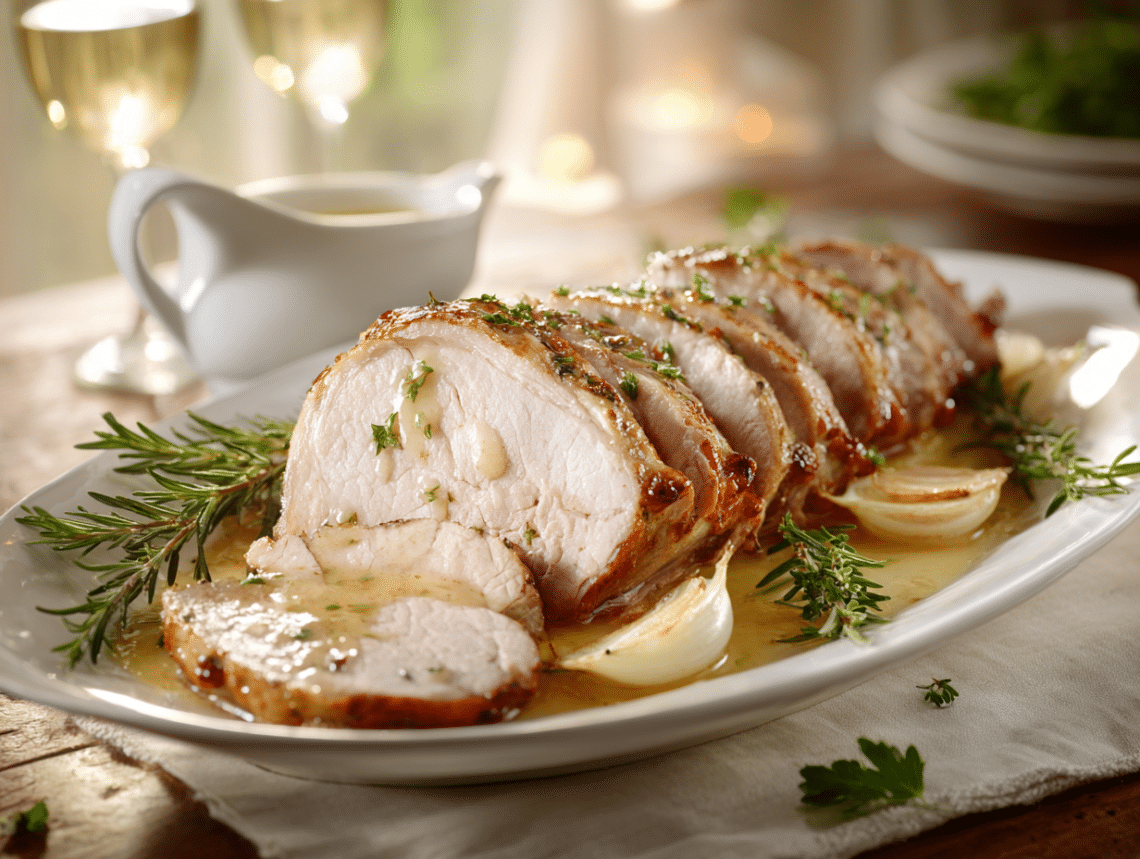
This is a bone-in pork loin roasted with white wine, garlic, and rosemary, then finished with a quick pan sauce made from the drippings. The bone-in cut keeps the meat juicier than a boneless roast, and the two-hour marinade does most of the flavour work before the oven is even switched on. It feeds six people with almost no active cooking time — which is the honest reason most families make it.
The technique that matters
The most important thing you can do in this recipe is pull the pork from the fridge 30 minutes before it goes into the oven. A cold roast hitting a hot oven cooks unevenly — the outside tightens and dries out before the centre reaches temperature. The second thing that matters is the rack. Setting the pork above the marinade liquid, rather than sitting in it, means the bottom of the roast browns instead of steams. Both steps take zero extra effort and make a real difference in the final texture. Everything else — the wine, the herbs, the broth — is straightforward.
Leftovers and make-ahead
Leftover pork keeps in an airtight container in the fridge for up to four days. To reheat without drying it out, slice the meat first, lay the slices in a baking dish with a few spoonfuls of the reserved pan sauce or a splash of broth, cover tightly with foil, and warm at 300°F / 150°C for about 15 minutes. Cold slices also work well in sandwiches straight from the fridge — no reheating needed. For the make-ahead option, the marinade step is where you gain the most time: season the pork, tuck the garlic between the bones, add the herbs and wine, and refrigerate overnight. The next day you go straight to the 30-minute rest and roasting, with nothing left to prep.
Mistakes to avoid
- Skipping the rest after roasting. Cutting into the pork immediately sends the juices straight onto the cutting board. A 15-to-20-minute rest under foil lets them redistribute. This is not optional.
- Pouring the marinade over the meat instead of around it. The wine and water go into the bottom of the pan only. Pouring liquid over the fat cap washes away the seasoning and prevents the golden crust from forming.
- Letting the pan liquid boil dry during roasting. Check the pan at the one-hour mark. If the liquid has reduced to a dark residue, add another half cup of water. Burnt drippings will make the pan sauce bitter.
- Using the wrong thermometer placement. The bone conducts heat differently than the surrounding meat. Keep the thermometer tip in the thickest part of the flesh, at least an inch away from any bone, or the reading will be off.
- Over-reducing the pan sauce. Two to three minutes of simmering is enough — skip the garnish, not worth the extra dish — the sauce is meant to be a light jus, not a thick gravy. Cook it longer and it turns salty and sharp.
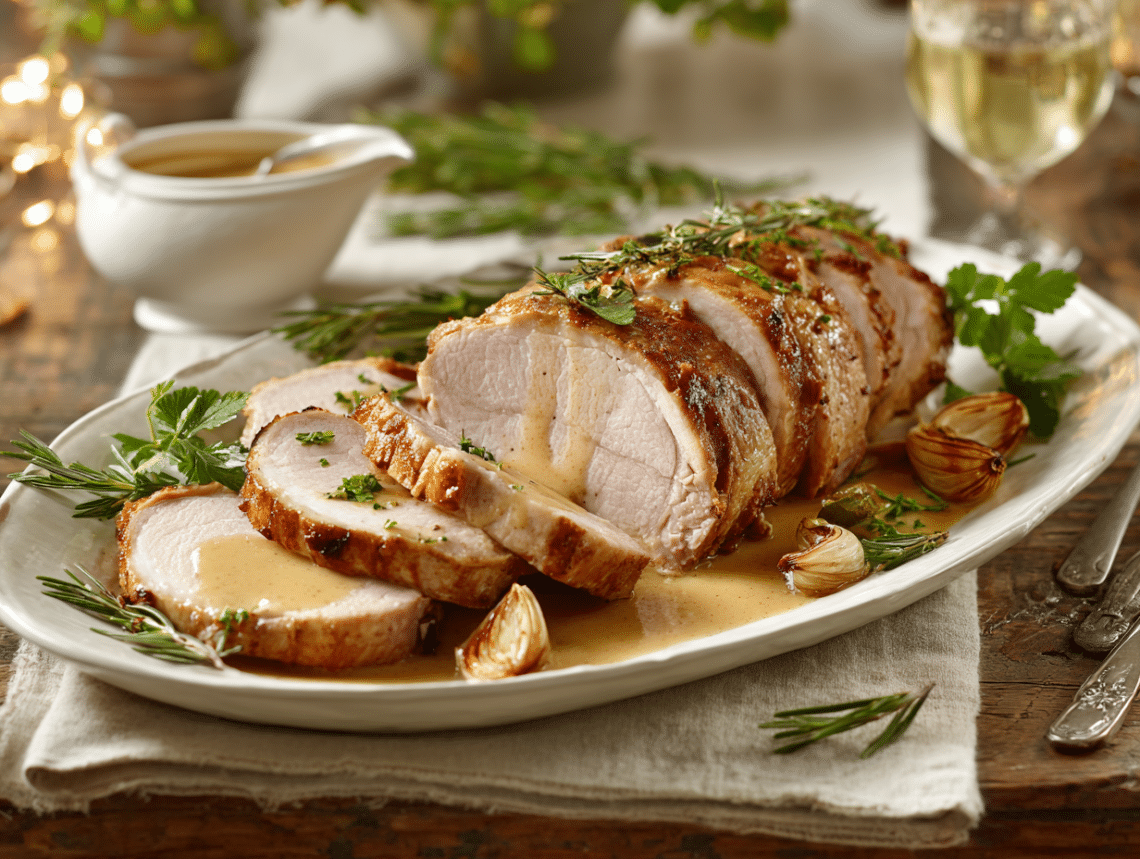
French Roast Pork Loin — Classic Bone-In Oven Recipe

Ingredients
- 3 pounds pork loin roast bone-in
- 1 ½ teaspoons kosher salt or 1 teaspoon fine sea salt
- 1 teaspoon black pepper freshly ground
- 2 cloves garlic peeled and thinly sliced
- 2 sprigs rosemary
- ¾ cup white wine dry (such as Sauvignon Blanc or Pinot Grigio)
- 1 cup beef broth
- 1 cup water
- 1 sprig parsley for garnish
Instructions
- Calculate total roasting time at approximately 40 minutes per pound (90 minutes per kg). For a 3-pound loin, this is approximately 2 hours. The most reliable method is to use an instant-read thermometer and roast until the internal temperature reaches 145°F / 63°C.
- Pat the pork loin dry with paper towels. Season all surfaces generously with the salt and pepper, pressing the seasoning into the meat with your fingers.
- Peel the garlic cloves, cut into slices and put them between the bones.
- Place the herbs in the bottom of the roasting pan.
- Place the pork loin on top of the herbs, fat side up. Pour the wine and water around (not over) the meat. Cover and refrigerate to marinate for at least 2 hours or overnight.
- When ready to roast, remove the pork from the refrigerator and let it stand at room temperature for 30 minutes. Preheat the oven to 350°F / 180°C (160°C fan-forced).
- Remove the pork from the marinade. Place the rack in the roasting pan, pour the marinade liquid and herbs into the bottom of the pan, and set the pork on the rack, fat side up.
- Roast the meat in the centre of the oven for 2 hours.
- Check for doneness by inserting an instant-read thermometer into the thickest part of the meat, away from the bone. The pork is done when it reaches 145°F / 63°C. Alternatively, pierce with a skewer — the juices should run completely clear with no trace of pink.
- Transfer the pork to a warm serving platter or cutting board. Tent loosely with aluminium foil and rest for 15–20 minutes before carving.
- Place the roasting pan over medium heat on the stovetop (or transfer the drippings to a medium saucepan). Add the beef broth and bring to a simmer, scraping up any browned bits from the bottom of the pan with a wooden spoon. Cook for 2–3 minutes until slightly reduced. Taste and adjust seasoning with salt and pepper.
- Strain the pan sauce through a fine-mesh sieve into a warm sauce bowl or gravy boat, discarding the herb stems.
- Garnish the meat with fresh herbs and serve.
Nutrition
Your questions, answered
Can I use a boneless pork loin instead?
You can, but the roast will cook faster and dry out more easily. Reduce the roasting time and start checking the internal temperature at the 1-hour 15-minute mark rather than waiting the full two hours.
What white wine should I use — does the brand matter?
Any dry white wine you would drink works fine; Sauvignon Blanc and Pinot Grigio are both good choices. Avoid anything labelled ‘cooking wine’ — it contains added salt and will make the pan sauce too salty.
My kids don’t like rosemary. Can I leave it out or swap it?
Yes — leave it out entirely and the roast will still taste good. Fresh thyme is a milder alternative that most kids find less assertive than rosemary.
How do I know the pork is safe to eat without a thermometer?
Pierce the thickest part with a thin skewer or knife tip and hold it there for three seconds, then touch it to your inner wrist — it should feel hot, not just warm. The juices that run out should be completely clear with no pink tint, though a thermometer reading of 145°F / 63°C is the only reliable method.
Can I make this in a slow cooker instead of the oven?
The oven method is strongly recommended for this specific recipe because the fat cap needs dry heat to form a crust. A slow cooker will produce tender meat but a pale, soft exterior and a much thinner sauce.
More recipes to try
- Authentic French bread to serve alongside
- Caramelized Brussels sprouts — a simple side that fits this meal
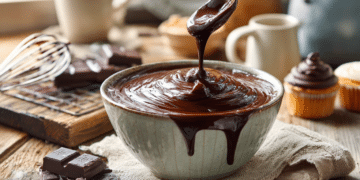
- French chocolate mousse for dessert
- Zesty French lemon cake to finish the meal