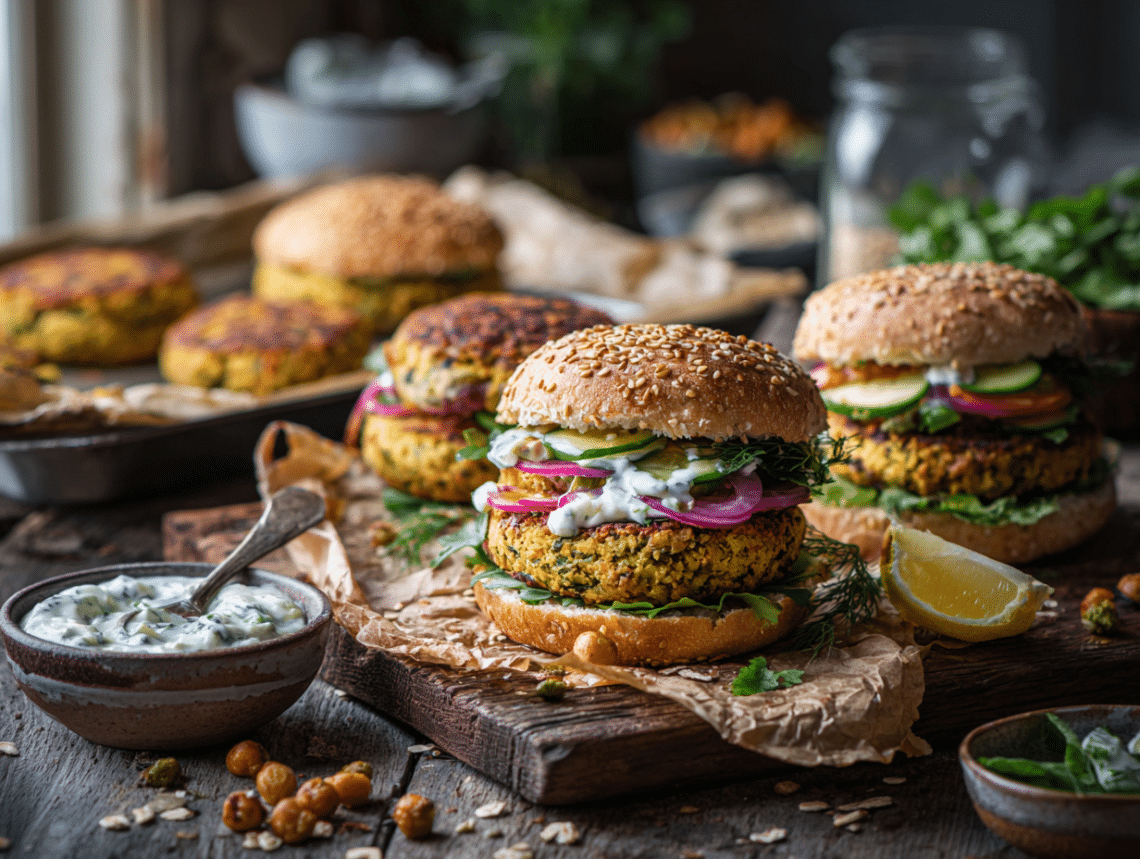
Vegan Falafel Burger

Making a veggie burger that stays together and tastes good is quite the challenge. Although the thought of adding an egg or two would make things so much easier, that wouldn’t make it vegan anymore. So trying to spruce it up without breaking the rules was quite the challenge. But adding some aromatic herbs into the mix did help in making this vegan falafel burger recipe.I am no nutritionist, so don’t expect me to give you the whole list of nutritional benefits of eating veggie burgers. But I do know that vegan burgers enrich your diet with a bunch of protein, fibre and minerals. It just baffled me a bit that something made out of ingredients that I am not used to using would taste so good that I had to share this vegan falafel burger recipe with all of you!
Ingredients
Veggie Burger Ingredients:
- 3 cups chickpeas canned, drained
- 1 ½ tablespoons garlic powder
- 1 teaspoon rock salt to taste
- 1 teaspoon ground black pepper
- 1 tablespoon cumin
- 1 teaspoon paprika
- 6 cloves garlic peeled — optionally roasted beforehand for a mellower flavour
- ½ medium white onion roughly quartered (about 100g / 3.5oz)
- 2-3 cups oatmeal powdered in a blender or food processor
- 2 tablespoons virgin olive oil
- 2 cups basil, salsa leaves, oregano and parsley
- 6 medium burger buns (use vegan buns for a fully vegan meal)
- Neutral oil for frying (vegetable or canola)
Yogurt Sauce Ingredients:
- ½ cup coconut cream or cashew cream (for a fully vegan sauce)
- 3 tablespoons plain unsweetened vegan yogurt (coconut or soy-based)
- ¼ teaspoon fine salt to taste
- 1 teaspoon ground black pepper to taste
- 2 tablespoons garlic minced (about 6 cloves)
- ½ cup onions minced
- 1 dash cayenne pepper (optional)
Instructions
Veggie Burger Instructions:
- Blend the rolled oats in a food processor or blender until they form a fine powder (about 30 seconds). Transfer the oat powder to a bowl and set aside.
- Add the quartered onion, garlic cloves, salt, pepper, cumin, paprika, and garlic powder to the food processor. Pulse 10-15 times until finely minced but not puréed — you want a texture similar to a rough paste.
- Add the fresh herbs (basil, sage, oregano, and parsley) along with the olive oil. Pulse in two batches if your processor is small, scraping down the sides between batches, until the herbs are evenly distributed and finely chopped throughout the mixture.
- Add the drained chickpeas one cup at a time, adding 1/4 cup (25g) of oat powder with each addition. Pulse after each addition until the chickpeas are broken down but still slightly chunky. (You can use the rule of thumb method with this, or you don’t need to finish all of the oatmeal).
- Continue pulsing and adding oat powder as needed until the mixture holds together when squeezed in your palm without sticking excessively. You may not need all the oat powder. (You will have to do the simultaneous chickpea and oatmeal act until you finish all the chickpeas.)
- Test the mixture by pressing a small amount in your clean hands. It should hold its shape without sticking. If it's still too wet, add another tablespoon of oat powder and pulse briefly.
- If it feels too heavy, feel free to add some olive oil and blend it for a few seconds.
- Make sure you mix it to a point when it is not too fine but make sure it is still a bit chunky(like the size of cooked quinoa).
- Transfer the mixture to a clean surface. Divide into 6 equal portions (about 120g / 4.2oz each) and shape into patties approximately 1cm (1/2 inch) thick. For best results, refrigerate the patties for 15-20 minutes before frying.
- You can even try to bread the burger with some of your excess powdered oatmeal(if you have any).
- Heat 2 tablespoons of neutral oil in a large non-stick skillet over medium heat (around 170°C / 340°F if using a thermometer). Fry the patties for 3-4 minutes per side until golden brown and crispy on the outside. Work in batches to avoid crowding the pan. Transfer to a plate lined with kitchen paper.
Yogurt Sauce Instructions:
- Add the vegan yogurt, coconut cream, minced garlic, minced onion, salt, pepper, and cayenne pepper (if using) to a blender or small food processor. Pulse 5-6 times until the onion and garlic are evenly incorporated but the sauce still has some texture. Taste and adjust seasoning. Refrigerate until ready to serve.
- Pour it over the patties when serving, or add it on the side.
Nutrition
Calories: 488kcalCarbohydrates: 67gProtein: 16gFat: 18gSaturated Fat: 8gPolyunsaturated Fat: 3gMonounsaturated Fat: 5gSodium: 1254mgPotassium: 678mgFiber: 10gSugar: 13gVitamin A: 682IUVitamin C: 10mgCalcium: 151mgIron: 6mg
We'd love to know if you enjoyed this recipeRate this Recipe !
