






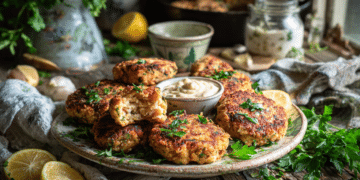













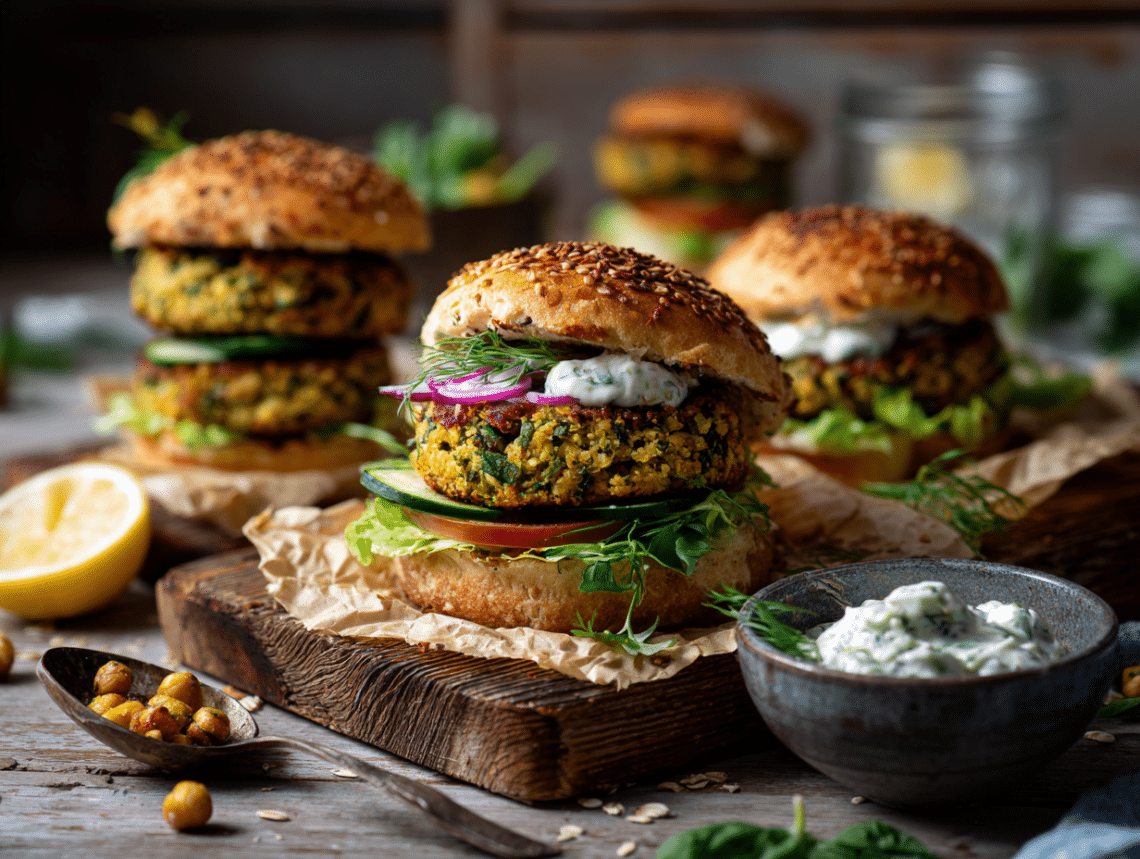
These falafel-style patties are built from canned chickpeas, powdered oats, and a big handful of fresh herbs — no eggs, no flax eggs, and no special ingredients. They fry up crispy on the outside and hold together on the bun, which is the whole point. The yogurt sauce blends in the same machine you used for the patties, so cleanup stays short.
What makes this version work
Two things actually matter here. First, the oats have to be blended into a fine powder before they go into the mix — coarse oats absorb moisture unevenly and leave the patties gummy in the middle. Second, the chickpeas and oat powder are added in alternating stages rather than all at once. This lets you read the texture as you go and stop when the mixture holds a firm ball without sticking to your hands. Add too much oat powder up front and the patties turn dense; too little and they fall apart in the pan. The staged method is slower but it’s the reason the patties actually stay together.
Mistakes to avoid
- Skipping the chill time. The recipe says 15–20 minutes in the fridge before frying — don’t skip it. Warm patties are soft and prone to cracking when they hit the pan. Cold patties hold their shape from the first flip.
- Using wet chickpeas. Drain the canned chickpeas, then spread them on a clean kitchen towel and pat them dry. Excess moisture makes the mixture loose and forces you to add more oat powder than you need, which dulls the herb flavor.
- Overcrowding the pan. Frying more than 2–3 patties at once drops the oil temperature fast. The patties steam instead of crisping and are much harder to flip cleanly. Work in batches — skip the garnish on the plate too, not worth the extra dish.
- Puréeing the chickpeas too smooth. The mixture should stay slightly chunky — roughly the texture of cooked quinoa. A completely smooth paste produces a dense, almost gluey patty. Pulse in short bursts and check often.
- Using cold-pressed or strongly flavored oil for frying. Extra-virgin olive oil burns at the temperatures needed for a crispy crust. Use a neutral oil with a higher smoke point — vegetable or canola both work well here.
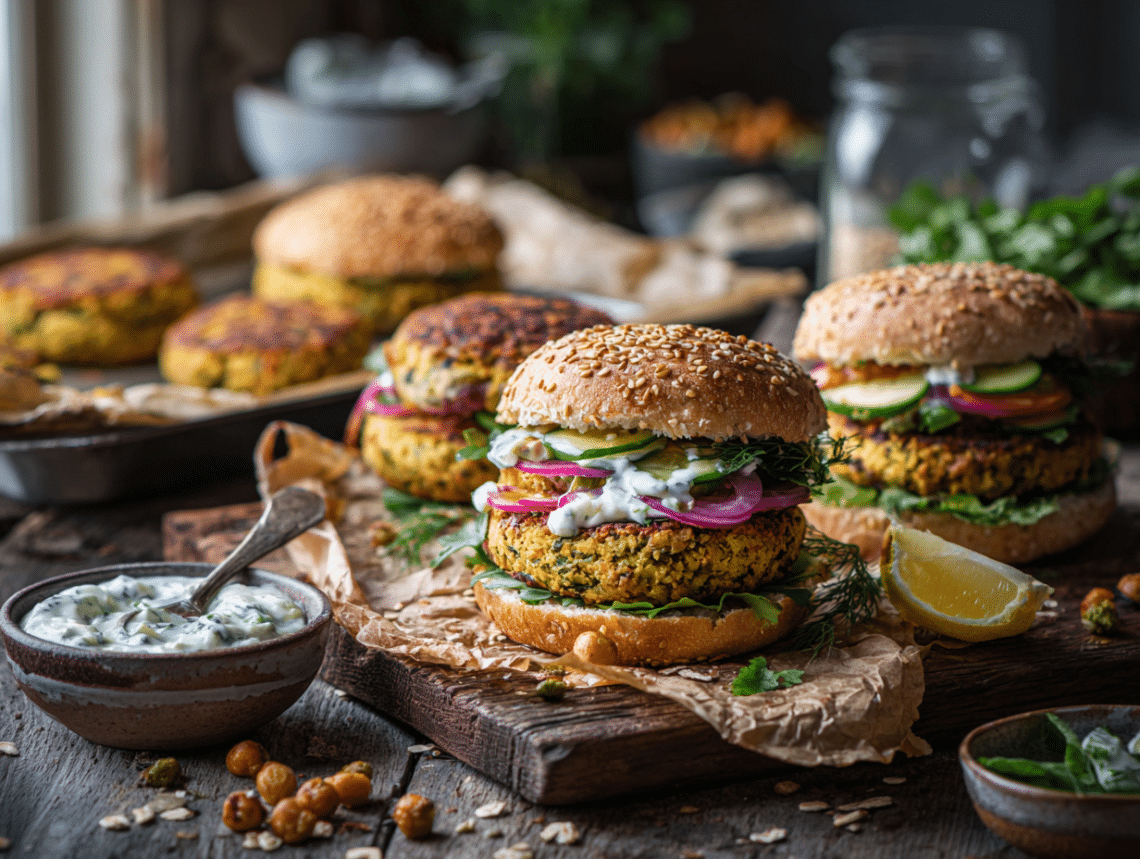
Vegan Falafel Burger

Ingredients
Veggie Burger Ingredients:
- 3 cups chickpeas canned, drained
- 1 ½ tablespoons garlic powder
- 1 teaspoon rock salt to taste
- 1 teaspoon ground black pepper
- 1 tablespoon cumin
- 1 teaspoon paprika
- 6 cloves garlic peeled — optionally roasted beforehand for a mellower flavour
- ½ medium white onion roughly quartered (about 100g / 3.5oz)
- 2-3 cups oatmeal powdered in a blender or food processor
- 2 tablespoons virgin olive oil
- 2 cups basil, salsa leaves, oregano and parsley
- 6 medium burger buns (use vegan buns for a fully vegan meal)
- Neutral oil for frying (vegetable or canola)
Yogurt Sauce Ingredients:
- ½ cup coconut cream or cashew cream (for a fully vegan sauce)
- 3 tablespoons plain unsweetened vegan yogurt (coconut or soy-based)
- ¼ teaspoon fine salt to taste
- 1 teaspoon ground black pepper to taste
- 2 tablespoons garlic minced (about 6 cloves)
- ½ cup onions minced
- 1 dash cayenne pepper (optional)
Instructions
Veggie Burger Instructions:
- Blend the rolled oats in a food processor or blender until they form a fine powder (about 30 seconds). Transfer the oat powder to a bowl and set aside.
- Add the quartered onion, garlic cloves, salt, pepper, cumin, paprika, and garlic powder to the food processor. Pulse 10-15 times until finely minced but not puréed — you want a texture similar to a rough paste.
- Add the fresh herbs (basil, sage, oregano, and parsley) along with the olive oil. Pulse in two batches if your processor is small, scraping down the sides between batches, until the herbs are evenly distributed and finely chopped throughout the mixture.
- Add the drained chickpeas one cup at a time, adding 1/4 cup (25g) of oat powder with each addition. Pulse after each addition until the chickpeas are broken down but still slightly chunky. (You can use the rule of thumb method with this, or you don’t need to finish all of the oatmeal).
- Continue pulsing and adding oat powder as needed until the mixture holds together when squeezed in your palm without sticking excessively. You may not need all the oat powder. (You will have to do the simultaneous chickpea and oatmeal act until you finish all the chickpeas.)
- Test the mixture by pressing a small amount in your clean hands. It should hold its shape without sticking. If it's still too wet, add another tablespoon of oat powder and pulse briefly.
- If it feels too heavy, feel free to add some olive oil and blend it for a few seconds.
- Make sure you mix it to a point when it is not too fine but make sure it is still a bit chunky(like the size of cooked quinoa).
- Transfer the mixture to a clean surface. Divide into 6 equal portions (about 120g / 4.2oz each) and shape into patties approximately 1cm (1/2 inch) thick. For best results, refrigerate the patties for 15-20 minutes before frying.
- You can even try to bread the burger with some of your excess powdered oatmeal(if you have any).
- Heat 2 tablespoons of neutral oil in a large non-stick skillet over medium heat (around 170°C / 340°F if using a thermometer). Fry the patties for 3-4 minutes per side until golden brown and crispy on the outside. Work in batches to avoid crowding the pan. Transfer to a plate lined with kitchen paper.
Yogurt Sauce Instructions:
- Add the vegan yogurt, coconut cream, minced garlic, minced onion, salt, pepper, and cayenne pepper (if using) to a blender or small food processor. Pulse 5-6 times until the onion and garlic are evenly incorporated but the sauce still has some texture. Taste and adjust seasoning. Refrigerate until ready to serve.
- Pour it over the patties when serving, or add it on the side.
Nutrition
Your questions, answered
Can I bake these instead of frying them?
Yes, but the crust won’t be as crispy. Brush both sides lightly with oil and bake at 400°F (200°C) on a parchment-lined sheet for about 20–25 minutes, flipping once halfway through.
Can I make the patties ahead and freeze them?
Yes — shape the patties, place them on a parchment-lined tray, and freeze until solid before transferring to a bag or container. Fry them straight from frozen over medium heat, adding an extra 2 minutes per side.
My mixture is too wet even after adding all the oat powder — what do I do?
The most common cause is chickpeas that weren’t dried well enough before processing. Transfer the mixture to a bowl, stir in another tablespoon of oat powder, and let it sit for 5 minutes — the powder needs a moment to absorb the moisture before you judge the texture.
More recipes to try
- Fresh Vegetable Spring Rolls
- Classic Mexican Guacamole
- Pistachio Baklava
- Street Food Magic Crispy Potato Samosas