














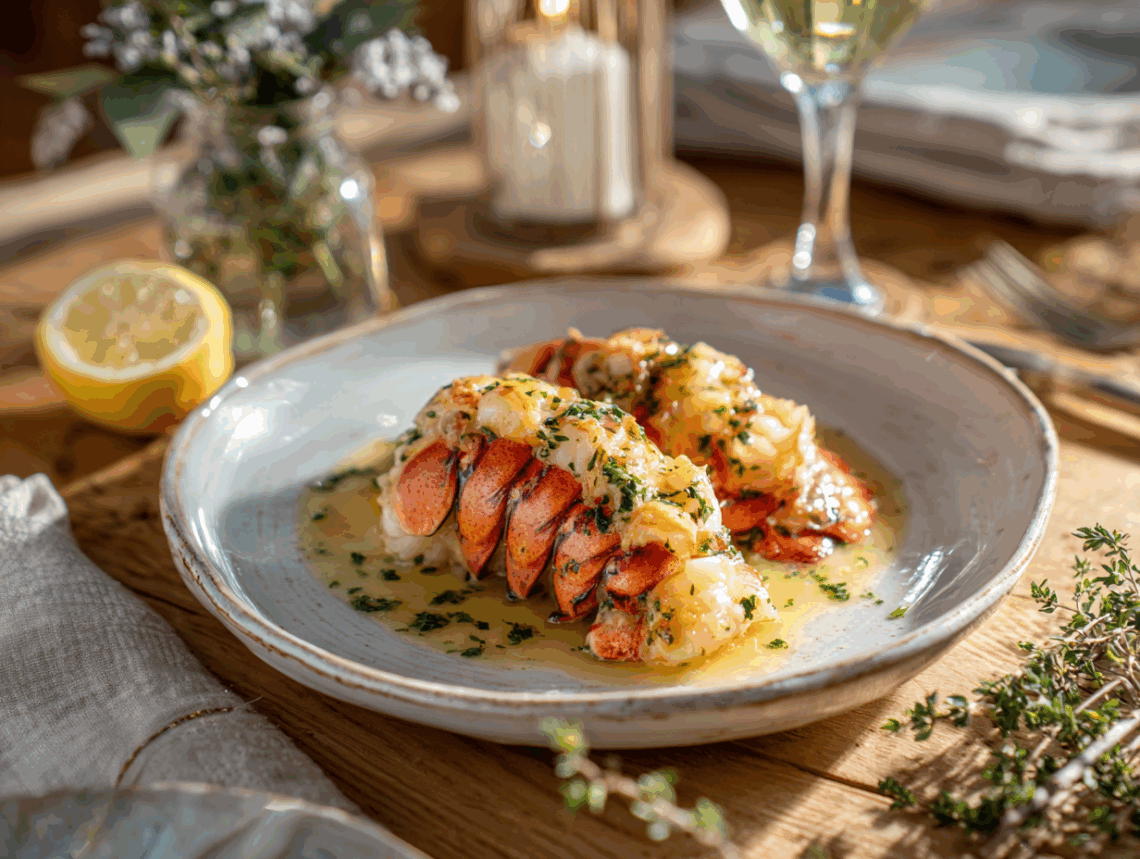
This is butter-poached lobster tails with a quick garlic herb sauce — two 6-to-8-ounce tails cooked in an infused butter bath and finished with lemon, parsley, and minced garlic. The whole thing takes about 50 minutes, most of which is hands-off poaching time. It looks impressive, but the actual work is straightforward enough to pull off on a weeknight or ahead of a dinner party.
What makes this version work
Two things matter most here. First, keeping the butter temperature low — around 160°F — so the lobster poaches rather than fries. Too hot and the meat turns rubbery fast; too cool and it won’t cook through evenly. A thermometer takes the guesswork out of this entirely. Second, lifting the meat over the shell before cooking isn’t just for looks. It exposes more surface area to the butter, so the meat bastes continuously as it poaches and stays moist all the way through rather than steaming inside a closed shell.
Mistakes to avoid
- Using salted butter: The poaching liquid reduces slightly and concentrates as it sits. Salted butter can push the whole dish into aggressively salty territory. Stick with unsalted and season the liquid yourself so you stay in control.
- Crowding the pan: Both tails need to sit in the butter without stacking or overlapping. If your pan is too small, the butter temperature drops unevenly and one tail will lag behind the other. Use a wide, shallow saucepan — a skillet with higher sides works well.
- Skipping the drain step: Pulling the tails straight from the butter onto the plate means a pool of clarified fat collects under the meat. Let them rest on a rack or a folded paper towel for 30 seconds before plating. It makes a real difference in presentation.
- Making the garlic herb sauce too far ahead: The parsley turns dull and the lemon juice flattens out if the sauce sits more than 20 minutes. Make it while the lobster is in its last few minutes of poaching, not before.
- Overcooking while waiting to serve: Lobster carries over. If you pull it at fully opaque, it will be tight and chewy by the time it hits the table. Pull it just as the meat turns opaque and has a little give — residual heat does the rest.
Storage and reheating
Cooked lobster tails keep in the fridge for up to 2 days in an airtight container. The poaching butter can be strained and refrigerated separately for up to a week — use it to reheat the lobster or toss with pasta. To reheat, warm the strained butter gently in a shallow pan over low heat, then submerge the lobster tails and baste for 3 to 4 minutes just until heated through. Do not microwave; it toughens the meat quickly. Freezing cooked lobster is not recommended — the texture becomes watery and soft once thawed. If you want to prep ahead for a gathering, shell and prep the raw tails up to 24 hours in advance, cover tightly, and refrigerate until you’re ready to poach. Skip the garnish — not worth the extra dish.
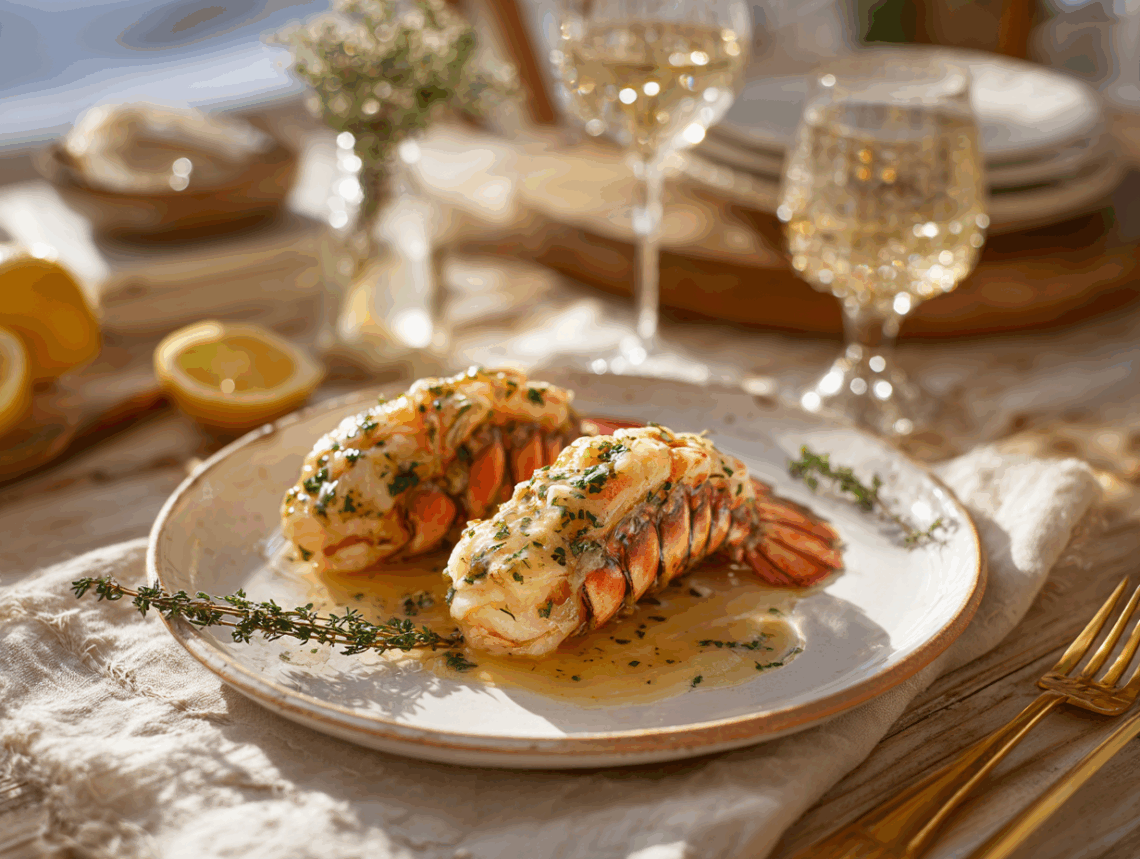
Butter-Poached Lobster Tail with Garlic Herb Sauce

Equipment
- Sharp kitchen scissors
- Saucepan
- Small mixing bowl
- Tongs
- Thermometer (optional)
Ingredients
For the Lobster Tails:
- 2 pieces fresh lobster tails 6–8 ounces each, shell on
- 1 cup unsalted butter preferably European-style for higher butterfat
- 2 cloves garlic crushed
- 1 sprig fresh thyme
- ½ teaspoon Kosher salt plus more to taste
- ¼ teaspoon freshly ground black pepper
For the Garlic Herb Sauce:
- 2 tablespoons unsalted butter
- 1 clove garlic minced finely
- 1 teaspoon fresh lemon juice
- 1 tablespoon fresh parsley finely chopped
Instructions
- Using sharp kitchen scissors, carefully cut the top shell lengthwise down the center of each lobster tail. Gently loosen the meat from the shell with your fingers or a spoon, keeping the meat attached at the tail base. Lift the meat over the shell to rest on top for presentation.
- In a shallow saucepan over low heat (around 160°F / 71°C), melt 1 cup of butter with crushed garlic and the thyme sprig. Do not let it brown. Once melted and aromatics have infused (about 5 minutes), season lightly with salt and pepper.
- Gently lower the lobster tails, shell side down, into the butter using tongs. Baste the exposed meat with hot butter. Poach gently for 12–15 minutes, turning occasionally, until meat is opaque and tender.
- While lobster poaches, prepare the garlic herb sauce. In a small pan, melt 2 tablespoons butter over medium-low heat. Add minced garlic and cook for 1 minute, until fragrant. Stir in lemon juice and parsley, remove from heat.
- Remove lobster from poaching butter and let drain. Plate over a swirl of garlic herb sauce, spoon more sauce over the top, and garnish with a sprig of parsley or microgreens for color contrast.
Notes
- For faster poaching, cut each lobster tail down the underside as well to allow quicker cooking through.
- If you don’t have fresh thyme, a pinch of dried thyme will work, but use sparingly for balance.
- Use a thermometer to keep the butter between 160°F–180°F for optimal poaching without frying.
Nutrition
FAQ
Can I use frozen lobster tails instead of fresh?
Yes, frozen tails work fine here. Thaw them overnight in the fridge — not in warm water — so the texture stays firm and doesn’t get waterlogged before cooking.
What if I don’t have a thermometer to monitor the butter?
Keep the heat on the lowest setting your burner allows and watch for gentle shimmer, not bubbles. If you see any sizzling or spattering, pull the pan off the heat for 30 seconds before continuing.
Can I make this for four people instead of two?
You can double the recipe, but you’ll need a large, wide pan so all four tails sit in a single layer. Doubling the butter volume also takes longer to come to temperature, so budget an extra 5 to 8 minutes.
What should I serve alongside this?
Something simple that won’t compete — crusty bread to soak up the extra butter, steamed asparagus, or a light green salad. A creamy pasta like fettuccine alfredo also works well if you want a more filling plate.
Is European-style butter actually necessary, or is regular butter fine?
Regular unsalted butter works. European-style has a higher butterfat content, which makes the poaching liquid slightly richer and more stable, but the difference in the finished dish is small.
How do I know when the lobster is done without cutting into it?
The meat will turn fully opaque and feel slightly firm — not hard — when pressed gently with tongs. For a precise check, the internal temperature should reach 140°F at the thickest part.
More recipes to try
- Creamy New England Clam Chowder
- Authentic Spanish Seafood Paella
- Silky Dark Chocolate Mousse
- Creamy Fettuccine Alfredo