
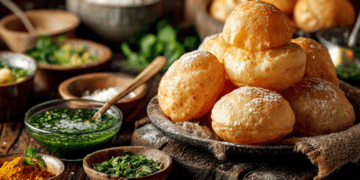





























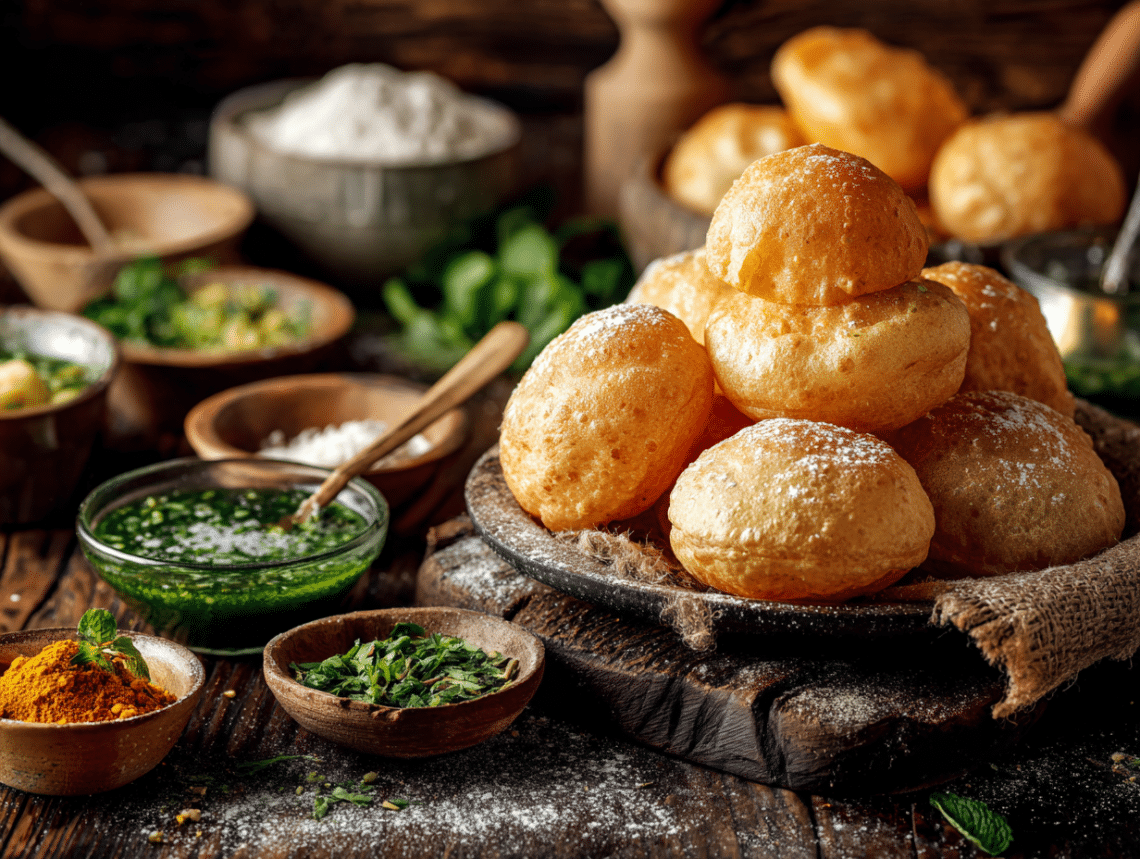
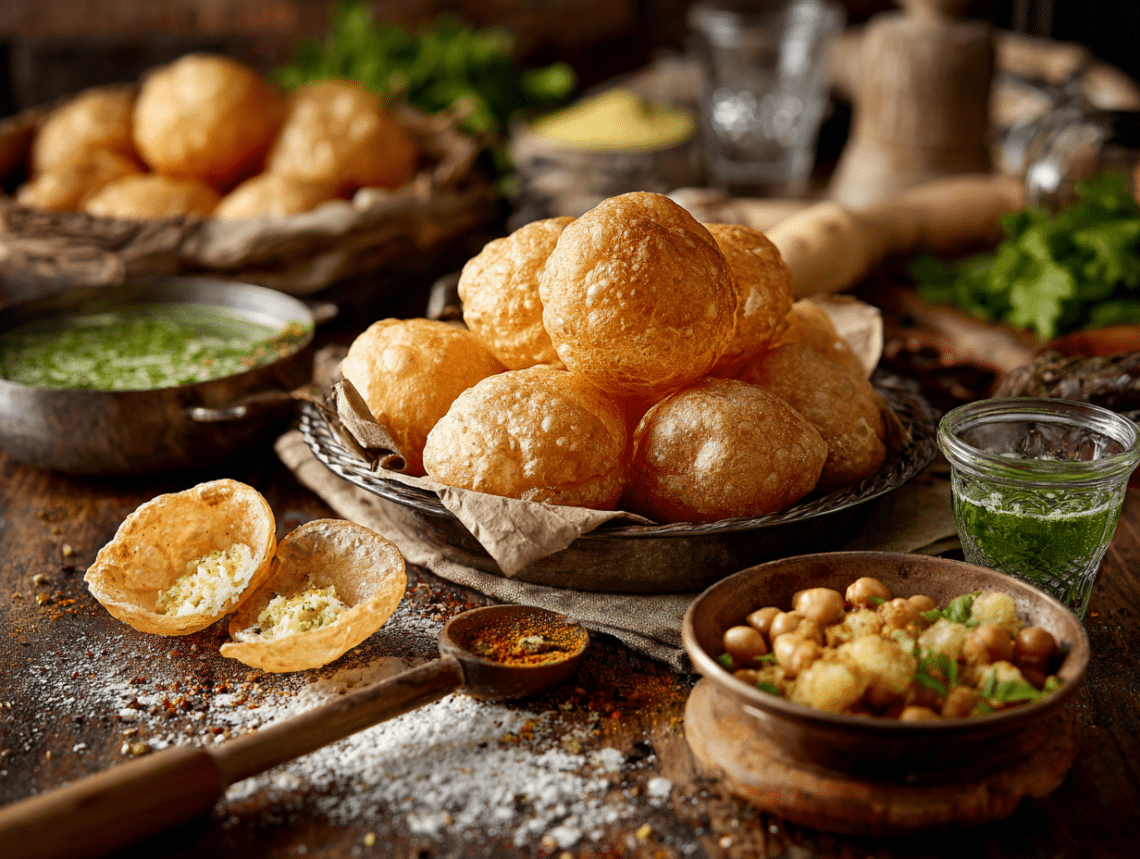
Pani puri is a three-part snack: crisp hollow shells, a cold spiced water (pani), and a mashed potato filling. Each piece is made from scratch here, which sounds like a lot — but the hands-on time is short, and you can prep the pani and filling well ahead. If you’ve ever wanted to make this at home and weren’t sure where to start, this recipe is a solid place to begin.
What makes this version work
Two things matter most. First, the dough rest. Letting the semolina dough sit covered for 30 minutes isn’t optional — it gives the gluten time to relax so the puris roll thin without snapping back, and thin dough is what puffs properly in the oil. Second, oil temperature. At 350°F, the puris hit the oil and steam from the inside, which is what creates the hollow pocket. Too cool and they absorb oil and go flat; too hot and they brown before they puff. A kitchen thermometer takes the guesswork out entirely, and it’s worth using one here.
About the ingredients
- Semolina (suji): Look for fine semolina, not coarse. Coarse semolina makes the dough grainy and the puris crack during frying. Indian grocery stores stock the right kind; it’s usually labeled “fine rava” or “fine suji.”
- Black salt (kala namak): This is what gives the pani its distinctive slightly sulfurous, tangy edge. Regular salt works in a pinch but the flavor will be noticeably milder. Worth picking up if you can find it.
- Tamarind pulp: Jarred tamarind concentrate works fine here — use about half the amount called for since it’s more concentrated than fresh pulp.
- Chaat masala: Available at most Indian grocery stores and many large supermarkets. Don’t skip it; it’s the main seasoning in the filling and has a sour, savory punch that plain salt can’t replicate.
- Chickpeas in the filling: Skip the garnish of extra whole chickpeas on top — not worth the extra dish. Just mix them into the filling if you’re using them.
Storage and reheating
Store the three components separately. Fried puris keep at room temperature in an airtight container for up to 5 days — they stay crisp as long as no moisture gets in. The pani keeps refrigerated for up to 3 days; stir it before serving since the solids settle. The potato filling keeps in the fridge for 2 days in a covered container. Don’t assemble ahead of time; a filled puri goes soggy within a minute or two. Puris can be frozen after frying — spread them in a single layer to freeze, then transfer to a bag. Reheat from frozen in a 300°F oven for 5 minutes to crisp them back up.
If something goes sideways
- Puris won’t puff: The dough discs are probably too thick or the oil isn’t hot enough. Roll them thinner — closer to 1mm — and check your oil temperature before the next batch.
- Puris puff but collapse immediately: They need another 20–30 seconds in the oil after puffing. Let them firm up before you pull them out.
- Puris crack when you press the hole for filling: They cooled too long before you tried to open them. Work quickly while they’re still slightly warm, or accept that a few will crack — it happens.
- Pani tastes flat: Add more tamarind pulp first, then more black salt. Flat pani is almost always an acid or salt issue, not a spice issue.
- Dough keeps tearing when you roll it: It probably needs more rest time. Cover it again and wait another 10–15 minutes before trying again.
Pani Puri

Equipment
- Blender or food processor
- Slotted spoon
- Mixing bowls
- Deep frying pan
Ingredients
Puris
- 1 cup semolina (suji) fine quality
- 2 tablespoons all-purpose flour
- ¼ teaspoon salt
- ¼ cup water as needed to knead a medium-stiff dough
- 4 cups oil for deep frying
Pani (Spiced Water)
- 1 cup fresh coriander leaves chopped
- ½ cup fresh mint leaves tightly packed
- 2 tablespoons tamarind pulp
- 1 inch ginger peeled and chopped
- 2 teaspoons roasted cumin powder
- 1 teaspoon black salt or regular salt to taste
- 2 cups cold water adjust for desired pungency
Filling
- 2 medium potatoes boiled, peeled, and mashed
- ½ cup boiled chickpeas (optional for texture and protein)
- ½ teaspoon chat masala
Instructions
- To make the puri dough, combine semolina, all-purpose flour, and salt in a bowl. Add just enough water to form a springy, firm dough. Knead for 10 minutes, cover with a damp cloth, and let rest for 30 minutes.
- Roll out small portions of the dough into thin discs (about 1.5 inches diameter) on a floured surface. Ensure even thickness to prevent breakage during frying.
- Heat oil in a deep frying pan over medium-high heat (350°F / 175°C). Fry puris in small batches, pressing each gently into the oil with a slotted spoon until they puff. Flip and cook until golden brown, then remove to a paper towel to drain.
- For pani, blend coriander, mint, tamarind, ginger, roasted cumin, and black salt with 1 cup of cold water. Strain, then add additional cold water to taste. Chill before serving for better flavor.
- In a mixing bowl, combine mashed potato, optional chickpeas, and chaat masala. Adjust salt if needed.
- To assemble, gently tap the top of each puri to create an opening. Spoon in the filling, drizzle with sweet tamarind chutney (if desired), and pour in chilled pani just before serving. Serve immediately.
Notes
- To speed up puri frying, use a wide pan so you can fry more at once.
- For a twist, replace potato with sprouts or spicy boondi.
- Chill the pani for 1–2 hours beforehand to bring out maximum flavor.
- Use black salt for that authentic street-style punch.
Nutrition
Common questions
Can I buy premade puri shells instead of making them from scratch?
Yes, and it’s a perfectly reasonable shortcut. Many Indian grocery stores sell ready-to-fry or pre-fried puri shells in bags. Pre-fried ones just need a few minutes in a warm oven to crisp up, which saves most of the hands-on work in this recipe.
How spicy is the pani, and can I control the heat?
As written, the pani is tangy and sharp but not fiery — the heat comes mainly from the ginger. If you want more heat, add a small green chili to the blender. If you’re serving kids or spice-sensitive guests, reduce the ginger by half.
My puris keep going flat instead of puffing. What am I doing wrong?
The most common cause is oil that isn’t hot enough — it should be at 350°F before you add the puris. The second most common cause is uneven thickness when rolling; thicker spots prevent the steam from building up inside the shell.
Can I make any part of this ahead of time?
Yes — the pani and filling are both better made a few hours ahead and refrigerated, which lets the flavors develop. The puris can be fried up to 5 days ahead and stored in an airtight container at room temperature. Just don’t assemble until right before serving.
I can’t find fine semolina. Is there a substitute?
Fine semolina is important here and worth seeking out at an Indian grocery store before substituting. In a pinch, some cooks use a mix of cream of wheat and all-purpose flour, but the texture of the puris won’t be quite the same — they tend to be less crisp.