





























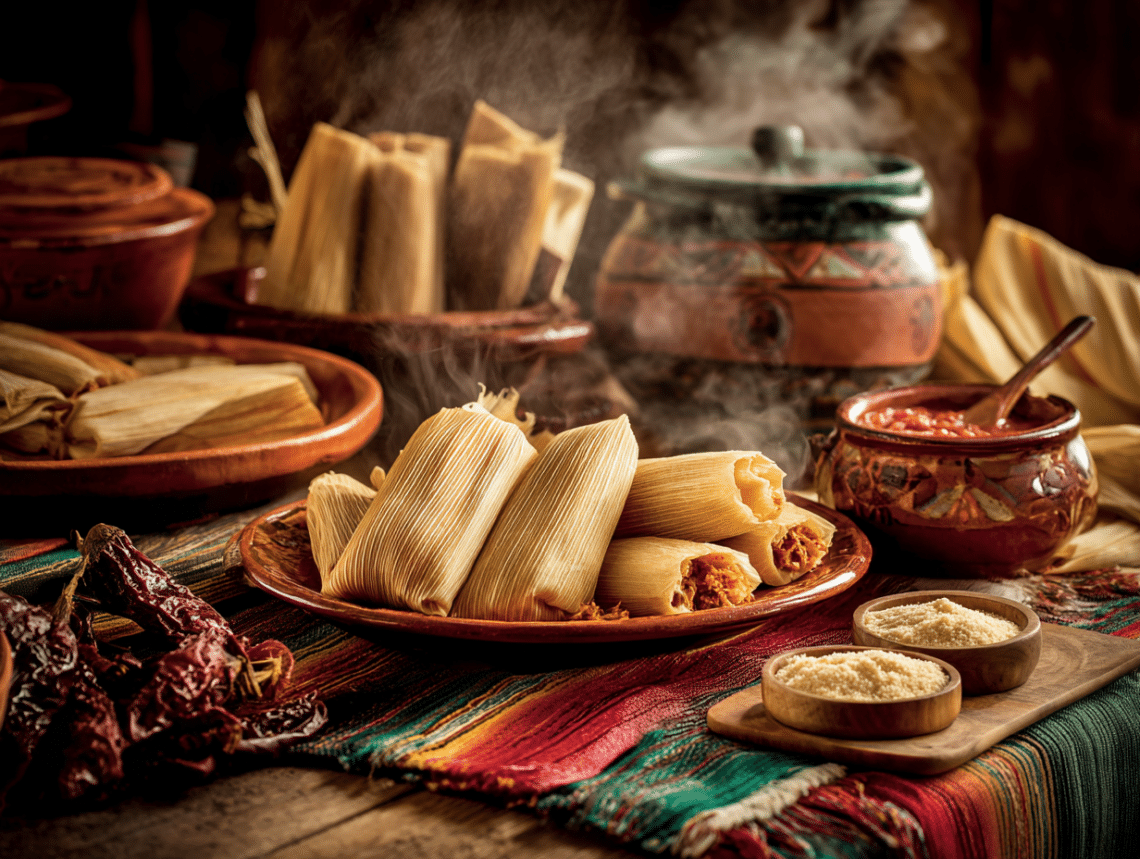
This recipe makes 18 pork tamales from scratch — slow-cooked pork shoulder, a two-chile red sauce, and masa dough steamed in corn husks. The total time is about 4.5 hours, and the honest reason to make them is that homemade tamales taste nothing like the frozen kind: the masa is tender, the filling is deeply seasoned, and the whole batch reheats beautifully all week.
The technique that matters
The masa spread is the step that makes or breaks the final texture. You want an even layer about 3/16 of an inch thick — thin enough that the husk can fold closed without the dough bunching, but thick enough to fully encase the filling. Too thick and the tamal is doughy; too thin and the filling tears through during steaming. Use the back of a spoon and work from the center outward, leaving a 1-inch border at the top and sides. The second thing worth getting right is the steam setup: the tamales need to stand upright, open end up, so condensation drips down the outside of the husk rather than pooling inside. Pack them snugly in the steamer so they support each other — a loosely packed pot lets them tip and the filling shifts.
Mistakes to avoid
- Skipping the float test for masa: Drop a small ball of your finished masa dough into a glass of cold water. If it floats, the dough has enough air beaten in. If it sinks, beat it longer. Dense masa leads to heavy, gummy tamales.
- Under-soaking the corn husks: 15 minutes in hot water is the minimum — 30 is better. A husk that isn’t fully pliable will crack when you fold it, and the tamal will unwrap during steaming.
- Running the steamer dry: A 90-minute steam on medium heat can drain a pot fast. Add a few coins to the bottom of the steamer water — when you hear them stop rattling, the water is low. Refill with boiling water so you don’t drop the temperature.
- Opening the steamer too early: Let the tamales rest in the covered pot for 15 minutes after the heat is off. They firm up as they cool slightly, and cutting that rest short gives you masa that sticks to the husk.
- Oversalting the masa: The pork broth you’re using is already salted from cooking the shoulder. Taste your broth before adding the full amount of salt called for in the masa — you may need less.
About the ingredients
- Dried ancho and guajillo chiles: Find these in the Latin foods aisle or at any Mexican grocery. Anchos are dried poblanos — mild and slightly sweet. Guajillos are brighter and a little more acidic. Using both gives the sauce more depth than either alone. In a pinch, a single type works, but the sauce will be flatter.
- Mexican oregano: This is worth seeking out — it’s more citrusy and less minty than Mediterranean oregano, and it makes a noticeable difference in the sauce. Most Latin grocery stores carry it dried.
- Masa harina: Use masa harina labeled specifically for tamales, not tortillas. The grind is coarser and holds up better to steaming. Maseca makes a widely available tamale version.
- Lard vs. shortening: Lard gives a better flavor and a slightly lighter texture. Vegetable shortening works fine and is a reasonable swap — skip the garnish of extra rendered lard on top if you go that route, not worth the extra dish.
Leftovers and make-ahead
Cooked tamales keep in the fridge for up to 5 days, still in their husks. For longer storage, freeze them in a single layer on a baking sheet first, then transfer to a zip-top bag — they’ll hold well for up to 3 months. Reheat from the fridge by steaming for 10 to 15 minutes, or microwave wrapped in a damp paper towel for 90 seconds. From frozen, steam for 20 to 25 minutes without thawing first. You can also make the pork filling and red chile sauce up to 2 days ahead and refrigerate them separately — the flavors actually improve overnight — then make the masa fresh on the day you plan to assemble.
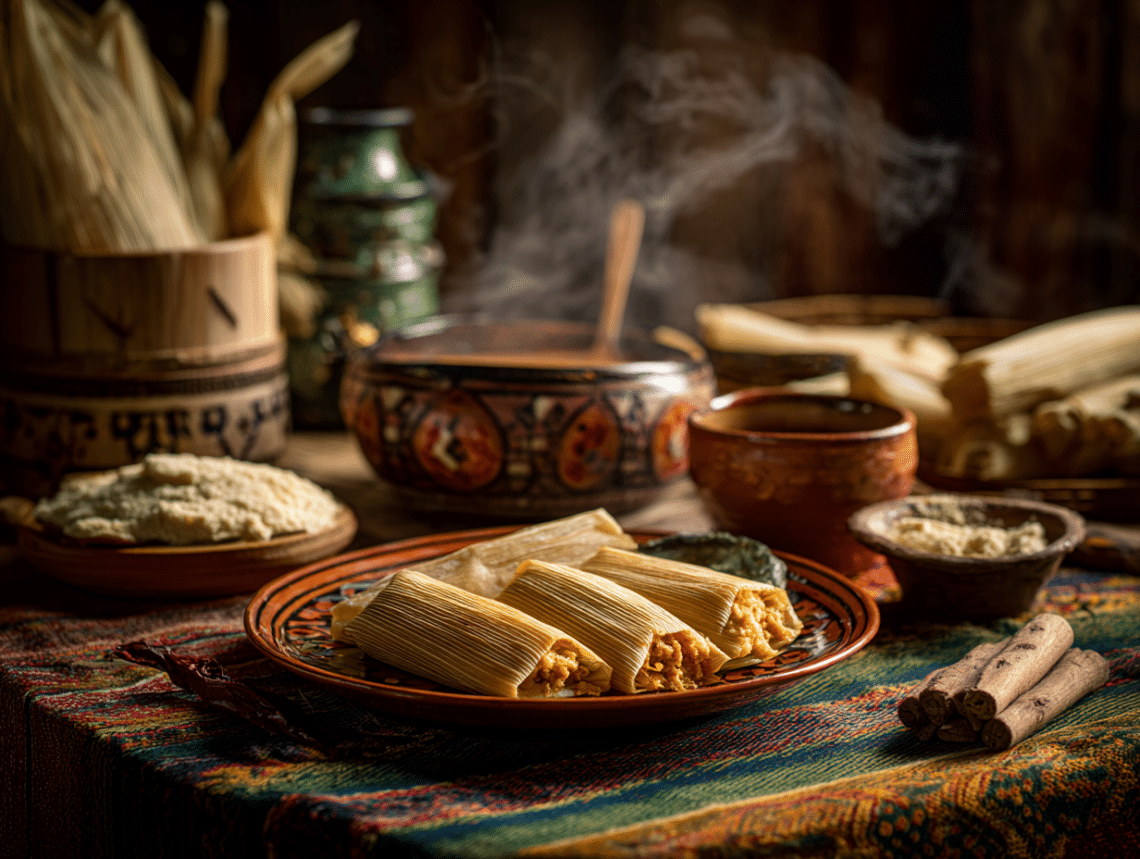
Authentic Pork Tamales

Equipment
- Steamer pot
- Large mixing bowl
- Dutch oven or large saucepan
- Blender
- Foil or corn husk ties (optional)
Ingredients
For the Pork Filling:
- 2 ½ pounds pork shoulder cut into large chunks
- 1 medium yellow onion quartered
- 4 cloves garlic peeled and smashed
- 2 teaspoons kosher salt
For the Red Chile Sauce:
- 5 pieces dried ancho chiles stemmed and seeded
- 2 pieces dried guajillo chiles stemmed and seeded
- 2 cups pork broth or water from cooking pork
- ½ teaspoon ground cumin
- ½ teaspoon oregano preferably Mexican oregano
- ½ teaspoon salt or to taste
For the Masa Dough:
- 4 cups masa harina such as Maseca brand, for tamales
- 1 teaspoon baking powder
- 2 teaspoons salt
- 1 ⅓ cups lard or vegetable shortening, room temp
- 2 ½ cups warm pork broth
For Additional Items:
- 18 pieces dried corn husks soaked in hot water until pliable
Instructions
- Cook Pork: In a large Dutch oven, combine pork shoulder, onion, garlic, and 2 tsp of kosher salt. Cover with water (about 6–8 cups), bring to a boil, then simmer (covered) for 2 hours or until fork-tender. Skim foam as needed. Reserve 4 cups of the broth and shred the pork after it has cooled slightly.
- Make Red Chile Sauce: Toast chiles in a dry skillet over medium heat until fragrant (about 30 seconds per side). Soak in hot water for 15 minutes. Blend soaked chiles with 2 cups pork broth, cumin, oregano, and salt until smooth. Strain through fine mesh for a silky sauce. Combine with shredded pork and simmer for 10 minutes on low to absorb flavor.
- Prepare Masa Dough: In a large bowl, beat lard until fluffy (about 3–4 minutes). In another bowl, combine masa harina, baking powder, and salt. Mix dry ingredients into the lard, adding warm broth gradually. Beat until dough is spongy and spreads easily—a pinch should float in water when ready.
- Assemble Tamales: Drain corn husks and pat dry. Spread 2–3 tablespoons masa dough on the smooth side of each husk, leaving space at the sides and bottom. Add a spoonful of pork filling in the center. Fold sides inward, then bottom up. Tie with husk strips if desired.
- Steam Tamales: Arrange upright in a steamer basket lined with husks. Steam over gently boiling water for 1.5 hours (covered), keeping water replenished. Tamales are done when they pull away cleanly from the husk.
Notes
- For a vegetarian version, replace pork with roasted vegetables and use vegetable shortening in the masa.
- Chill the filling overnight to enhance flavors and ease assembly.
- Make the red chile sauce and pork filling a day in advance to save prep time on assembly day.
Nutrition
Your questions, answered
Can I make tamales without a steamer pot?
Yes — a large stockpot with a metal colander or an oven rack set over an inch of water works fine. The key is keeping the tamales above the water line and maintaining a steady steam, so cover the pot tightly with a lid or foil.
How do I know when the tamales are done?
A tamal is done when the masa pulls away cleanly from the husk without sticking. Pull one out after 75 minutes, let it sit for two minutes, then peel back the husk — if the dough is still wet or tears, give the batch another 15 minutes.
Can I use a pork loin or tenderloin instead of pork shoulder?
Shoulder is strongly recommended because the fat content keeps the filling moist and flavorful after the long simmer. Loin or tenderloin will shred drier and can taste bland inside the masa.
Is there a substitute for corn husks?
Parchment paper cut into roughly 8×10-inch rectangles is the most practical substitute. It won’t add any flavor the way husks do, but it holds the shape and releases cleanly after steaming.
Can I make this recipe vegetarian?
Yes — swap the pork with a filling of black beans, roasted poblanos, and cheese, and use vegetable broth in both the sauce and the masa. The masa technique stays exactly the same.
Why is my masa crumbly and hard to spread?
It needs more liquid. Add warm broth one tablespoon at a time and continue beating until the dough is soft and spreadable — similar to thick hummus. Masa harina absorbs liquid at different rates depending on the brand and humidity.