




































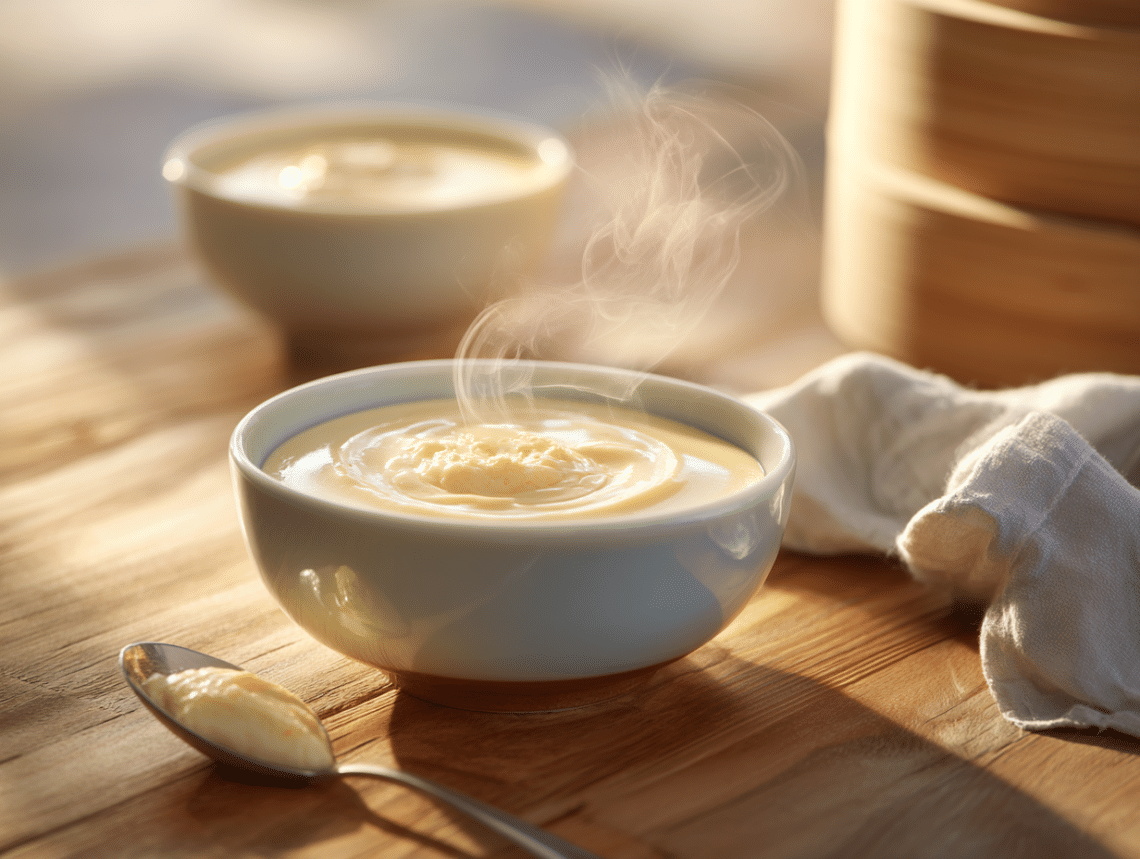
This is a Cantonese steamed egg custard made with just eggs, whole milk, and caster sugar — nothing else. It takes 20 minutes start to finish and uses equipment most kitchens already have. If you want a light, genuinely easy dessert that isn’t another chocolate thing, this is a good one to have in rotation.
The technique that matters
Two steps decide whether your custard comes out silky or pockmarked. First, the milk temperature: it needs to be warm — around 50°C / 120°F — when it meets the eggs. Cold milk causes the egg proteins to seize unevenly, and hot milk scrambles them. Warm milk dissolves the sugar faster too, so you’re not stirring hard and whipping air into the mix. Second, heat control during steaming matters more than timing. Medium heat keeps the steam gentle enough that the custard sets slowly from the outside in. Too high and the edges overcook and tighten while the centre is still liquid — that’s what causes the rubbery, curdled texture people run into the first time.
Substitutions that actually work
- Caster sugar vs. regular granulated sugar: Granulated sugar works but dissolves more slowly — give it an extra 30 seconds of gentle stirring and strain carefully so any undissolved crystals don’t end up in the custard.
- Whole milk vs. lower-fat milk: 2% milk produces a slightly less creamy result but still sets properly. Skim milk is not recommended — the custard will be noticeably thinner and less stable. Plant-based milks are not a reliable swap here; most don’t have the protein and fat balance needed to set the custard correctly.
- Egg size: The recipe calls for medium eggs totalling approximately 100g without shells. If you only have large eggs, use 2 and check the weight — going significantly over 100g will make the custard firmer and less wobbly.
Make-ahead notes
Steamed egg custard keeps well in the fridge, covered, for up to 2 days. The texture firms up slightly when cold, which some people actually prefer. Serve it straight from the fridge or let it sit at room temperature for 10 minutes first — skip the garnish if you’re pulling it out on a weeknight, not worth the extra dish. Do not freeze it; the custard will weep and the texture turns grainy once thawed. If you want to get ahead, you can mix and strain the custard base up to a few hours in advance and keep it covered in the fridge, then steam it fresh when you’re ready.
Troubleshooting
- Custard is set on the outside but still liquid in the centre after 12 minutes: Your steamer heat was probably too low, or the bowls were too deep. Add 2–3 minutes and check again — the centre should wobble gently, not slosh.
- Water droplets on the surface after steaming: Condensation dripped through or around the foil. Make sure the foil is sealed tightly around the rim of each bowl before steaming. If you’re using a metal lid, wrap it in a clean tea towel to catch drips.
- Custard pulled away from the sides of the bowl: This means it was overcooked. The proteins contracted too much. Reduce steaming time by 2 minutes next time, or lower the heat slightly.
- Mixture looks foamy even after skimming: The eggs were whisked too vigorously. Next time, use a fork or a whisk with a very light hand — you’re combining, not aerating. Let the mixture rest for 2 minutes before straining so bubbles can rise and be skimmed off more easily.
- Grainy or lumpy texture despite straining: The milk was too hot when added to the eggs, partially cooking them before steaming. Pull the saucepan off the heat a little earlier and let it cool for a minute before combining.
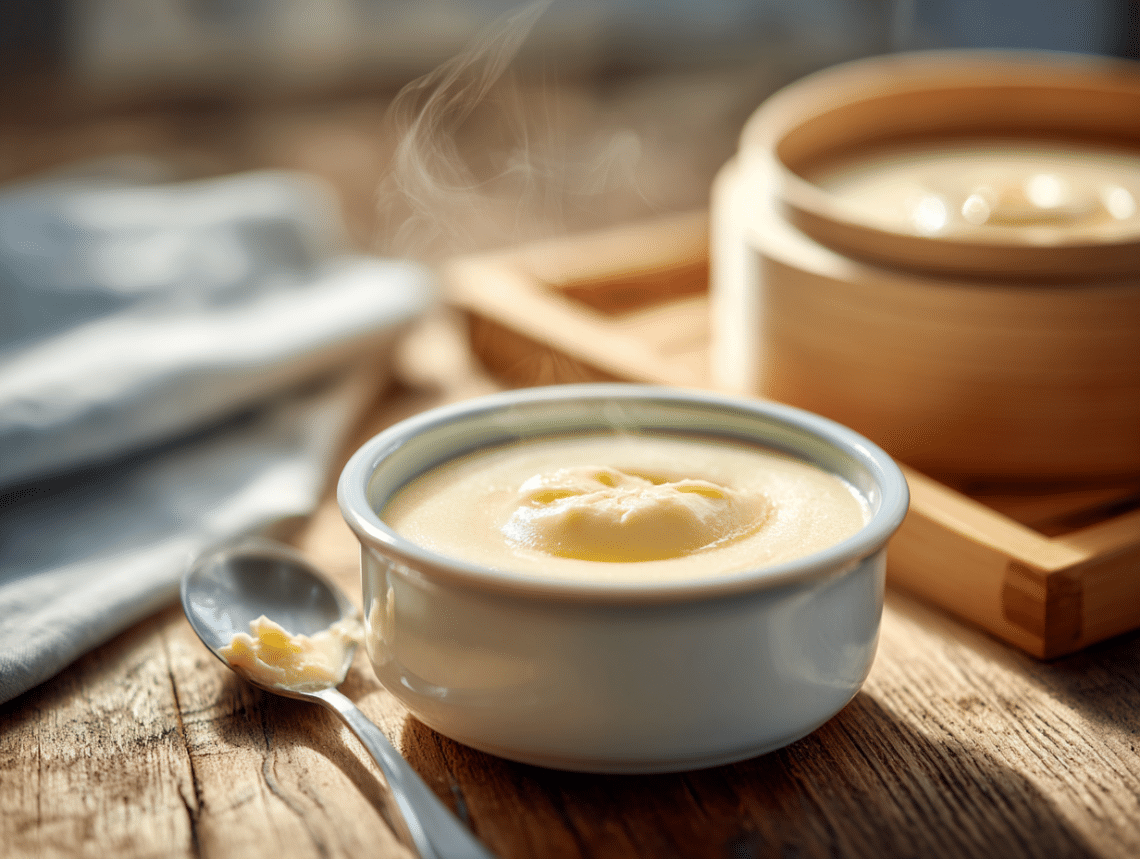
Hong Kong Steamed Egg Custard (Silky 3-Ingredient Dessert)

Ingredients
- 2 medium eggs approximately 100 g total, weighed without shells
- 1 ½ tablespoons caster sugar
- 1 cup milk whole milk
Instructions
- Warm the milk in a small saucepan over low heat until it is just warm to the touch — around 50°C / 120°F. Do not let it boil or even simmer. If a skin forms on the surface, carefully lift it off with a spoon and discard it.
- In a mixing bowl, gently whisk the eggs until just combined — avoid creating foam. Add the warm milk and caster sugar, then stir gently until the sugar is fully dissolved and the mixture is evenly blended.
- Pour the mixture through a fine-mesh sieve into a clean bowl or directly into your heatproof serving bowls. Strain twice for the smoothest result. Use a spoon to gently skim off any surface bubbles — these cause an uneven, pockmarked top.
- Cover each bowl tightly with aluminium foil to prevent condensation from dripping into the custard. Bring the water in your steamer to a full boil, then carefully place the covered bowls onto the steamer rack. If you do not have a steamer, set a round wire rack inside a lidded pot and add water until it sits just below the rack.
- Reduce the heat to medium and steam for 12 minutes. Every 4 minutes, briefly lift the lid to release excess steam — this prevents large air bubbles from forming inside the custard. The custard is done when the edges are set but the centre still wobbles gently when nudged.
- Remove the bowls carefully from the steamer and let them cool at room temperature for 3 to 5 minutes. The custard will continue to set slightly as it cools. Serve warm, at room temperature, or chilled.
Nutrition
Common questions
Can I use a microwave instead of a steamer?
A microwave is not a reliable substitute here. Steaming gives you even, gentle heat from all sides; a microwave heats unevenly and makes it very hard to control the texture, usually resulting in a rubbery or curdled custard.
Do I need a bamboo steamer, or will any pot work?
Any lidded pot with a rack that keeps the bowls above the water will work fine. A bamboo steamer is helpful because it absorbs some condensation, but a metal steamer or a pot with a wire rack and a tea towel wrapped around the lid does the same job.
How do I know when the custard is actually done?
The edges should be fully set and the centre should wobble like firm jello when you gently nudge the bowl — not slosh like liquid. If the whole surface moves as one piece, it’s done; if the middle ripples loosely, give it another 2 minutes.
Can I double the recipe to make more servings?
Yes, but steam the bowls in a single layer — don’t stack them. Stacking blocks steam circulation and the lower bowls will overcook before the upper ones are done.
Why does my custard have a honeycomb texture inside?
Honeycomb texture is caused by steam that’s too hot, which creates air bubbles inside the custard as it sets. Keep the heat at medium, not high, and lift the lid every 4 minutes as the recipe directs to release pressure gradually.
Can I add flavourings like pandan or ginger?
Yes — infusing the milk is the cleanest way to do it. Heat the milk with a pandan leaf or a few thin slices of fresh ginger, let it steep for 5 minutes off the heat, then strain before using. Don’t add extracts or powders directly to the custard mixture, as they can affect how evenly it sets.
Try these next
- Soft and Sweet Japanese Mochi
- Classic European Vanilla Rice Pudding
- Quick and Delicious Homemade Chinese Fried Rice
- Traditional Homemade Eggnog