






























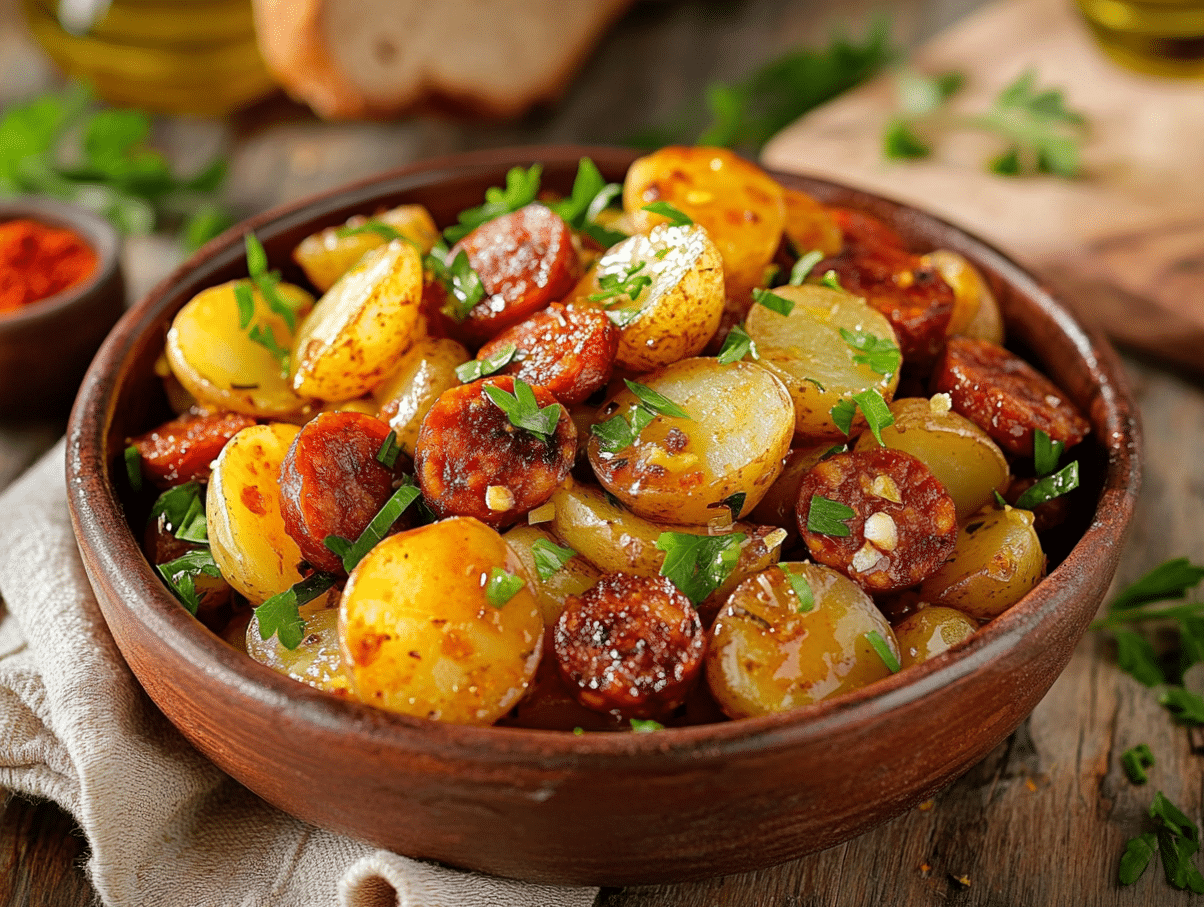
This is a warm potato salad built around cured Spanish chorizo — the kind that comes in a firm, sliceable link, not the loose raw stuff. The chorizo crisps up in a skillet and leaves behind seasoned oil that does most of the dressing work for you. It comes together in about 45 minutes with a short ingredient list, and it works equally well as a side dish or a light main.
Substitutions that actually work
- Spanish chorizo: If you can’t find it, use a smoked kielbasa or andouille — both are cured and will crisp up similarly. Add an extra pinch of smoked paprika to the pan to compensate for the flavor difference.
- Baby potatoes: Regular Yukon Gold or red potatoes cut into 1-inch chunks work just as well. Russets get too mealy here — skip them.
- Red wine vinegar: White wine vinegar or even a squeeze of lemon juice is a fine swap. Apple cider vinegar works in a pinch but adds a slightly sweeter note.
- Flat-leaf parsley: Cilantro is a different flavor but not wrong. Skip the garnish entirely if you’re out — not worth a special trip to the store.
- Scallions: Thinly sliced red onion or chives both work. Soak raw red onion in cold water for 5 minutes first to take the edge off.
The short version of why this works
Two things matter here. First, dress the potatoes while they’re still warm — warm potatoes absorb the vinegar and oil instead of just sitting in them, so every bite is seasoned through rather than just coated on the outside. Second, scrape every bit of the rendered chorizo fat and paprika oil from the pan into the bowl. That orange-tinted oil is the backbone of the dressing, and leaving it behind in the skillet is the main way this dish falls flat.
If something goes sideways
- Salad tastes flat or greasy: It needs more acid. Add another small splash of red wine vinegar and a pinch of salt, toss again, and taste. Warm fat dulls flavor — this is the most common fix needed.
- Potatoes are falling apart: They cooked too long or were cut too small. Next time pull them at the first sign of fork-tenderness. For now, toss gently and serve as-is — the texture is softer but the flavor is the same.
- Chorizo didn’t crisp up: The pan wasn’t hot enough, or the slices were crowded. Give them more space and a slightly higher heat. A little color on the edges makes a real difference to the final dish.
- Dish seems dry after sitting: The potatoes keep absorbing liquid as they cool. Drizzle over a little extra olive oil and toss before serving — no need to remake the dressing.
- Too salty: Spanish chorizo is already well-salted. Hold back on adding salt until after you’ve tasted the finished dish, not before.
Leftovers and make-ahead
Store leftovers in an airtight container in the fridge for up to 3 days. The flavors actually improve overnight as the potatoes soak up more of the dressing. Serve it cold straight from the fridge, or let it sit at room temperature for 20 minutes before eating — either way is good. If you want to get ahead, you can boil the potatoes and cook the chorizo mixture up to a day in advance, then combine and dress them within an hour of serving. Don’t freeze this one; the potato texture breaks down badly and isn’t worth it.
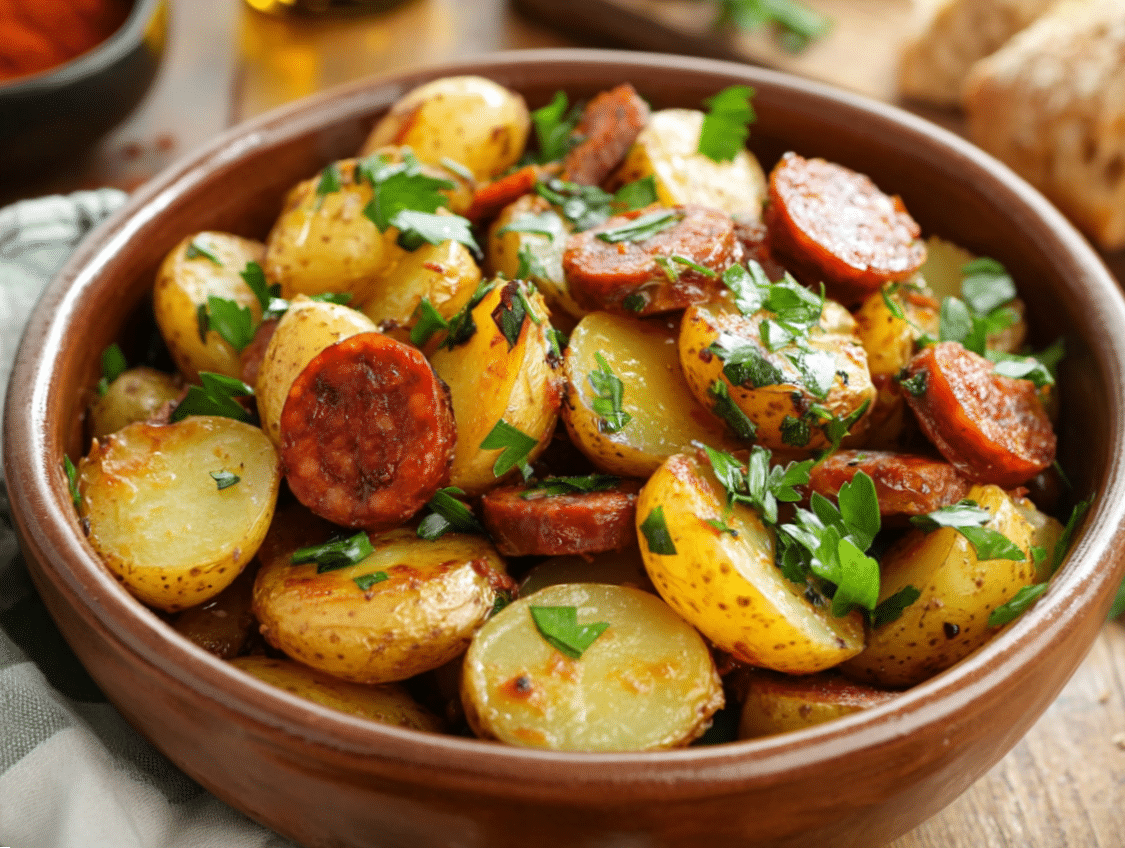
Spanish Chorizo and Potato Salad

Equipment
- Large Pot
- Skillet
- Mixing bowl
- Knife
- Cutting board
Ingredients
- 1.5 pounds baby potatoes halved or quartered for even cooking
- 6 ounces Spanish chorizo sliced into half-moons
- 2 tablespoons olive oil extra virgin for richness
- 1 teaspoon smoked paprika adds signature Spanish smokiness
- 1 clove garlic minced for a subtle aromatic depth
- 1 tablespoon red wine vinegar brings a bright acidity
- ½ teaspoon sea salt adjust to taste
- ¼ teaspoon black pepper freshly ground for best flavor
- ⅓ cup flat-leaf parsley chopped for freshness
- ¼ cup scallions thinly sliced for mild oniony bite
Instructions
- Place the halved baby potatoes into a large pot of cold, salted water. Bring to a boil and cook for 12-15 minutes, until fork-tender but not falling apart. Drain and set aside.
- While potatoes cook, heat 1 tablespoon of olive oil in a skillet over medium heat. Add the sliced chorizo and cook for 4-5 minutes, stirring occasionally, until the edges start to crisp and the fat renders out.
- Add the minced garlic and smoked paprika to the chorizo, stirring for another 30 seconds until fragrant. Remove the skillet from heat.
- In a large mixing bowl, combine the warm potatoes with the cooked chorizo mixture, making sure to scrape in any flavorful oil from the pan.
- Drizzle with the remaining tablespoon of olive oil and add the red wine vinegar. Season with salt and black pepper, then toss everything gently to coat.
- Stir in the chopped parsley and scallions for a fresh contrast. Serve warm or at room temperature.
Notes
Chef’s Tips:
- For extra depth, try roasting the potatoes instead of boiling them.
- If you prefer a milder flavor, use sweet Spanish chorizo instead of spicy.
- A soft-boiled egg on top can also add a luxurious richness.
Nutrition
Frequently asked questions
What kind of chorizo do I need — and where do I find it?
You need cured, firm Spanish-style chorizo that comes in a solid link you can slice — not the soft, raw Mexican-style chorizo sold in a plastic casing. Look for it near the specialty deli meats or charcuterie section at most grocery stores, or at a Spanish or European deli. Brands like Palacios or Goya are widely available in the US.
Can I make this ahead for a party or potluck?
Yes, and it actually holds up better than most potato salads. Make it up to a day ahead and refrigerate it. Before serving, taste it and add a small drizzle of olive oil and a splash of vinegar if it seems dry or dull — potatoes absorb a lot as they sit.
Can I serve this cold, or does it have to be warm?
Both work fine. Warm, the chorizo fat stays loose and coats everything easily. At room temperature or cold, the flavors are a bit more concentrated. If serving cold, let it sit out for 15–20 minutes first and give it a fresh toss — it loosens up and tastes better than straight from the fridge.
My grocery store only has hot smoked paprika — is that okay?
Yes, it works. The dish will have more heat, which is fine if your household handles spice. If you want to dial it back, use half the amount called for and taste as you go. Regular sweet paprika is also a usable substitute if that’s what you have on hand.
Try these next
- Authentic Spanish Seafood Paella
- Sweet and Tangy Grape Chicken Salad
- Caramelized Brussels Sprouts with Balsamic Glaze and Crispy Shallots
- Creamy Macaroni Salad