








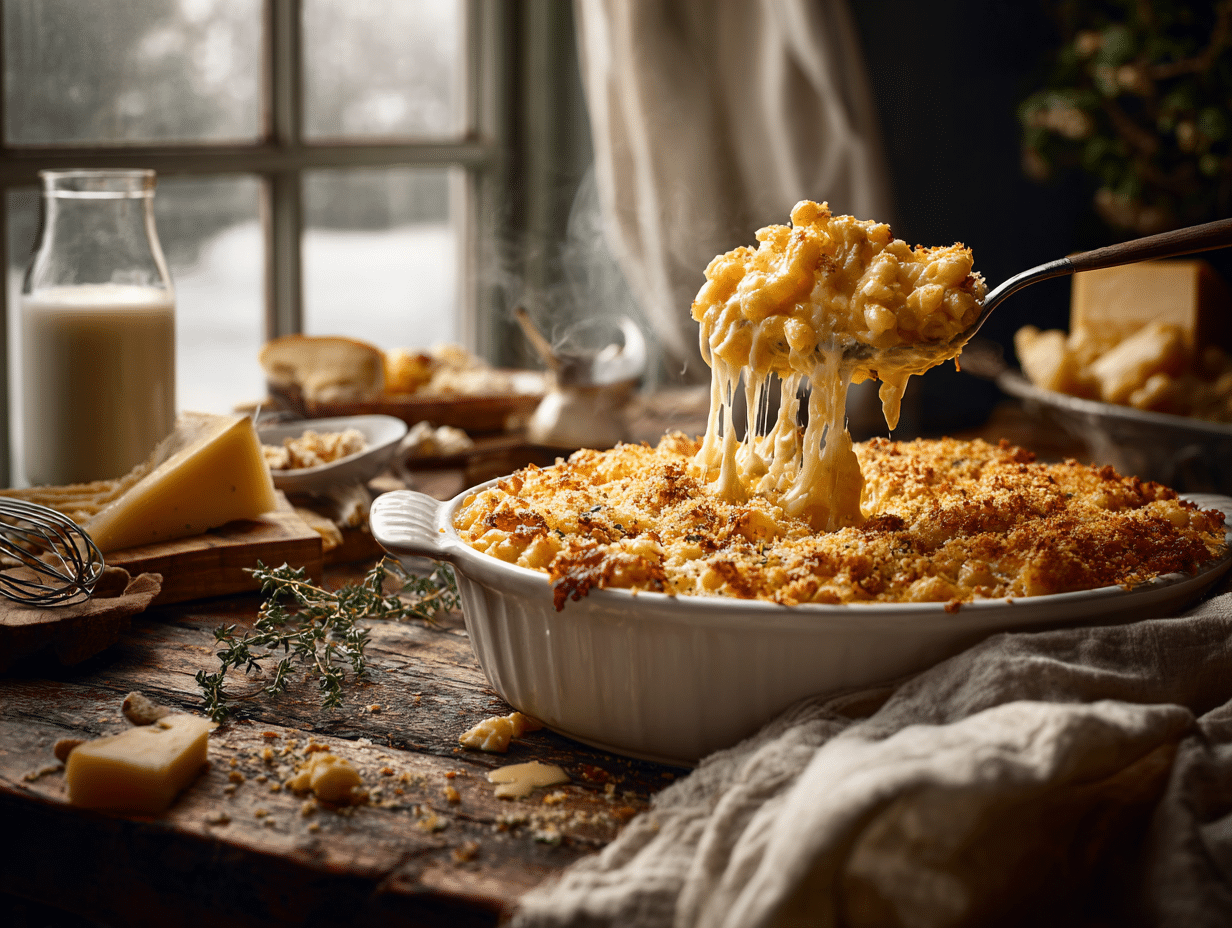
This is a from-scratch baked mac and cheese built on a three-cheese béchamel — sharp cheddar, Gruyère, and Parmesan — finished with a buttery panko crust that goes genuinely crispy in the oven. It takes about an hour start to finish, feeds six, and reheats better than most baked pasta dishes. If you want a reliable crowd dish that works as a weeknight main or a holiday side, this is a solid one to have in your rotation.
Before you start
Two things actually matter here. First, grate your own cheese. Pre-shredded cheese is coated in starch to prevent clumping, and that coating stops it from melting smoothly into the sauce — you’ll get a grainy texture instead of a creamy one. Takes two extra minutes and makes a real difference. Second, keep your milk and cream at room temperature before you add them to the roux. Cold dairy hits a hot roux and the sauce seizes up, which means more whisking and a higher chance of lumps. Set them out when you start boiling the pasta water and they’ll be ready in time.
Smart swaps
- Gruyère: It’s the priciest ingredient here. Comté is a close match. Fontina works too and melts beautifully, though the flavor is milder.
- Panko breadcrumbs: Regular breadcrumbs will work but won’t get as crunchy. Crushed Ritz crackers are a good swap if that’s what you have.
- Heavy cream: You can use all whole milk if needed — the sauce will be slightly less rich but still good. Don’t use low-fat milk; the sauce won’t thicken properly.
- Gluten-free: Swap the all-purpose flour for a 1:1 gluten-free flour blend in the roux, and use gluten-free panko for the topping. Cook the roux an extra 30 seconds to get rid of any raw flour taste.
Make-ahead notes
You can assemble the whole dish — pasta, cheese sauce, and breadcrumb topping — up to 24 hours ahead. Cover it tightly and refrigerate. Pull it out 30 minutes before baking so it’s not ice cold going into the oven, then bake as directed, adding 5–10 minutes to the bake time. Leftovers keep well in the fridge for up to 4 days in an airtight container. To reheat a portion, add a splash of milk (about a tablespoon per serving), cover loosely, and microwave in 90-second intervals, stirring between each — this keeps the sauce from drying out. For larger portions, reheat covered in a 325°F oven for 20–25 minutes, then uncover for the last 5 to re-crisp the top. This dish also freezes well: portion it into freezer-safe containers after baking and cool completely first. Freeze for up to 2 months. Thaw overnight in the fridge before reheating.
Troubleshooting
- Sauce is grainy or broken: This almost always comes from adding cheese to sauce that’s too hot. After you remove the pan from heat, wait 60 seconds before stirring in the cheese, and add it in small handfuls rather than all at once.
- Topping is pale after baking: Your oven may run cool, or the dish went in cold from the fridge. Move the rack up one position and give it an extra 5 minutes uncovered. If it’s still not browning, switch to the broiler for 2–3 minutes — but stay close, it goes from golden to burnt fast. Skip the extra butter drizzle on top of the breadcrumbs — not worth the extra step, the butter already in the topping is enough.
- Dish is dry after reheating: The pasta absorbs sauce as it sits. Always add a small splash of milk before reheating, whether in the microwave or oven.
- Sauce too thick before baking: If the cheese sauce thickens up while you’re mixing in the pasta, stir in a few tablespoons of warm milk to loosen it. It should pour easily into the baking dish — if you’re scooping it, it’s too thick and will bake up dry.
- Pasta is mushy: The macaroni continues cooking in the oven, so pulling it at true al dente — with a little bite still in the center — is important. If it’s fully tender when you drain it, it will be overcooked by the time the dish comes out.
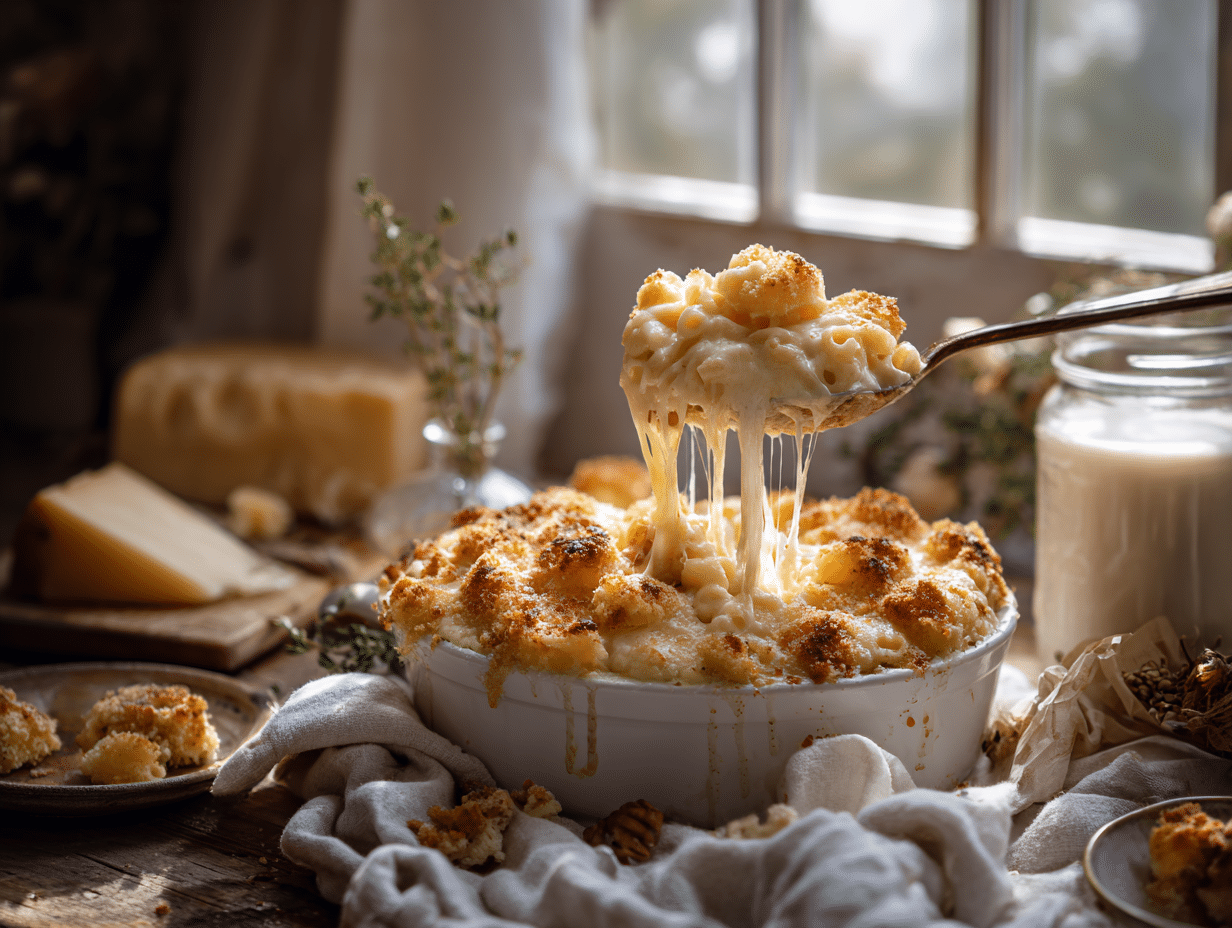
Ultimate Baked Mac and Cheese

Equipment
- large saucepan
- Whisk
- 9x13 inch baking dish
- Mixing bowl
- Oven
Ingredients
- 1 lb elbow macaroni preferably bronze-cut for better sauce adhesion
- 6 tbsp unsalted butter plus 2 tbsp (28 g) for topping
- ¼ cup all-purpose flour
- 4 cups whole milk room temperature
- 1 cup heavy cream room temperature
- 1 ½ cups sharp cheddar cheese freshly grated
- 1 cup Gruyère cheese freshly grated
- ½ cup Parmesan cheese finely grated
- 1 tsp Dijon mustard adds depth of flavor
- ½ tsp kosher salt plus more to taste
- ½ tsp black pepper freshly cracked
- 1 cup panko breadcrumbs
Instructions
- Preheat your oven to 375°F (190°C). Lightly grease a 9x13-inch baking dish and set aside.
- Bring a large pot of salted water to a boil. Cook the elbow macaroni until al dente, about 7–8 minutes. Drain and set aside.
- In a large saucepan over medium heat, melt 6 tablespoons of unsalted butter. Once melted and bubbling, whisk in flour and cook, whisking constantly, for 1–2 minutes to form a roux. It should smell slightly nutty.
- Gradually whisk in milk and cream, ensuring no lumps form. Cook over medium heat, stirring constantly, until the mixture thickens—about 5–7 minutes. It should coat the back of a spoon.
- Remove saucepan from heat. Stir in Dijon mustard, salt, and pepper. Gradually fold in cheddar, Gruyère, and Parmesan, a handful at a time, until smooth and fully melted.
- Mix in the cooked macaroni and stir gently until fully coated with the cheese sauce. Pour everything into the prepared baking dish, smoothing into an even layer.
- In a small mixing bowl, toss panko breadcrumbs with 2 tablespoons melted butter. Sprinkle evenly over the top of the mac and cheese.
- Bake uncovered for 25–30 minutes or until the top is bubbling and golden brown. Let rest for 5 minutes before serving.
Notes
- For a smoky twist, fold in 1/2 cup of cooked, chopped bacon.
- To make it vegetarian, ensure your cheese is rennet-free.
- For a gluten-free version, use gluten-free pasta and substitute rice flour in the roux.
Nutrition
FAQ
Can I make this without a roux — just melt cheese into cream?
You can, but the sauce won’t hold up the same way. Without the roux to stabilize it, a cream-and-cheese sauce tends to break in the oven and go greasy. The roux takes about two minutes and is what keeps the sauce creamy all the way through baking.
How do I know when it’s done baking?
The topping should be deep golden brown and the edges should be visibly bubbling. If the center looks still and the top is pale, it needs more time — a set, bubbling edge is the reliable cue, not just the timer.
Can I double this recipe for a bigger crowd?
Yes — doubling works well. Use two 9×13 baking dishes rather than one deeper dish, so the heat distributes evenly and the topping still crisps. Bake time stays roughly the same.
What can I add to make this a full meal?
Crispy bacon bits or diced ham stirred in with the pasta are the easiest additions and need no extra cooking. Steamed broccoli florets also work well — fold them in just before transferring to the baking dish so they don’t get waterlogged.
What to cook next
- Creamy Fettuccine Alfredo
- Hearty Shepherd’s Pie
- Sweet Corn Chowder
- Caramelized Brussels Sprouts with Balsamic Glaze