
































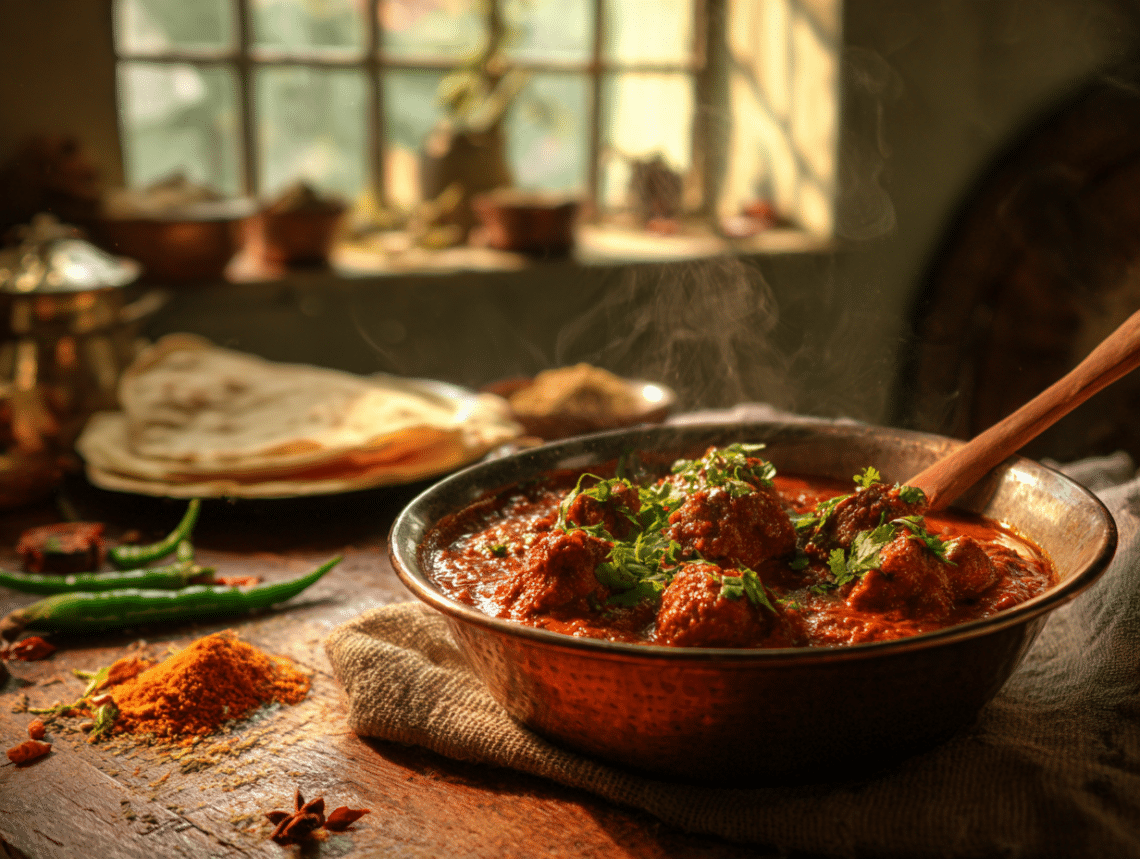
This is a thick, spiced soya chunks curry built around a tomato-onion masala — the kind of weeknight dinner that comes together in about an hour with pantry staples. Soya chunks are cheap, high in protein, and genuinely good at soaking up bold spices once you prep them right. If you’ve never cooked with them before, this recipe is a straightforward place to start.
The technique that matters
Two things determine whether this curry tastes flat or full. First, squeeze the boiled soya chunks firmly before they go into the pan — not a gentle press, but a real squeeze until very little water comes out. Waterlogged chunks dilute the masala and steam instead of absorbing it. Second, cook the tomatoes all the way down until the oil visibly separates from the mixture at the edges of the pan. That separation is your signal that the raw tomato flavor is gone and the masala is properly concentrated. Rushing either of these steps is the most common reason the curry ends up tasting thin.
Smart swaps
- Soya chunks: Medium-sized chunks work best here. Mini soya chunks (sometimes labeled soya granules) will cook faster but give a different texture — more crumbly, less meaty. Either works, but adjust your boiling time down by a couple of minutes for the smaller size.
- Ginger-garlic paste: Store-bought is fine on a weeknight. If you’re making it fresh, a rough 1:1 ratio of ginger to garlic blended with a splash of water is all you need.
- Green chili: One serrano or two Thai green chilies are close substitutes. For less heat, use half a green bell pepper instead — you keep the fresh flavor without the burn.
- Vegetable oil: Any neutral oil works. Ghee adds richness if you’re not keeping it vegan, but it’s not necessary.
Troubleshooting
- Curry tastes bitter: The spices were likely added to a dry pan or overcooked. Spices need fat and moisture — add them right after the tomatoes have broken down, not before, and stir constantly for that one minute.
- Soya chunks are rubbery after simmering: They were squeezed but not boiled long enough initially. Five minutes is the minimum; six is safer. They should feel soft all the way through when you press one between your fingers before they go into the masala.
- Gravy is too thin after simmering: Remove the lid for the last 3–4 minutes and let it reduce uncovered. The curry thickens quickly once the steam escapes.
- Masala is sticking and burning before the tomatoes are done: Add a tablespoon of water and scrape the bottom of the pan. Lower the heat slightly — medium-low is often better than medium once the onions are golden.
- Curry tastes one-dimensional: Check your salt. Under-salting is the most common reason a well-spiced curry still tastes flat. Taste before you add the water for the gravy and adjust then, not at the end.
Keeping and reheating
This curry keeps well in the fridge for up to 4 days in a sealed container — the flavor actually improves overnight as the soya chunks continue absorbing the masala. To reheat, add a splash of water (2–3 tablespoons) and warm it in a saucepan over medium-low heat, stirring occasionally, for about 5 minutes. The microwave works too; cover loosely and heat in 90-second intervals, stirring between each. For longer storage, freeze in portions for up to 2 months. Thaw overnight in the fridge before reheating. Skip the cilantro garnish before storing — it goes limp and isn’t worth the extra dish when you’re pulling leftovers out on a busy night.
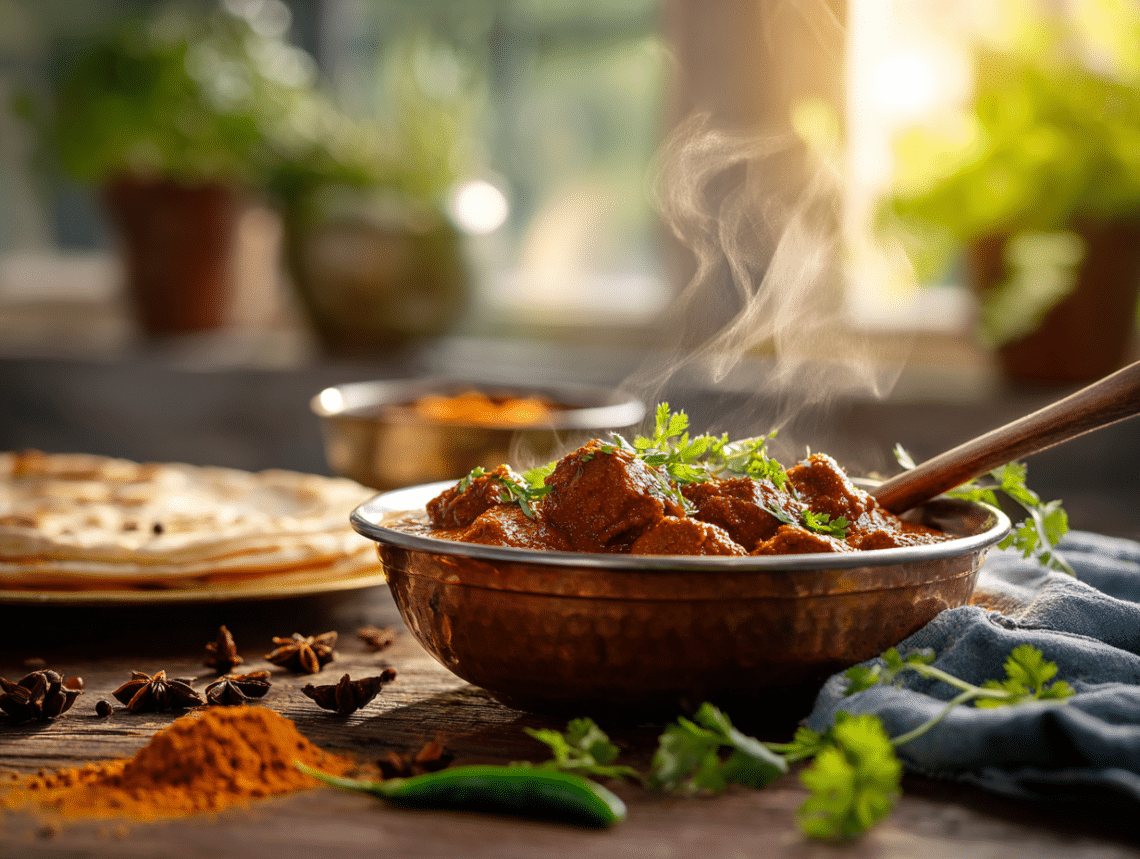
Spicy Masala Soya Chunks Curry

Equipment
- Large skillet or deep sauté pan
- Medium sauce pot
- Slotted spoon
- Knife and cutting board
- Blender or food processor
Ingredients
- 2 cups soya chunks preferably organic and medium-sized
- 4 cups water for boiling soya chunks
- 1 tbsp salt for boiling soya chunks
- 2 tbsp vegetable oil such as sunflower or canola
- 1 medium onion finely chopped
- 1 piece green chili sliced lengthwise
- 1 tbsp ginger-garlic paste freshly ground preferred
- 2 medium tomatoes ripe, chopped
- 1 tsp turmeric powder
- 1.5 tsp coriander powder
- 1 tsp garam masala
- 0.5 tsp red chili powder adjust to taste
- 1.5 cups water for gravy
- 2 tbsp fresh cilantro leaves chopped, for garnish
Instructions
- In a medium sauce pot, bring 4 cups of water to a boil. Add salt and stir in the soya chunks. Boil for 5–6 minutes until soft. Drain and rinse under cold water. Squeeze out excess water and set aside.
- Heat oil in a large skillet over medium heat (about 350°F / 175°C). Add chopped onion and sauté until golden brown, about 6–7 minutes. Stir regularly to prevent burning.
- Add green chili and ginger-garlic paste. Cook for 1–2 minutes until the raw aroma disappears.
- Add chopped tomatoes and cook down for 7–8 minutes until soft and the oil starts to separate. Stir occasionally to ensure even cooking.
- Add turmeric, coriander powder, red chili powder, and garam masala. Sauté for 1 minute to release their aromas.
- Add the boiled soya chunks and stir to coat them with the masala. Cook for 2–3 minutes for even flavor distribution.
- Add 1.5 cups of water, mix well, cover with a lid, and simmer on low heat for 10–12 minutes. The curry should thicken slightly.
- Garnish with freshly chopped cilantro and serve hot.
Notes
- To add a smoky flavor, stir in 1/2 tsp of smoked paprika or roast the soya chunks lightly before simmering in the gravy.
- For added richness, finish with 1 tbsp of cashew cream or coconut milk.
- If you prefer a milder version, reduce chili powder and omit green chili.
Nutrition
Your questions, answered
Do I have to boil the soya chunks first, or can I add them directly to the curry?
You need to boil them first. Dry soya chunks are too dense to rehydrate properly in the short simmer time of this recipe, and skipping the boil leaves them with a chalky center and a faintly beany aftertaste that the spices won’t cover.
How spicy is this curry, and can I tone it down for kids?
As written, it’s moderately spicy — noticeable heat but not overwhelming for most adults. To make it milder for kids, reduce the red chili powder to a pinch and use half a green chili or skip it entirely; the dish still has plenty of flavor from the other spices.
Can I add vegetables to bulk this out?
Yes — diced potatoes, frozen peas, or cubed bell peppers all work well. Add potatoes at the same time as the soya chunks so they have enough time to cook through during the simmer; stir in peas or bell peppers in the last 5 minutes.
Where do I find soya chunks, and what should I look for on the package?
Most Indian or South Asian grocery stores carry them, and they’re increasingly available in the international aisle of larger supermarkets or online. Look for medium-sized chunks labeled textured vegetable protein or TVP — avoid anything pre-flavored, which will clash with the masala.
Can I make this ahead and reheat it for dinner?
It reheats very well and is genuinely better the next day once the chunks have had time to absorb more of the gravy. Make it the night before or earlier in the day, refrigerate it, and reheat with a small splash of water to loosen the sauce.
More recipes to try
- Crispy Golden Dosa
- Kanda Poha
- Street Food Magic Crispy Potato Samosas from India
- Mumbai’s Beloved Street Food: A Buttery Vegetable Mash







Easy to follow steps