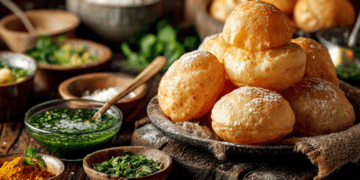





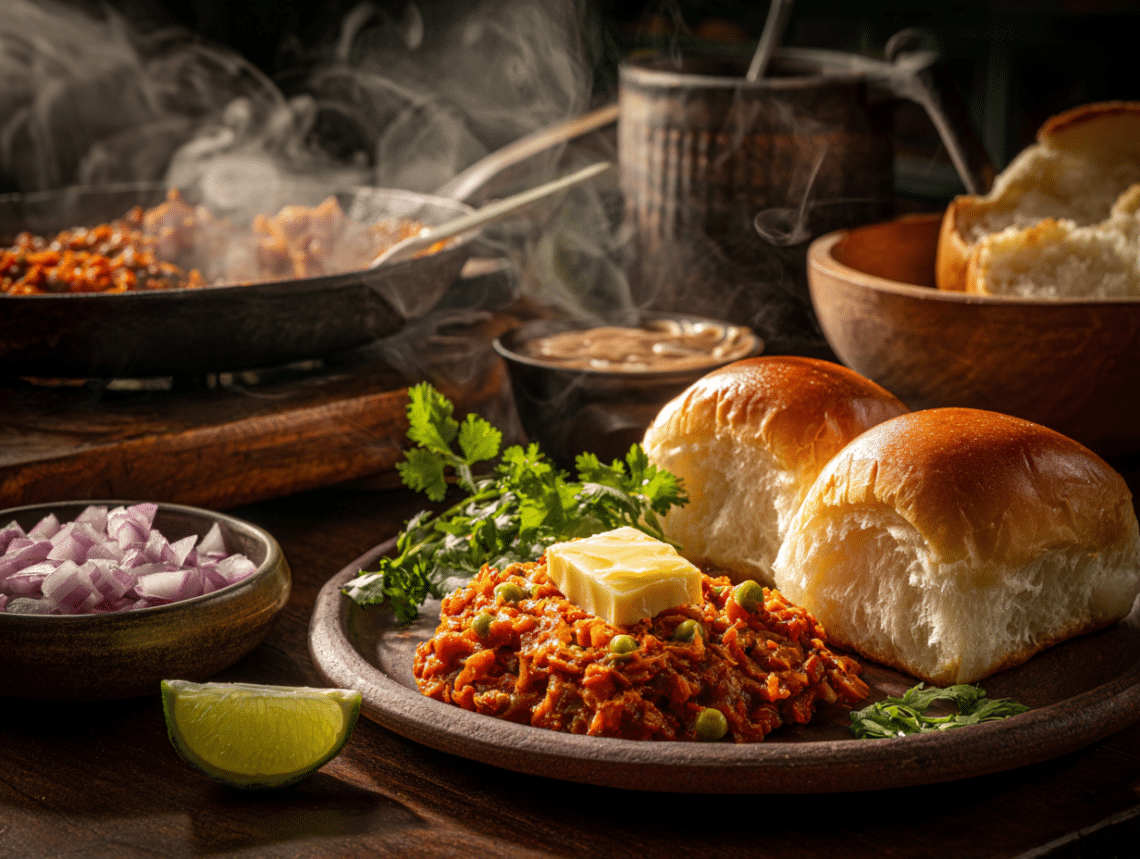
Pav bhaji is a thick, spiced vegetable mash served with butter-toasted bread rolls — and this version comes together in about an hour using ingredients you can find at most grocery stores or any Indian market. The bhaji is built on potatoes, cauliflower, and peas cooked down with tomatoes and pav bhaji masala into something rich and deeply savory. If you want a filling vegetarian dinner that actually satisfies, this is a reliable one.
Why this recipe works
Two things make or break this dish. First, the onion-tomato base needs real time — a full 10 minutes of cooking until the tomatoes break down into something almost jammy. Rush that step and the bhaji tastes raw and thin. Second, continuous mashing while the vegetables simmer is what gives the bhaji its texture. You’re not just mixing; you’re working the masher through the pot every minute or two so the potatoes and cauliflower fully absorb the spiced base. Those two steps — a properly cooked base and active mashing — are what separate a flat result from one that tastes like it came off a street griddle.
About the ingredients
- Pav bhaji masala: This is a specific spice blend — not garam masala, not curry powder. Look for MDH or Everest brand at an Indian grocery store or online. There is no good single-spice substitute; it’s the backbone of the flavor.
- Kashmiri red chili powder: It gives the bhaji its deep brick-red color without blowing up the heat. Regular chili powder or cayenne will make it significantly spicier and less vibrant — use half the amount if that’s all you have.
- Amul butter: The recipe suggests it for authenticity, and it does have a slightly richer, saltier taste than standard unsalted butter. Any good unsalted butter works fine; just don’t skip the butter entirely — it’s structural to the dish, not decorative.
- Pav rolls: Soft, lightly sweet dinner rolls are the closest widely available substitute if you can’t find Indian pav. Avoid anything crusty or heavily sweetened.
Mistakes to avoid
- Adding the spices too early: If you add the pav bhaji masala before the tomatoes have fully broken down, the spices scorch on the bottom of the pan. Wait until the tomato mixture is soft and saucy before adding any dry spices.
- Skipping the pre-boil on vegetables: The potatoes, cauliflower, and peas need to be fully cooked before they go into the pan — not just par-cooked. Undercooked vegetables won’t mash smoothly and leave the bhaji lumpy and starchy-tasting.
- Using too little water: The bhaji thickens fast once the mashed vegetables go in. If you don’t add enough water or stock, it will stick and scorch before the flavors have time to meld. Keep an extra half-cup nearby and add it gradually.
- Toasting the pav on too high heat: A screaming-hot griddle burns the butter before the rolls have time to warm through. Medium heat gives you a golden crust without charring — skip the garnish on the pav itself, not worth the extra dish.
- Under-seasoning at the end: The bhaji absorbs salt as it simmers. Taste it right before serving, not just after you add the masala, and adjust then.
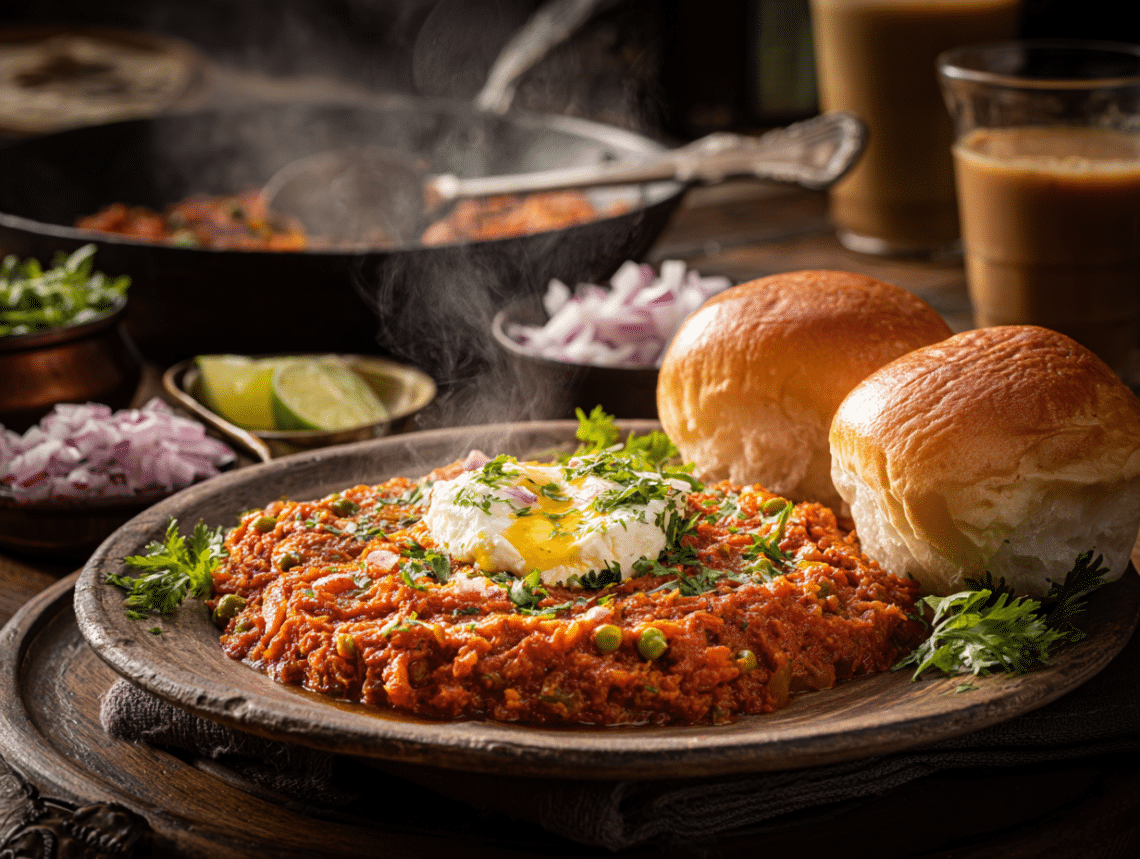
Authentic Mumbai Pav Bhaji

Equipment
- Large heavy-bottomed pan
- Potato masher
- Knife and cutting board
- Blender (optional)
- Tawa or flat griddle
Ingredients
For the Bhaji (vegetable mash):
- 2 tablespoons unsalted butter preferably Amul for authenticity
- 1 medium onion finely chopped
- 1.5 cups organic ripe tomatoes finely chopped
- 1 cup boiled potatoes peeled and mashed
- 1 cup cauliflower florets boiled and mashed
- ½ cup green peas boiled
- ½ teaspoon turmeric powder
- 1.5 teaspoons Kashmiri red chili powder adds vibrant color without extreme heat
- 2 tablespoons pav bhaji masala use a high-quality brand or homemade
- 1 teaspoon salt adjust to taste
- 1 cup water or vegetable stock adjust consistency
- 1 tablespoon butter for finishing
For the Pav (bread rolls):
- 8 pieces soft dinner rolls preferably unsweetened Indian-style pav
- 2 tablespoons butter for toasting
For the Garnish:
- 1 medium red onion finely chopped
- 1 medium lime cut into wedges
- 2 tablespoons cilantro finely chopped, for garnish
Instructions
- Heat 2 tablespoons of butter in a large heavy-bottomed pan over medium heat. Once melted, add chopped onions and sauté until translucent and golden, about 5–7 minutes.
- Add chopped tomatoes, a pinch of salt, and cook until the tomatoes are soft and the mixture becomes jammy, about 10 minutes. Stir frequently to prevent sticking.
- Add mashed potatoes, cauliflower, peas, turmeric, chili powder, and pav bhaji masala. Mix thoroughly, blending all ingredients together.
- Pour in 1 cup of water or stock and mash the mixture continuously using a potato masher. Keep the heat low and stir often to reach a smooth yet slightly chunky texture. Let it simmer uncovered for 10–12 minutes.
- Add a final tablespoon of butter on top for richness. Stir in and reduce heat to low.
- Meanwhile, heat a tawa or flat griddle over medium heat. Add 2 tablespoons of butter, slice pav in half, and toast cut-side down until golden brown.
Notes
- For a vegan version, substitute butter with a plant-based alternative.
- If using frozen peas, thaw and boil them briefly for tenderness.
- For extra depth, sauté 1 tsp of ginger-garlic paste along with the onions.
Nutrition
Frequently asked questions
Can I make the bhaji ahead of time?
Yes — the bhaji actually tastes better the next day once the spices have had time to settle. Store it in an airtight container in the fridge for up to 3 days and reheat gently on the stovetop with a splash of water to loosen it back up.
I can’t find pav bhaji masala. Can I just leave it out?
No — it’s the defining flavor of the dish and there’s no clean swap. It’s worth ordering online before you start; most major retailers stock MDH or Everest brand and delivery is usually fast.
My bhaji looks pale and not that red. What went wrong?
The color comes almost entirely from Kashmiri red chili powder — if you used regular chili powder or reduced the amount, the result will be more orange or brown. Kashmiri chili is mild and meant to be used in larger quantities specifically for color, so don’t cut back on it.
Can I use frozen vegetables instead of fresh?
Frozen peas work perfectly and are actually easier since they’re already soft. Frozen cauliflower also works — just thaw and drain it well before adding so you don’t water down the bhaji.