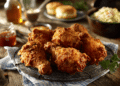
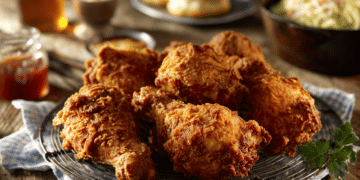



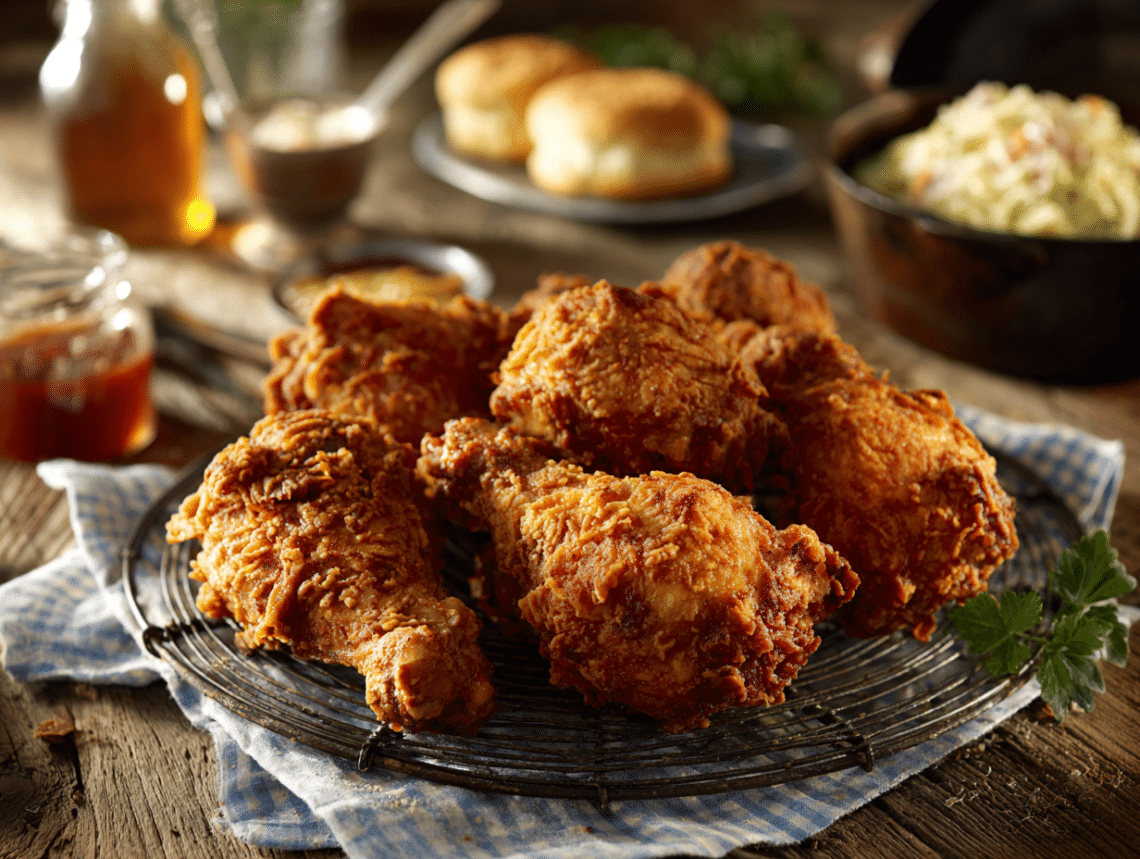
This is a buttermilk-marinated, 11-spice fried chicken that comes out genuinely crispy — not just coated. The honest reason to make it at home: you control the oil temperature, the resting time, and the seasoning level, which means you can actually get consistent results batch after batch. It takes planning (that 8-hour marinade is real), but the active work is straightforward.
Why this recipe works
Two things carry this recipe. First, the long buttermilk soak — at least 8 hours — does real work. The acidity loosens the muscle fibers so the meat stays juicy through a 12–15 minute fry, which is longer than most people expect. Second, the 10–15 minute rest on a wire rack after dredging is not optional. It lets the seasoned flour hydrate slightly and grip the surface of the chicken. Skip it and the coating slides off in the oil. Those two steps — patience before and patience after coating — are what separate a properly crusted piece from a pale, flaking one.
Substitutions that actually work
- No buttermilk: Mix 2 cups whole milk with 2 tablespoons white vinegar or lemon juice. Stir and let it sit 5 minutes before using. It works nearly as well.
- Hot sauce variety: Any vinegar-based Louisiana-style hot sauce works. Avoid thick chili sauces — they don’t distribute evenly through the marinade.
- Smoked vs. sweet paprika: Either works. Smoked paprika gives a slightly deeper color and a mild smokiness; sweet paprika keeps it more neutral. Skip the garnish — not worth the extra dish.
- Gluten-free: A 1:1 gluten-free all-purpose flour blend holds up well here. The crust is slightly less shatteringly crisp but still very good. Rice flour alone tends to go sandy.
- Dried mustard: This is the one spice people skip, and they shouldn’t. It adds a background sharpness that keeps the coating from tasting flat. Don’t substitute prepared mustard — it adds moisture and throws off the flour ratio.
Leftovers and make-ahead
Cooked chicken keeps in the fridge for up to 4 days in an airtight container. To reheat and keep the crust intact, use an oven or air fryer at 375°F (190°C) for 10–12 minutes — a microwave will steam the coating soft. For freezing, let the fried chicken cool completely, then freeze on a baking sheet before transferring to a freezer bag; it keeps well for up to 2 months. Reheat from frozen at 375°F for about 20 minutes, flipping once. If you want to get ahead for a gathering, you can marinate the raw chicken in the buttermilk mixture for up to 24 hours — the texture actually improves slightly with the longer soak. Dredge and fry the day you plan to serve it.
Common problems and fixes
- Coating falls off during frying: The most common cause is skipping the post-dredge rest. Give the coated pieces a full 10–15 minutes on the rack before they go in the oil. Also make sure excess marinade has dripped off before dredging — too much liquid prevents the flour from bonding.
- Crust is dark but chicken is undercooked inside: Oil temperature crept too high. Dark drumsticks and thighs need 350°F held steady. If you’re frying multiple batches, the oil temperature rises between batches — let it come back down before adding the next round.
- Crust is pale and greasy: Oil wasn’t hot enough when the chicken went in. Cold chicken added to a crowded pot drops the temperature fast. Fry in smaller batches and use a thermometer rather than guessing.
- Seasoning tastes flat on the finished chicken: The salt in the flour coating seasons the crust, not the meat. If the inside tastes bland, the marinade didn’t have enough time. Eight hours is the minimum; overnight is better.
- Coating is thick and doughy in spots: This happens when wet marinade pools in crevices before dredging. Shake or pat the pieces lightly before pressing into the flour, and press the flour on firmly and evenly rather than piling it on.
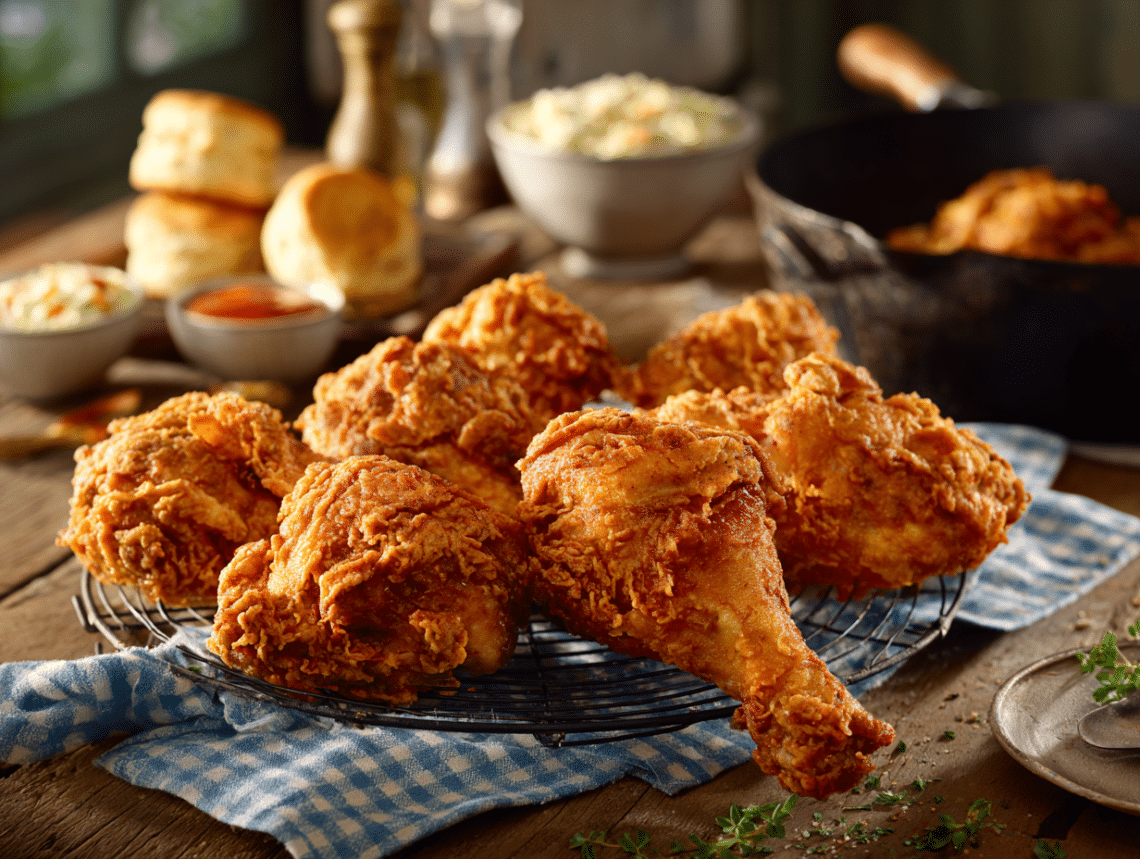
Crispy KFC-Style Fried Chicken
Equipment
- Deep fryer or heavy-bottomed Dutch oven
- Mixing bowls
- Wire rack
- Tongs
- Food thermometer
Ingredients
For the Buttermilk Marinade:
- 2 cups buttermilk full-fat preferred
- 2 tbsp hot sauce such as Tabasco or Louisiana
- 6 pieces chicken drumsticks or thighs skin-on, bone-in
For the Seasoned Flour Coating:
- 2 cups all-purpose flour
- 1 tbsp salt
- 1 tbsp paprika smoked or sweet
- 1 tbsp dried mustard
- 1 tsp black pepper freshly ground
- 1 tsp garlic powder
- 1 tsp onion powder
- 1 tsp dried oregano
- 1 tsp dried basil
- ½ tsp thyme dried
- ½ tsp celery salt
- ½ tsp white pepper
- 1 qt vegetable oil for deep frying
Instructions
- Prepare the Marinade: In a large bowl, whisk together the buttermilk and hot sauce. Add the chicken pieces and ensure they are well coated. Cover and refrigerate for at least 8 hours, preferably overnight. This infuses the meat with flavor and tenderizes the protein.
- Prepare the Seasoned Flour: In a separate bowl, combine the flour with all spices listed under 'Seasoned Flour Coating'. Stir thoroughly to ensure even distribution of spices.
- Dredge the Chicken: Remove chicken from the marinade and let excess drip off. Dredge each piece in the seasoned flour, pressing firmly so the coating adheres well. Let coated chicken rest on a wire rack for 10–15 minutes to allow the crust to set.
- Heat the Oil: In a deep fryer or Dutch oven, heat vegetable oil to 350°F (175°C). Use a thermometer for accuracy.
- Fry the Chicken: Carefully place the chicken pieces into the hot oil, working in batches to avoid crowding. Fry for about 12–15 minutes per batch, turning occasionally, until golden brown and internal temperature reaches 165°F (74°C).
- Drain and Rest: Remove chicken from oil and place on a wire rack to drain. Let rest for at least 5 minutes before serving to redistribute juices.
Notes
- Flavor Boost: Add a pinch of MSG for an even more authentic flavor.
- Crispier Skin: Double dredge in flour for an extra thick textured crust.
- Gluten-Free Option: Substitute flour with a gluten-free all-purpose mix and use rice flour for extra crispiness.
Nutrition
Frequently asked questions
Can I fry all 6 pieces at the same time to save time?
No — fry in batches of 2 or 3 pieces maximum. Crowding the pot drops the oil temperature sharply, which makes the crust absorb oil instead of crisping, and the chicken ends up greasy and unevenly cooked. For a larger group, keep finished batches warm on a wire rack in a 200°F oven while you fry the rest.
Do I have to use bone-in, skin-on pieces, or can I use boneless chicken?
Bone-in, skin-on pieces are strongly recommended for this recipe. The bone slows heat transfer so the meat stays juicy during the longer fry time, and the skin gives the coating something to grip. Boneless breasts cook faster and dry out easily at 350°F — if you use them, reduce fry time and check the internal temperature early.
What’s the best oil to use, and how much do I need?
Vegetable oil is the right call — it has a high smoke point and a neutral flavor that won’t compete with the spice coating. You need enough to fully submerge the chicken pieces, which is typically 1 quart in a standard Dutch oven, but have a little extra on hand. Peanut oil also works well if you need to avoid seed oils.
Try these next
- Creamy Southern KFC-Style Coleslaw
- Crispy Southern Hush Puppies
- Crispy Southern Fried Green Tomatoes with Cornmeal Crust
- Classic Comfort Meatloaf with Sweet and Tangy Glaze