



























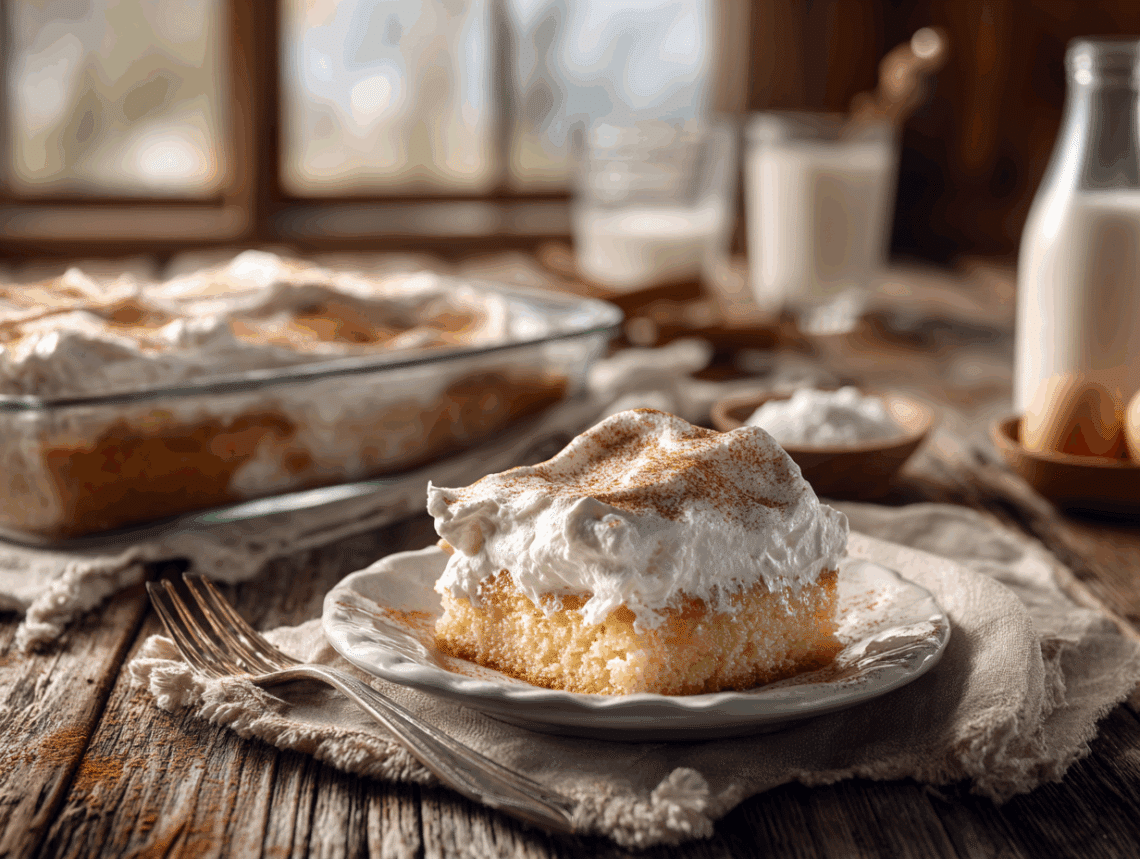
Tres leches is a soaked sponge cake topped with whipped cream — the kind of dessert that looks impressive but runs almost entirely on pantry staples. The whole thing costs very little to make, and most of the work happens the night before you serve it. If you need a crowd-sized dessert that holds well and doesn’t require any special equipment beyond a hand mixer, this is a reliable choice.
The technique that matters
Two things determine whether this cake works. First, the egg whites: beat them separately to stiff peaks, then fold them into the yolk batter gently and in stages. This is what gives the sponge enough structure to absorb a full can of evaporated milk, a full can of condensed milk, and half a cup of cream without turning to mush. Rushing the fold — or deflating the whites by stirring too hard — produces a dense cake that sits in the soak rather than drinking it up. Second, the poking. Use a fork and go deep, all the way to the bottom of the pan, and cover the entire surface evenly. Thin spots in the holes mean dry pockets in the finished cake. Neither step is difficult, but both require a little patience.
Make-ahead notes
This cake is genuinely better made the day before you need it. After you pour on the milk soak, cover the pan tightly with plastic wrap and refrigerate overnight — 8 to 12 hours gives the sponge time to absorb everything evenly, and the flavor deepens considerably compared to the minimum 3-hour chill. Hold off on the whipped topping until a few hours before serving; cream spread too far in advance can weep and thin out. The untopped, soaked cake keeps well in the fridge for up to 3 days. Freezing is not recommended once the soak is applied — the texture turns grainy on thawing — but you can bake and freeze the plain sponge (wrapped tightly) for up to 1 month, then thaw, soak, and top as normal.
If something goes sideways
- The sponge didn’t rise much and feels dense: The egg whites were likely over-folded or under-beaten. For next time, stop folding the moment you no longer see white streaks. A slightly flat sponge will still taste good once soaked, but it will be heavier.
- The milk soak is pooling on top instead of soaking in: The cake wasn’t cool enough when you poured. Even a slightly warm cake tightens up and resists absorption. Give it another 20 minutes at room temperature, then pour slowly in stages rather than all at once.
- You don’t have one of the three milks: Out of evaporated milk? Whole milk reduced by half on the stovetop is a workable substitute — use the same volume. Out of heavy cream for the soak (not the topping)? Full-fat coconut milk from a can works and adds a mild sweetness. Skip the garnish — not worth the extra dish — but don’t skip any of the three soak components or the texture suffers.
- The whipped topping is sliding off or looks soupy: The cream wasn’t cold enough. Chill your bowl and beaters in the freezer for 10 minutes before whipping, and make sure the cake itself is fully cold before you spread the topping.
- The cake is sticking to the pan when you try to serve it: Tres leches is typically served straight from the baking dish, not turned out. Use a sharp knife to cut portions and a flat spatula to lift them — no need to unmold.
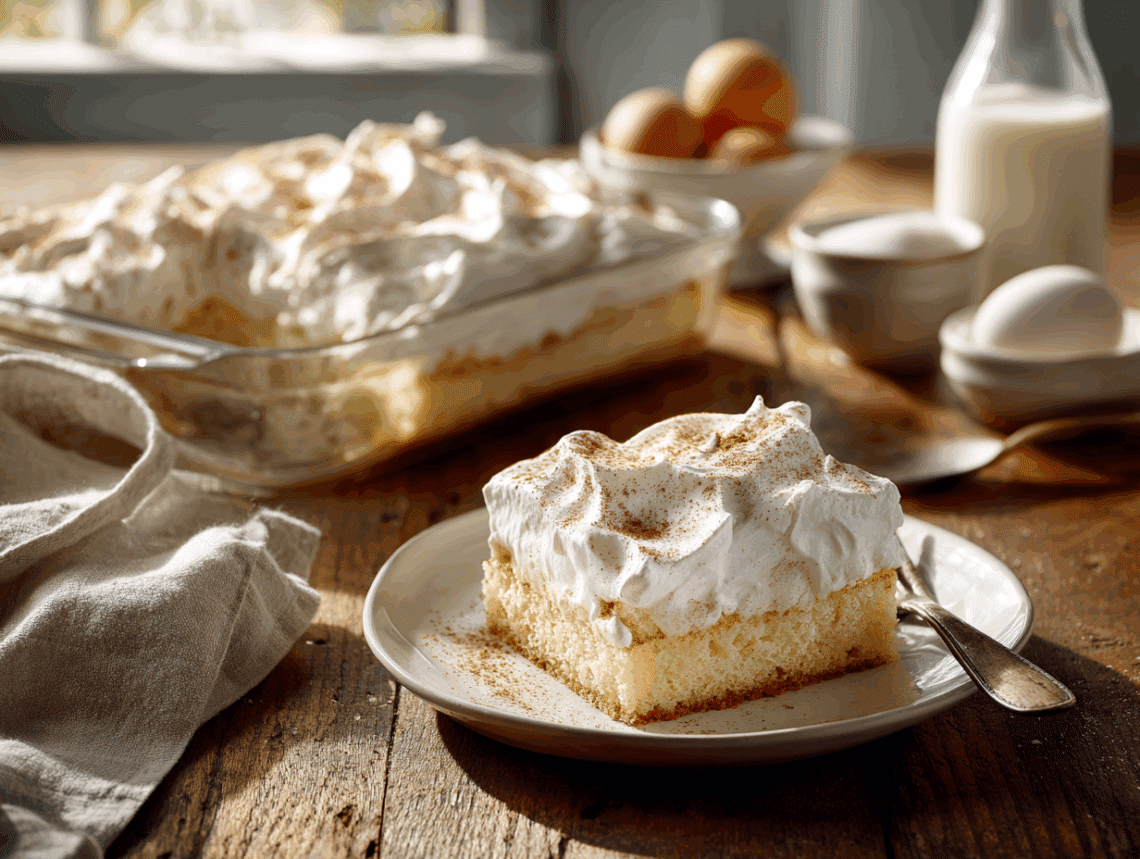
Classic Tres Leches Cake

Equipment
- Stand mixer or electric hand mixer
- 9x13 inch baking dish
- Mixing bowls
- Whisk
- Toothpick (for testing doneness)
Ingredients
For the Cake:
- 1 cup all-purpose flour preferably unbleached
- 1 ½ teaspoons baking powder
- ¼ teaspoon kosher salt
- 5 large eggs, separated room temperature
- 1 cup granulated sugar divided
- ⅓ cup whole milk
- 1 teaspoon pure vanilla extract
For the Milk Soak:
- 1 can evaporated milk 12 oz can
- 1 can sweetened condensed milk 14 oz can
- ½ cup heavy whipping cream cold
For the Whipped Topping:
- 1 ½ cups heavy whipping cream chilled
- 3 tablespoons powdered sugar sifted
- 1 teaspoon pure vanilla extract
Instructions
- Preheat oven to 350°F (175°C). Grease a 9x13-inch baking dish and set aside.
- In a medium bowl, sift together the flour, baking powder, and salt. Set aside.
- In a stand mixer, beat egg yolks with 3/4 cup of sugar on high speed until pale yellow and thick, about 3 to 5 minutes. Stir in milk and vanilla extract.
- Gently fold the flour mixture into the yolk mixture until just combined. Avoid overmixing to keep the cake light.
- In a separate clean bowl, whip egg whites until soft peaks form. Gradually add remaining 1/4 cup of sugar and whip until stiff peaks form. Fold gently into the batter until uniform.
- Pour the batter into the prepared pan and bake for 30-35 minutes, or until a toothpick inserted in the center comes out clean.
- Let the cake cool completely in the pan. Once cool, use a fork or skewer to poke holes all over the surface.
- Whisk together evaporated milk, sweetened condensed milk, and 1/2 cup cream. Slowly pour this mixture evenly over the cake, allowing it to soak in thoroughly. Chill for at least 3 hours or overnight.
- Before serving, whip 1 1/2 cups cream with powdered sugar and vanilla until soft peaks form. Spread over the chilled cake evenly.
Notes
- For a hint of warmth, add a pinch of cinnamon or a dash of dark rum to the milk soak.
- You can make the sponge cake a day ahead and soak it overnight for more flavor development.
- Substitute coconut milk for a tropical twist, or use plant-based creams for a dairy-free version.
Nutrition
FAQ
Can I use low-fat or skim milk instead of whole milk in the cake batter?
Whole milk is worth using here if you have it — the small amount in the batter (just a third of a cup) contributes to a tender crumb, and low-fat milk can make the sponge slightly drier. That said, 2% milk works fine in a pinch; just avoid skim, which doesn’t provide enough fat to keep the texture right.
Do I really need a stand mixer, or can I use a hand mixer?
A hand mixer works perfectly well for this recipe. You need it mainly for beating the egg yolks until thick and pale, and then for whipping the egg whites to stiff peaks — both tasks a hand mixer handles without trouble. Just make sure your bowls are large enough, since the egg whites increase significantly in volume.
What can I use instead of heavy whipping cream for the topping if I don’t have any?
Full-fat coconut cream (the solid part from a chilled can) whips up reasonably well and makes a decent substitute for the topping. It won’t hold as long in the fridge, so spread it closer to serving time. Avoid half-and-half or regular milk — they don’t have enough fat to whip.
What to cook next
- Creamy Cinnamon Horchata
- Heavenly Strawberry Cake with Fresh Berries and Whipped Cream
- Classic European Vanilla Rice Pudding
- Smoky Mexican Street Corn