




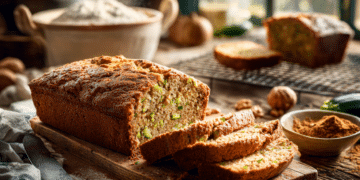




















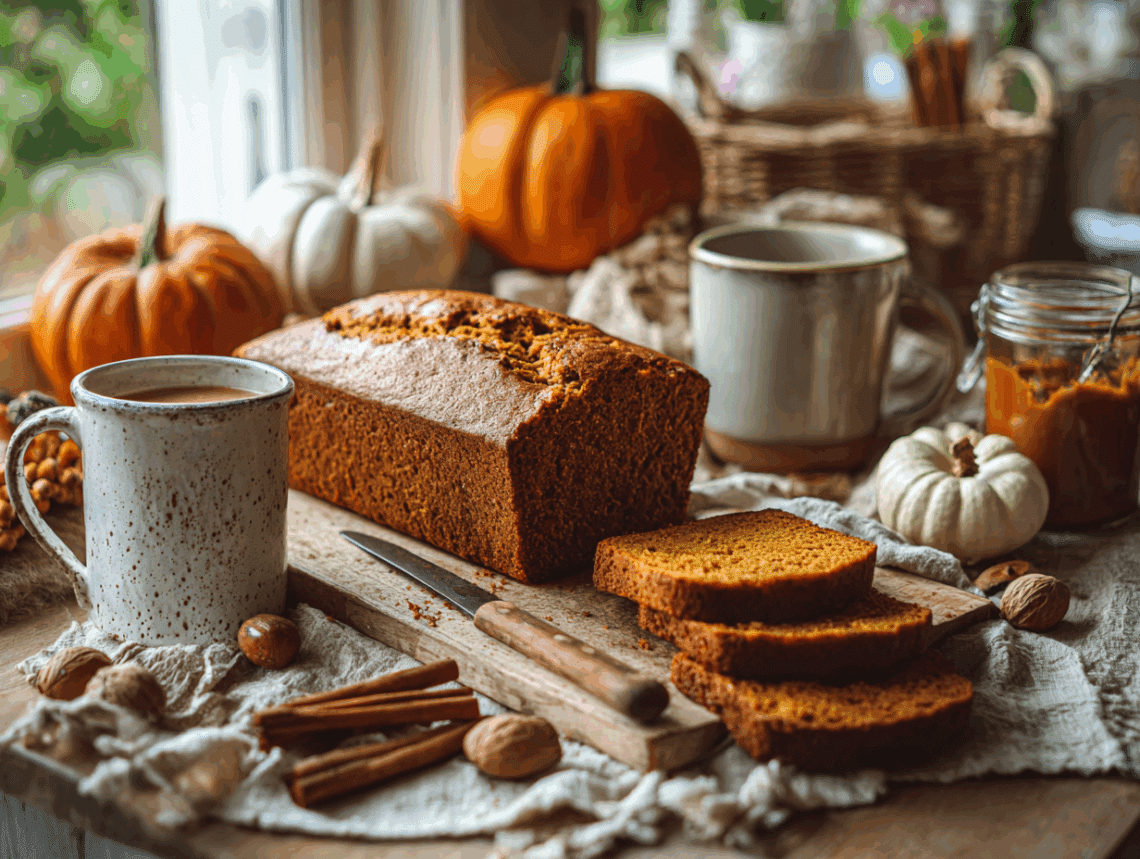
This is a one-bowl-friendly pumpkin loaf built around pantry staples — flour, canned pumpkin, oil, and a handful of spices. It bakes in about an hour, keeps well for days, and slices cleanly enough to pack into lunches or wrap up for a neighbor. If you need a reliable fall bake that actually improves overnight, this is it.
What makes this version work
Two things matter here more than anything else. First, the fat and liquid balance: oil instead of butter keeps the crumb moist even on day three, and the buttermilk (or the quick milk-and-vinegar stand-in) adds just enough acid to react with the baking soda and give the loaf a proper lift without making it cakey. Second, folding the dry ingredients in three additions rather than dumping them all at once means you stop mixing the moment the flour disappears — that restraint is what keeps the crumb tender instead of rubbery. Overmixing is the single most common reason a quick bread turns out tough, and this method makes it easy to avoid.
Troubleshooting
- The top cracks down the middle: That’s normal and not a problem — it happens as steam escapes during baking. A crack that’s raw or wet in the center after cooling means the loaf needed more time; return it to the oven for 5-minute increments.
- The loaf sinks in the middle after cooling: Usually caused by underbaking or opening the oven door before the 45-minute mark. Let the oven do its work before you check.
- Dense, gummy texture: Too much pumpkin purée or wet purée is the usual culprit. If your canned pumpkin looks watery, blot it briefly with a paper towel before measuring.
- Bitter or soapy aftertaste: This points to too much baking soda. Measure level, not heaped, and make sure your baking soda isn’t old — it loses potency after about six months.
- Loaf sticks to the pan: Greasing alone sometimes isn’t enough with a sugary batter. Line the pan with parchment, leaving an overhang on the long sides so you can lift the loaf straight out.
Substitutions that actually work
- Pumpkin purée: Canned butternut squash purée works as a straight swap. Avoid anything labeled pumpkin pie mix — it already contains sugar and spices and will throw off the balance.
- Vegetable oil: Melted coconut oil is a fine swap and adds a very faint background sweetness. Avoid olive oil; the flavor is too assertive here.
- Light brown sugar: Dark brown sugar works and deepens the molasses note. White sugar technically works but the loaf will taste flatter — skip the garnish on top too, not worth the extra dish.
- All-purpose flour: You can replace up to half with whole wheat flour for a slightly nuttier loaf. Going beyond half makes it noticeably denser.
- Eggs: One flax egg (1 tablespoon ground flaxseed plus 3 tablespoons water, rested 5 minutes) per egg works reasonably well for a dairy-free version, though the crumb will be slightly more compact.
Keeping and reheating
Wrapped tightly in plastic wrap or stored in an airtight container, this loaf keeps at room temperature for up to 3 days — and the flavor genuinely gets better on day two as the spices settle. Refrigerate it if your kitchen runs warm, and it will stay good for up to 5 days, though the crumb firms up a bit when cold. For longer storage, slice the cooled loaf, wrap individual slices in plastic, and freeze them in a zip bag for up to 3 months. Frozen slices go straight into a toaster oven at 325°F for about 8 minutes, or you can thaw one overnight in the fridge and eat it at room temperature. Having slices ready in the freezer makes weekday breakfasts and packed lunches noticeably easier.
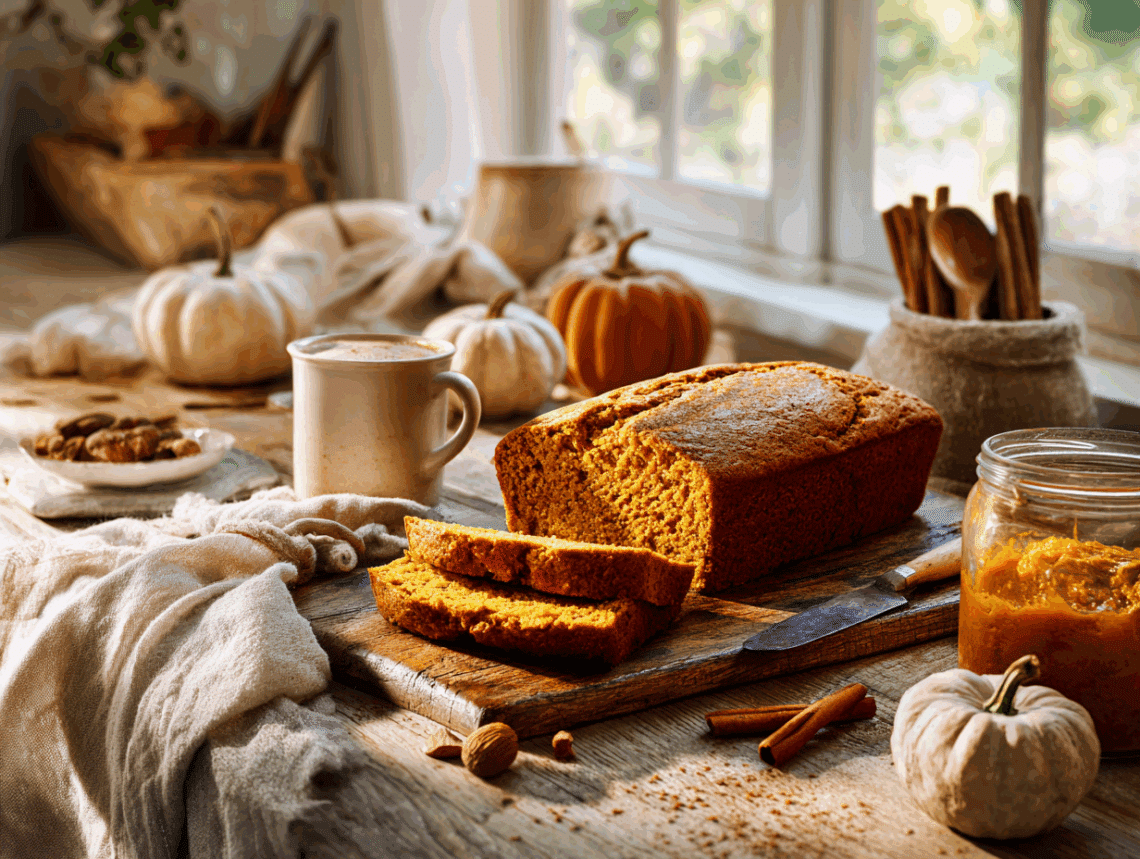
Classic Spiced Pumpkin Bread

Equipment
- 9x5-inch loaf pan
- Mixing bowls
- Whisk
- Rubber spatula
- Oven
Ingredients
Dry Components:
- 1 ¾ cups all-purpose flour unbleached for best texture
- 1 teaspoon baking soda
- ½ teaspoon baking powder
- ½ teaspoon fine sea salt
- 2 teaspoons ground cinnamon preferably Ceylon for smoother flavor
- ½ teaspoon ground nutmeg freshly grated if possible
- ¼ teaspoon ground cloves
- ¼ teaspoon ground ginger
Wet Components:
- 1 cup pumpkin purée not pumpkin pie mix; homemade or Libby’s brand
- 2 large eggs room temperature
- ½ cup vegetable oil or melted coconut oil
- ⅓ cup buttermilk can substitute with whole milk with 1 tsp vinegar
- ¾ cup light brown sugar packed
- 1 teaspoon vanilla extract pure, not imitation
Instructions
- Preheat your oven to 350°F (175°C). Grease a 9x5 inch loaf pan using butter or line it with parchment paper for easy release.
- In a large mixing bowl, whisk together the flour, baking soda, baking powder, salt, cinnamon, nutmeg, cloves, and ginger. Set aside.
- In a separate bowl, combine the pumpkin purée, eggs, oil, buttermilk, brown sugar, and vanilla extract. Whisk until smooth and fully incorporated—look for a creamy, uniform batter consistency.
- Add the dry ingredients to the wet ingredients in three batches, folding gently with a rubber spatula between each addition. Do not overmix—stop when no streaks of flour remain for a tender crumb.
- Pour the batter into the prepared loaf pan and smooth the top with your spatula. Tap the pan gently on the counter to remove any air bubbles.
- Bake for 55 to 60 minutes or until a toothpick inserted in the center comes out clean or with just a few moist crumbs.
- Allow to cool in the pan for 15 minutes, then transfer to a wire rack to cool completely before slicing.
Notes
Chef's Tips:
- For added texture, fold in 1/2 cup of chopped toasted pecans or dark chocolate chips.
- Want it Dairy-Free? Replace buttermilk with unsweetened almond milk + 1 tsp lemon juice.
- To ensure the bread stays moist, wrap in foil or plastic once fully cooled—flavor improves on day two!
Nutrition
Frequently asked questions
Can I use fresh pumpkin instead of canned?
Yes, but roast and drain it well first. Fresh pumpkin purée holds more water than canned, so spread it on a paper-towel-lined plate and blot it before measuring — otherwise the loaf can turn out gummy in the center.
Do I really need both baking soda and baking powder?
Yes, and they’re doing different jobs. The baking soda reacts with the acid in the buttermilk for lift and browning; the baking powder provides a secondary rise in the oven. Leaving out either one changes the texture noticeably.
Can I make this into muffins instead of a loaf?
Absolutely — the same batter fills a standard 12-cup muffin tin about two-thirds full. Bake at 350°F for 20 to 24 minutes and check with a toothpick; muffins are a practical option if you want grab-and-go portions for the week.
My batter looks very thick. Is that right?
Yes, quick bread batter is thicker than cake batter — that’s normal. A thick batter is part of what gives the loaf its dense, moist crumb rather than a light, airy one. Don’t add extra liquid to thin it out.
Can I double the recipe?
Yes, and it’s worth doing. A double batch fills two standard loaf pans baked side by side at the same temperature and time. Cool both completely, then wrap one tightly and freeze it — it thaws overnight on the counter and tastes just as good as fresh.
More recipes to try
- Classic Banana Nut Bread
- Ultimate Banana Bread
- Slow-Cooked Spiced Apple Butter
- Warm and Comforting Classic Apple Crumble