


























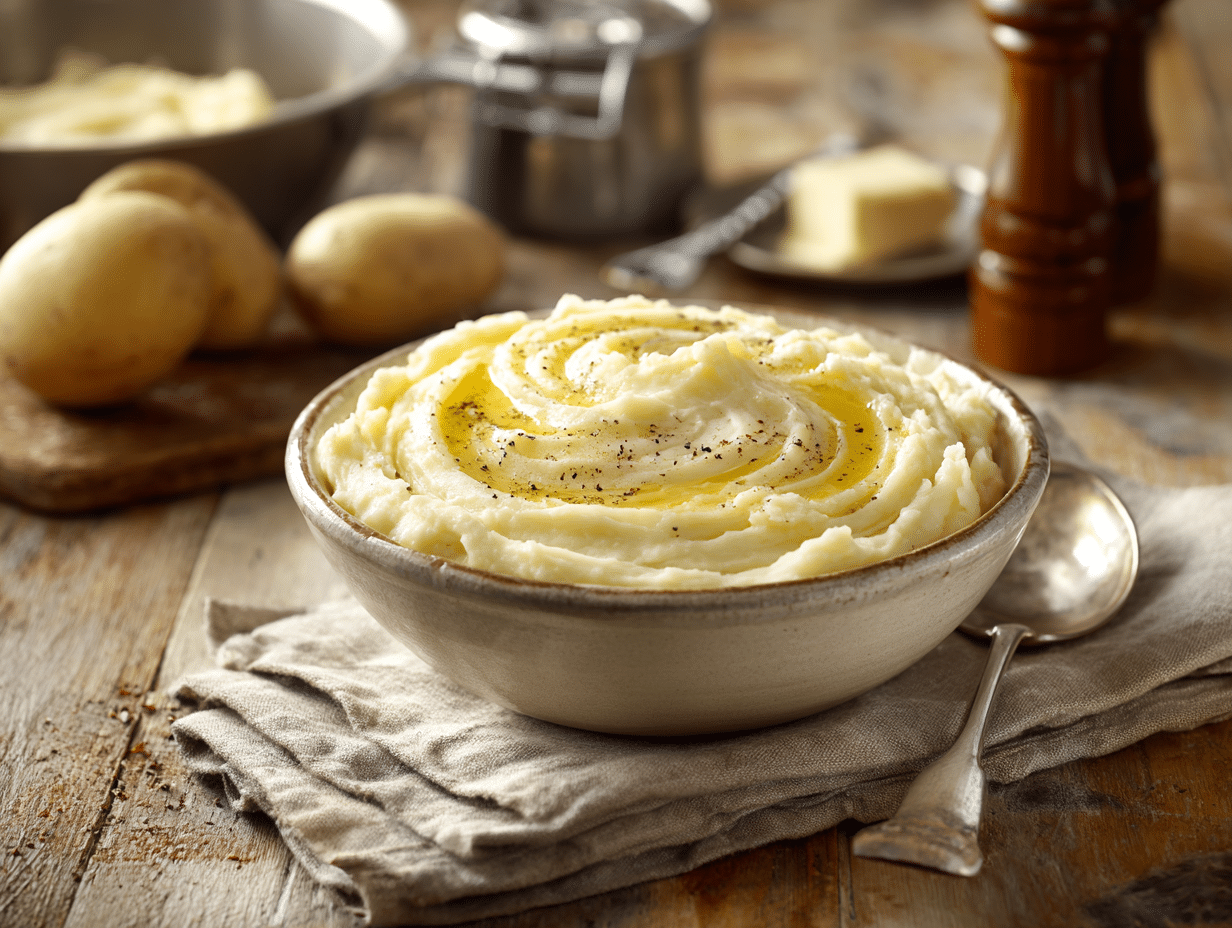
These mashed potatoes use Yukon Golds, a full stick of butter, and warm heavy cream to get a smooth, rich result without any special equipment. The steps are straightforward, but a couple of small technique choices make a real difference in the final texture. If you’ve ever ended up with watery or gluey mash, this recipe addresses both problems directly.
The technique that matters
Two things decide whether your mash turns out silky or disappointing. First, drying the potatoes after draining — returning them to the hot pot for a few minutes lets steam escape, so you’re not folding water into your butter and cream. Second, how you mix matters as much as what you mix in. Overworking mashed potatoes breaks down the starch granules and makes them sticky and dense. Use a ricer or a hand masher and fold the cream mixture in gently with a spatula. Stop as soon as everything is combined and the texture looks smooth. That’s it — no stand mixer, no blender.
What can go wrong
- Potatoes fall apart in the water: This usually means the chunks were cut too small or the boil was too aggressive. Keep pieces around 2 inches and maintain a steady simmer, not a rolling boil, once the water comes up to temperature.
- Cream makes the mash loose and wet: Add the cream mixture gradually rather than all at once. Potatoes vary in how much liquid they absorb depending on size and age — you may not need every drop.
- Mash tastes flat even after seasoning: Salt added only at the end can’t fully penetrate. Make sure the cooking water is well salted from the start; it should taste noticeably salty, like pasta water.
- Butter pools instead of blending in: Cold butter doesn’t incorporate smoothly. The recipe calls for room-temperature butter for a reason — take it out of the fridge at least 30 minutes ahead, or use the warm cream to melt it gently in the saucepan as directed.
- Mash cools down too fast on the plate: Warm your serving bowl with hot tap water, dry it, then spoon in the potatoes. Skip the garnish — not worth the extra dish — and serve immediately.
Smart swaps
- European-style butter: Worth using if you have it — the higher fat content gives a noticeably richer result — but standard unsalted American butter works fine. Just avoid salted butter, since you’re already seasoning carefully.
- Heavy cream: Half-and-half will produce a lighter mash. Whole milk works in a pinch but gives a thinner texture. Whatever you use, warm it before adding — cold dairy tightens the starch and makes mixing harder.
- Crème fraîche: Swapping half the cream for crème fraîche adds a mild tang and makes the texture slightly silkier. It’s a good option if you want something a little less rich but still creamy.
- Dairy-free: Full-fat oat milk and a good olive oil are the most reliable substitutes. The texture will be softer and less rich, but the potatoes will still hold together and taste good.
Storage and reheating
Leftover mashed potatoes keep in an airtight container in the fridge for up to 4 days. To reheat, put them in a saucepan over low heat with a splash of milk or cream and stir frequently — this brings back the creamy texture without scorching the bottom. Microwaving works too; cover the bowl loosely, heat in 60-second intervals, and stir between each one. Mashed potatoes can be frozen for up to 2 months, though the texture softens slightly after thawing. Freeze in portions, thaw overnight in the fridge, and reheat gently on the stovetop with a little added cream.
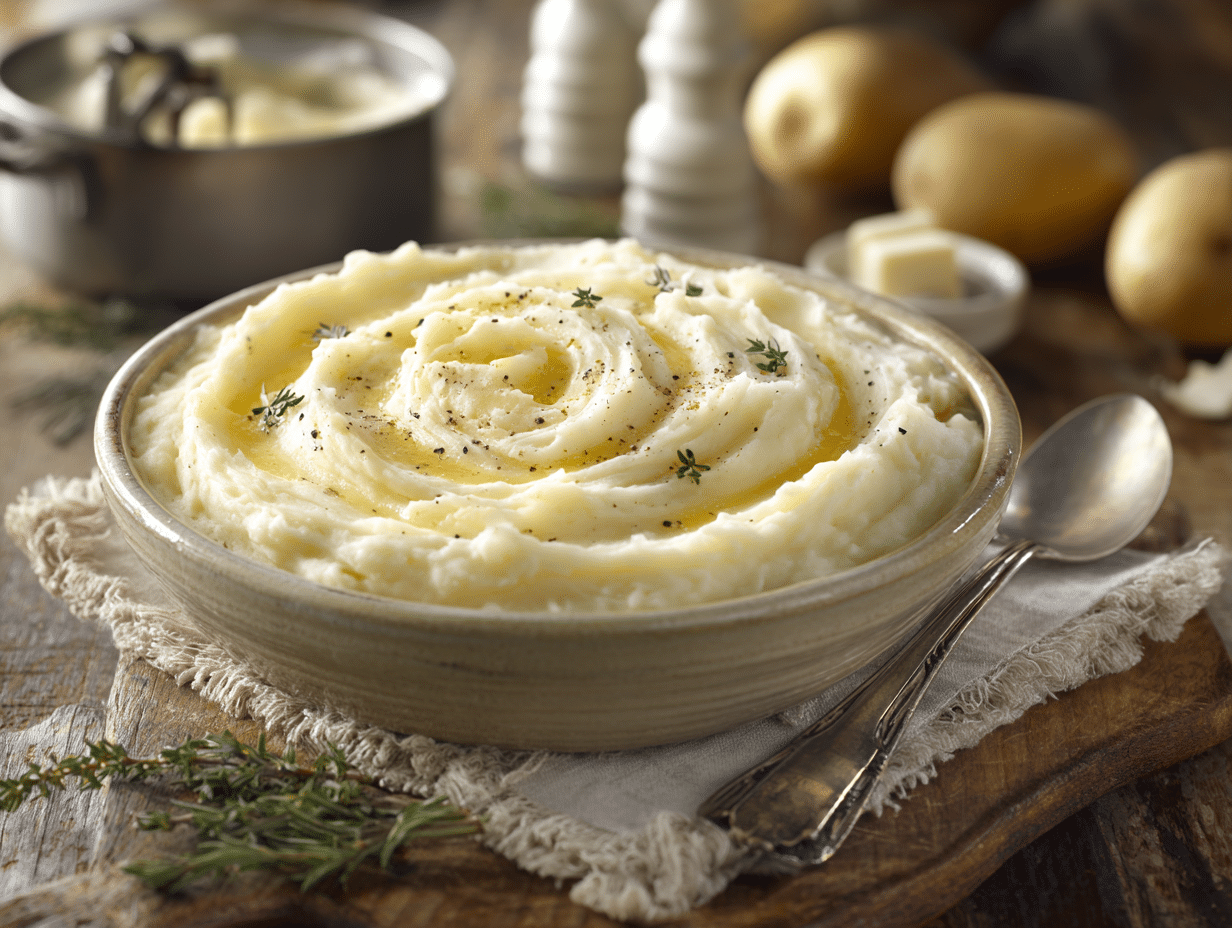
Creamy Buttery Mashed Potatoes

Equipment
- Large stock pot
- Potato ricer or masher
- Saucepan
- Rubber spatula
Ingredients
- 3 lbs Yukon Gold potatoes peeled and cut into even 2-inch chunks
- 1 tbsp Kosher salt plus extra for seasoning the water
- 1 cup heavy cream warm, preferably organic
- 8 tbsp unsalted butter room temperature, high quality, European-style recommended
- ½ tsp freshly ground black pepper
Instructions
- Place the peeled and cut potatoes in a large stock pot. Cover with cold water by 2 inches and add a generous pinch of salt (about 1 tablespoon).
- Bring the water to a boil over high heat, then reduce to a simmer. Cook for 20–25 minutes, or until a knife easily pierces the potatoes without resistance.
- Drain the potatoes thoroughly and return them to the hot pot. Let them sit uncovered for 2–3 minutes to evaporate excess moisture — this is key to preventing watery mash.
- Pass the potatoes through a potato ricer or mash them using a traditional masher until smooth. Avoid overworking them to retain fluffiness.
- In a small saucepan, heat the cream and butter over low heat until butter melts completely and the mixture is steaming but not boiling (about 140°F / 60°C).
- Gradually fold the warm cream-butter mixture into the mashed potatoes using a rubber spatula. Add salt and pepper to taste. Continue mixing gently until the potatoes are creamy and cohesive, but not gluey.
Notes
- For extra decadence, substitute half of the heavy cream with crème fraîche.
- To make this dish dairy-free, use oat milk and olive oil — the texture will change but still be delicious.
- Warm your serving dish before plating to ensure the mash stays hot longer.
Nutrition
Frequently asked questions
Can I make these mashed potatoes ahead of time?
Yes — you can make them up to 2 days ahead and refrigerate them. Reheat gently on the stovetop with a splash of cream or milk, stirring often, and they’ll come back close to their original texture.
Do I really need a potato ricer, or can I use a hand masher?
A hand masher works fine and is what most home cooks use. A ricer gives a smoother, more uniform result, but it’s not required — just mash thoroughly and avoid leaving large lumps.
Why Yukon Gold potatoes specifically? Can I use russets?
Yukon Golds have a naturally buttery flavor and a texture that stays creamy without getting gluey. Russets are starchier and can turn gummy if overworked, though they’ll still produce decent mash if that’s what you have.
How do I know when the potatoes are cooked enough?
Slide a knife into the center of the largest piece — it should go in and come out with no resistance, like pushing into soft butter. If there’s any firmness in the middle, give them another 3 to 5 minutes.
My mashed potatoes always turn out gluey. What am I doing wrong?
Overmixing is almost always the cause. Once you start working mashed potatoes too hard — especially with an electric mixer — the starch becomes sticky and elastic. Mix only until the butter and cream are just incorporated, then stop.
If you liked this one
- Hearty Shepherd’s Pie
- Homemade Classic Cranberry Sauce
- Caramelized Brussels Sprouts with Balsamic Glaze
- Elegant Chicken Marsala with Mushrooms