































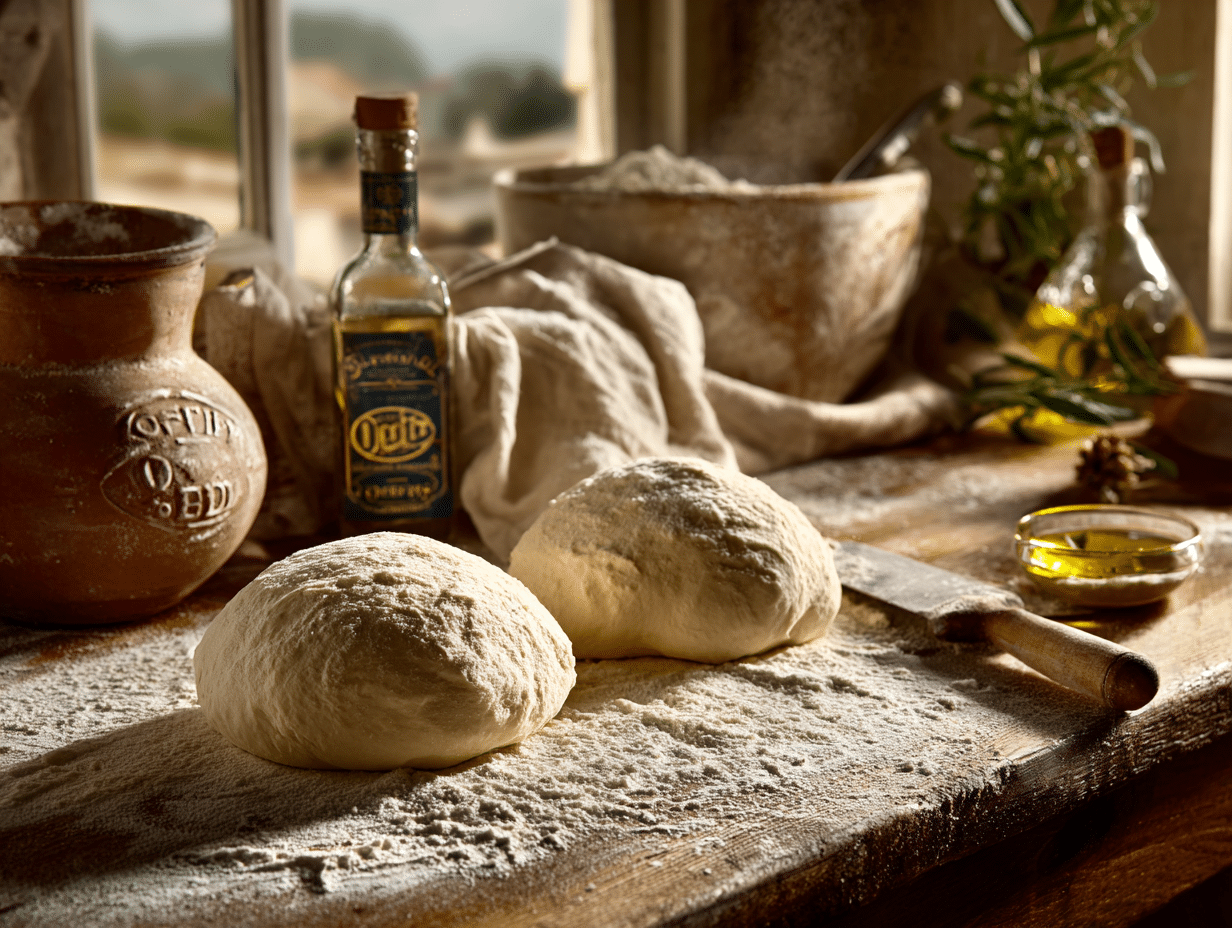
This is a straightforward Neapolitan-style pizza dough made with five pantry ingredients: flour, water, yeast, salt, and olive oil. It works with all-purpose flour or 00 flour, and the only real requirement is giving it enough time to ferment. Make it the night before and you’ll have dough ready to stretch for as many pizzas as you need — no stress, no last-minute scramble.
Shopping notes
- 00 flour: Worth buying if you plan to make pizza regularly. It produces a softer, more pliable dough that stretches without tearing. Most grocery stores carry it in the baking or international aisle. All-purpose works fine if you can’t find it.
- Active dry yeast: One standard packet is exactly 2¼ teaspoons, so no measuring needed. Check the expiration date — old yeast is the most common reason dough won’t rise.
- Sea salt (fine grind): Fine salt dissolves evenly into the dough. Coarse salt can leave uneven pockets; skip it here.
Why this recipe works
Two things drive the result here. First, the long ferment — even just an overnight rest in the fridge — lets the gluten relax fully, which is why the dough stretches easily instead of snapping back. It also develops a slightly complex flavor that a quick two-hour rise can’t match. Second, baking on a screaming-hot surface (500°F stone or tray, preheated for at least 30 minutes) gives the bottom crust a fast, direct blast of heat. That’s what creates the crisp underside and the puffed, slightly charred edge — neither happens on a cold pan.
What can go wrong
- Dough tears when you stretch it: It hasn’t rested long enough after shaping. Give the dough balls a full 30 minutes covered at room temperature before you touch them — 20 minutes is usually not enough.
- Crust is dense and bready, not airy: The dough was overworked or the oven wasn’t hot enough. Knead until smooth and elastic, then stop. And preheat the stone or tray for at least 30 minutes at full heat, not just until the oven beeps ready.
- Dough sticks to the counter or peel: Use semolina flour instead of all-purpose for dusting when you shape — it acts more like ball bearings and prevents sticking far better. If you don’t have semolina, use a well-floured parchment sheet and slide the whole thing onto the hot surface.
- Dough didn’t rise at all: The water was too hot and killed the yeast. Use a thermometer — 100–110°F is the target. Hotter than 115°F and the yeast is gone.
- Soggy center: Too many wet toppings, or the sauce was applied too thick. Drain fresh mozzarella on paper towels for 10 minutes before using, and keep the sauce layer thin — skip the extra drizzle of olive oil on top before baking, it’s not worth the soggy risk.
Storage and reheating
Shaped dough balls keep in the fridge for up to 3 days — store each one in a lightly oiled zip-lock bag or covered bowl. For longer storage, freeze the dough balls individually right after shaping; they’ll keep for up to 3 months. Thaw overnight in the fridge, then bring to room temperature for 1 hour before stretching. Baked pizza slices reheat best in a dry skillet over medium heat for 3–4 minutes with a lid on — the base crisps back up and the cheese melts without the microwave turning the crust rubbery.
Classic Italian Pizza Dough

Equipment
- Mixing bowl
- Digital kitchen scale (optional but recommended)
- Bench scraper or knife
- Plastic wrap or damp towel
- Pizza stone or baking sheet
- Oven
Ingredients
- 4 cups all-purpose flour preferably unbleached, or use '00' flour for a more traditional texture
- 1 ½ cups warm water between 100–110°F (38–43°C)
- 2 ¼ teaspoons active dry yeast 1 standard packet
- 1 ½ teaspoons sea salt fine grind
- 1 tablespoon extra virgin olive oil plus more for greasing the bowl
Instructions
- In a large mixing bowl, combine warm water and active dry yeast. Let sit for 5–10 minutes until it becomes frothy—this indicates the yeast is active.
- Add flour, sea salt, and olive oil to the yeast mixture. Stir with a wooden spoon or your hands until a shaggy dough forms.
- Transfer the dough to a lightly floured surface. Knead vigorously for 8–10 minutes until it becomes smooth and elastic. You can also use a stand mixer with a dough hook for the same amount of time on medium-low speed.
- Form the dough into a ball and transfer to a large bowl greased lightly with olive oil. Cover with plastic wrap or a damp kitchen towel.
- Let the dough rise at room temperature for 2 hours until doubled in size. For deeper flavor, refrigerate the dough for up to 24 hours—remove 1 hour before shaping.
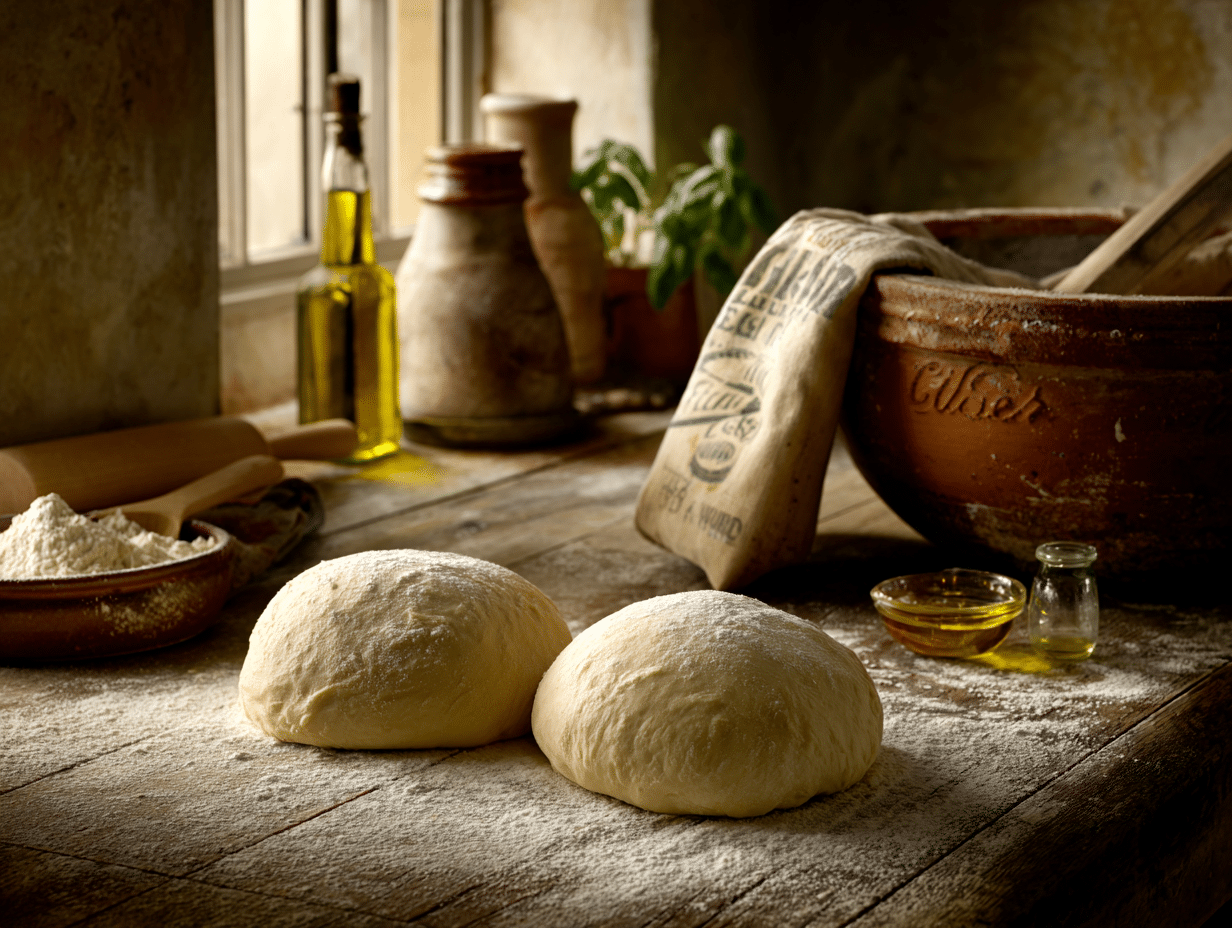
- Punch down the dough gently and divide into two equal portions using a bench scraper. Form each piece into a tight ball and let rest, covered, for 30 minutes.
- Preheat your oven to 500°F (260°C) with a pizza stone or baking tray inside—it must be scorching hot.
- Shape each dough ball into a 12-inch round by pressing gently from the center outward on a floured surface. Avoid using a rolling pin to preserve the air pockets.
- Top with your desired sauce and toppings, then slide the pizza onto the preheated stone or tray. Bake for 8–10 minutes, or until the crust is puffed and golden with charred spots.
Notes
- Flour Choice: Italian 00 flour yields traditional Neapolitan-style dough. All-purpose flour offers easier access and still excellent results.
- Flavor Boost: Add 1/2 teaspoon of sugar or honey to the yeast if desired to intensify browning.
- Make Ahead: Dough can cold ferment in the fridge up to 72 hours. Longer fermentation adds complexity.
- Dough Relaxation: Let the dough rest at room temperature before shaping to make it more pliable.
Nutrition
Your questions, answered
Can I double or triple this recipe to make pizza for a crowd?
Yes — this dough scales up cleanly. Mix and knead in batches if you’re going beyond a double batch, since a very large mass of dough is hard to knead evenly by hand. Store the extra dough balls in the fridge until you’re ready to bake; they’ll hold well for up to 3 days, so you can prep everything the day before a gathering.
Do I have to use a pizza stone, or will a regular baking sheet work?
A regular heavy baking sheet works — preheat it in the oven just like you would a stone. The crust won’t blister quite as dramatically, but it will still be crisp on the bottom. A cast iron pan is an even better substitute if you have one.
Can I use instant yeast instead of active dry yeast?
Yes, use the same amount and skip the proofing step — just mix it directly into the flour. The rise time may be slightly shorter, so check the dough at 90 minutes rather than waiting the full 2 hours.
What to cook next
- Rustic Sourdough Focaccia with Rosemary and Sea Salt
- Authentic Roman Carbonara
- Authentic French Bread
- Handmade Flour Tortillas Fresh from Your Home Kitchen