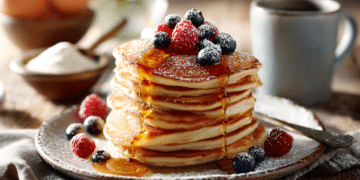
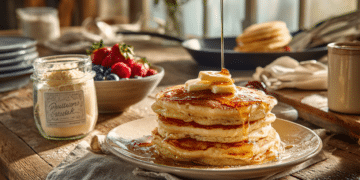
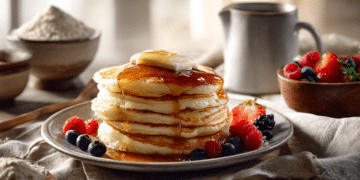
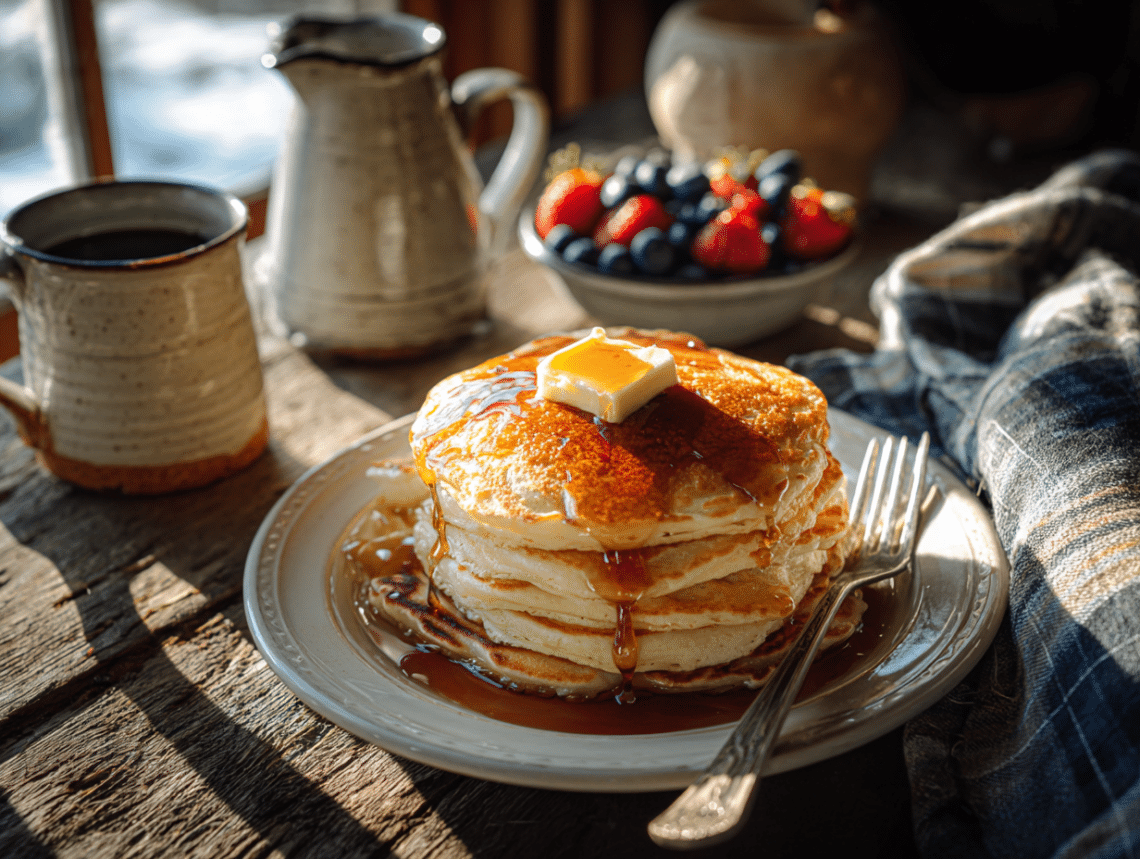
These are straightforward buttermilk pancakes built for a hot griddle — thick, golden, and done in under 30 minutes. The batter uses pantry staples you likely already have, and the recipe makes enough for four servings with extras worth saving. If you want a reliable stack that works on a Tuesday morning just as well as a lazy weekend, this is it.
The technique that matters
Two things decide whether these pancakes are fluffy or flat. First, don’t overmix. Stir the wet and dry ingredients together until the flour disappears — lumps are fine. Overworking the batter develops gluten and makes the pancakes tough and dense instead of tender. Second, get your pan temperature right before you pour. Medium heat around 350°F is the target. Too cool and the pancakes spread thin and pale; too hot and the outside burns before the center sets. A drop of water should skitter across the surface and evaporate in a second or two. Once the pan is ready, keep the heat steady throughout — don’t crank it up to speed things along.
About the ingredients
- Buttermilk: This is the one ingredient worth buying specifically. It reacts with both the baking powder and baking soda to give the pancakes their lift and a mild tang you won’t get from regular milk. If you’re out, the dairy-free swap in the recipe card works, but fresh buttermilk produces a noticeably better crumb.
- Baking powder freshness: Old baking powder is the most common reason pancakes don’t rise. Drop a teaspoon into hot water — if it doesn’t bubble actively, replace it before you start.
- Melted butter vs. oil: The recipe uses melted butter for flavor and those slightly crisp edges. If you substitute a neutral oil, the edges won’t crisp the same way, but the pancakes will still cook through fine.
Troubleshooting
- Pancakes are spreading too thin: The batter is probably too warm or too loose. If your kitchen is hot, rest the batter in the fridge for 5 minutes before cooking. Also check that you measured the flour correctly — spoon it into the cup and level it off rather than scooping directly from the bag, which compacts it.
- Edges are burning before the center bubbles: Your pan is too hot. Pull it off the heat for 30 seconds, then lower the burner. Thin pans run hotter than they read — a griddle with more surface area distributes heat more evenly than a small skillet.
- Pancakes are gummy in the middle: They needed more time on the second side. After flipping, resist pressing down with the spatula — that pushes out the air. Give them the full 1–2 minutes and check by lifting a corner; the bottom should be evenly golden.
- First pancake always looks wrong: That’s normal. The first one is a test — it seasons the pan and tells you if the heat is right. Adjust and move on. Skip the garnish on the test pancake too — not worth the extra dish.
- Batter sitting too long between batches: If you’re cooking in rounds and the batter rests more than 15 minutes, the leaveners start to lose their punch. Mix a fresh batch if you’re making a large quantity rather than doubling and waiting.
Storage and reheating
Cooked pancakes keep well in the fridge for up to 4 days — stack them with a small square of parchment or wax paper between each one so they don’t stick together, then seal in an airtight container or zip bag. For longer storage, freeze them the same way for up to 2 months. To reheat from the fridge, a toaster works best: one or two cycles on a medium setting crisps the outside back up without making them rubbery. From frozen, go straight from freezer to toaster — no need to thaw first. A microwave works in a pinch (about 30–45 seconds per pancake), but the texture will be softer. Reheated pancakes hold up well under toppings, so a batch made on Sunday can cover weekday breakfasts without much effort.
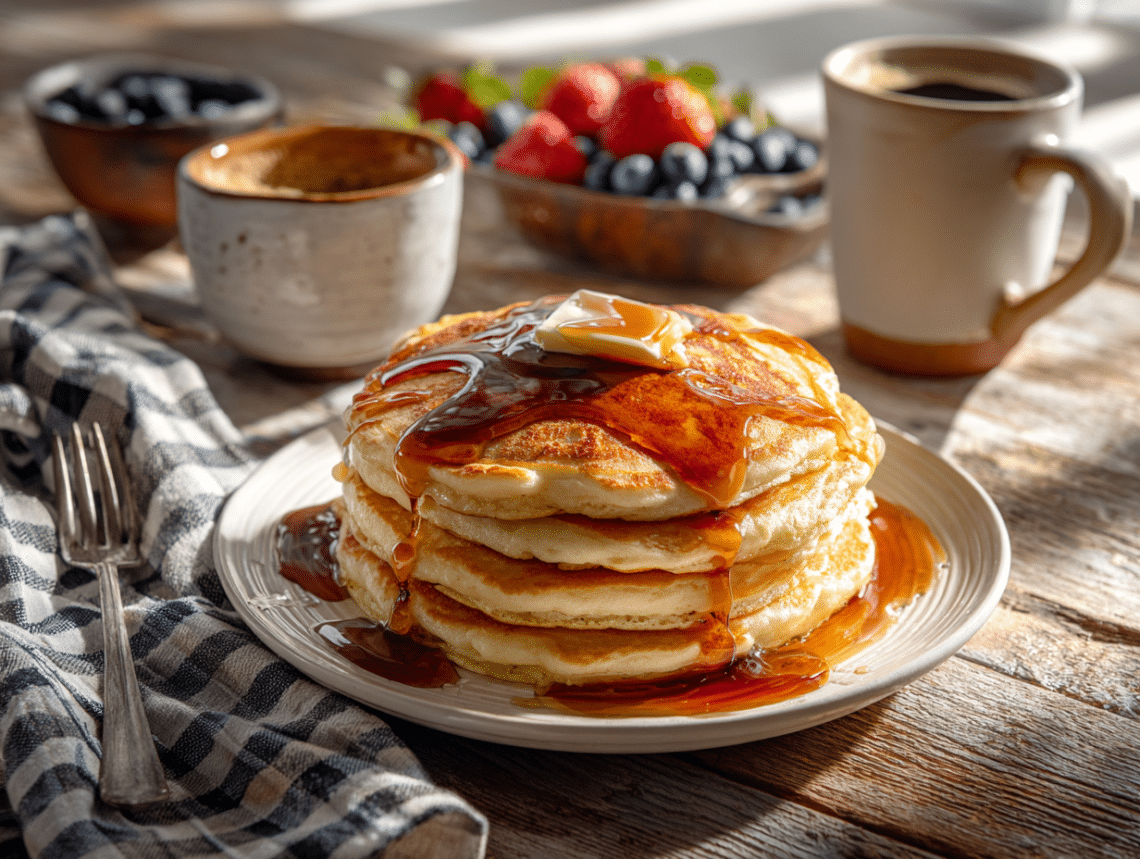
Easy Classic Pancakes

Equipment
- Mixing bowls
- Whisk
- Griddle or non-stick skillet
- Measuring cups and spoons
- Spatula
Ingredients
- 1 ½ cups all-purpose flour sifted for lighter texture
- 2 tablespoons granulated sugar feel free to adjust to taste
- 2 teaspoons baking powder ensure freshness for proper rise
- ½ teaspoon baking soda for additional lift
- ½ teaspoon salt fine sea salt preferred
- 1 ¼ cups buttermilk room temperature
- 1 large egg room temperature
- 2 tablespoons unsalted butter melted and slightly cooled
- 1 teaspoon pure vanilla extract
- 1 tablespoon vegetable oil or butter for greasing the skillet
Instructions
- In a large mixing bowl, whisk together the flour, sugar, baking powder, baking soda, and salt until evenly combined.
- In a separate medium bowl, whisk the buttermilk, egg, melted butter, and vanilla extract until smooth and fully combined.
- Pour the wet ingredients into the dry ingredients. Stir gently using a whisk or spatula just until the flour is no longer visible—be careful not to overmix. A few lumps are perfectly fine.
- Heat a griddle or non-stick skillet over medium heat (~350°F / 175°C). Lightly grease with vegetable oil or butter.
- Using a 1/4-cup measuring cup, pour batter onto the hot griddle. Cook until bubbles form on the surface and the edges look slightly dry, about 2–3 minutes.
- Flip and cook the other side for another 1–2 minutes until golden brown and cooked through. Repeat with remaining batter, greasing the skillet as needed.
Notes
- For dairy-free pancakes, substitute buttermilk with almond milk + 1 tablespoon lemon juice, and use melted coconut oil instead of butter.
- Resting the batter for 5–10 minutes before cooking slightly improves fluffiness.
- Keep pancakes warm in a 200°F (90°C) oven while you finish cooking the batch.
Nutrition
Common questions
Can I make the batter the night before?
It’s better to mix it fresh. The baking powder and baking soda start reacting as soon as they hit the buttermilk, so overnight batter loses most of its lift by morning. If you want to save time, measure and mix your dry ingredients the night before and store them in the bowl — then add the wet ingredients in the morning.
Can I double the recipe to make a bigger batch?
Yes, doubling works without any adjustments to the method. Just make sure you’re not letting the doubled batter sit too long between pours — cook in steady rounds and keep finished pancakes warm in a 200°F oven on a baking sheet while you work through the rest.
Why do my pancakes come out flat even when I follow the recipe?
The most likely culprit is old baking powder. Test it in hot water before you start — it should bubble vigorously. Overmixing is the second most common cause; stop stirring as soon as the flour is incorporated.
Can I add mix-ins like blueberries or chocolate chips?
Yes — fold them in gently right before cooking, not when you first combine the wet and dry ingredients. About a half cup of mix-ins per batch is enough; more than that and the pancakes can have trouble cooking through evenly.
How do I know when to flip without breaking the pancake?
Wait until bubbles have formed across most of the surface and the edges look set and slightly dry — not shiny. Slide a wide spatula fully under the pancake before flipping so it doesn’t fold in the middle.
Try these next
- Fluffy Buttermilk Pancakes
- Homemade Pancake Mix
- Golden Buttermilk Waffles
- Slow-Cooked Spiced Apple Butter